
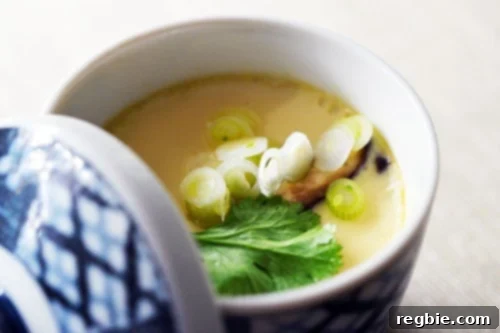
Prepare to delight your taste buds with a truly exquisite culinary creation: a flavor-packed, healthy version of the beloved Japanese savory steamed egg custard, Chawanmushi (茶碗蒸し). With a few thoughtful adjustments, we’ve transformed this traditional dish into a delightful recipe that aligns perfectly with Paleo, Whole30, and Keto dietary guidelines, without sacrificing any of its delicate charm or rich umami. Whether you prefer to steam it on the stove, bake it in a gentle water bath (bain-marie), or utilize the precision of a sous vide cooker, this versatile recipe has you covered for a perfect result every time.
Imagine spooning through the delicate, quivering surface of this custard to uncover a delightful treasure trove of ingredients nestled within. Each ramekin holds tender pieces of chicken, succulent shrimp, and earthy shiitake mushrooms, all swimming in a silky smooth, savory egg base. This Paleo Chawanmushi is not just a meal; it’s an experience – a warm, comforting, and incredibly nourishing dish that will transport you straight to a Japanese tea house, reimagined for your healthy lifestyle.
What is Chawanmushi? Understanding this Japanese Delicacy
Chawanmushi, literally meaning “tea cup steam” (chawan for teacup, mushi for steam), is a traditional Japanese savory egg custard renowned for its incredibly smooth, almost ethereal texture. Unlike Western custards that often lean sweet, Chawanmushi offers a delicate umami flavor profile, typically incorporating dashi (Japanese soup stock), soy sauce, and mirin, along with various fillings. These fillings can range from chicken, shrimp, white fish, ginkgo nuts, kamaboko (fish cake), and shiitake mushrooms, creating a delightful surprise in every spoonful.
The beauty of Chawanmushi lies in its subtlety and elegance. It’s often served as an appetizer or a light course in Japanese cuisine, appreciated for its warming qualities and comforting presence. Achieving the perfect Chawanmushi involves careful steaming to prevent air bubbles and ensure that signature silky, almost pudding-like consistency. The ideal texture is often described as “quivering” – firm enough to hold its shape but delicate enough to melt in your mouth, leaving behind a burst of savory flavors.
Our adapted Paleo, Whole30, and Keto Chawanmushi version maintains the essence of this classic dish while thoughtfully substituting traditional ingredients to fit modern dietary needs. By replacing soy sauce with coconut aminos and opting for natural broths, we ensure a compliant and equally delicious experience for everyone. This allows you to enjoy the authentic spirit of Japanese cuisine with the added benefits of a clean, grain-free, and low-carb meal.
Why Choose Paleo, Whole30, and Keto for Your Chawanmushi?
Adapting traditional recipes to fit specific dietary frameworks like Paleo, Whole30, and Keto can be a game-changer for those seeking healthier eating options without sacrificing flavor. Chawanmushi is a prime candidate for such a transformation, given its inherent simplicity and the ease with which certain ingredients can be swapped.
Paleo Principles: Whole Foods, Natural Goodness
The Paleo diet emphasizes eating whole, unprocessed foods that our hunter-gatherer ancestors might have consumed. This means focusing on lean proteins, fruits, vegetables, nuts, and seeds, while avoiding grains, legumes, dairy, refined sugar, and processed foods. For Chawanmushi, this translates to using natural chicken or bone broth instead of dashi made with soy-based ingredients, and opting for coconut aminos as a soy-free alternative. This ensures your savory egg custard is free from common allergens and inflammatory ingredients, promoting better digestion and overall well-being.
Whole30 Compliance: A Reset for Your Body
Whole30 is a 30-day nutritional program designed to eliminate common inflammatory foods and reset your eating habits. It strictly avoids sugar, alcohol, grains, legumes, dairy, and food additives like MSG. Our Chawanmushi recipe is meticulously crafted to be Whole30 compliant, utilizing ingredients such as organic chicken broth, paleo-friendly fish sauce, and coconut aminos, all free from added sugars or undesirable additives. This makes it an ideal, comforting dish to enjoy during your Whole30 journey, providing rich flavor and satiety while adhering to the program’s strict guidelines.
Keto Benefits: Low-Carb, High-Flavor
The Ketogenic diet focuses on significantly reducing carbohydrate intake and increasing healthy fats, prompting the body to enter a state of ketosis where it burns fat for fuel. Traditional Chawanmushi recipes might contain trace carbs from soy sauce or mirin. Our Keto Chawanmushi adaptation ensures a very low-carb profile by using coconut aminos and fish sauce, which are naturally low in carbohydrates, and by carefully selecting carb-conscious fillings. This version allows those following a ketogenic lifestyle to enjoy a deeply satisfying and flavorful Japanese dish without disrupting their macronutrient goals, providing sustained energy and supporting metabolic health.
By making these simple yet effective substitutions, we’ve created a Chawanmushi that is not only incredibly delicious but also a powerhouse of nutrition, suitable for a wide range of healthy dietary preferences. It’s a testament to how traditional flavors can be beautifully preserved and even enhanced within a health-conscious framework.
Paleo Chawanmushi: The Recipe
This recipe yields 5 servings of exquisite, delicate Chawanmushi, perfect for a light meal, appetizer, or side dish. The hands-on time is surprisingly short, making it an accessible option even on busy days.
Serves: 5
Hands-On Time: 15 minutes
Total Time: 45 minutes
Ingredients:
- 4 large eggs, preferably organic and free-range for best flavor and nutrition
- ½ teaspoon Diamond Crystal kosher salt, or adjust to taste
- 2 cups organic chicken broth, bone broth (for added nutritional benefits), or homemade dashi (ensure dashi is soy-free for Paleo/Whole30/Keto)
- 5 teaspoons coconut aminos, divided (a fantastic soy-free alternative to soy sauce)
- 1½ teaspoon Paleo-friendly fish sauce, divided (choose a brand without added sugar for Whole30/Keto)
- 4 ounces boneless, skinless chicken thighs, cut into uniform ½-inch cubes for even cooking
- 2 ounces shrimp, peeled, deveined, and cut into ½-inch pieces (can use pre-cooked for convenience)
- 2 medium shiitake mushrooms, thinly sliced (fresh preferred, but dried rehydrated will also work)
- Freshly-ground black pepper, to taste
- 2 scallions, thinly sliced, for garnish and a touch of fresh onion flavor
- ¼ cup minced cilantro, for a bright, herbaceous finish
Cooking Equipment:
- Five 8-ounce cups or ramekins (preferably with lids or suitable for covering)
- Measuring cups and spoons
- Steamer insert
- Large stock pot or Dutch oven, wide enough to accommodate the ramekins
- Medium mixing bowl
- Balloon whisk or fork
- Fine mesh sieve or strainer (crucial for a smooth custard)
- Plastic wrap or aluminum foil, for covering ramekins during steaming
- Sous vide cooker (optional, for an alternative cooking method)
Step-by-Step Instructions: Crafting Your Savory Egg Custard
Follow these detailed steps to create perfectly silky and flavorful Paleo Chawanmushi. The key to its signature texture is gentle, even steaming.
- Prepare Your Ramekins: For this recipe, you’ll need five 8-ounce cups or ramekins. While any oven-safe cup will do, consider using attractive ones, perhaps traditional Japanese tea cups with lids if you have them. The term “chawan” literally means “tea cup” in Japanese, and “mushi” means “steaming,” highlighting the traditional serving vessel. Using cups with lids or tightly sealing them is essential for even cooking and preventing condensation from dripping onto the custard.
- Set Up Your Steamer: Place a steamer insert into a large stockpot or Dutch oven. Add enough water to the pot so it comes just below the bottom of the steamer insert. Bring the water to a rolling boil over high heat on the stove. Once boiling, reduce the heat to medium-low to maintain a constant, gentle simmer. This controlled steam is vital for a smooth custard.
- Prepare the Egg Base: In a medium mixing bowl, crack the 4 large eggs. Add the ½ teaspoon of Diamond Crystal kosher salt. Using a balloon whisk or a fork, gently whisk the eggs until the yolks and whites are just combined, making sure not to incorporate too much air, which can lead to bubbles in your finished custard.
- Combine Wet Ingredients: In a separate measuring cup or small bowl, combine the 2 cups of chicken broth (or bone broth/dashi), 1 tablespoon (3 teaspoons) of coconut aminos, and 1 teaspoon of paleo-friendly fish sauce. Stir these liquids together well to ensure all components are evenly distributed.
- Mix and Strain the Custard Base: Gradually pour the broth mixture into the beaten eggs, whisking gently as you pour. Once fully combined, it’s crucial to strain this liquid mixture. Pour it through a fine mesh sieve into another large measuring cup or bowl. This step removes any eggy membranes, chalazae, or froth, which are common culprits for an uneven or porous custard texture. The goal is an incredibly smooth, delicate Chawanmushi.
- Prepare the Savory Fillings: In a small bowl, combine the 4 ounces of cubed chicken thighs, 2 ounces of shrimp pieces, and the thinly sliced shiitake mushrooms. Add the remaining 2 teaspoons of coconut aminos, ½ teaspoon of fish sauce, and a generous grind of fresh black pepper. Mix everything together thoroughly, ensuring the chicken, shrimp, and mushrooms are lightly coated with the seasonings. Remember, you can customize these fillings; feel free to substitute with other savory meats and vegetables you enjoy, such as scallops, firm white fish, or spinach.
- Assemble the Chawanmushi: Divide the seasoned meaty filling mixture evenly among your five 8-ounce cups or ramekins, placing a heaping tablespoon into the bottom of each. Then, carefully pour the strained egg mixture over the fillings in each cup. Fill each ramekin to about a half-inch from the top to allow for expansion during steaming.
- Cover and Steam: Individually cover each ramekin tightly with plastic wrap or aluminum foil. If your cups have lids, use those. This prevents condensation from dripping into the custards and ensures even cooking. Carefully place the covered cups onto the steamer insert in your stockpot, making sure they are level and stable.
- Cook to Perfection: Cover the stockpot with its lid, ensuring a tight seal, and cook for approximately 20 minutes. To check for doneness, carefully remove one ramekin and insert a toothpick into the center of the custard. If it comes out clean and the custard is set but still quivery in the center, it’s ready. Overcooking can lead to a rubbery or porous texture, so keep a close eye on it.
- Serve Immediately: The custards should be delicate and softly set. When gently pierced, the texture underneath the surface should be almost soup-like and incredibly smooth. Chawanmushi is best enjoyed warm. Do not let these delicate custards get cold. Serve them immediately, garnished generously with freshly sliced scallions and a sprinkle of minced cilantro for a burst of fresh flavor and vibrant color.
Tips for Achieving the Perfect Silky Chawanmushi
Creating an impeccable Chawanmushi requires a few key techniques to ensure that desired delicate, silky-smooth texture. Here are some essential tips:
- Gentle Whisking is Key: When beating the eggs, whisk just enough to combine the yolks and whites. Over-whisking incorporates too much air, leading to air bubbles and a spongy, rather than smooth, custard.
- Don’t Skip the Strainer: Straining the egg mixture through a fine-mesh sieve is perhaps the most critical step for smoothness. This removes any unmixed egg white bits, chalazae (the stringy bits in egg white), and surface foam, which can all contribute to an uneven texture.
- Low and Slow Steaming: The water in your steamer should maintain a gentle simmer, not a rolling boil. High heat or vigorous boiling will cause the egg proteins to cook too quickly and unevenly, resulting in a rubbery texture and numerous air pockets (often called “su” in Japanese, meaning holes). A gentle steam ensures a custardy, delicate set.
- Covering the Ramekins: Always cover your ramekins tightly with plastic wrap, foil, or their own lids. This prevents steam condensation from dripping onto the surface of the custard, which can dilute the flavor and create an undesirable texture. It also helps to maintain even heat around the custard.
- Check for Doneness Carefully: Chawanmushi is notoriously easy to overcook. It should be just set, with a slight quiver in the center. A toothpick inserted should come out mostly clean. If it’s too firm, it’s overcooked. It’s better to slightly undercook and allow it to finish setting with residual heat than to overcook.
- Temperature of Ingredients: Using room temperature eggs and broth can help them combine more smoothly and cook more evenly.
Customizing Your Chawanmushi Fillings and Flavors
One of the beautiful aspects of Chawanmushi is its versatility. While our recipe offers a delicious foundation, don’t hesitate to personalize your savory egg custard with your favorite Paleo, Whole30, or Keto-friendly ingredients. The “treasure trove” inside each cup can truly be tailored to your preference!
Protein Power-Ups:
- Seafood: Beyond shrimp, consider adding small pieces of white fish like cod or snapper, bay scallops, or even crab meat for a luxurious touch.
- Poultry: If chicken isn’t your preference, thinly sliced turkey breast or duck can be excellent substitutes.
- Pork: Lean ground pork, lightly seasoned and cooked, or small cubes of pork tenderloin can add a different depth of flavor.
- Vegetarian/Vegan Options: For a plant-based version (though no longer Paleo/Keto/Whole30 with eggs), you could use firm tofu or tempeh, finely diced and marinated, along with a mushroom or vegetable broth.
Vibrant Vegetable Additions:
Enhance the nutritional profile and visual appeal of your Chawanmushi with a variety of vegetables. Just ensure they are cut into small, bite-sized pieces so they cook evenly with the custard.
- Leafy Greens: A pinch of spinach, kale, or bok choy, finely chopped, adds color and nutrients.
- Root Vegetables (in moderation for Keto): Thinly sliced carrots, daikon radish, or bamboo shoots can provide a lovely textural contrast.
- Other Fungi: Enoki or oyster mushrooms can be used instead of or in addition to shiitake for different textures and flavors.
- Aromatics: A tiny slice of ginger or a few garlic slivers can infuse the custard with subtle aroma.
Flavor Enhancements:
- Sesame Oil: A tiny drizzle of toasted sesame oil over the top before serving can add a nutty aroma.
- Citrus Zest: A whisper of fresh lemon or lime zest can brighten the overall flavor.
- Herbs: Experiment with other fresh herbs like chives or parsley in addition to scallions and cilantro.
Remember to consider the cooking time of any new ingredients. Ingredients that take longer to cook (like denser root vegetables) should be cut very small or blanched slightly before adding to the ramekins. The beauty of Chawanmushi is in its gentle balance, so don’t overpower the delicate egg custard with too many strong flavors.
Alternative Cooking Methods for Chawanmushi
While stove-top steaming is the classic method, these custards are incredibly versatile and can be cooked using other techniques, offering flexibility based on your kitchen equipment and preference.
- Baking in a Bain-Marie (Water Bath): If you don’t have a steamer or need to cook many ramekins at once, a bain-marie is an excellent alternative.
- Preheat your oven to 425°F (220°C).
- Place your foil-covered cups or ramekins in a large, oven-safe baking dish.
- Carefully pour boiling water into the baking dish until it reaches halfway up the sides of the ramekins. A kitchen towel placed at the bottom of the baking dish can prevent the ramekins from sliding and absorb some of the bubbling, ensuring more even heat distribution.
- Carefully transfer the baking dish to the preheated oven and bake for approximately 30 minutes. The high initial heat helps set the outside quickly, while the water bath ensures gentle, even cooking internally.
- Sous Vide Cooking (for the Gourmand): For ultimate precision and an unbelievably silky texture, sous vide is an outstanding choice.
- Set your sous vide water bath to 195°F (90.5°C).
- Prepare your Chawanmushi as directed, pouring the mixture into heat-proof jars or ramekins.
- Cover each container tightly with its lid or plastic wrap, ensuring a watertight seal.
- Carefully lower the covered ramekins into the preheated sous vide bath. Ensure they are fully submerged.
- Cook for 60 to 90 minutes. The precise temperature control of sous vide guarantees an incredibly smooth, perfectly cooked custard every time, without the risk of overcooking or air bubbles.
Serving Suggestions for Paleo Chawanmushi
This savory egg custard is best enjoyed immediately after cooking, while it’s still warm and delicate. Its light yet satisfying nature makes it a versatile dish for various occasions.
- As an Appetizer: Serve small portions as an elegant start to a Japanese-inspired meal.
- Light Lunch or Dinner: Pair it with a simple side salad dressed with a ginger-sesame vinaigrette, or a bowl of steamed greens for a complete and wholesome meal.
- Part of a Larger Spread: Chawanmushi complements other light Japanese dishes beautifully, such as sashimi, grilled fish, or a clear soup.
- Garnish for Freshness: Always top with fresh scallions and cilantro just before serving. A tiny drizzle of good quality extra virgin olive oil or a few drops of chili oil can also add another layer of flavor if desired.
Enjoy the comforting warmth and exquisite flavors of this healthy Japanese classic!
Recipe Card
Paleo Chawanmushi (Savory Egg Custard)
Inside these savory Japanese steamed egg custards, you’ll find a treasure trove of ingredients: diced seafood, poultry, and veggies. With just a few adjustments, I’ve come up with a flavor-packed Paleo version of chawanmushi that you can steam on the stove, bake in a water bath, or pop into a sous vide cooker.
Prep Time: 15 mins
Cook Time: 20 mins
Total Time: 45 mins
Servings: 5 people
Author: Michelle Tam
Pin Recipe | Print Recipe
Ingredients
- 4 large eggs
- ½ teaspoon kosher salt
- 2 cups organic chicken broth, bone broth, or homemade dashi
- 5 teaspoons coconut aminos, divided
- 1½ teaspoons Paleo-friendly fish sauce, divided
- 4 ounces boneless, skinless chicken thighs, cut into ½ inch cubes
- 2 ounces shrimp, cut into ½-inch pieces
- 2 medium shiitake mushrooms, thinly sliced
- Freshly-ground pepper
- 2 scallions, thinly sliced
- ¼ cup minced cilantro
Instructions
- You’ll need five 8-ounce cups or ramekins for this recipe. Traditional Japanese tea cups with lids are ideal, as “chawan” means “tea cups” and “mushi” means “steaming.”
- Place a steamer insert into a large stockpot and add water until it’s just below the bottom of the steamer. Bring the water to a boil, then reduce heat to medium to maintain a constant simmer.
- Crack the eggs into a medium bowl and add the salt. Whisk gently until well-mixed, avoiding excessive aeration.
- In a separate measuring cup, combine the chicken broth, 1 tablespoon of coconut aminos, and 1 teaspoon of fish sauce. Pour this broth mixture into the beaten eggs and mix well.
- Strain the entire egg mixture through a fine mesh sieve into a large measuring cup to remove any eggy membranes or froth, ensuring a silky-smooth custard.
- In a small bowl, combine the chicken, shrimp, and mushrooms. Add the remaining 2 teaspoons of coconut aminos, ½ teaspoon of fish sauce, and some freshly-ground black pepper. Mix everything together. (Feel free to use your preferred savory meats and veggies as substitutions.)
- Grab the 8-ounce cups or ramekins and place a heaping tablespoon of the seasoned filling into each one.
- Carefully pour the strained egg mixture into each cup, stopping when you’re about a half-inch from the top.
- Cover each ramekin tightly with plastic wrap or aluminum foil to prevent condensation from dripping in.
- Place the covered cups onto the steamer insert in the pot, ensuring they are level.
- Cover the stockpot with its lid and cook for 20 minutes, or until a toothpick inserted into the center comes out clean and the custard is set but still quivery.
- The custards should be quivery and delicate to the touch. When pierced, the texture should be almost soup-like underneath. Serve immediately, topped with sliced scallions and minced cilantro.
Notes
- Alternative Cooking Mod #1 (Bain-Marie): If a steamer isn’t available, create a bain-marie. Place the foil-covered cups in a towel-lined baking dish filled halfway with boiling water, then bake in a 425°F (220°C) oven for 30 minutes.
- Alternative Cooking Mod #2 (Sous Vide): For a particularly silky texture, steam the cups in a sous vide cooker set at 195°F (90.5°C) for 60 to 90 minutes.
- You can customize the fillings with other savory meats and vegetables that fit your dietary preferences.
Nutrition
Calories: 100kcal | Carbohydrates: 2g | Protein: 12g | Fat: 5g | Fiber: 1g
Nutrition information is automatically calculated, so should only be used as an approximation.
Looking for more recipe ideas? Head on over to my Recipe Index. You’ll also find exclusive recipes on my iPhone and iPad app, and in my cookbooks, Nom Nom Paleo: Food for Humans (Andrews McMeel Publishing 2013), Ready or Not! (Andrews McMeel Publishing 2017), and Nom Nom Paleo: Let’s Go! (Andrews McMeel Publishing 2021).
Like this? Leave a comment below!