
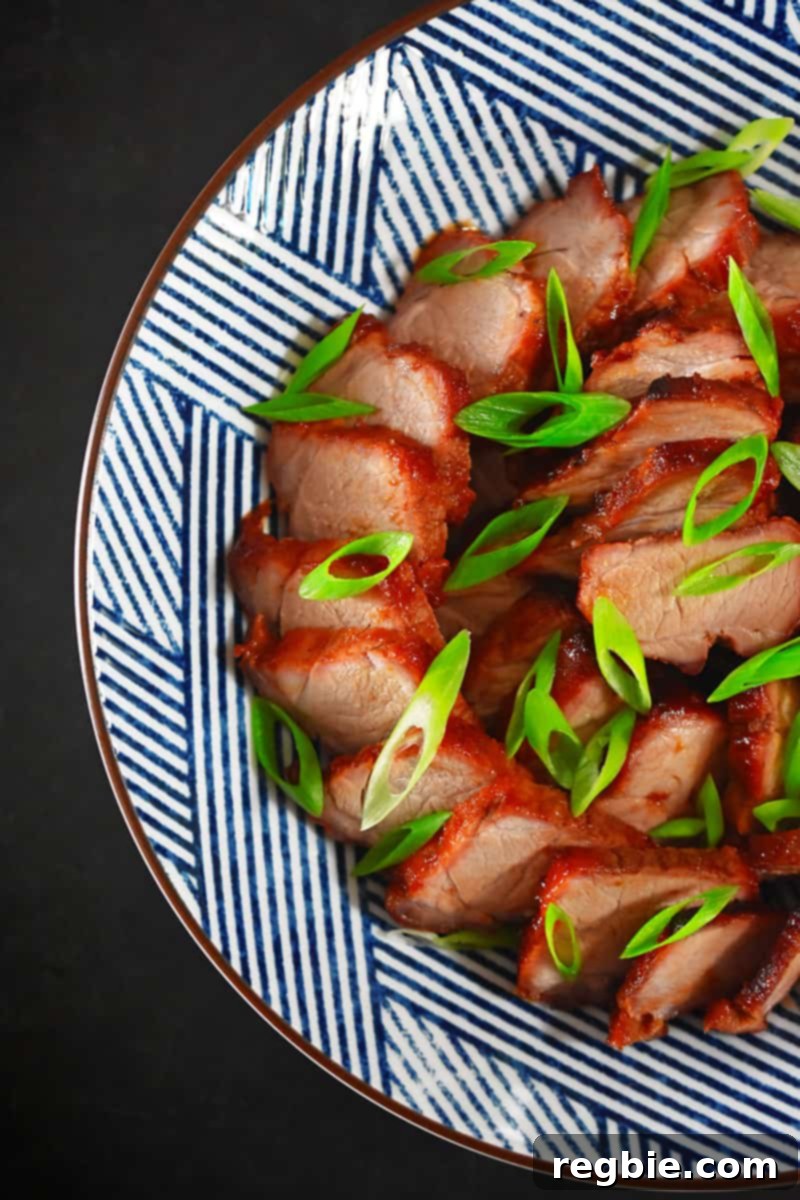
Authentic Paleo & Whole30 Char Siu: Healthy Chinese BBQ Pork That Tastes Incredible
Embark on a culinary journey to recreate a beloved Cantonese classic with this incredible **Whole30-friendly, gluten-free Char Siu recipe**. Prepare to indulge in tender, perfectly roasted pork, lacquered with a rich, sticky-sweet marinade that captures the very essence of traditional Chinese BBQ pork. This recipe offers a healthier, compliant twist on the classic, ensuring you don’t have to sacrifice flavor for your dietary choices. Get ready to impress your family and friends with a dish that pays a delicious homage to the vibrant flavors found in bustling Chinatown BBQ joints.
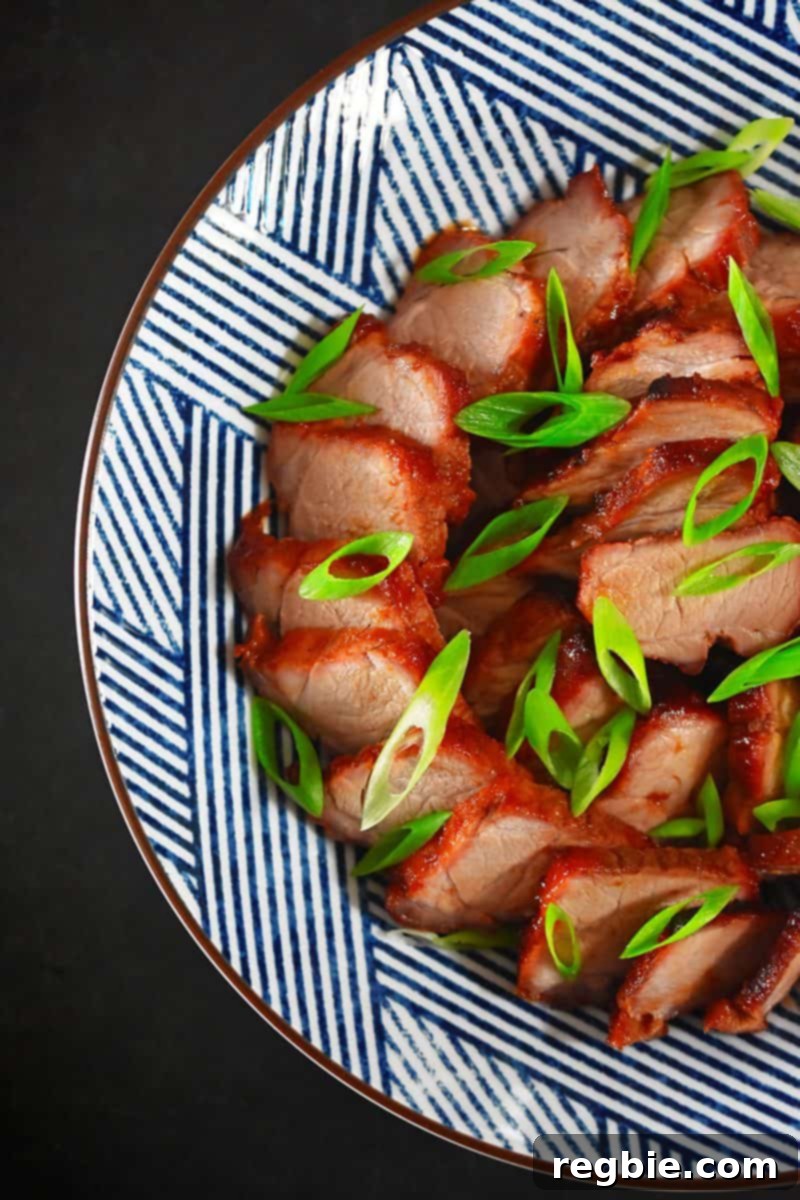
Table of Contents
- The Quest for Paleo Cantonese Favorites
- Reimagining a Cherished Family Recipe
- The Ultimate Paleo Char Siu Breakthrough
- Essential Ingredients for Paleo Char Siu
- Step-by-Step Guide: Crafting Your Paleo Char Siu
- Tips for Perfect Paleo Char Siu Every Time
- Serving Suggestions
- Storing and Repurposing Leftovers
- More Paleo Chinese Culinary Delights
- Printer-Friendly Paleo Char Siu Recipe Card
The Quest for Paleo Cantonese Favorites
When I first embraced the Paleo lifestyle back in 2010, the culinary cravings that truly challenged me weren’t the usual suspects like pizza, pasta, or cake. Even in that pre-Instagram, pre-widespread-food-blogging era, I instinctively knew that a quick internet search would yield numerous Paleo-friendly alternatives for those popular dishes. My real yearning, the flavors I struggled most to replace, were the authentic Cantonese dishes from my childhood.
Let me be clear: I’m not talking about the watered-down, Westernized interpretations of Chinese cuisine often found in many restaurants. My deepest desire was to recreate the exquisite plates of steaming-hot, perfectly seasoned meats and vibrant vegetables that my incredible mother conjured night after night in our family kitchen in Menlo Park, California. Those were the true tastes of home, comfort, and tradition.
Navigating the world of Paleo and Whole30 meant meticulously scrutinizing every ingredient. While it was relatively easy to find substitutes for Western comfort foods, replicating the intricate balance of sweet, savory, and umami in Chinese cooking, without relying on soy sauce, refined sugars, or artificial additives, felt like an insurmountable challenge at times. This quest became a personal mission: to adapt cherished family recipes into a healthier format, proving that wholesome eating doesn’t mean sacrificing the rich culinary heritage that shapes us.
Reimagining a Cherished Family Recipe

My mother, like many brilliant home cooks, isn’t one to readily hand over her “secret” recipes. Her cooking philosophy is more intuitive: a dash of this, a pinch of that, all guided by years of experience and an innate understanding of flavor. When asked for precise measurements, she’d often shrug and say, “I don’t know exactly what I put in that dish. Just a little bit of this, and a little bit of that.” While charming, it certainly made the task of reverse-engineering her culinary masterpieces a delightful challenge!
Over the years, through countless experiments and a fair share of kitchen mishaps, I’ve managed to “crack the code” on several of my childhood favorites, successfully transforming them into delicious Paleo-friendly versions. However, some family recipes lingered in my mind as seemingly impossible to adapt. These were the dishes I’d regrettably written off, believing they couldn’t possibly be made compliant with Paleo, let alone the stricter Whole30 guidelines.
The primary hurdle often lay in the traditional ingredients. Many authentic Chinese sauces, like store-bought hoisin, are unfortunately packed with gluten, excessive sugar, and other non-Paleo components. Beyond the ingredient list, some recipes simply appeared overly complicated, demanding a level of dedication that, I’ll admit, my own culinary laziness sometimes prevented me from fully committing to. Yet, one particular dish continued to call to me, a persistent whisper from my past, urging me to try just one more time.
The Ultimate Paleo Char Siu Breakthrough
That one dish, the persistent craving that fueled countless attempts, was none other than **Char Siu**, the iconic Chinese barbecue pork, renowned for its glossy, sticky-sweet glaze and vibrant red hue. You know the sight – those glistening hunks of roasted pork proudly displayed in the windows of bustling Chinatown BBQ joints, beckoning passersby with their irresistible aroma. I missed Char Siu terribly, but more than any restaurant version, I missed my mother’s homemade rendition.
As a child, I was a creature of habit whenever my mom prepared Char Siu. I would hover at her elbow, practically panting like a hungry puppy, desperate to snatch a scrap of the freshly sliced pork right off the cutting board. My anticipation was palpable, and I refused to budge until she’d slipped me a juicy piece. Those happy food memories, steeped in the warmth of our family kitchen and the unforgettable taste of her Char Siu, served as a powerful reminder: persistence truly pays off.
Overcoming Traditional Char Siu Challenges
My mission was clear: develop a Paleo and Whole30-friendly version of this porky delight. However, what seemed like a straightforward task turned into a considerably longer journey than anticipated. Traditional Char Siu marinade is a complex symphony of flavors, but many of its core ingredients are absolute no-gos for a Paleo or gluten-free diet:
- Soy Sauce: A primary ingredient, rich in gluten and soy, both non-compliant.
- Hoisin Sauce: Often contains gluten, copious amounts of sugar, and other problematic additives.
- Honey & Sugar: While honey can be Paleo in moderation, high amounts of refined sugar are present in traditional recipes, and both need careful management or omission for Whole30.
- Chinese Rice Wine: Another non-compliant alcoholic ingredient.
- Red Food Coloring or Red Bean Curd: Used for the signature crimson color, these can be artificial or contain non-Paleo ingredients.
I’ll spare you the exhaustive details of my many failed experiments – trust me, there were plenty, including one memorable batch that, despite looking promising, unfortunately smelled distinctly like a skunk (a testament to how wrong things can go!). But after weeks of dedicated testing, ingredient substitutions, and flavor adjustments, I finally achieved a breakthrough. The resulting Char Siu recipe garnered unanimous approval from my toughest critics: my finicky kids, my visiting in-laws, and perhaps most importantly, the pickiest eater in the entire family – me!
This triumphant Paleo version of Char Siu isn’t just delicious; it’s also incredibly versatile. By opting for a fruit-sweetened jam and completely omitting the optional honey, this recipe seamlessly transforms into a compliant **Whole30 Chinese BBQ Pork**, proving that healthy eating can be incredibly flavorful and satisfying. It’s a testament to the fact that with a little creativity and a lot of persistence, you truly can enjoy the foods you love, made better.
Essential Ingredients for Paleo Char Siu
Crafting this incredible Paleo and Whole30-friendly Char Siu requires a thoughtful selection of ingredients that deliver authentic flavor while adhering to your dietary guidelines. Each component plays a crucial role in replicating the sweet, savory, and umami profile of traditional Chinese BBQ pork.
- Plum, Peach, or Apricot Jam (100% Fruit Sweetened): This is the star ingredient for sweetness and that signature glossy glaze. It’s absolutely vital to choose a high-quality jam sweetened *only* with fruit juice, with no added sugars or artificial sweeteners. Brands like St. Dalfour are excellent choices, offering a pure fruit flavor that works wonderfully as a substitute for traditional sugar and honey in Char Siu. These jams also contribute to the beautiful color of the final dish.
- Coconut Aminos: A fantastic soy-free and gluten-free alternative to soy sauce. Coconut aminos provide the necessary savory depth and umami without the inflammatory ingredients. I find that combining it with a touch of fish sauce creates an even more authentic flavor profile that truly mimics traditional soy sauce.
- Tomato Paste: This ingredient is a triple threat! It adds a beautiful natural reddish hue to the marinade, deepening the color without artificial dyes. More importantly, it contributes a rich, concentrated umami flavor and a subtle tang that balances the sweetness of the jam.
- Almond Butter (Creamy): Used for emulsification and to add a subtle richness and body to the marinade, helping it cling to the pork. Ensure it’s unsweetened and contains only almonds (and salt, if desired). If you have a nut allergy, sunflower seed butter or tahini are excellent, compliant substitutes that offer a similar texture and depth.
- Red Boat Fish Sauce: Don’t let the name deter you – a high-quality fish sauce is a secret weapon in Paleo Asian cooking. It’s intensely savory and adds incredible umami complexity, perfectly complementing the coconut aminos to create a robust “soy sauce” flavor without any actual soy. Red Boat is known for its pure ingredients (anchovies and salt).
- Chinese Five-Spice Powder: This aromatic blend of star anise, cloves, Chinese cinnamon, Szechuan peppercorns, and fennel seeds is quintessential to Char Siu. It provides the warming, complex spice notes that define the dish’s flavor. Don’t skip it!
- Ground Ginger (Ginger Powder): While fresh ginger is often used in Chinese cooking, ground ginger works perfectly in this marinade, offering a concentrated, spicy warmth without the need for grating. It’s a convenient and effective way to infuse that classic ginger kick.
- Boneless Pork Shoulder Roast (or Pork Butt): This is the absolute best cut of pork for Char Siu, hands down. Its higher fat content ensures the pork remains incredibly juicy and tender during the roasting process, resulting in a melt-in-your-mouth texture. Many people are tempted to use leaner cuts like pork tenderloin, but I strongly advise against it – they will inevitably dry out and lack the rich flavor that pork shoulder delivers. Embrace the fat for superior results!
- Diamond Crystal Kosher Salt: Essential for seasoning the pork and enhancing all the flavors in the marinade. If you’re using a finer grain salt (like table salt), remember to use only half the amount to avoid over-salting.
- Honey (Optional): For those strictly adhering to Whole30, omit the honey entirely. For a Paleo diet where some natural sweeteners are acceptable, a tablespoon of honey can add an extra layer of sweetness and shine to the glaze. It’s a personal preference based on your specific dietary goals.
- Green Onions (Scallions, Optional Garnish): Freshly sliced green onions add a pop of vibrant color, a crisp texture, and a mild oniony bite that beautifully complements the rich pork. They are an optional but highly recommended garnish for both presentation and flavor.

Step-by-Step Guide: Crafting Your Paleo Char Siu
Follow these detailed steps to create perfectly tender and gloriously glazed Paleo and Whole30 Char Siu in your own kitchen. Precision and patience are key to achieving that authentic, mouth-watering result.
1. Prepare the Marinade
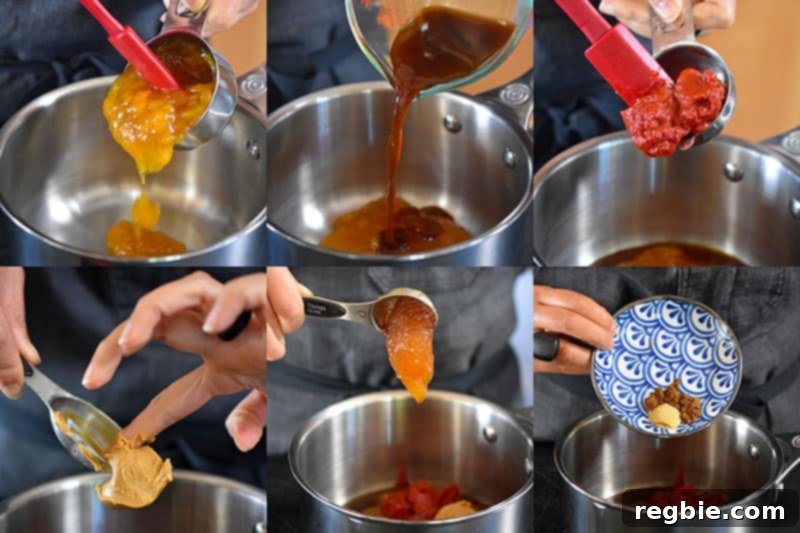
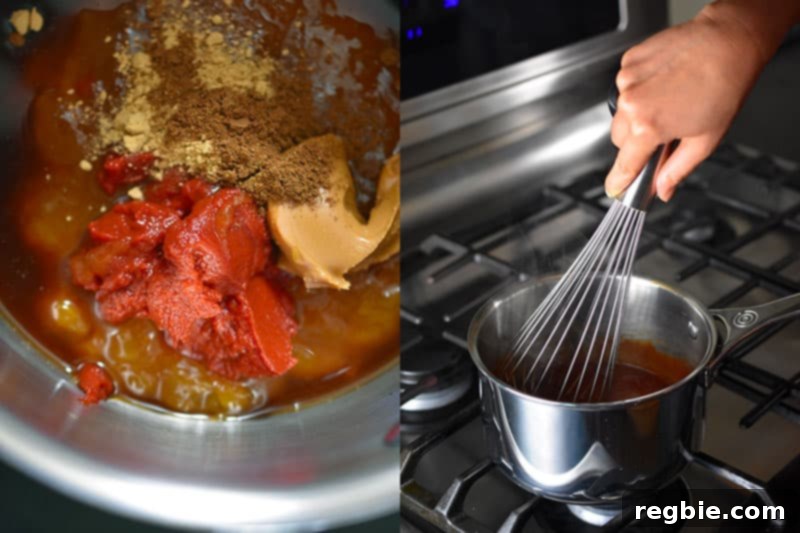
Begin by combining all the marinade ingredients: the fruit jam of your choice, coconut aminos, tomato paste, creamy almond butter, honey (if using), Red Boat fish sauce, Chinese five-spice powder, and ground ginger, in a small saucepan. Whisk continuously as you gently heat the mixture over medium heat, bringing it to a steady simmer. This ensures all ingredients are well combined and the flavors meld beautifully.
2. Simmer and Cool the Marinade
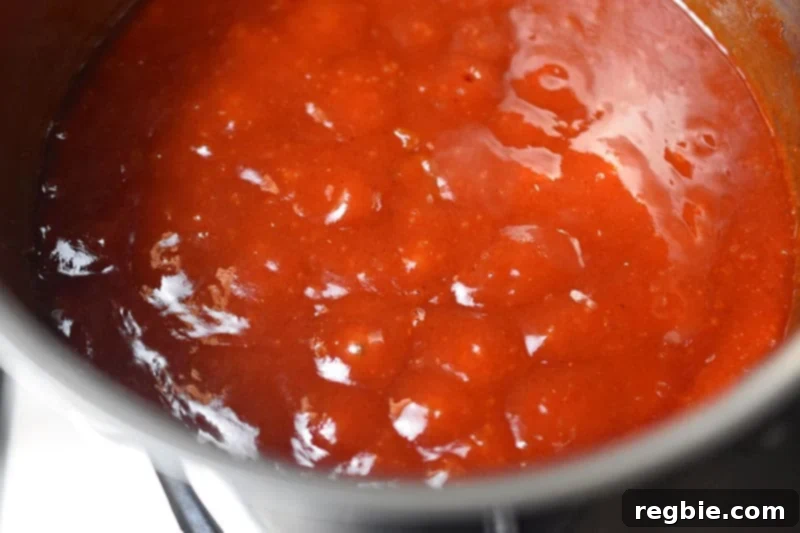
Continue whisking the marinade as it heats and begins to simmer gently. Once it’s perfectly smooth, bubbling lightly, and slightly thickened, remove it from the heat. Transfer the sauce to a measuring cup or heat-proof bowl and allow it to cool completely to room temperature. This cooling step is crucial before adding the pork. You can prepare the marinade up to 4 days in advance and store it in an airtight container in the refrigerator, making meal prep even easier.
3. Prepare the Pork
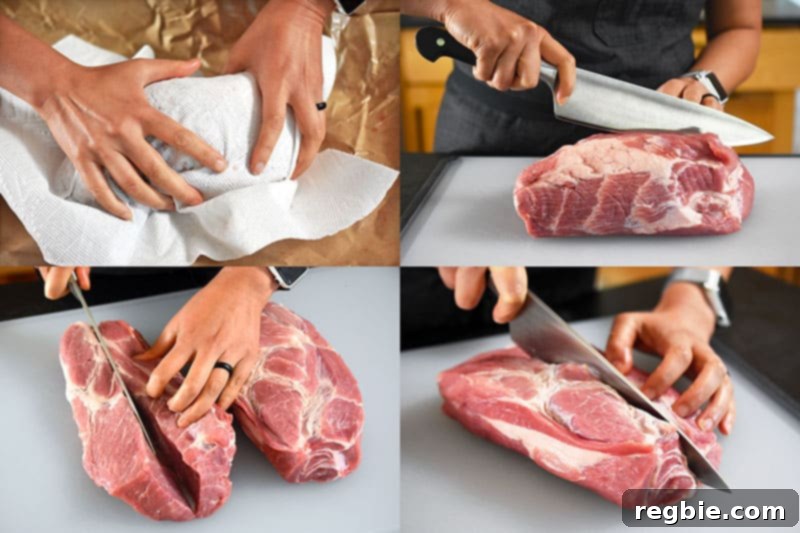
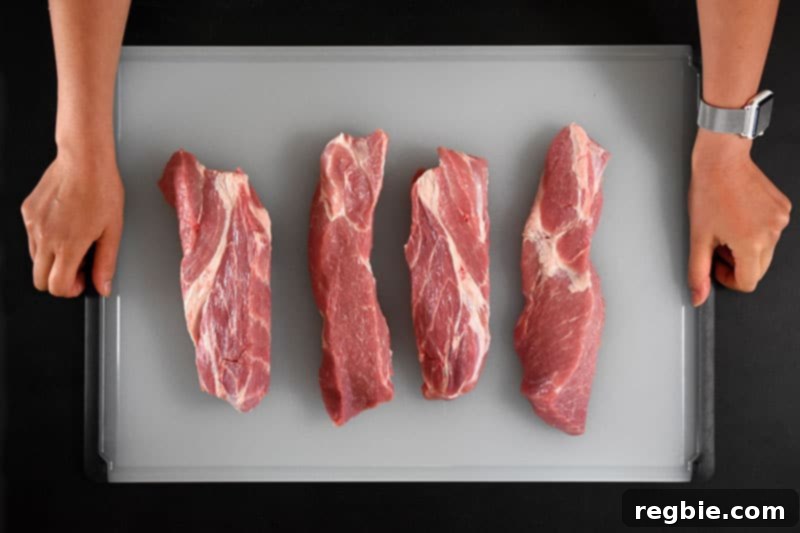
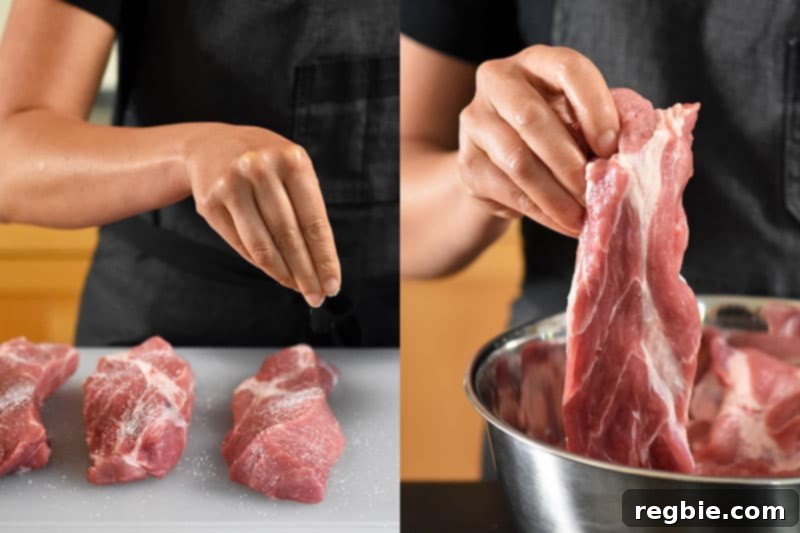
Take your boneless pork shoulder roast and pat it thoroughly dry with paper towels. This step is important for achieving a good sear and allowing the marinade to adhere effectively. Next, slice the pork into long, roughly 2-inch wide strips of uniform thickness. Aim for consistency to ensure even cooking. Don’t shy away from pieces with a good amount of fat – this is essential for succulent, flavorful Char Siu; lean cuts will result in dry pork.
4. Marinate the Pork
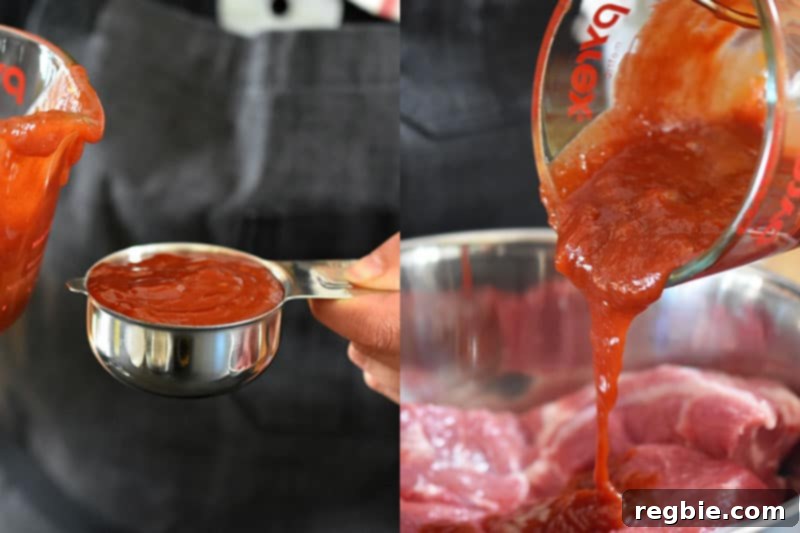
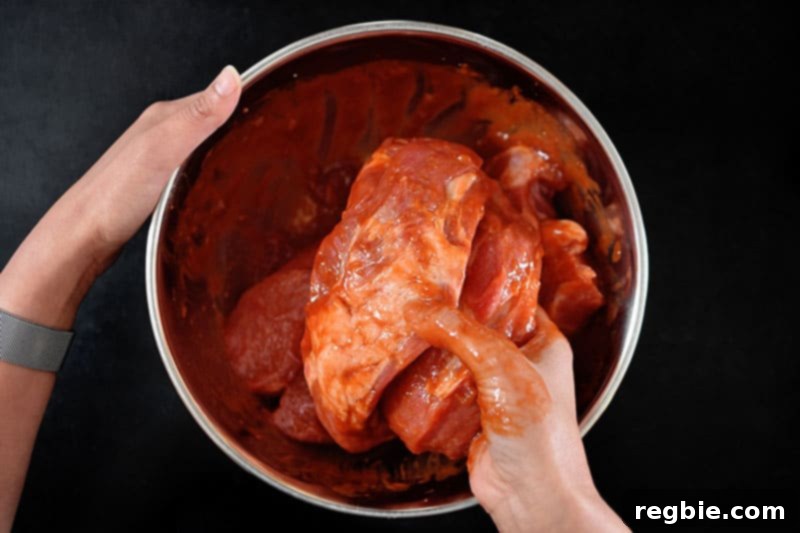
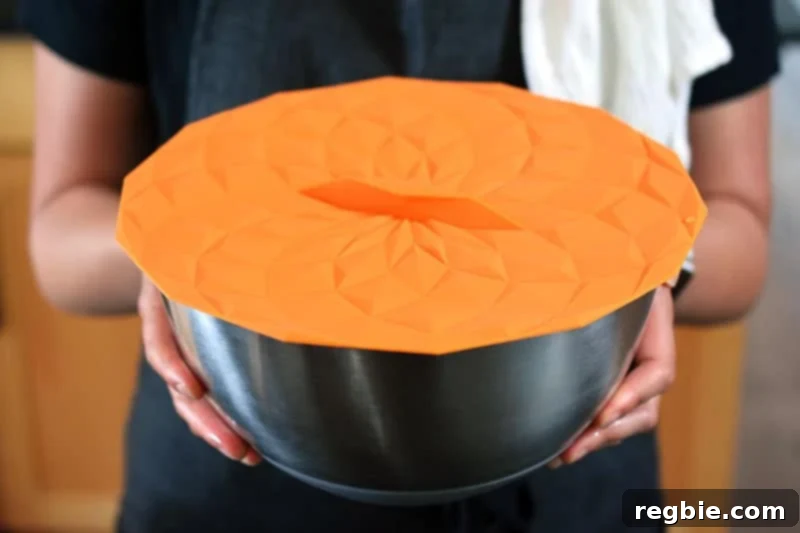
Generously sprinkle the kosher salt all over the prepared pork pieces, ensuring an even coating. Place the salted pork in a large bowl or a sturdy zippered storage bag. Now, pour almost all of the cooled marinade over the pork, reserving approximately ⅓ cup for later basting. Cover the reserved marinade and store it in the refrigerator. Using your hands, thoroughly coat each strip of pork with the marinade, ensuring every surface is glistening. Cover the bowl with a silicone lid or plastic wrap and refrigerate for a minimum of 2 hours, or ideally, up to 24 hours for maximum flavor absorption.
5. First Roast
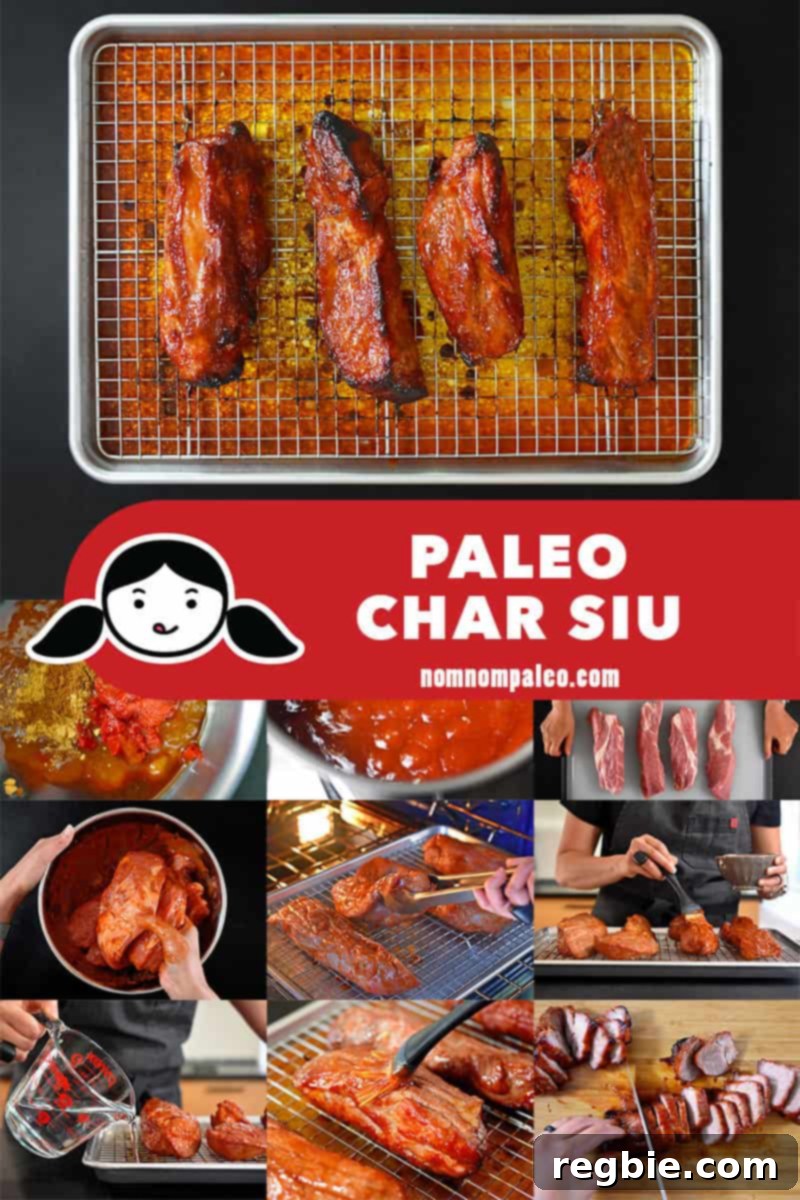
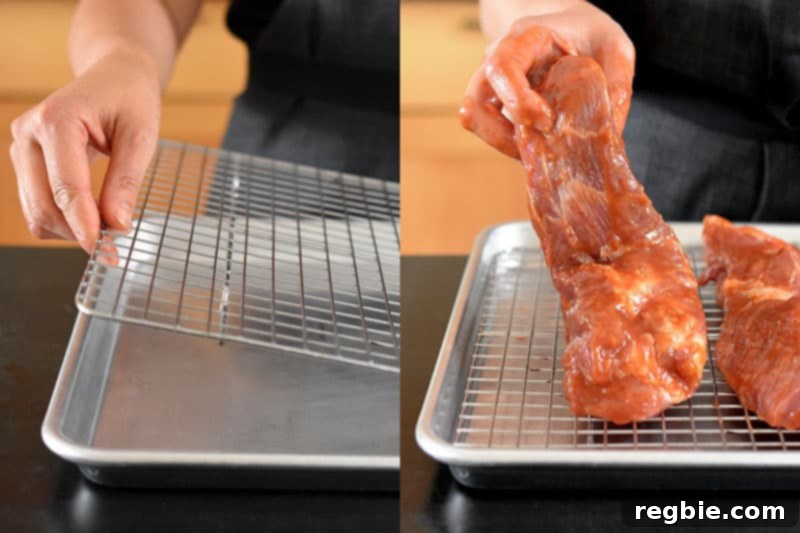
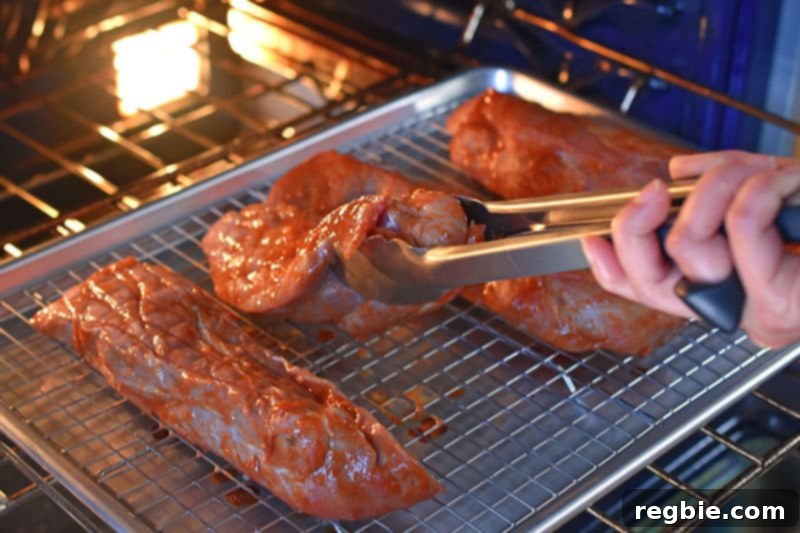
When you’re ready to cook, preheat your oven to 350°F (175°C) and position an oven rack in the middle. Place the marinated pork pieces directly onto an oven-safe wire rack set inside a rimmed baking sheet. This setup allows for even air circulation around the pork, promoting crispy edges and preventing it from sitting in its own juices. Roast for an initial 30 minutes, making sure to flip the pork pieces halfway through (at the 15-minute mark) to ensure even cooking and color development.
6. Increase Heat and Baste
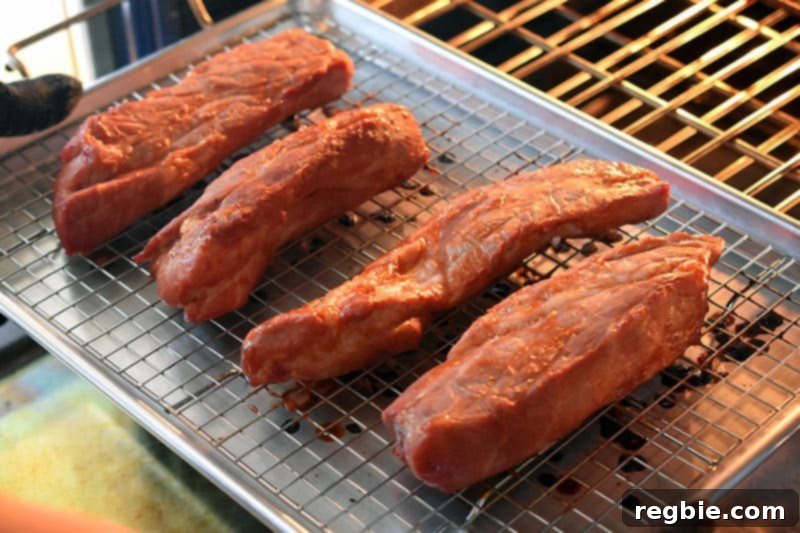
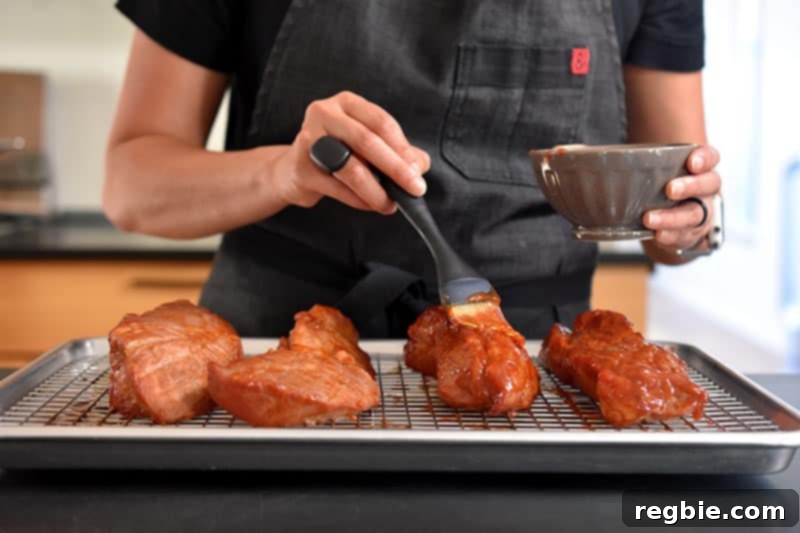
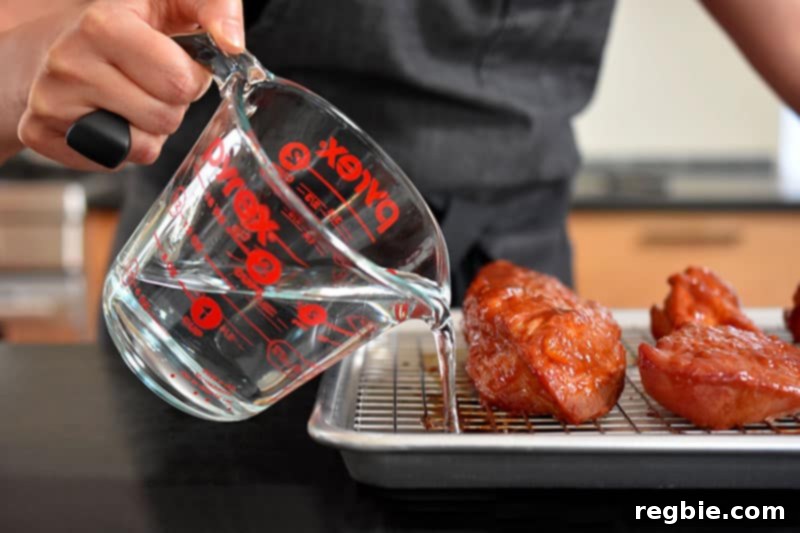
After the first 30 minutes, carefully remove the pork from the oven. At this point, increase your oven temperature to 400°F (200°C). Take half of the reserved marinade and generously brush it over the top surfaces of the pork pieces. To prevent drippings from burning and creating smoke, pour a thin layer of water into the bottom of the rimmed baking sheet, directly under the wire rack. This creates a moist environment and ensures easy cleanup.
7. Final Roast and Glaze
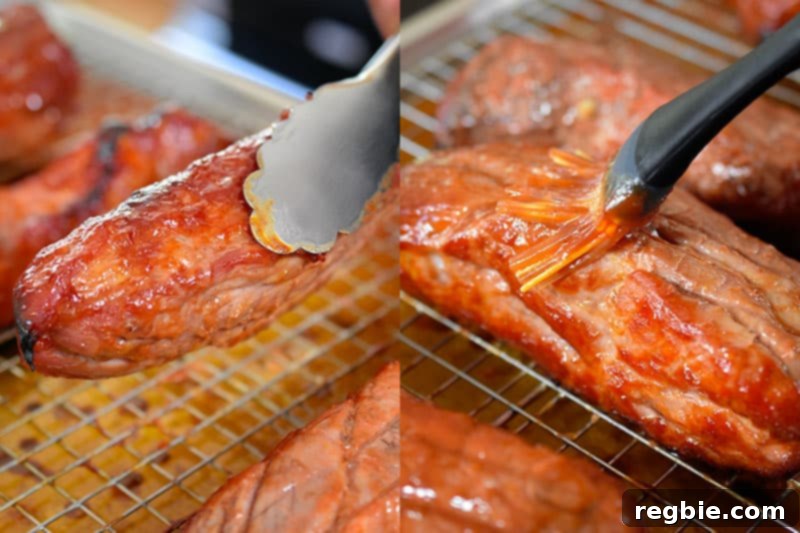
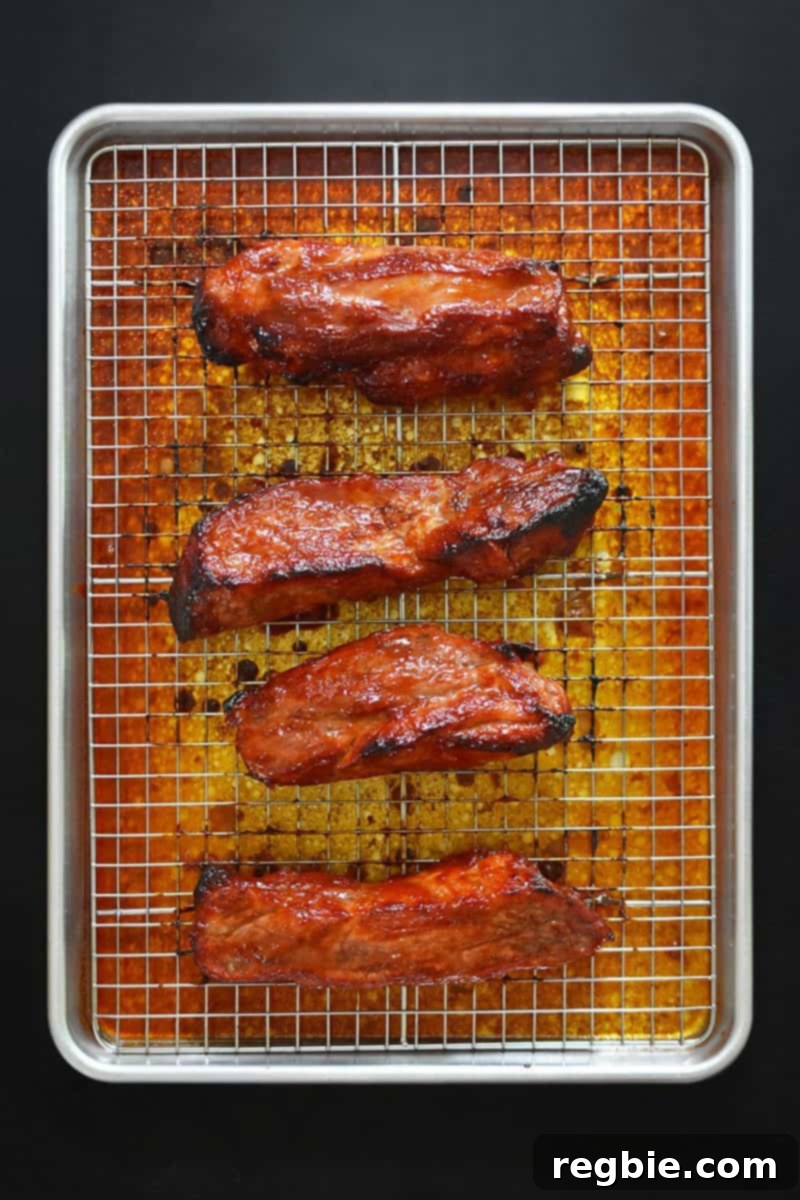
Return the pork to the preheated 400°F (200°C) oven and roast for another 25 minutes. After this time, remove it once more, flip the pieces, and brush on the remaining reserved marinade, ensuring a second generous coating. Continue roasting for an additional 20 to 30 minutes, or until the pork achieves a beautiful dark, lacquered finish with slightly charred, caramelized edges. This final blast of heat creates that irresistible sticky glaze and deep flavor.
8. Rest, Slice, and Serve
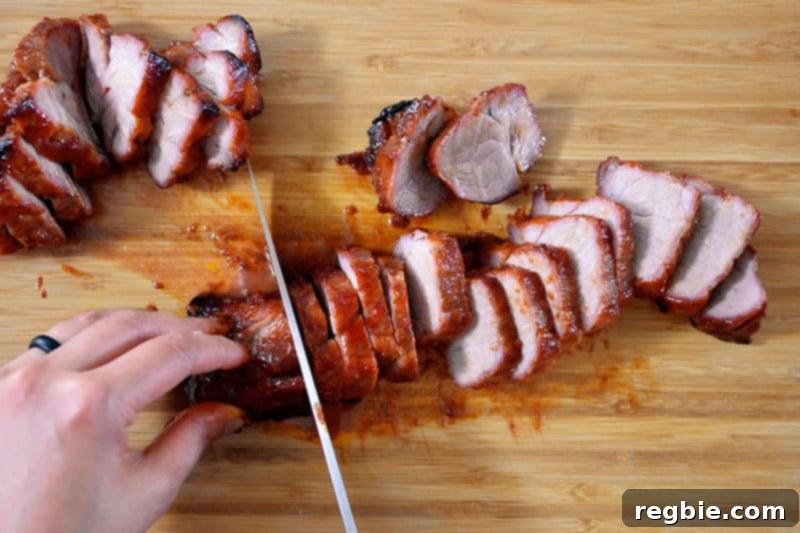
Once roasted to perfection, transfer the Char Siu from the oven to a cutting board and allow it to rest for at least 10 minutes. This resting period is crucial as it allows the juices to redistribute throughout the meat, ensuring maximum tenderness and flavor. After resting, slice the pork against the grain into ½-inch thick, “chompable” pieces. Arrange these succulent slices on a serving dish, garnish generously with freshly sliced scallions (green onions), and serve immediately. Enjoy this homemade, healthy take on a beloved classic!
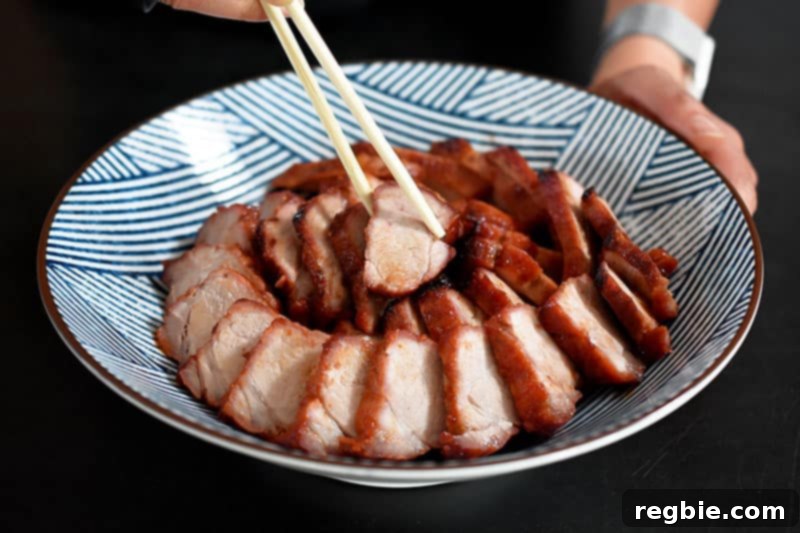
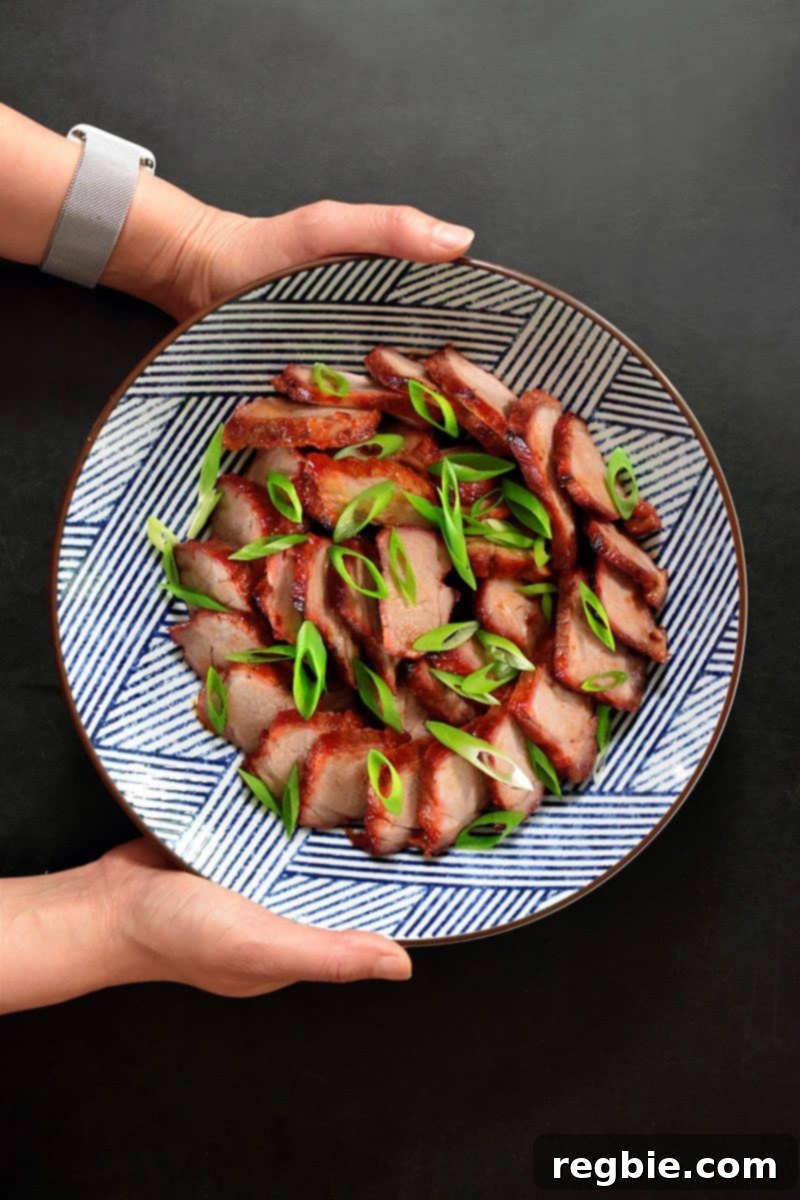
Tips for Perfect Paleo Char Siu Every Time
Achieving Char Siu perfection goes beyond just following the steps. Here are some extra tips to ensure your Cantonese BBQ pork is consistently delicious and lives up to its authentic inspiration:
- Don’t Skimp on Marination Time: While 2 hours will work in a pinch, allowing the pork to marinate for a full 24 hours truly deepens the flavors. The longer the pork bathes in that aromatic sauce, the more tender and infused with taste it will become. Plan ahead for the best results!
- Pork Cut Matters: As emphasized in the ingredients, boneless pork shoulder (or pork butt) is non-negotiable for tender, juicy Char Siu. Its fat content renders down during cooking, basting the meat from within. Leaner cuts will result in a drier texture that simply won’t compare.
- The Water in the Pan is Key: Don’t skip adding water to the bottom of your baking sheet during the second stage of roasting. This simple trick prevents the delicious drippings from burning and smoking, which can impart an unpleasant bitter taste to your pork and create a messy cleanup. It also adds a touch of moisture to the oven environment.
- Achieve the Perfect Glaze: The final roasting stages at a higher temperature, combined with the reserved marinade for basting, are what create that signature sticky, lacquered crust. Keep a close eye on the pork during the last 20-30 minutes to ensure it caramelizes beautifully without burning. A slight char on the edges is desirable and adds depth of flavor.
- Rest Your Meat: Resist the urge to slice into your Char Siu immediately after removing it from the oven. A 10-minute rest allows the meat fibers to relax and reabsorb all those precious juices, ensuring every bite is incredibly tender and moist.
- Adjust Sweetness for Whole30: If you’re strictly on Whole30, ensure your fruit jam contains absolutely no added sugar, only fruit juice. And of course, omit the optional honey. The natural sweetness from the fruit jam will be sufficient and delicious!
Serving Suggestions
This Paleo Char Siu is incredibly versatile and can be enjoyed in many ways. Here are some delicious ideas to complete your meal:
- Classic Meal: Serve sliced Char Siu over a bed of cauliflower rice or alongside steamed leafy greens like bok choy or gai lan.
- Lettuce Wraps: Create fun and fresh lettuce wraps with Char Siu, shredded carrots, cucumber, and a sprinkle of fresh cilantro.
- Noodle Bowls (Paleo-Friendly): Toss with spiralized zucchini noodles or sweet potato noodles and a drizzle of the pan drippings for a delicious, quick meal.
- Salad Topper: Cube leftover Char Siu and add it to your favorite salad for a protein-packed, flavorful addition.
- Appetizer: Serve warm, sliced Char Siu on its own as a show-stopping appetizer at your next gathering.
Storing and Repurposing Leftovers
One of the best things about making a generous batch of Paleo Char Siu is the joy of leftovers! Properly stored, this delicious pork can be enjoyed for days to come, and it’s fantastic in other dishes.
- Refrigeration: Store any leftover Char Siu in a sealed, airtight container in the refrigerator for up to 4 days.
- Freezing: For longer storage, you can freeze sliced Char Siu for up to 3 months. Wrap individual portions tightly in plastic wrap or foil, then place them in a freezer-safe bag or container. Thaw in the refrigerator overnight before reheating.
- Reheating: Gently reheat sliced Char Siu in a skillet with a splash of water or broth, or in the oven at a low temperature (around 275°F/135°C) until warmed through to prevent it from drying out.
Leftovers are perfect for transforming into new meals! Try dicing the Char Siu and adding it to my Asian Cauliflower Fried Rice or incorporate it into a refreshing Paleo Hiyashi Chuka (Cold Ramen Salad) for a quick and flavorful lunch.
More Paleo Chinese Culinary Delights
If you’ve loved this Paleo Char Siu, you’re in for a treat! Exploring more compliant versions of classic Chinese dishes can be incredibly rewarding. Here are some of my other favorite Paleo Chinese recipes that bring authentic flavors to your healthy lifestyle:
- Char Siu Chicken: A fantastic poultry alternative to pork, with the same irresistible marinade.
- Walnut Shrimp: Crispy shrimp coated in a creamy, sweet sauce, reminiscent of the takeout favorite.
- Paleo Potstickers: Savory dumplings with a compliant wrapper, perfect for dipping.
- All-Purpose Stir-Fry Sauce: Your go-to sauce for quick and easy Paleo stir-fries with authentic taste.
- Hot and Sour Soup: A comforting and zesty soup, reimagined for Paleo.
- Beef Noodle Soup: Rich, savory beef broth with tender meat and compliant noodles.
- Wonton Soup: A warming bowl of delicate “wontons” in a flavorful broth.
- Chicken Chow Mein: A classic noodle dish made healthy, without gluten or grains.
- Moo Shu Chicken: Flavorful chicken and vegetable stir-fry, often served with compliant “pancakes.”
- Scallion Pancakes: Crispy, savory, and gluten-free pancakes perfect as a side or snack.
- Shrimp Toast: A delightful appetizer with a crispy base and savory shrimp topping.
- Chinese Garlic Green Beans: A simple yet incredibly flavorful vegetable side dish.
Looking for even more incredible recipe ideas to support your healthy lifestyle? Head on over to my comprehensive Recipe Index. You’ll also discover exclusive, mouth-watering recipes and culinary insights in my award-winning cookbooks: Nom Nom Paleo: Food for Humans (Andrews McMeel Publishing 2013), Ready or Not! (Andrews McMeel Publishing 2017), and Nom Nom Paleo: Let’s Go! (Andrews McMeel Publishing 2022). Happy cooking!
Printer-Friendly Paleo Char Siu (Chinese BBQ Pork) Recipe Card
Paleo Char Siu (Chinese BBQ Pork)
This authentic Whole30-friendly, Paleo Char Siu recipe delivers tender Cantonese roasted pork lacquered with a sticky-sweet marinade – a healthier, incredibly delicious alternative to takeout!
Prep Time: 10 mins
Cook Time: 1 hr 20 mins
Marinating Time: 2-24 hrs
Total Time: 3 hrs 30 mins (includes minimum marinating time)
Servings: 8 servings
Author: Michelle Tam
Ingredients
- ½ cup plum jam sweetened with fruit juice (peach and apricot jam also work, ensure no added sugars for Whole30)
- ¼ cup coconut aminos
- 3 tablespoons tomato paste
- 1 tablespoon creamy almond butter (or sunflower seed butter/tahini for nut-free)
- 1 tablespoon honey (optional; omit for Whole30)
- 1 teaspoon Red Boat fish sauce
- ½ teaspoon Chinese five-spice powder
- ½ teaspoon ground ginger
- 3 pounds boneless pork shoulder roast (pork butt), sliced into 2-inch strips
- 2 teaspoons Diamond Crystal kosher salt (use 1 teaspoon if using a finer grain salt)
- 2 scallions, trimmed and thinly sliced (optional garnish)
Instructions
- Prepare the Marinade: In a small saucepan, combine the fruit jam, coconut aminos, tomato paste, almond butter, honey (if using), fish sauce, Chinese five-spice powder, and ground ginger. Whisk the mixture as you heat it over medium heat until it reaches a gentle simmer.
- Cool the Marinade: Once the sauce is smooth and lightly bubbling, transfer it to a measuring cup or heat-proof bowl and allow it to cool completely to room temperature. This marinade can be prepared up to 4 days in advance and stored in the fridge.
- Prepare the Pork: Pat the boneless pork shoulder roast dry with paper towels. Slice the meat into uniform 2-inch wide strips. Ensure there’s some fat on the pieces for maximum juiciness; avoid using lean cuts.
- Marinate the Pork: Sprinkle the kosher salt evenly over the pork pieces. Place the pork in a large bowl or zippered storage bag. Pour almost all of the cooled marinade over the pork, reserving about ⅓ cup for basting later. Cover the reserved marinade and refrigerate. Use your hands to thoroughly coat the pork strips with the marinade. Cover the bowl (or seal the bag) and refrigerate for 2 to 24 hours.
- First Roast: Preheat your oven to 350°F (175°C) with the oven rack in the middle position. Place the marinated pork pieces on an oven-safe wire rack set inside a rimmed baking sheet. Roast for 30 minutes, flipping the pork pieces at the 15-minute mark to ensure even cooking.
- Increase Heat and Baste: Remove the pork from the oven and increase the oven temperature to 400°F (200°C). Brush half of the reserved marinade generously over the top of the pork pieces. Pour a thin layer of water into the bottom of the baking sheet (under the wire rack) to prevent drippings from burning.
- Final Roast and Glaze: Return the pork to the 400°F (200°C) oven and roast for an additional 25 minutes. Then, remove it again, flip the pork pieces, and brush on the remaining reserved marinade. Continue roasting for another 20 to 30 minutes, or until the pork develops a beautiful dark, lacquered finish with slightly charred edges.
- Rest, Slice, and Serve: Once roasted, remove the pork from the oven and let it rest on a cutting board for 10 minutes. Then, slice the pork against the grain into ½-inch thick pieces. Arrange on a serving dish, garnish with sliced scallions, and serve immediately.
Nutrition Information (Approximate per serving)
(Note: Nutrition information is an approximation and can vary based on specific ingredients and preparation.)
- Calories: 531 kcal
- Carbohydrates: 11g
- Protein: 41g
- Fat: 33g
- Fiber: 1g
- Sugar: 7g
We hope you love this recipe! If you tried it, please consider leaving a comment below to share your experience.