
Are you ready to master the art of cooking collard greens? For many home cooks, collard greens present a challenge: achieving that perfect balance of tenderness without losing their vibrant color or succumbing to an unappetizing bitterness. Traditionally, collards are simmered for an extended period, a method that often results in a dull, khaki hue and can sometimes leave them overly soft. Attempting a quick sauté usually leads to scorched leaves before they ever become tender enough. But what if there was a better way?
Inspired by the meticulous testing and insights from culinary authorities like Cooks Illustrated, we’ve found a revolutionary approach that guarantees tender, bright green, and incredibly flavorful collard greens every time. The secret lies in a simple, shallow blanching step before sautéing. This technique not only accelerates the cooking process but also helps to remove the natural bitterness, ensuring your collards are both delicious and visually appealing.
How to Cook Collard Greens (Tender, Flavorful & Vibrant!)
This recipe serves 4 as a hearty side dish.
Why This Method Works Wonders for Your Collard Greens
Before diving into the recipe, let’s understand why this blanching-then-sautéing method is superior. Collard greens, like many hearty greens (kale, mustard greens, turnip greens), contain compounds that contribute to their firm texture and sometimes bitter flavor. Prolonged cooking breaks these down but often at the expense of color and texture.
Shallow blanching in salted boiling water achieves several critical things: it quickly tenderizes the greens, neutralizes much of the bitterness, and sets their bright green color. The subsequent ice bath immediately halts the cooking process, preserving that vibrant hue. Finally, a quick sauté allows you to infuse them with rich flavors from ingredients like ham, bacon, or garlic, delivering a perfectly cooked dish in a fraction of the traditional time, without sacrificing taste or appearance.
Selecting and Preparing Your Collard Greens
The foundation of any great dish is quality ingredients. When selecting collard greens at the market, look for bunches with firm, dark green leaves that are free from yellowing, wilting, or blemishes. Younger leaves tend to be slightly more tender and less bitter, but this method works beautifully with mature collards as well.
Proper preparation is key. Collard greens can sometimes hold a lot of dirt and grit, so thorough washing is essential. Start by separating the leaves from the bunch. You can then fill a clean sink or a large bowl with cold water and submerge the leaves, swishing them around to dislodge any soil. Drain the water and repeat this process one or two more times until the water remains clear. For this recipe, you’ll need to stem the collards, which means removing the tough, fibrous central rib. You can do this by folding each leaf in half lengthwise and tearing or cutting the leafy portion away from the stem. Once stemmed, coarsely chop the greens into manageable pieces, roughly 1-2 inches in width, so they cook evenly and are easy to eat.
Ingredients for Perfectly Cooked Collard Greens:
- 1½ teaspoons Diamond Crystal brand kosher salt (or equivalent fine sea salt)
- 2 pounds assertive greens, such as collards, kale, mustard, or turnip greens; stemmed and coarsely chopped
- 1 tablespoon high-quality olive oil
- 1 cup diced ham or bacon (optional, but highly recommended for smoky depth)
- 3 cloves of garlic, freshly minced
- ¼ cup rich chicken broth (or vegetable broth for a vegetarian option)
- Freshly cracked black pepper, to taste
- Freshly squeezed lemon juice or a splash of good quality balsamic vinegar, for finishing
Essential Equipment for Success:
- Large pot (6-8 quart): For blanching your greens efficiently.
- Cutting board: A sturdy surface for prepping your greens and other ingredients.
- Chef’s knife: For stemming and coarsely chopping the greens, and mincing garlic.
- Colander: Indispensable for draining the blanched greens and rinsing.
- Potato ricer (or clean kitchen towel): This clever tool is fantastic for pressing excess water out of the blanched greens, preventing a soggy sauté.
- Large skillet (12-inch or larger): For sautéing the greens and melding all the wonderful flavors.
- Silicone spatula or wooden spoon: For stirring and tossing your greens.
- All of my top-recommended kitchen tools can be found conveniently listed here.
Step-by-Step Method: How to Cook Collard Greens (Blanch & Sauté)
Phase 1: The Blanch and Chill
- Prepare the Blanching Water: Fill a large, deep pot with 2 quarts of water. Bring the water to a rolling boil over high heat. Once boiling, add the 1½ teaspoons of kosher salt. The salt helps tenderize the greens and season them from the inside out.
- Blanch the Greens: Carefully add the stemmed and coarsely chopped greens to the boiling salted water. Stir immediately to submerge all the greens. They will quickly wilt down. Cover the pot and allow the greens to cook for approximately 7 minutes, or until they are just tender. You’ll notice their color will intensify to a beautiful bright green. Do not overcook them at this stage; we want them tender, not mushy.
- Prepare the Ice Bath: While the greens are blanching, prepare an ice bath. Fill a large bowl with cold water and plenty of ice cubes. This step is crucial for stopping the cooking process and preserving the vibrant color of your greens.
- Chill the Greens: Once tender, immediately drain the collard greens into a colander. Quickly rinse the hot pot with cold water to cool it down, then refill it with cold water and the ice cubes you prepared. Dump the drained greens directly into the ice water. Swish them around for a minute or two until they are completely chilled. This “shocking” process ensures they retain their crisp-tender texture and stunning green hue.
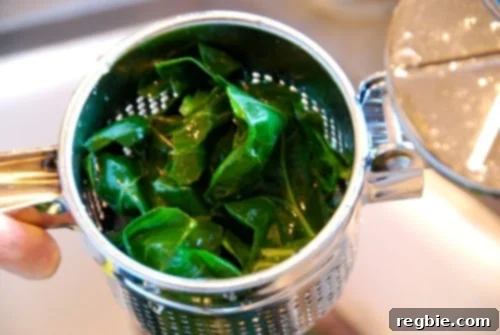
- Remove Excess Water: Transfer the chilled greens back to the colander. Now, you need to squeeze out as much excess water as possible. Take small handfuls of the blanched greens and place them into a potato ricer. Press firmly to extract the water. If you don’t have a ricer, you can place handfuls of greens onto a clean kitchen towel, roll them up, and twist to wring out the moisture. Repeat this process until all the greens are no longer soggy. This step is vital for achieving a proper sauté later.
- Optional Storage: At this point, your blanched and squeezed collard greens can be stored in an airtight container in the refrigerator for up to 4 days. This makes them an excellent meal prep component for quick weeknight dinners.
Phase 2: The Flavorful Sauté
- Prepare for Sautéing: If your blanched greens are still too large for your preference, give them another chop now to achieve your desired size.
- Heat the Skillet: Place a large skillet over medium heat. Allow the pan to heat thoroughly for a minute or two.
- Add Aromatics and Fat (Optional): Swirl the olive oil into the hot pan. If you’re using ham or bacon, add it to the skillet now and cook until crispy, about 3-5 minutes. The rendered fat from the pork will add incredible flavor. If omitting ham or bacon, you can add your minced garlic to the pan and cook for about 30 seconds until fragrant, being careful not to burn it.
- Sauté the Greens: Add your blanched and squeezed collard greens to the skillet with the ham/bacon (if using) and garlic. Toss everything together to combine. Pour in the ¼ cup of chicken broth. The broth will add moisture and help create a flavorful steam, further tenderizing the greens and infusing them with savory notes. Cover the skillet and let the greens cook for 2 minutes.
- Season and Serve: Uncover the skillet. Taste the greens and adjust the seasoning as needed with freshly cracked black pepper. If you desire a brighter, more acidic finish, add a squeeze of fresh lemon juice or a drizzle of balsamic vinegar. Stir well.
Collard greens prepared using this method are a revelation. They are perfectly tender, boast a beautiful bright green color, and are wonderfully flavorful without any overwhelming bitterness. They make a fantastic, healthy side dish for a variety of meals.
Tips for Success and Delicious Variations
- Don’t Skip the Ice Bath: This step is non-negotiable for preserving the vibrant green color and crisp-tender texture.
- Squeeze Thoroughly: The more water you remove after blanching, the better your greens will sauté and absorb the flavors.
- Flavor Boosters: Besides ham or bacon, consider adding a pinch of red pepper flakes for a subtle kick, or a spoonful of apple cider vinegar for extra tang. Smoked paprika can also add a delightful smoky depth.
- Vegetarian/Vegan Option: Skip the ham/bacon and use vegetable broth. For extra richness, you can use a tablespoon of vegan butter or an additional half-tablespoon of olive oil for sautéing. Nutritional yeast can also add a cheesy, umami flavor.
- Garlic Lover’s Dream: Feel free to increase the amount of minced garlic to 4 or 5 cloves if you love a strong garlic presence.
- Sweet and Tangy: Some people enjoy a touch of sweetness with their collards. A teaspoon of maple syrup or a pinch of brown sugar can be added along with the broth for a subtle sweet-and-sour profile.
Serving Suggestions
These tender and flavorful collard greens are incredibly versatile. They are a classic accompaniment to Southern-style meals like fried chicken, pork chops, or barbecue. They also pair wonderfully with roasted meats, grilled fish, or as a vibrant side to a vegetarian feast. Try them alongside cornbread to soak up any delicious pan juices, or even mixed into grain bowls for a nutritious boost.
Storage and Reheating
Cooked collard greens can be stored in an airtight container in the refrigerator for up to 3-4 days. To reheat, gently warm them in a skillet over medium-low heat, adding a splash of water or broth if they seem a little dry, until heated through. Avoid microwaving if possible, as it can sometimes alter the texture and color. These greens are also delicious served at room temperature.
Looking for more delicious recipe ideas? Head on over to my Recipe Index. You’ll also find exclusive recipes on my iPhone and iPad app, and in my cookbooks, Nom Nom Paleo: Food for Humans (Andrews McMeel Publishing 2013), Ready or Not! (Andrews McMeel Publishing 2017), and Nom Nom Paleo: Let’s Go! (Andrews McMeel Publishing 2021).
Printer-Friendly Recipe Card: Collard Greens (Tender & Vibrant)
Summary: The absolute best way to cook collard greens (and any assertive greens) is to shallow blanch them before sautéing. This method results in tender, bright green leaves with no bitterness, offering a delicious and beautiful side dish every time!
Prep Time: 5 minutes
Cook Time: 25 minutes
Total Time: 30 minutes
Yields: 4 servings
Author: Michelle Tam
Ingredients
- 1½ teaspoons Diamond Crystal brand kosher salt
- 2 pounds assertive greens, such as kale, collards, mustard, or turnip greens; stemmed and coarsely chopped
- 1 tablespoon olive oil
- 1 cup diced ham or bacon (optional)
- 3 cloves of garlic, minced
- ¼ cup chicken broth
- Freshly cracked black pepper
- Freshly squeezed lemon juice or balsamic vinegar
Instructions
- Bring 2 quarts of water to a boil in a deep pot. Add the salt and greens and stir until wilted. Cover and cook until the greens are just tender (~7 minutes).
- Drain the collard greens in a colander. Rinse the pot with cold water to cool, then refill with cold water and some ice cubes. Dump the greens into the ice water to stop the cooking process immediately.
- Transfer the greens back to the colander. Place small handfuls into a potato ricer (or use a clean kitchen towel) to squeeze out as much water as possible. Repeat until all the greens are no longer soggy. These blanched greens can be stored in a sealed container in the fridge for up to 4 days.
- Now you’re ready to sauté the greens! If your greens need to be chopped smaller, do so now.
- Heat up a large skillet over medium heat. Swirl in the olive oil when the pan is hot.
- Toss in some diced ham or bacon (if using) and cook until crispy. Then, add your cooked collard greens and minced garlic. Add ¼ cup of chicken broth, cover for 2 minutes. Taste and adjust with salt, pepper, and a squeeze of lemon juice or vinegar if needed.
Nutrition Information (Approximate)
- Calories: 138 kcal
- Carbohydrates: 14g
- Protein: 12g
- Fat: 6g
- Fiber: 9g
- Sugar: 2g
Nutrition information is automatically calculated, so it should only be used as an approximation. Individual results may vary based on exact ingredients and portion sizes.
Enjoyed This Recipe? Share Your Thoughts!
We love hearing from you! If you tried this recipe for collard greens and loved the results, please consider leaving a comment below. Your feedback helps us and other home cooks in our community discover fantastic new dishes. What did you pair them with? Did you add any unique twists? Let us know!