
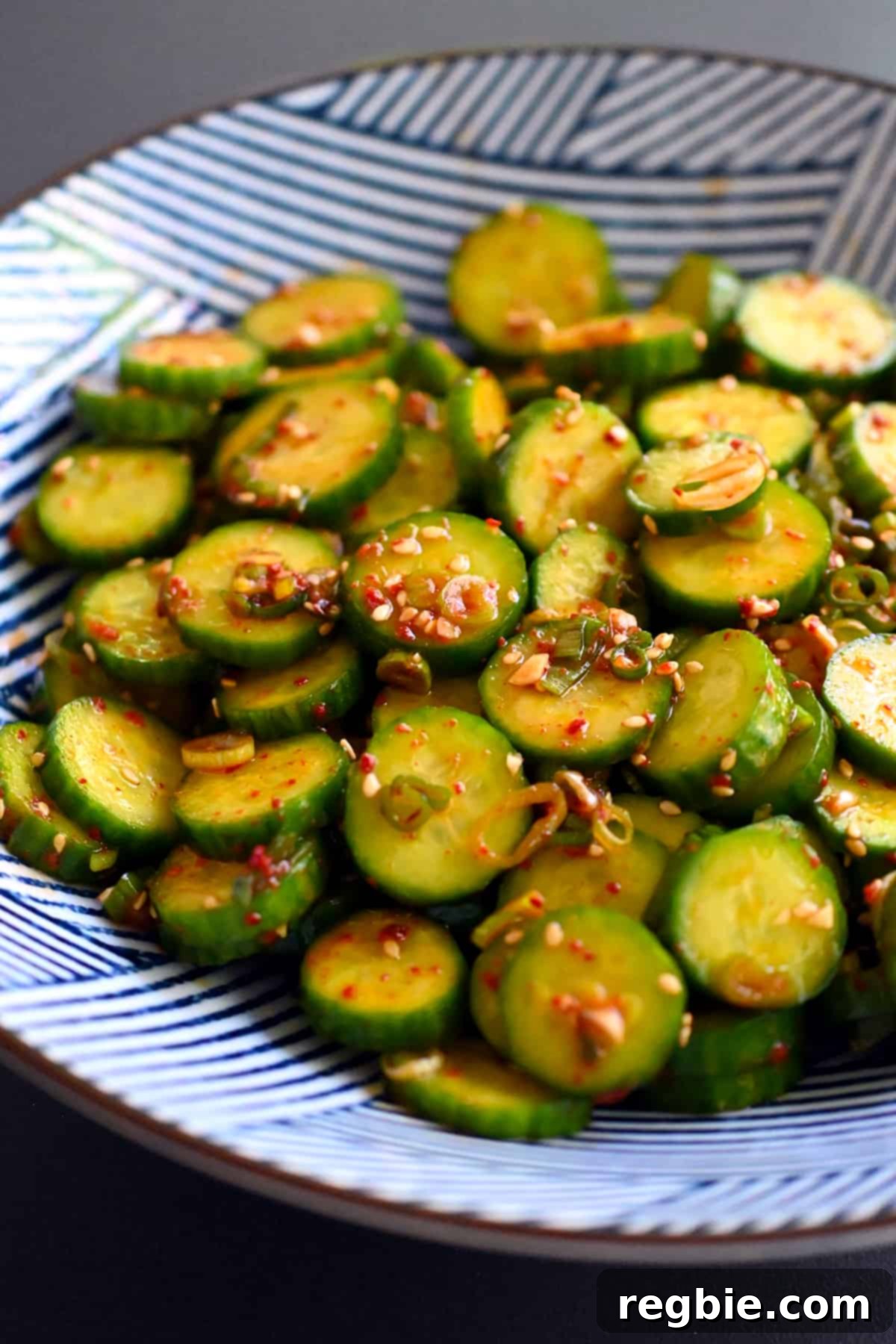
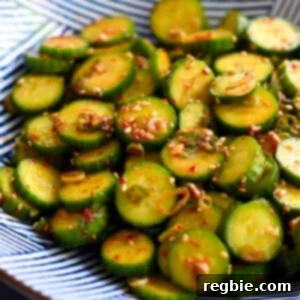
Discover the vibrant flavors of Korea with this irresistibly crunchy, spicy, and utterly refreshing Korean cucumber salad, also known as Oi Muchim. This perfect make-ahead side dish is not only bursting with umami goodness but also caters to various dietary needs, being completely gluten-free, paleo, keto, and Whole30 compliant! It’s an essential addition to any meal, offering a delightful contrast of textures and tastes that will tantalize your taste buds.
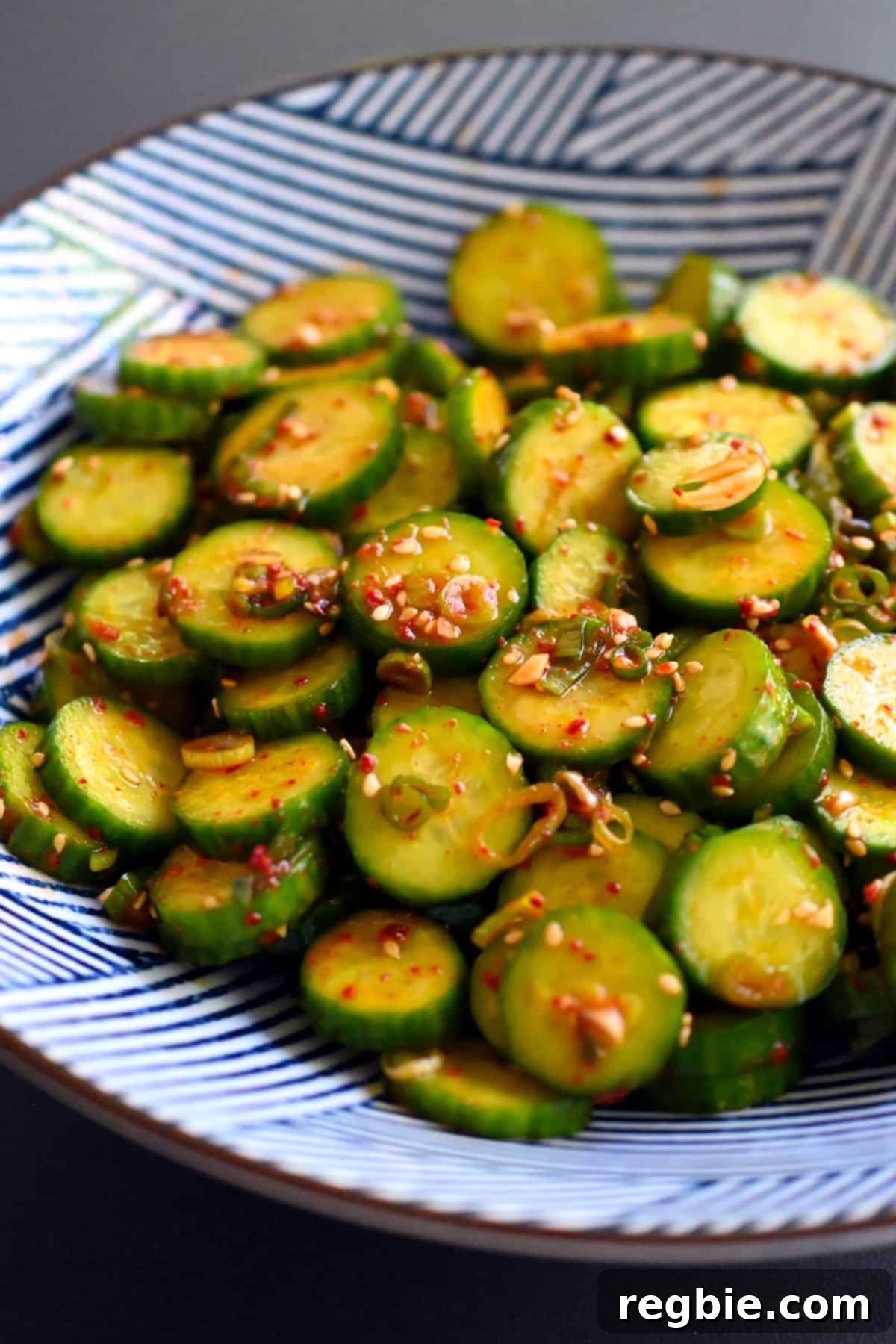
Table of Contents
- What is Banchan: The Heart of Korean Dining?
- The Refreshing Delight of Korean Cucumber Salad (Oi Muchim)
- Essential Ingredients for Your Perfect Korean Cucumber Salad
- How to Prepare Korean Cucumber Salad: Step-by-Step
- The Secret to Crisp Cucumbers: The Salting Method
- Frequently Asked Questions About Korean Cucumber Salad
- Korean Cucumber Salad (Whole30, Paleo, Gluten Free, Keto) Recipe
What is Banchan: The Heart of Korean Dining?
For anyone who has experienced the joy of Korean cuisine, particularly at a bustling Korean barbecue restaurant or a home-cooked family dinner, you’ll know that the true stars are often the banchan. These aren’t mere appetizers; they are an integral part of the Korean meal experience, a collection of small, diverse side dishes that beautifully complement the main course, typically a savory meat dish.
Banchan offers an incredible array of flavors, textures, and colors, creating a harmonious balance on the dining table. From crisp, fresh salads and tangy pickles to savory pancakes, fermented kimchi, and seasoned vegetables like sigeumchi namul(Korean spinach side dish), each tiny plate adds a unique dimension. As someone who appreciates a meal rich with options and contrasts, these vibrant, tangy, subtly sweet, and spicy bites are always a highlight.
However, navigating restaurant menus for gluten-free Korean options can be challenging. This prompted my journey into recreating beloved Korean dishes at home, ensuring they are both delicious and compliant with paleo and Whole30 dietary guidelines. After successfully adapting favorites like Galbi (Korean BBQ short ribs) and Slow Cooker Korean Short Ribs, I realized a crucial element was missing: the diverse and delightful banchan. Thus, this recipe for a paleo and Whole30 friendly Korean Cucumber Salad was born, bringing the authentic taste of Korea to your table without compromise.
The Refreshing Delight of Korean Cucumber Salad (Oi Muchim)
Among the pantheon of banchan, Korean cucumber salad stands out as a simple yet profoundly refreshing dish. Known in Korean as oi muchim (오이무침), which literally translates to “cucumber mixed with seasonings,” it’s a testament to how humble ingredients can create an explosion of flavor. This salad features thinly sliced cucumbers tossed in a wonderfully spicy, tangy, and sometimes subtly sweet dressing.
While regional and family variations abound, the core elements typically include soy sauce (or a suitable alternative), vinegar, garlic, green onions, sesame oil, sesame seeds, and, crucially, gochugaru (Korean red pepper flakes). Don’t let the vivid red hue of the gochugaru mislead you into thinking this salad is overwhelmingly hot. Korean chili flakes possess a unique flavor profile — a gentle warmth combined with a distinct smokiness and a touch of sweetness, making the salad flavorful rather than just fiery. It’s the perfect counterpoint to richer main dishes, cutting through their richness with its bright, crisp character.
Essential Ingredients for Your Perfect Korean Cucumber Salad
To ensure this spicy Korean cucumber salad remains entirely paleo and Whole30-friendly, we’ve carefully selected substitutes for traditional ingredients, specifically swapping soy sauce for coconut aminos and omitting added sugar. The rest of the ingredient list stays true to the classic preparation of oi muchim, guaranteeing an authentic taste profile while adhering to dietary preferences.
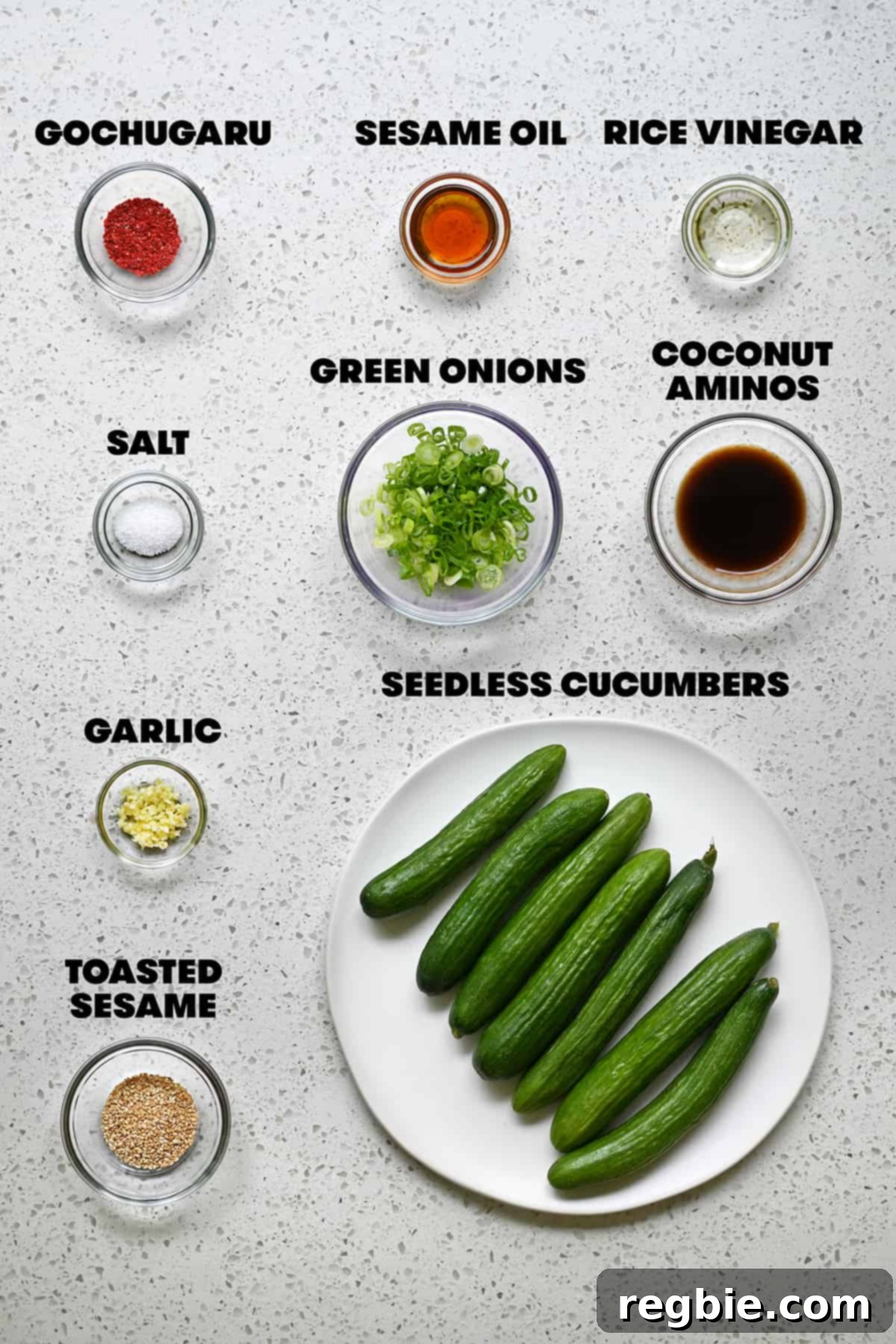
- Seedless Cucumbers: The foundation of this refreshing salad. For the best texture and flavor, choose varieties that are crunchy, subtly sweet, and have thin skins with minimal seeds. My top recommendations include Persian, Japanese, or Korean cucumbers. In a pinch, English cucumber or Kirby cucumbers also work wonderfully, providing that essential crispness.
- Diamond Crystal Kosher Salt: More than just a seasoning, salt plays a crucial role in drawing out excess moisture from the cucumbers, preventing a watery salad and ensuring every bite is satisfyingly crunchy. Its unique crystal structure allows for easy control over salinity.
- Green Onions (Scallions): These provide a mild oniony bite and a beautiful splash of green, adding both flavor and visual appeal to the salad.
- Minced Garlic: A cornerstone of Korean cuisine, garlic infuses the salad with its pungent, aromatic depth, essential for that authentic taste.
- Coconut Aminos: This fantastic ingredient serves as a perfect, savory, and slightly sweet alternative to soy sauce, making the recipe compliant with paleo and Whole30 diets without sacrificing umami.
- Unseasoned Rice Vinegar: Adds a bright, tangy acidity that balances the spice and richness of the other ingredients. If rice vinegar isn’t readily available, apple cider vinegar can be a suitable substitute, offering a similar tang.
- Gochugaru (Korean Chili Flakes): This is the soul of the spice in Korean cooking. You can find high-quality gochugaru at Korean markets, specialty food stores like Whole Foods, or conveniently online. Despite its vibrant red color, gochugaru offers a surprisingly mild heat, accompanied by distinct smoky and sweet undertones. It’s truly difficult to replicate its unique profile; while cayenne pepper will provide heat, it lacks the depth of gochugaru. Aleppo pepper is a closer, though still not identical, alternative if absolutely necessary.
- Toasted Sesame Oil: Essential for its rich, nutty aroma and deep flavor, toasted sesame oil is a hallmark of Korean dressings, adding a layer of complexity.
- Toasted Sesame Seeds: These tiny powerhouses provide a lovely textural crunch and a delicate nutty finish, enhancing both the taste and appearance of the salad.
How to Prepare Korean Cucumber Salad: Step-by-Step
Creating this delightful Korean cucumber salad is straightforward, but a few key steps ensure the best texture and flavor. Follow these instructions for a perfectly crisp and well-seasoned Oi Muchim.
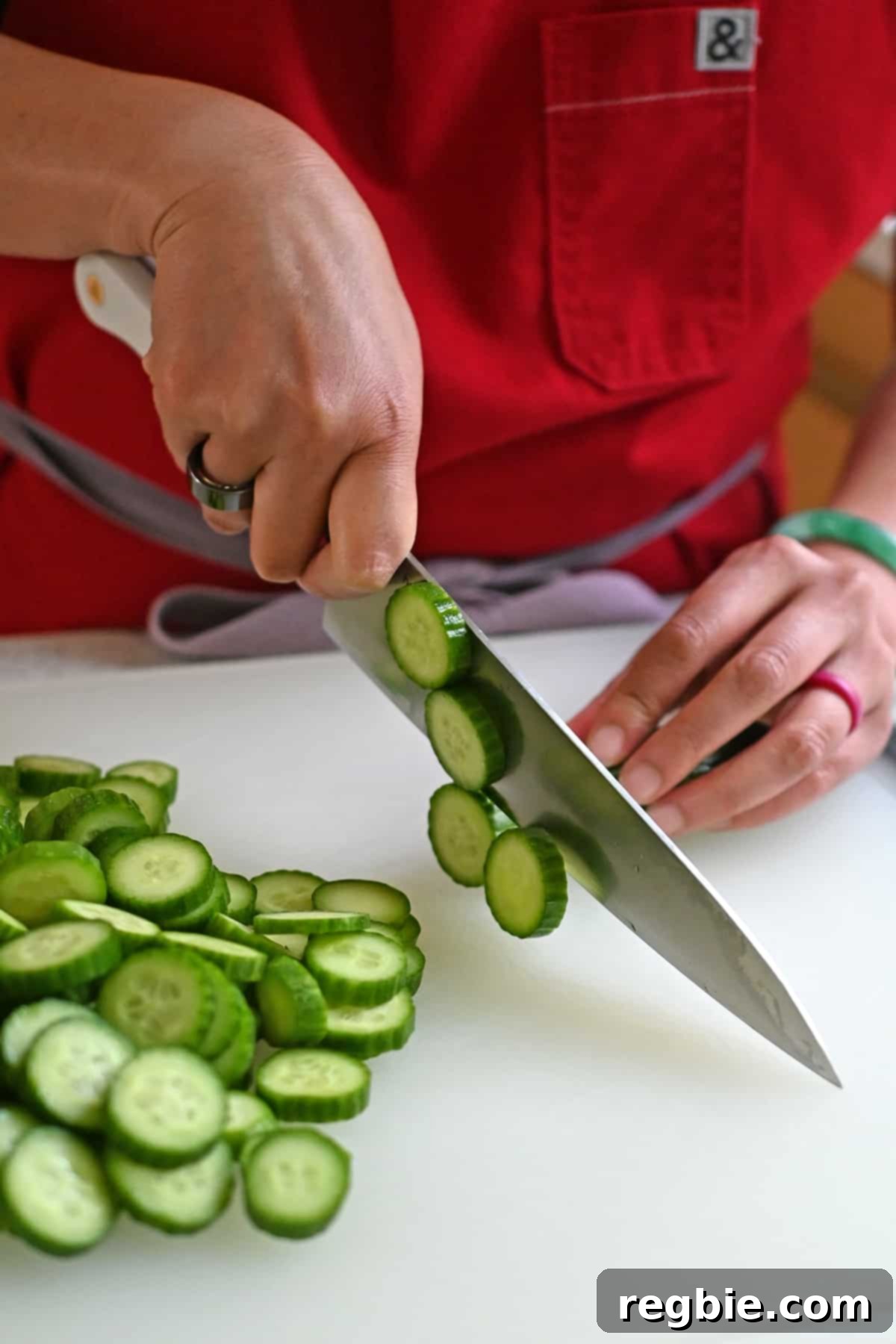
Begin by preparing your cucumbers. Using a sharp knife or a mandoline for consistency, cut the cucumbers crosswise into thin ¼-inch slices. Uniform slices are important for an even texture and seasoning absorption.
The Secret to Crisp Cucumbers: The Salting Method!
Achieving a wonderfully crunchy, refreshing spicy cucumber salad means avoiding any sogginess. The secret lies in a crucial step: salting the cucumbers. This process helps draw out excess water, ensuring your salad maintains its delightful crispness. After slicing, generously toss the cucumber slices with Diamond Crystal kosher salt. Then, transfer them to a fine-mesh strainer or a colander nestled inside a medium bowl. Allow them to drain for at least 20 minutes, and for even better results, you can extend this up to 4 hours in the refrigerator. This dehydration process not only prevents dilution of your dressing but also concentrates the cucumber flavor and provides that highly desirable refreshing crunch. If you’re using a different type of salt, such as table salt or fine sea salt, you’ll need to adjust the quantity, typically reducing it by half, as these salts are denser. For Morton’s kosher salt, reduce the amount by a quarter.
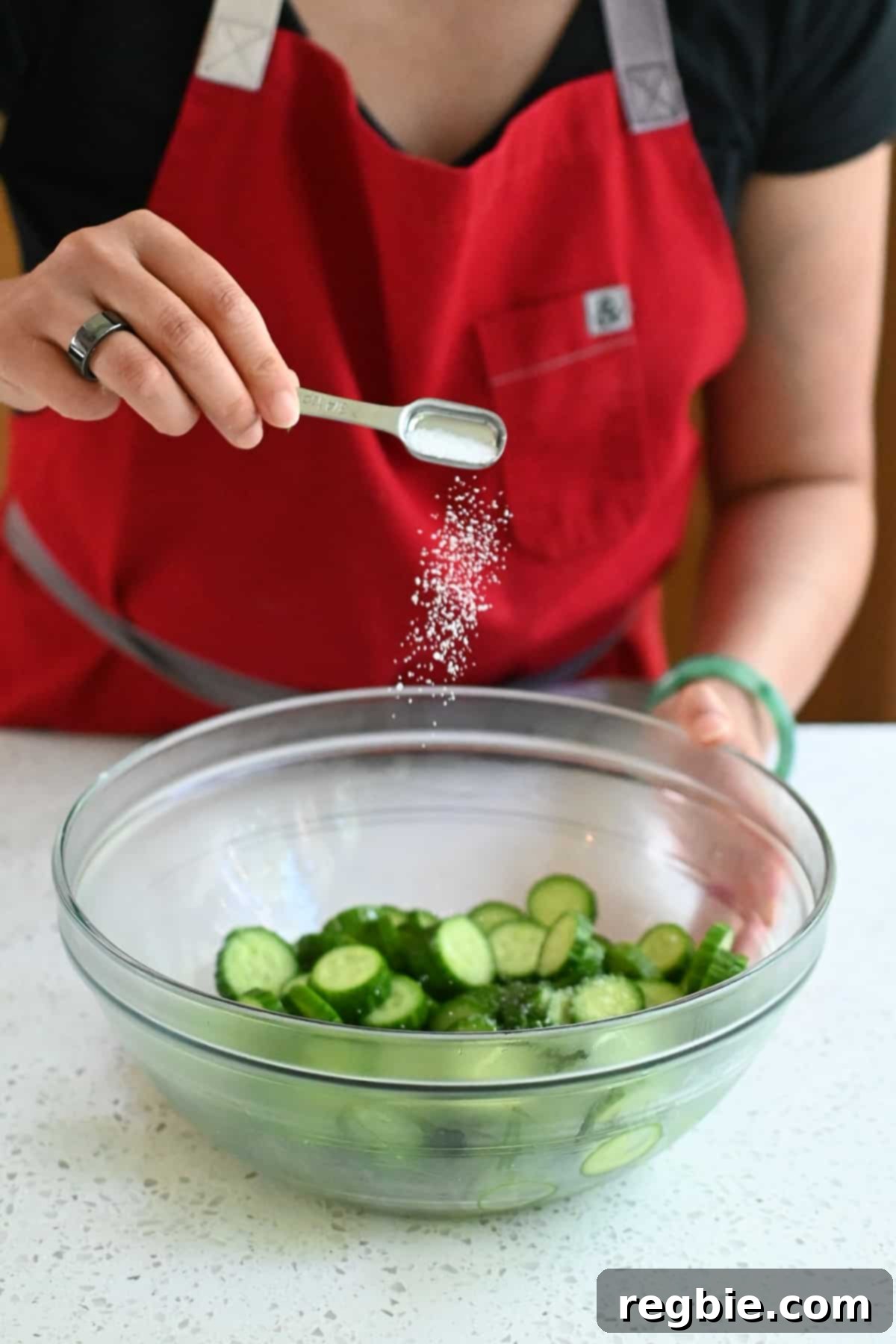
Once sliced, toss the cucumbers thoroughly with Diamond Crystal kosher salt in a large mixing bowl. Ensure each slice is lightly coated to facilitate the water-drawing process.
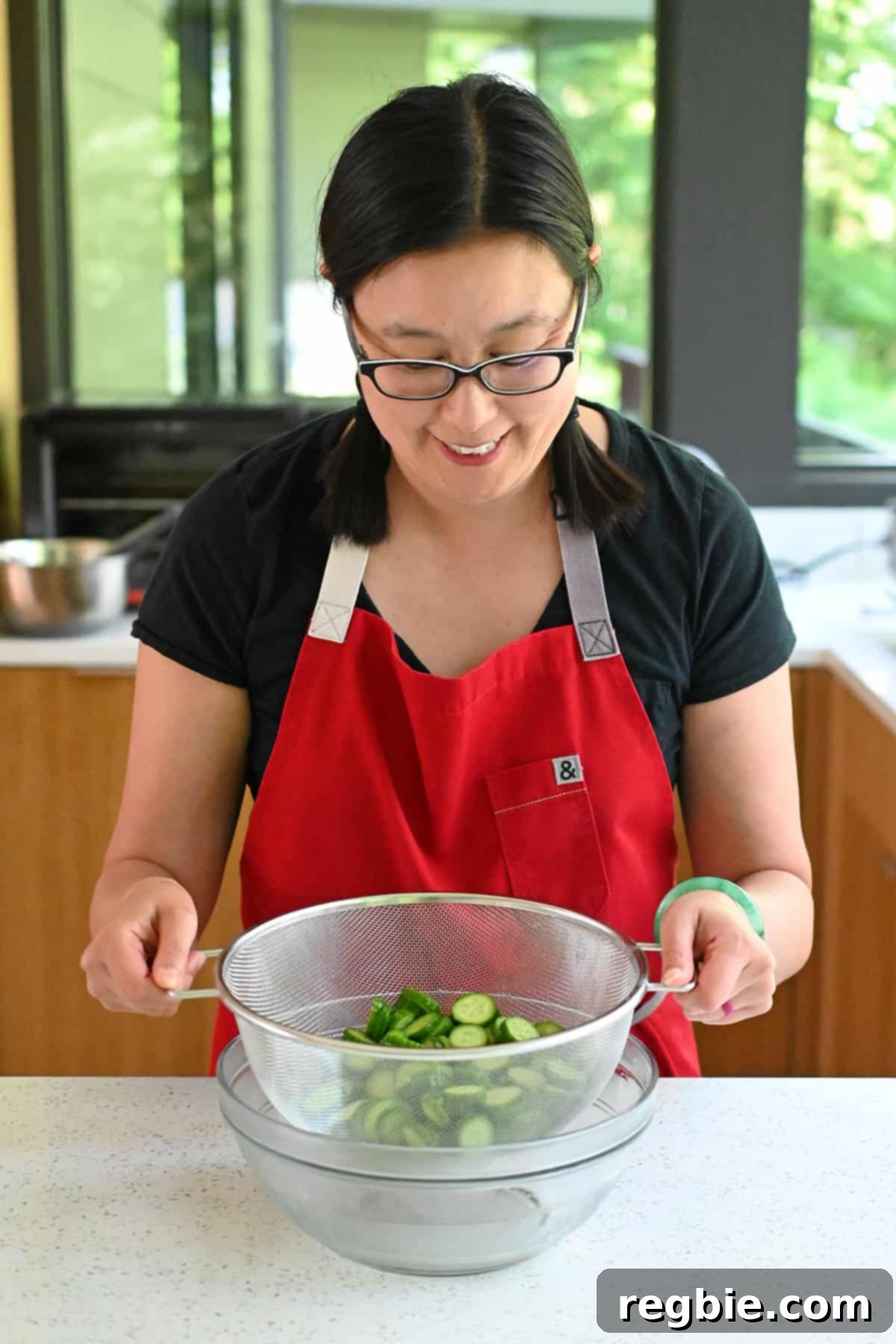
Next, transfer the salted cucumber slices into a fine-mesh strainer or a colander that fits snugly within a medium bowl. This setup allows the released liquid to collect in the bowl below, keeping the cucumbers elevated and draining effectively.
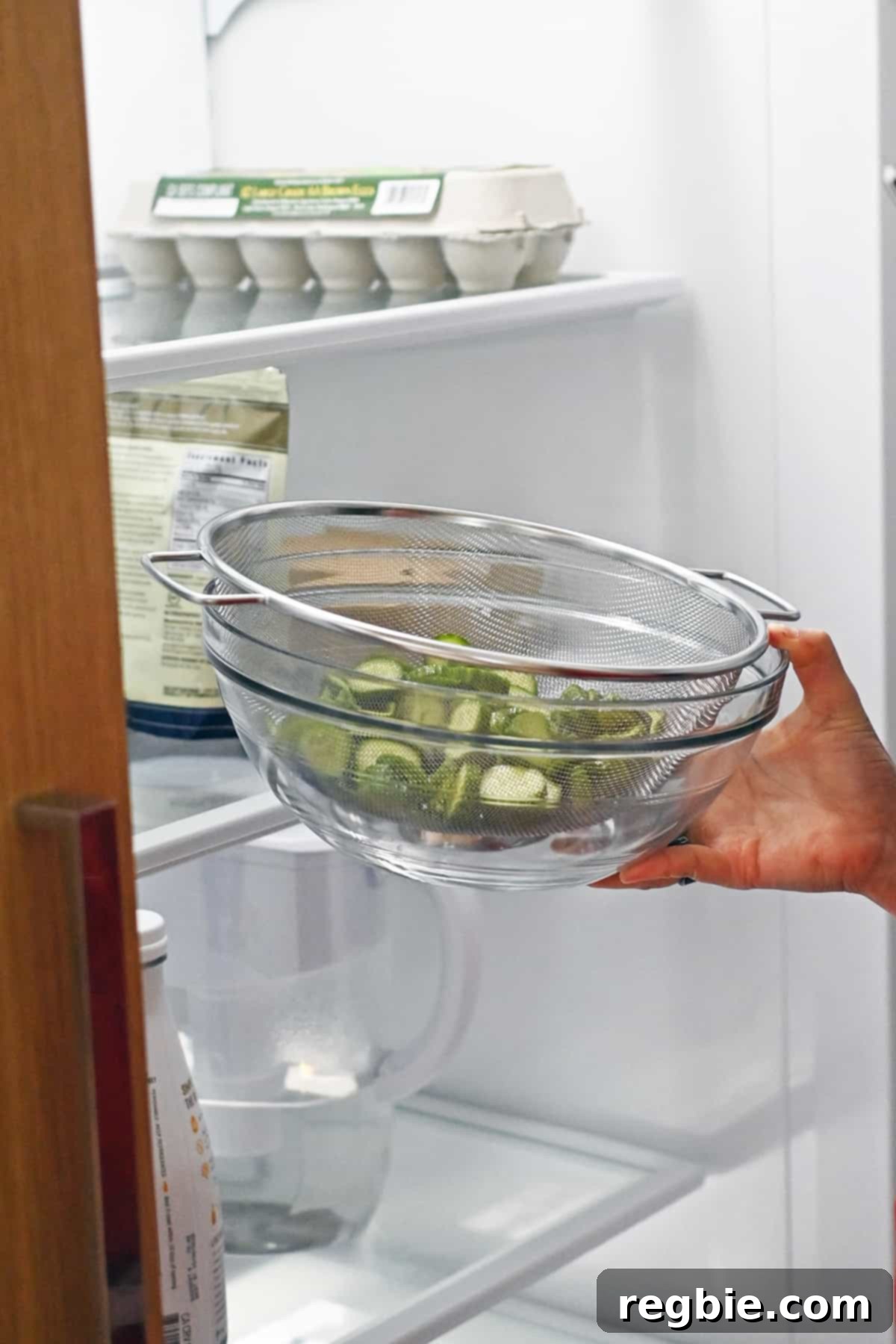
Place the entire assembly (strainer, bowl, and salted cucumbers) into the refrigerator. Let it rest for at least 20 minutes to allow ample time for the moisture to be drawn out. For an even firmer texture, you can leave it to drain for up to 4 hours while you prepare the remaining dressing ingredients.
Once drained, gently blot any remaining excess moisture from the cucumber slices with a clean paper towel. This ensures the dressing will adhere better and the salad remains crisp. Transfer the dried cucumbers back into a large mixing bowl. Now, add the vibrant green onions, pungent minced garlic, savory coconut aminos…
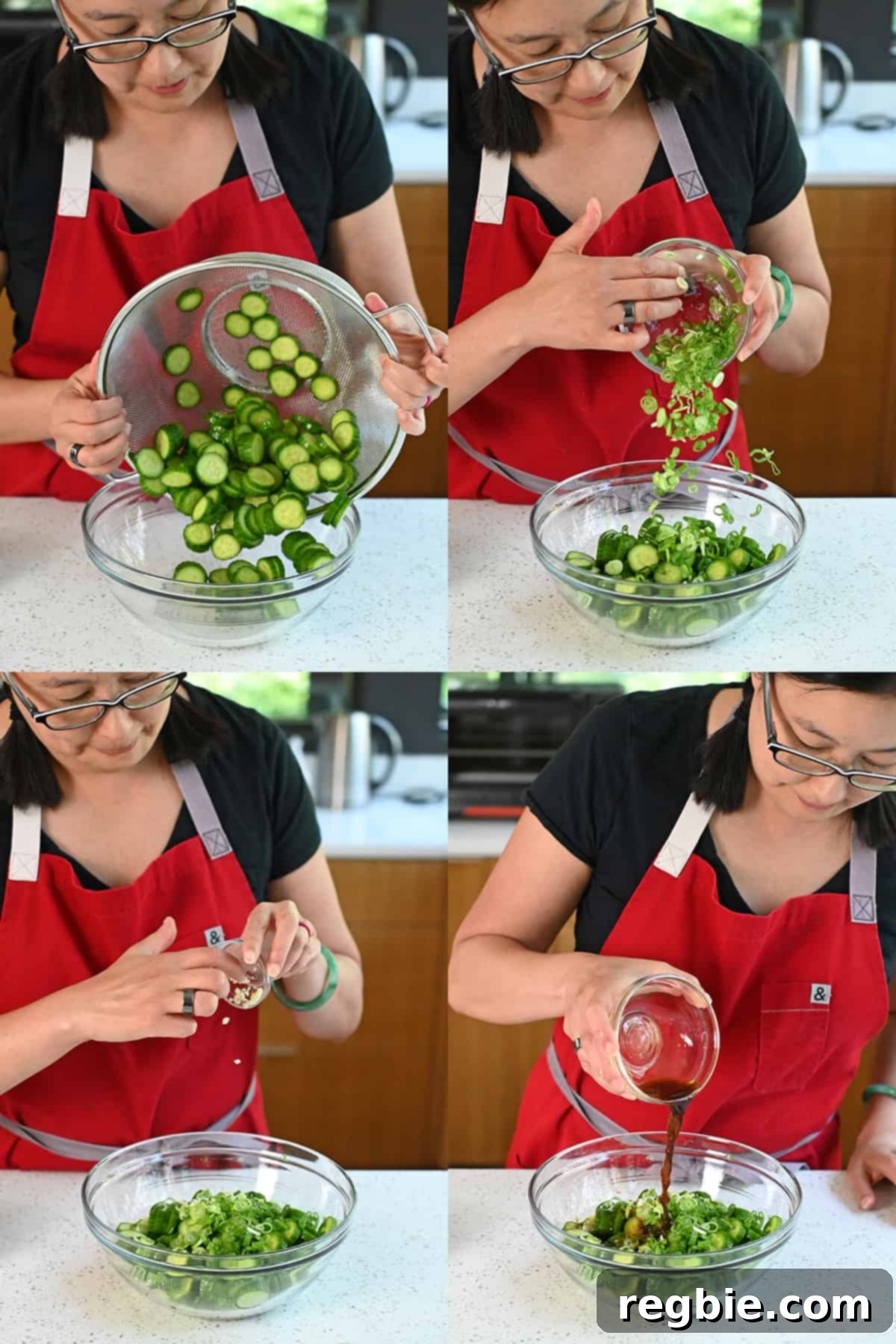
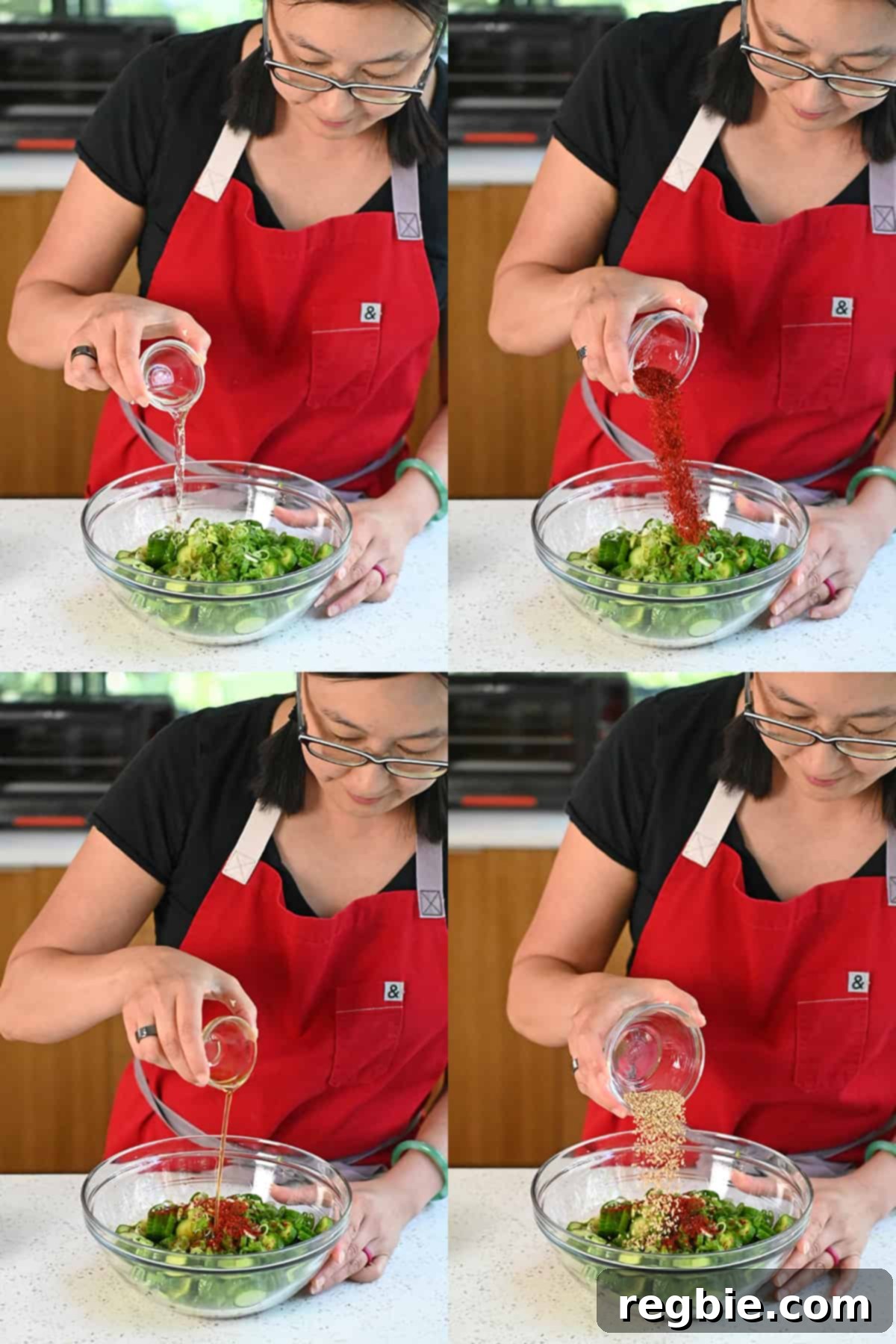
…followed by the tangy rice vinegar, distinctive gochugaru, fragrant sesame oil, and crunchy sesame seeds. These ingredients form the heart of the salad’s vibrant dressing, delivering that classic Korean flavor profile.
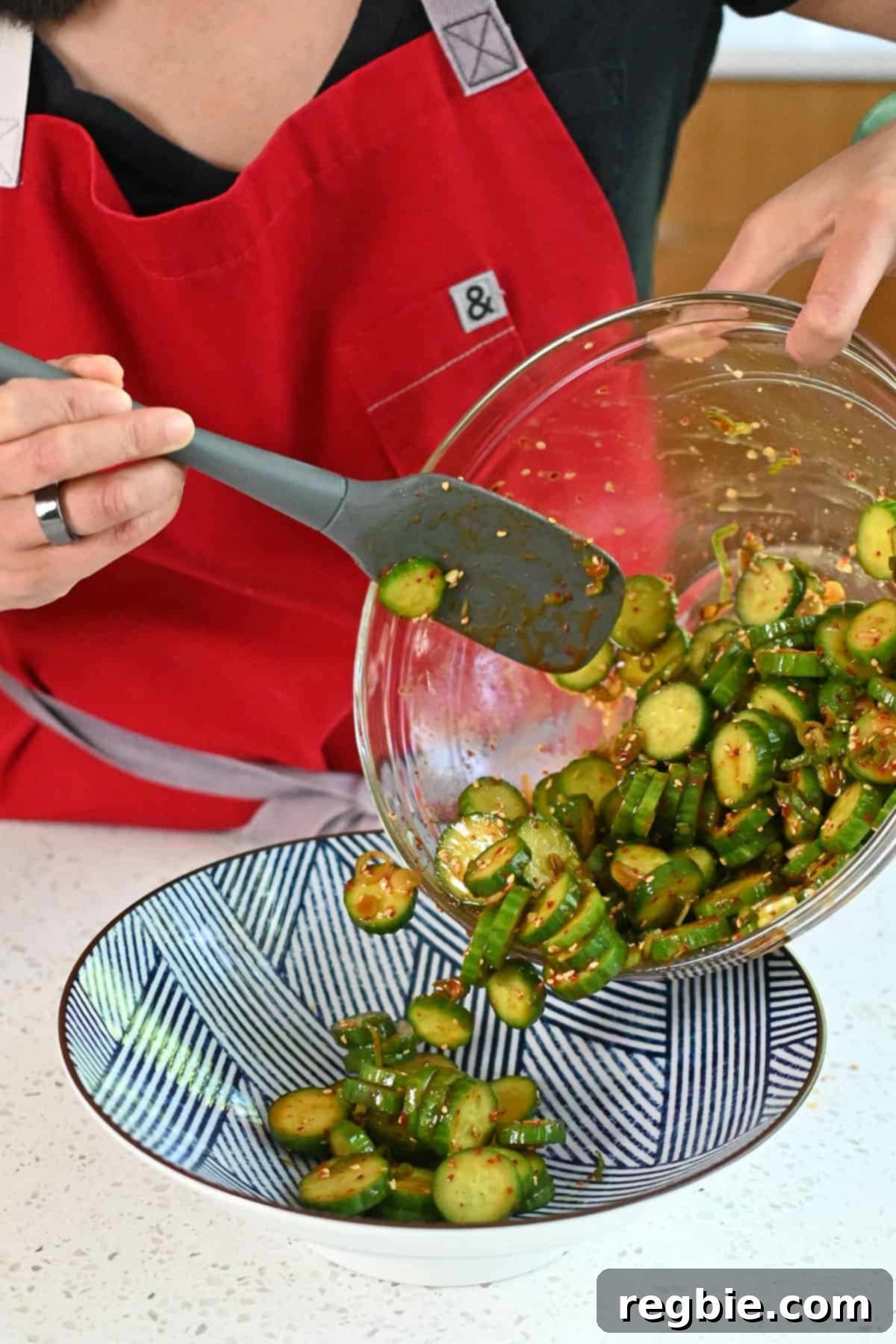
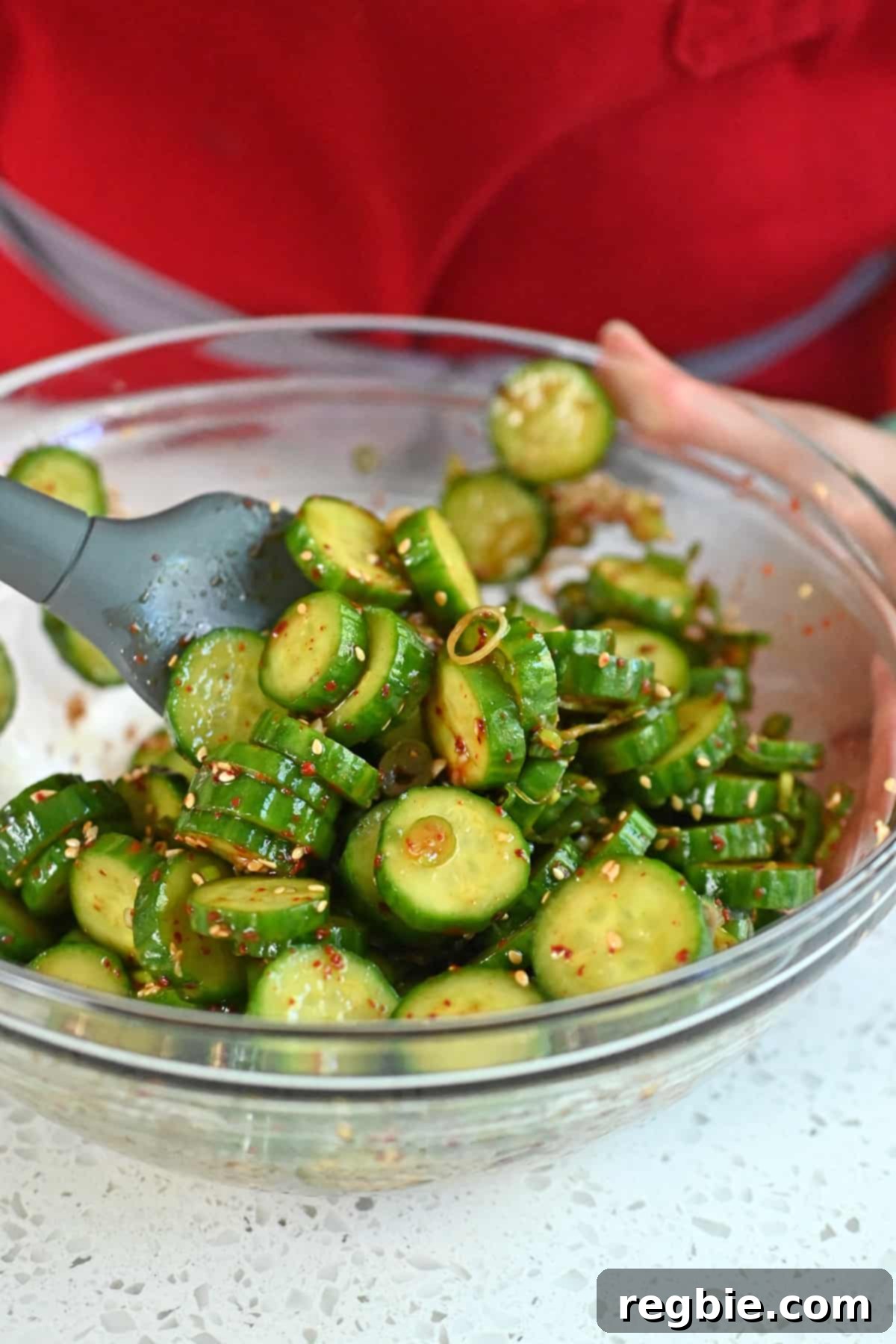
Using a spatula or your hands, thoroughly mix all the ingredients until the cucumbers are evenly coated with the dressing. Taste and adjust the seasoning as needed; you might want a little more tang, spice, or salt depending on your preference.
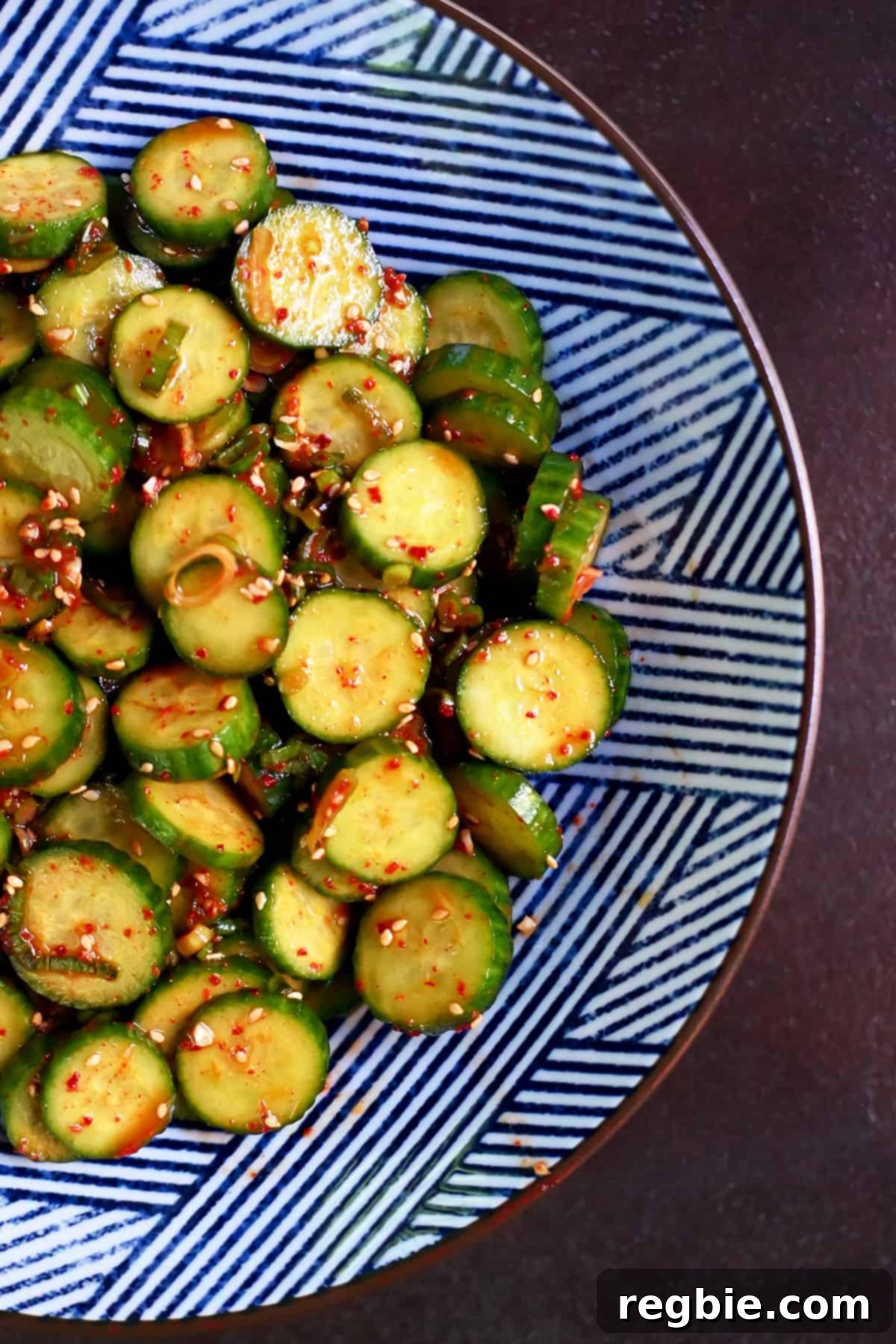
Finally, allow the flavors to meld together for about 5 to 10 minutes before serving. This short resting period allows the cucumbers to fully absorb the dressing, deepening the overall taste experience. Then, it’s time to dig into this fabulous, crunchy Korean cucumber side dish!
Frequently Asked Questions About Korean Cucumber Salad
This Korean cucumber salad is an excellent make-ahead dish! You can store any leftovers in a sealed container in the refrigerator for up to four days. While it’s perfect for meal prep, keep in mind that the cucumbers will continue to release a small amount of liquid over time. For the best texture, always make sure to drain any accumulated liquid before serving or re-serving.
This versatile Korean cucumber salad is a fantastic accompaniment to almost any meat dish, as its refreshing and tangy profile beautifully complements richer flavors. Some of my absolute favorite pairings include: Galbi (BBQ Korean Short Ribs), Slow Cooker Korean Short Ribs, Kalua Pig, My Sister’s Phenomenal Green Chicken, Cracklin’ Chicken, and Bangin’ Baby Back Ribs. It also complements grilled fish, stir-fries, or even just a simple bowl of rice with a fried egg.
Despite its vibrant red color from the gochugaru, this Korean cucumber salad typically has a mild to medium spice level, offering more flavor than intense heat. The gochugaru provides a unique smoky sweetness along with its gentle warmth. If you prefer it milder, you can reduce the amount of gochugaru to 1 teaspoon or even ½ teaspoon. For those who love a fiery kick, feel free to increase the gochugaru to 3 or even 4 teaspoons, or add a pinch of cayenne pepper for extra heat.
This Korean cucumber salad is packed with healthful benefits. Cucumbers are incredibly hydrating, rich in vitamins K and C, and provide antioxidants. Garlic is renowned for its immune-boosting and anti-inflammatory properties. Gochugaru, while providing flavor, also contains capsaicin, which can boost metabolism. Being gluten-free, paleo, keto, and Whole30 compliant means it avoids common allergens and inflammatory ingredients like refined sugar and soy, making it a wholesome addition to any diet.
Hungry for more healthy and delicious recipes? Explore my comprehensive Recipe Index. You’ll also find exclusive recipes and culinary inspiration in my acclaimed cookbooks: Nom Nom Paleo: Food for Humans (Andrews McMeel Publishing 2013), Ready or Not! (Andrews McMeel Publishing 2017), and Nom Nom Paleo: Let’s Go! (Andrews McMeel Publishing 2022).
Korean Cucumber Salad (Whole30, Paleo, Gluten Free, Keto)
Rated 5 out of 5 stars by 11 users
Print Recipe
Ingredients
- 1 pound Persian, Japanese, English, or Kirby cucumbers
- 1 teaspoon Diamond Crystal kosher salt
- 2 scallions (green onions), thinly sliced
- 1 small garlic clove, minced
- 2 tablespoons coconut aminos
- 2 teaspoons unseasoned rice vinegar
- 2 teaspoons gochugaru (Korean red pepper flakes)
- 2 teaspoons toasted sesame oil
- 2 teaspoons toasted sesame seeds
Instructions
-
Cut the cucumbers crosswise into thin ¼-inch slices. In a large bowl, toss the sliced cucumbers with Diamond Crystal kosher salt until evenly coated.
-
Transfer the salted cucumber slices to a fine-mesh strainer or a colander placed inside a medium bowl. Refrigerate for at least 20 minutes and up to 4 hours to draw out excess moisture. This is a crucial step for a crisp salad.
-
After draining, gently blot the excess moisture from the cucumbers with a clean paper towel. Return the dried cucumbers to a large mixing bowl. Add the thinly sliced scallions, minced garlic, coconut aminos, rice vinegar, gochugaru, sesame oil, and toasted sesame seeds.
-
Mix all ingredients thoroughly until the cucumbers are well coated with the dressing. Taste the salad and adjust seasonings as needed, adding more spice, tang, or salt to suit your preference. Allow the flavors to meld for about 5 to 10 minutes before serving. Enjoy your delicious Korean cucumber salad!
Video
A video tutorial for this Korean Cucumber Salad is available to guide you through each step for perfect results.
Notes
- This salad can be stored in a sealed container in the refrigerator for up to four days. Remember to drain any liquid that accumulates before serving to maintain its crispness.
- Korean cucumber salad pairs exceptionally well with a variety of main courses. Consider serving it alongside grilled meats, such as Galbi (BBQ Korean Short Ribs) or Slow Cooker Korean Short Ribs, as well as with Kalua Pig, My Sister’s Phenomenal Green Chicken, Cracklin’ Chicken, or Bangin’ Baby Back Ribs for a complete and flavorful meal.
Nutrition
Nutrition information provided is an approximation and may vary based on specific ingredient brands and preparation methods.