
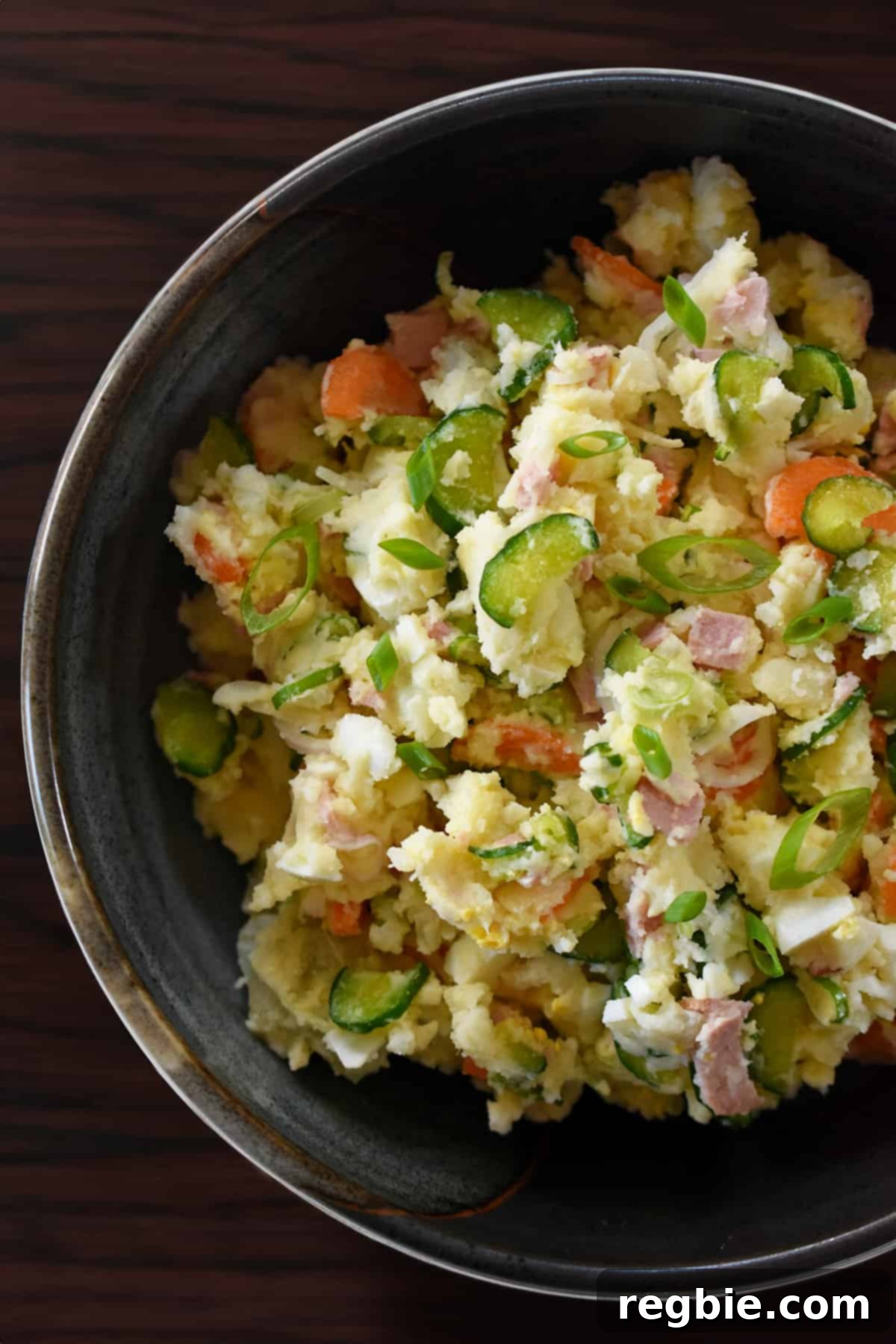
Potato salad enthusiasts, get ready to experience a truly exceptional dish! This Japanese-inspired potato salad offers an irresistible combination of creamy texture, delightful crunch, and a profound depth of umami flavor. What’s even better? It’s thoughtfully crafted to be entirely Paleo and Whole30 compatible, making it a fantastic, guilt-free side dish. Whether you’re planning an Asian-themed dinner, a casual backyard barbecue, or a refreshing picnic in the park, this unique potato salad is guaranteed to be a crowd-pleaser and a versatile addition to any menu.
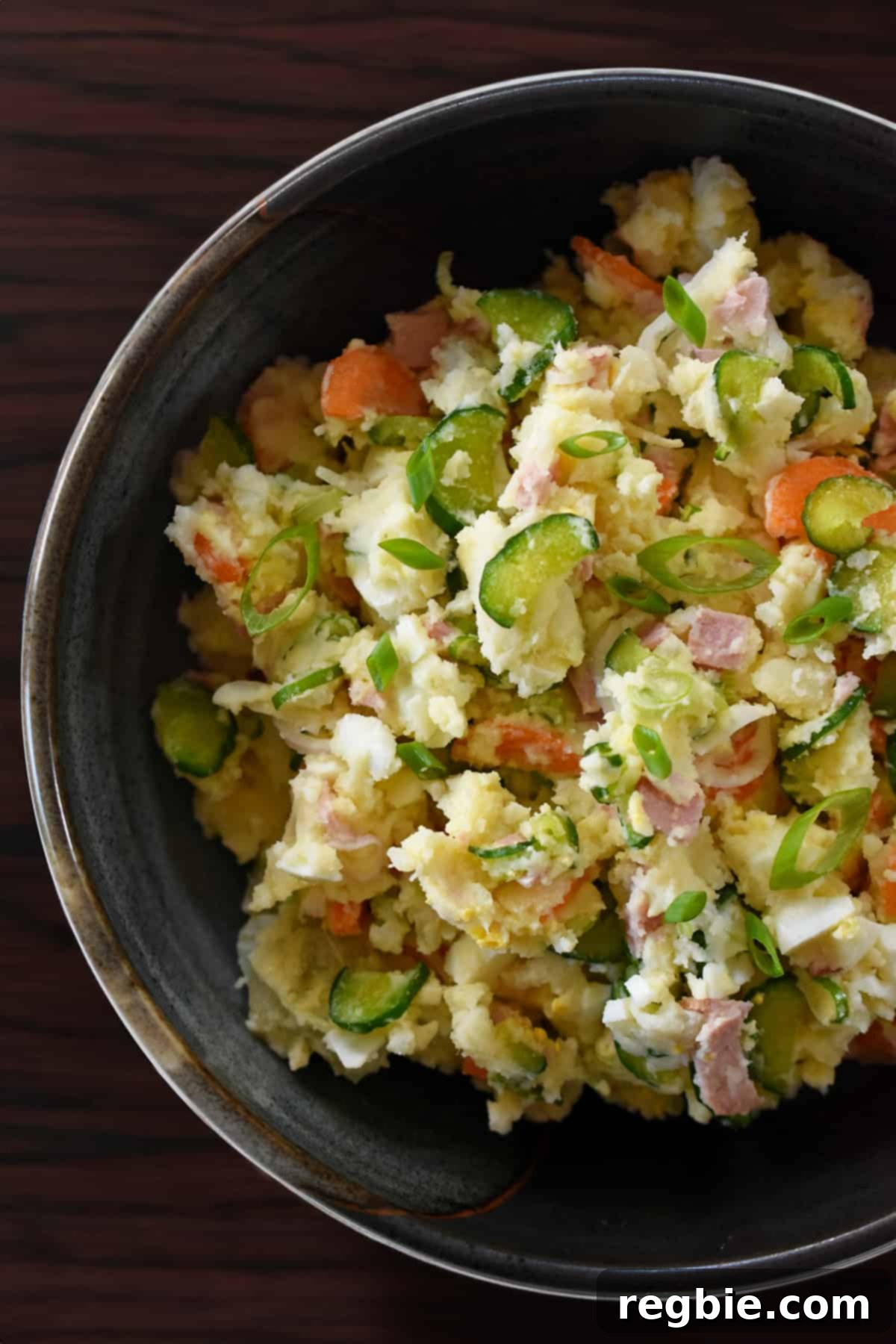
I’ve always been captivated by yoshoku, the fascinating genre of Western-influenced Japanese cooking. It’s a culinary bridge that beautifully blends diverse flavors and techniques, resulting in dishes that are both familiar and excitingly new. This particular potato salad recipe stands as a testament to the delicious possibilities of East-meets-West fusion cuisine. My love for Japanese potato salad runs deep, inspiring me to create a version that not only captures its authentic taste but also adheres to Paleo principles. This health-conscious adaptation was so well-received that it earned a spot in our latest cookbook, Nom Nom Paleo: Let’s Go!, and I am thrilled to share this special recipe with you today!
Table of Contents
- What is Japanese Potato Salad?
- Crafting a Paleo and Whole30 Japanese Potato Salad
- Key Ingredients for Perfection
- Step-by-Step Preparation: How to Make Japanese Potato Salad
- Storage and Leftovers: Maximizing Freshness
- Serving Suggestions: What to Pair with Your Salad
- Japanese Potato Salad – Creamy, Crunchy & Umami-Packed! (Full Recipe)
What is Japanese Potato Salad? A Culinary Introduction
Japanese potato salad, known locally as “pote sara” (ポテサラ), is a beloved staple found in bento boxes, izakayas, and home kitchens across Japan. While it shares a name with its Western counterpart, the Japanese version offers a distinctly different and delightful experience. Unlike many American potato salads that often feature a mustard-forward or dill-infused dressing, Japanese potato salad is characterized by its reliance on Japanese mayonnaise (famously Kewpie mayo) as its primary binder. This unique mayonnaise, with its richer, tangier, and sweeter profile compared to standard Western mayonnaise, imparts a signature umami punch that sets the dish apart.
Beyond the mayonnaise, the textural interplay is crucial. You’ll find semi-mashed potatoes, creating a creamy base, beautifully contrasted with thinly sliced or finely diced vegetables. Common additions include crisp cucumbers, sweet carrots, and sometimes even apples for a touch of fruitiness. Ham and hard-boiled eggs are also frequently incorporated, adding protein and extra layers of flavor. The preparation often involves a gentle hand in mashing the potatoes, ensuring some chunks remain to provide that satisfying chew, while the vegetables contribute a welcome crunch. The overall flavor is a harmonious balance of savory, slightly sweet, and tangy notes, making it incredibly addictive and versatile.
Crafting a Paleo and Whole30 Japanese Potato Salad: A Health-Conscious Twist
Adapting a classic like Japanese potato salad to fit Paleo and Whole30 guidelines requires thoughtful ingredient substitutions without compromising its iconic taste and texture. The biggest modification comes in the dressing. Traditional Japanese potato salad relies heavily on Kewpie mayonnaise, which contains sugar and MSG, and sometimes corn syrup – ingredients not permitted on these specific dietary plans. To replicate that signature creamy, tangy, and umami-rich profile, I’ve developed a custom dressing that’s entirely compliant.
Instead of Kewpie, our recipe utilizes a high-quality paleo-friendly mayonnaise (either homemade or a carefully selected store-bought version). This is then seasoned with unseasoned rice vinegar and a touch of Dijon-style mustard to build complexity. Critically, we omit any added sugar, allowing the natural sweetness of ingredients like carrots to shine. Furthermore, corn, a common addition in some Japanese potato salads, is excluded to maintain Whole30 compliance. It’s important to note that when choosing ham, ensure it is sugar-free to keep the recipe strictly Whole30 and Paleo. And for those wondering about the main star, the potato: yes, white potatoes are generally considered paleo and Whole30-compatible as long as they are prepared simply. However, if potatoes don’t agree with your dietary needs or preferences, feel free to explore other delicious potato-free salad recipes from our collection!
Key Ingredients for Perfection
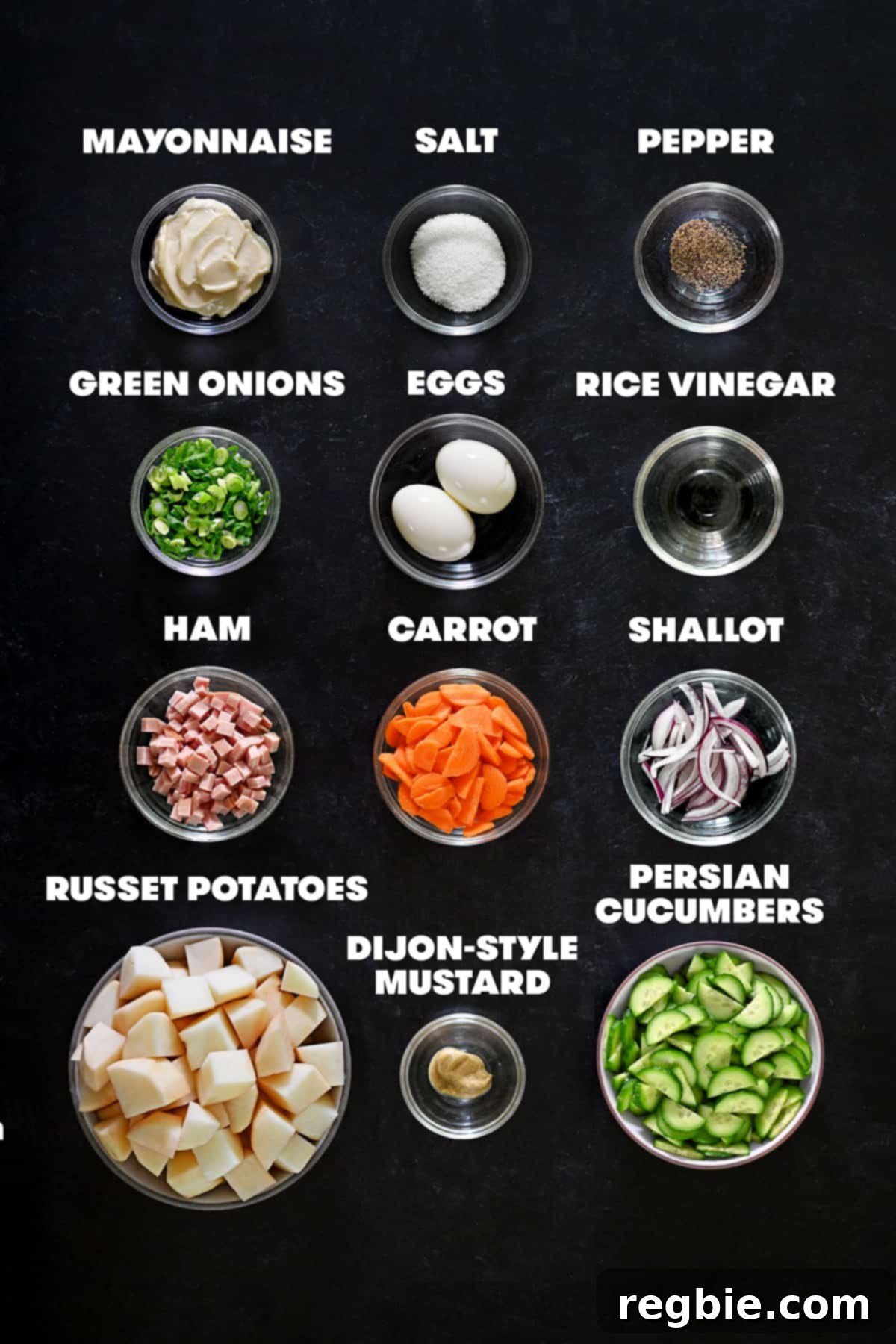
- Russet potatoes: These are my top choice for Japanese potato salad. Their high starch content means they break down beautifully when cooked, creating an incredibly creamy and fluffy base when mashed, which is essential for the desired texture. While Yukon gold or red potatoes can work, russets deliver superior creaminess.
- Persian cucumbers: For that essential crunch and freshness, thin-skinned cucumbers are key. Persian cucumbers are ideal due to their minimal seeds and crisp texture. Japanese or English cucumbers are also excellent alternatives. The goal is a firm cucumber that won’t become watery or mushy.
- Carrot: Adding finely sliced or shredded carrots brings a natural sweetness, vibrant color, and an additional layer of crunch to the salad, contributing to its balanced flavor profile.
- Shallot or red onion: A finely sliced shallot or red onion introduces a subtle sharpness and aromatic depth. To mellow their pungent bite, a crucial step is to soak them in iced water for about 10 minutes, then drain thoroughly. This technique retains their flavor without overwhelming the delicate balance of the salad.
- Hard-boiled eggs: These add richness, a lovely yellow hue, and extra protein, making the salad more satisfying. Roughly chopped, they integrate beautifully into the creamy potato base.
- Sugar-free ham: While optional, diced ham provides a savory, smoky, and salty element that complements the other ingredients wonderfully. Ensure it’s sugar-free to maintain Paleo and Whole30 compliance. For non-pork eaters, diced cooked chicken or even crispy bacon bits could be delightful alternatives.
- Green onions (Scallions): Freshly sliced green onions are indispensable for a burst of fresh, mild onion flavor and a pop of green color, serving as both an ingredient and a garnish.
- Paleo mayonnaise: The heart of the creamy dressing. You can either whip up your own homemade mayonnaise using compliant oils (like avocado oil) or opt for a trusted store-bought brand that uses only Whole30-approved ingredients.
- Unseasoned rice vinegar: This is vital for providing the characteristic tang without any added sugar or MSG often found in seasoned rice vinegars. Read labels carefully to ensure compliance.
- Dijon-style mustard: A teaspoon of Dijon mustard enhances the tanginess of the dressing and adds a layer of sophisticated flavor that rounds out the mayonnaise base beautifully.
- Diamond Crystal kosher salt: Essential for seasoning the potatoes during cooking and for drawing out moisture from the cucumbers. Its coarse texture makes it easy to handle.
- Freshly ground black pepper: A final touch of pepper adds a gentle warmth and aromatic finish to the salad.
Always prioritize fresh, high-quality ingredients. They are the foundation of any truly delicious dish, especially one where each component contributes distinct flavor and texture.
Step-by-Step Preparation: How to Make Japanese Potato Salad
Creating this delightful Japanese potato salad is a straightforward process, but paying attention to each step ensures the best possible texture and flavor. Follow these instructions carefully for a creamy, crunchy, and irresistibly umami-packed side dish.
1. Prepare and Cook the Potatoes
Begin by placing your peeled and cubed russet potatoes into a large, heavy-bottomed pot. Add enough cold water to completely submerge the potatoes, ensuring they are covered by at least an inch. Starting with cold water allows the potatoes to cook more evenly, preventing the outsides from becoming mushy while the centers remain firm.
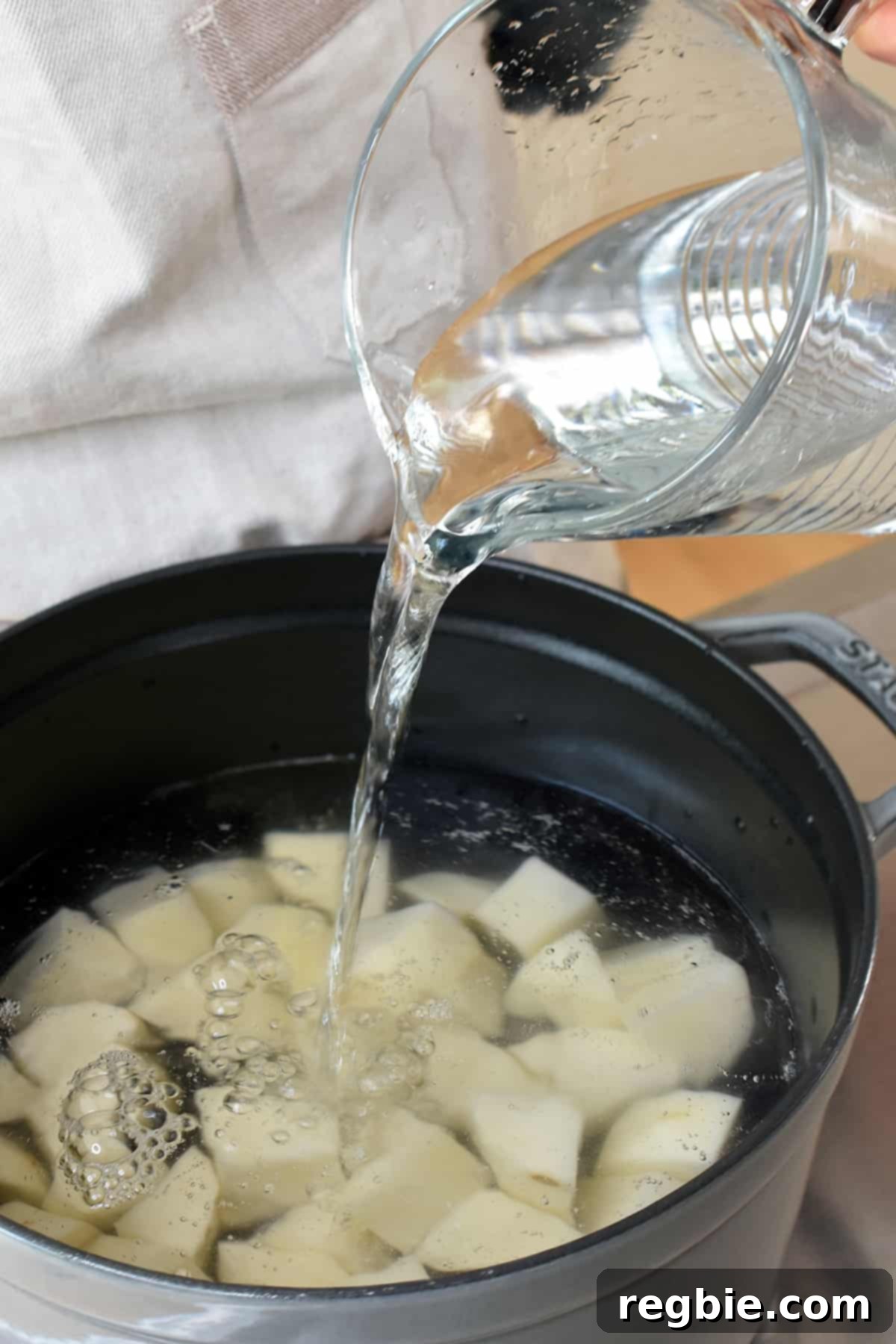
Add a generous pinch of Diamond Crystal kosher salt to the pot. This seasons the potatoes from the inside out and helps prevent them from becoming bland. Bring the water to a rolling boil over high heat.
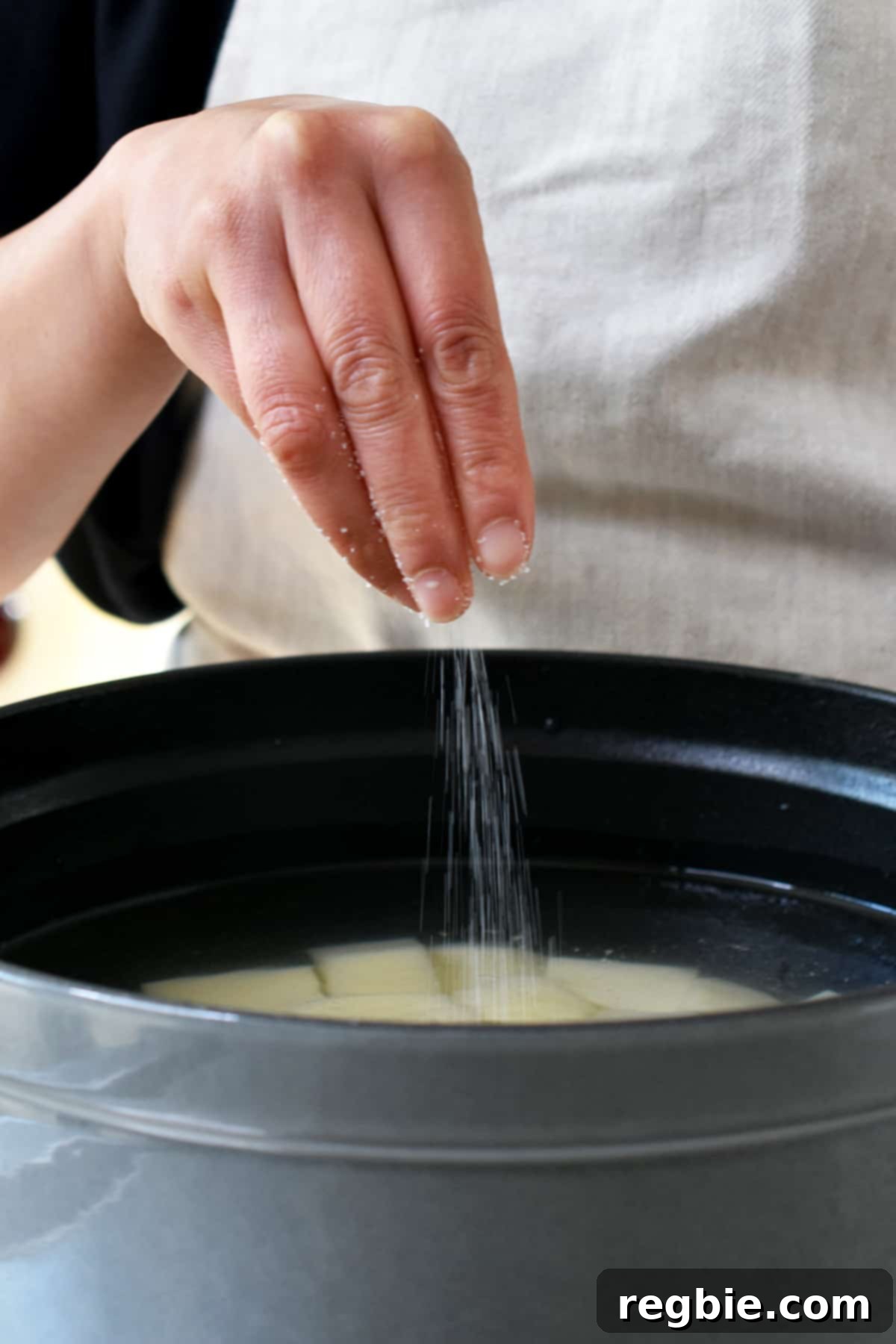
Once boiling, reduce the heat to maintain a steady, gentle simmer. Cook the potatoes for approximately 10 to 15 minutes, or until they are fork-tender. A fork should easily pierce through a potato cube without resistance, but they shouldn’t be falling apart. Overcooking will result in a gummy salad, so be mindful of the tenderness.
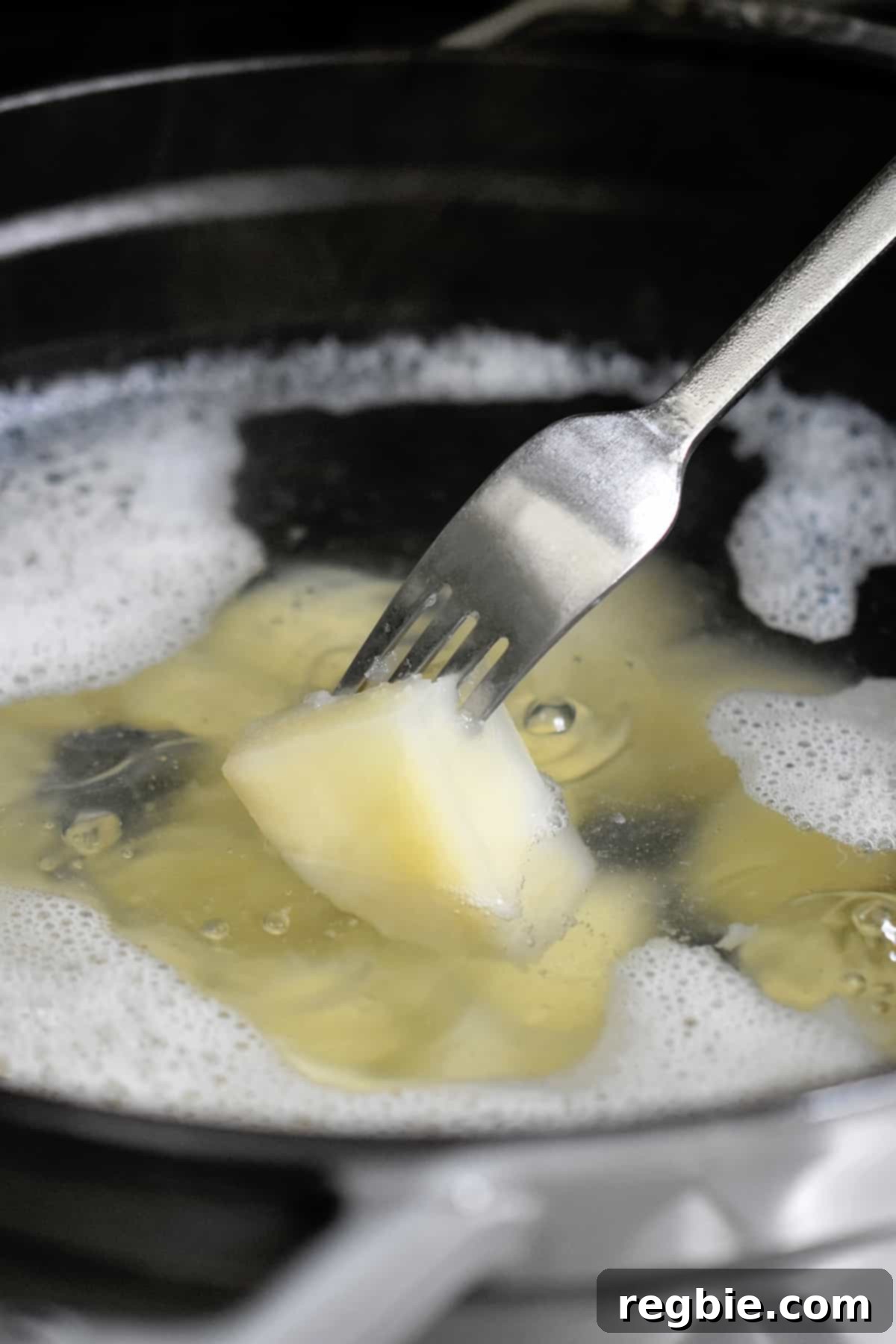
Once cooked, carefully drain the potatoes in a colander. Allow them to cool completely to room temperature. For quicker chilling, you can spread them out on a baking sheet or transfer them to the refrigerator. Chilled potatoes absorb the dressing better and contribute to the salad’s ideal texture.
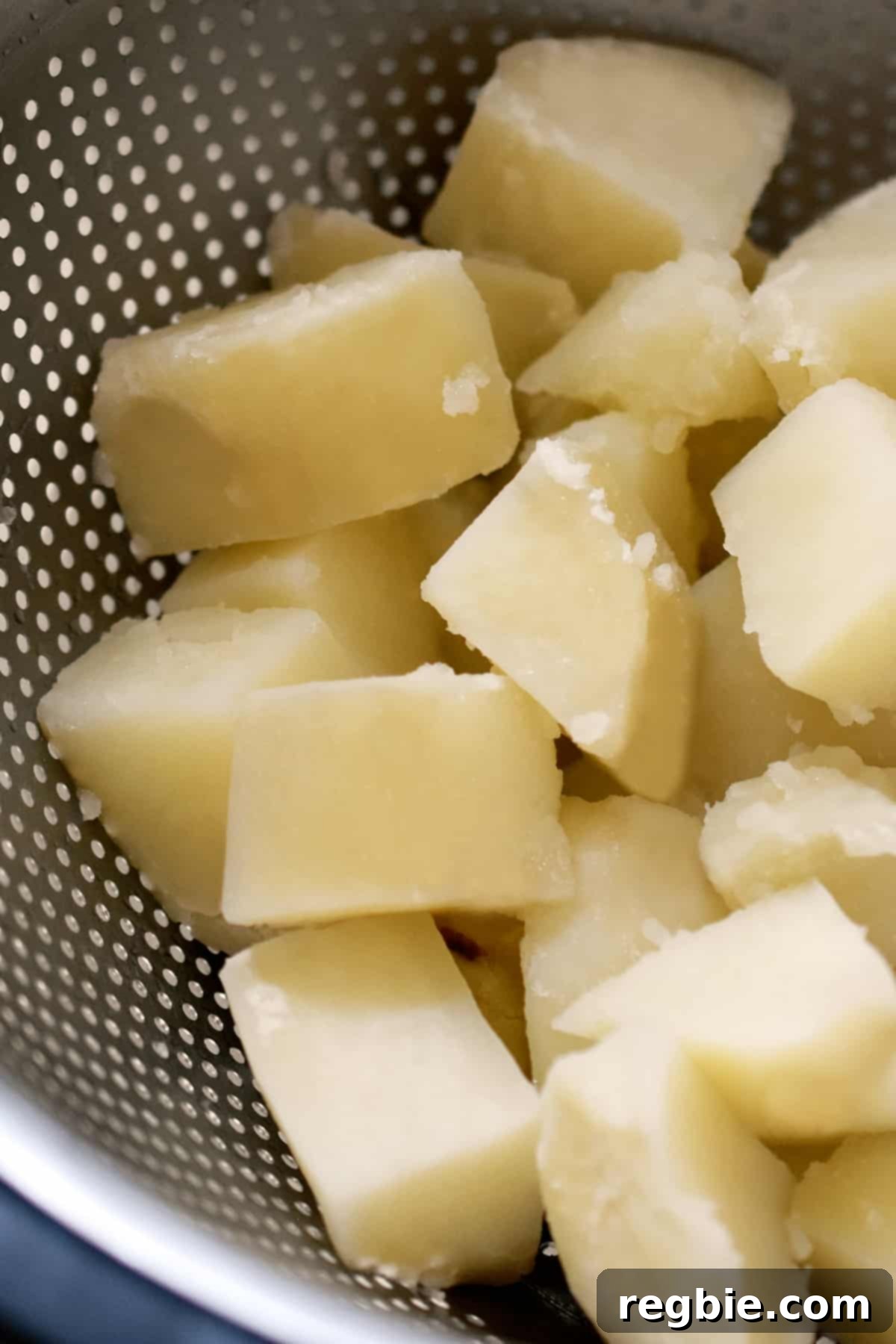
2. Prepare the Cucumbers
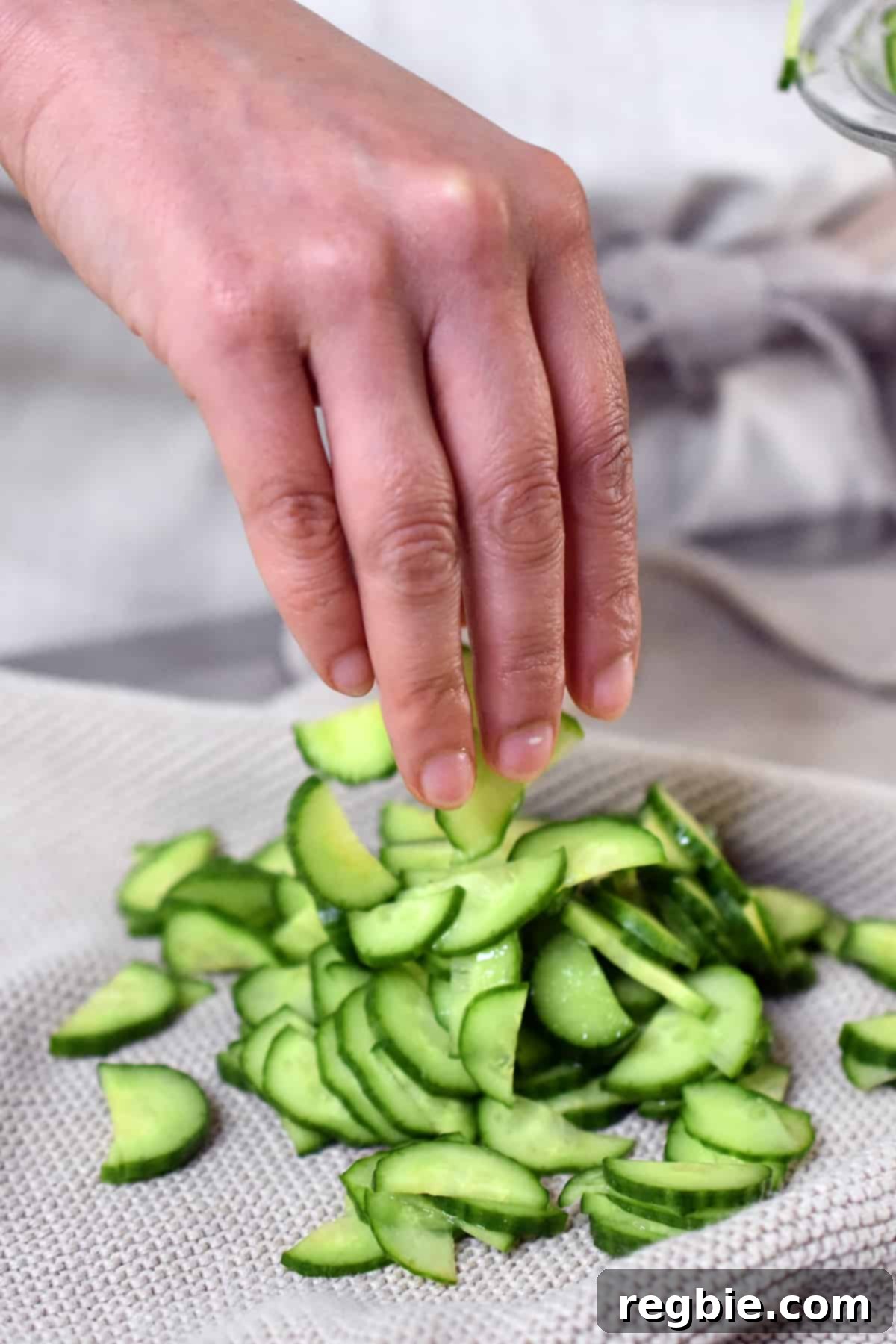
While the potatoes are cooking and cooling, prepare your cucumbers. In a small bowl, toss the thinly sliced Persian cucumbers with ½ teaspoon of kosher salt. Set them aside for at least 10 minutes. This salting process is crucial as it draws out excess moisture from the cucumbers, ensuring they remain wonderfully crunchy and don’t water down your potato salad.
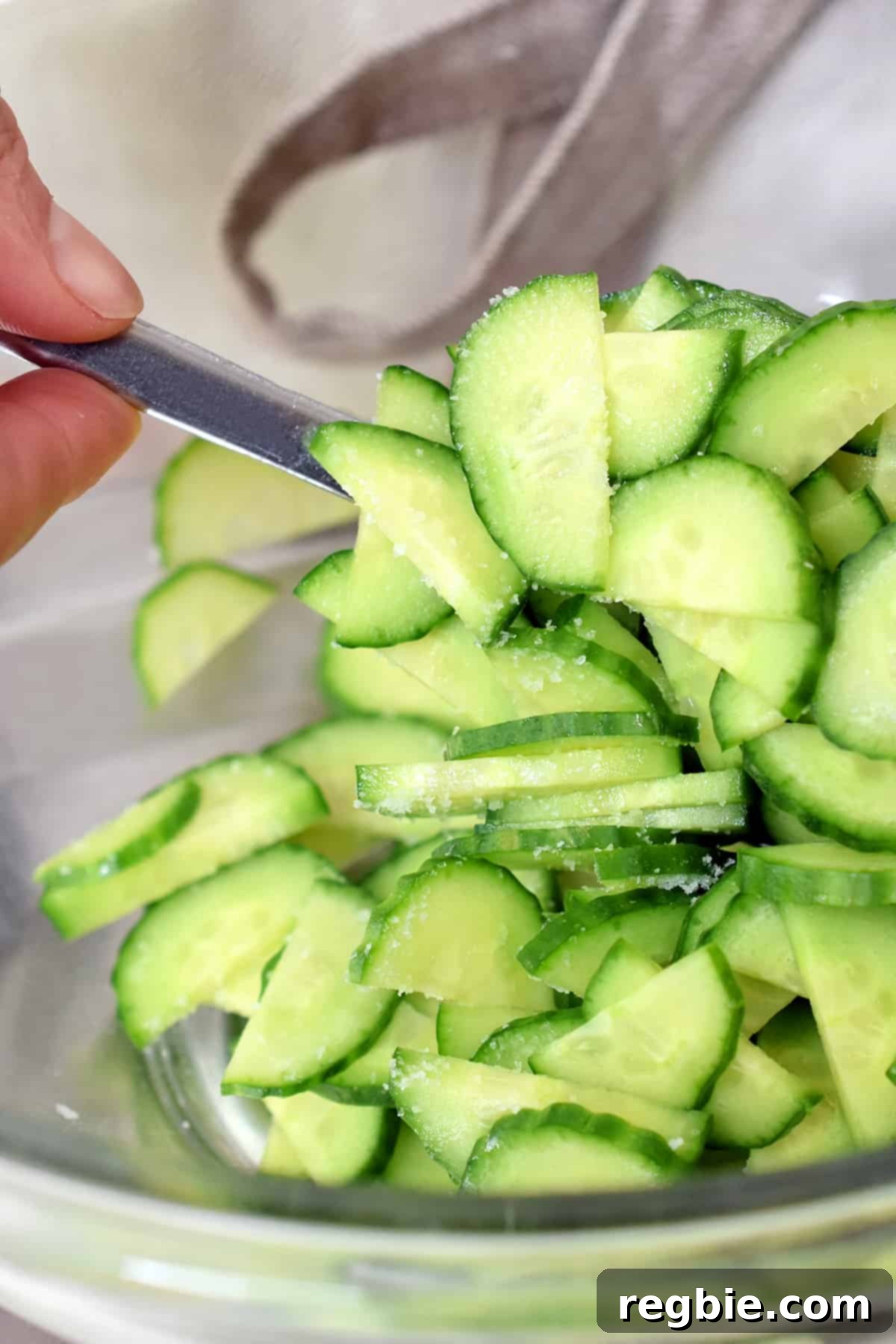
After 10 minutes, gather the salted cucumber slices and place them onto a clean kitchen towel. This can be a paper towel or a thin, lint-free cloth.
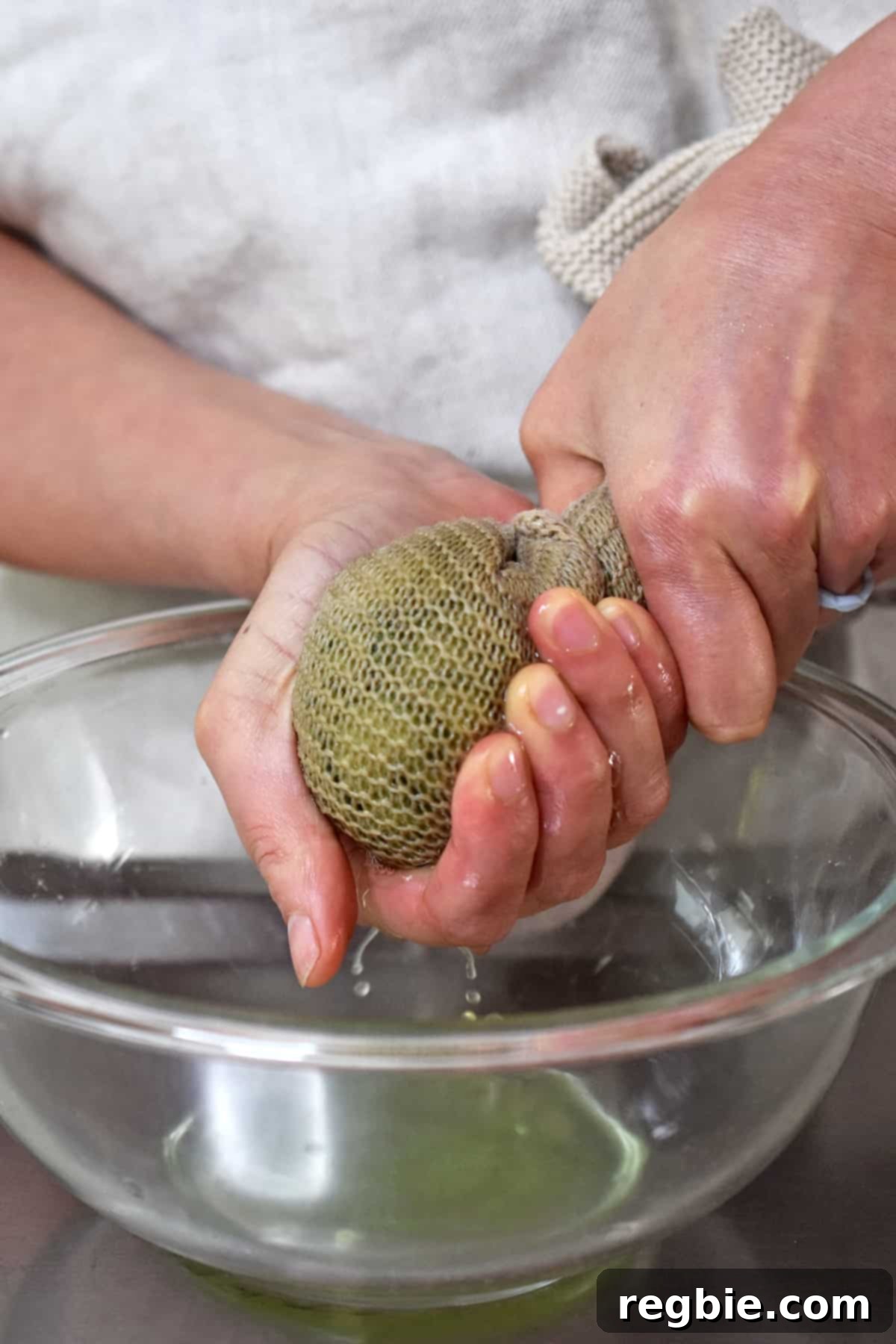
Firmly squeeze out and discard as much liquid as possible from the cucumbers. This step is essential for preventing a watery salad and maintaining that desired crunchy texture. Set the squeezed, dry cucumber slices aside.
3. Prepare the Dressing
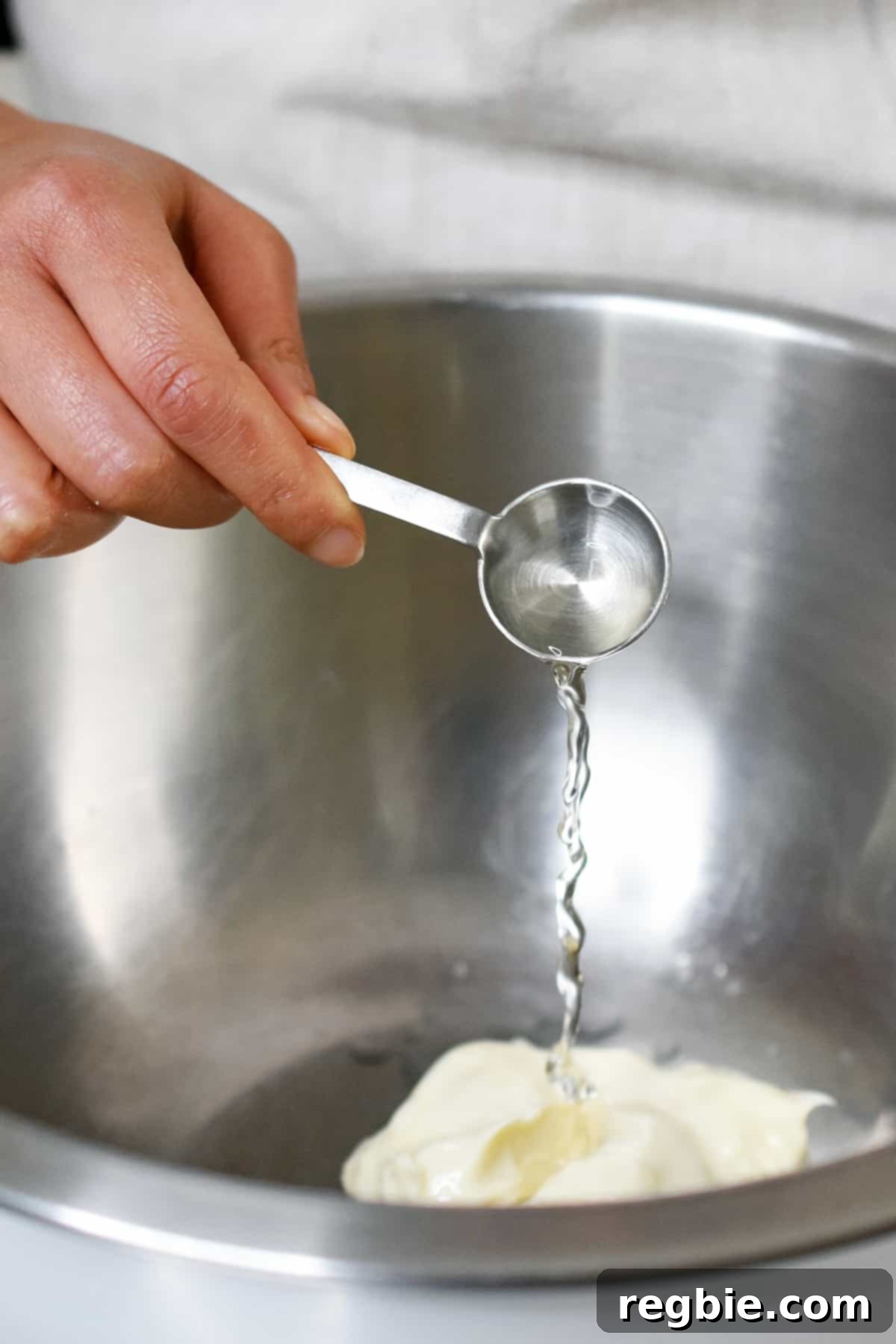
In a large mixing bowl, combine the paleo mayonnaise, unseasoned rice wine vinegar, and Dijon-style mustard. Stir these ingredients together thoroughly until the dressing is smooth and well-combined. This forms the creamy, tangy base that will bind all the salad components.
4. Combine and Mash the Potatoes with Dressing
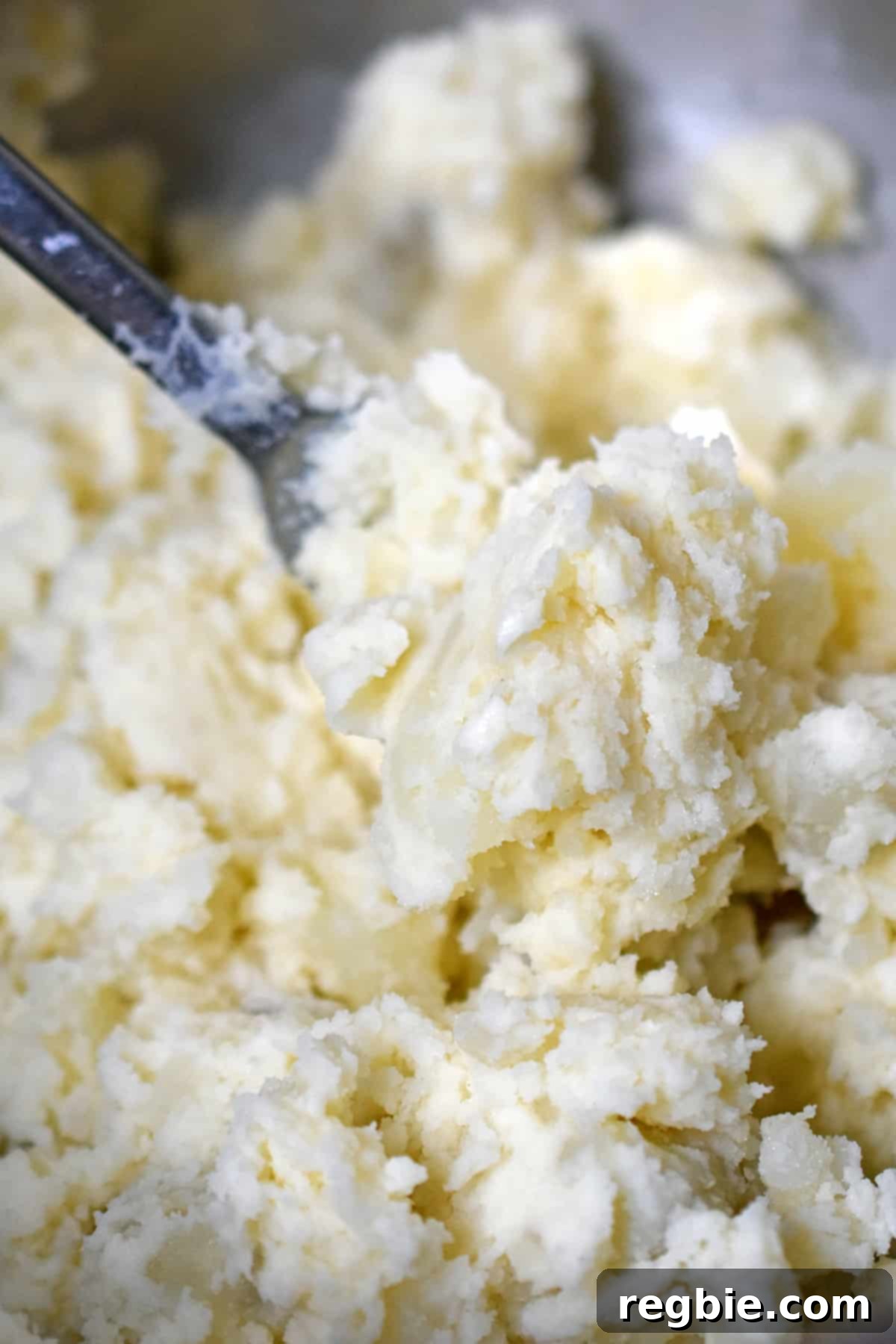
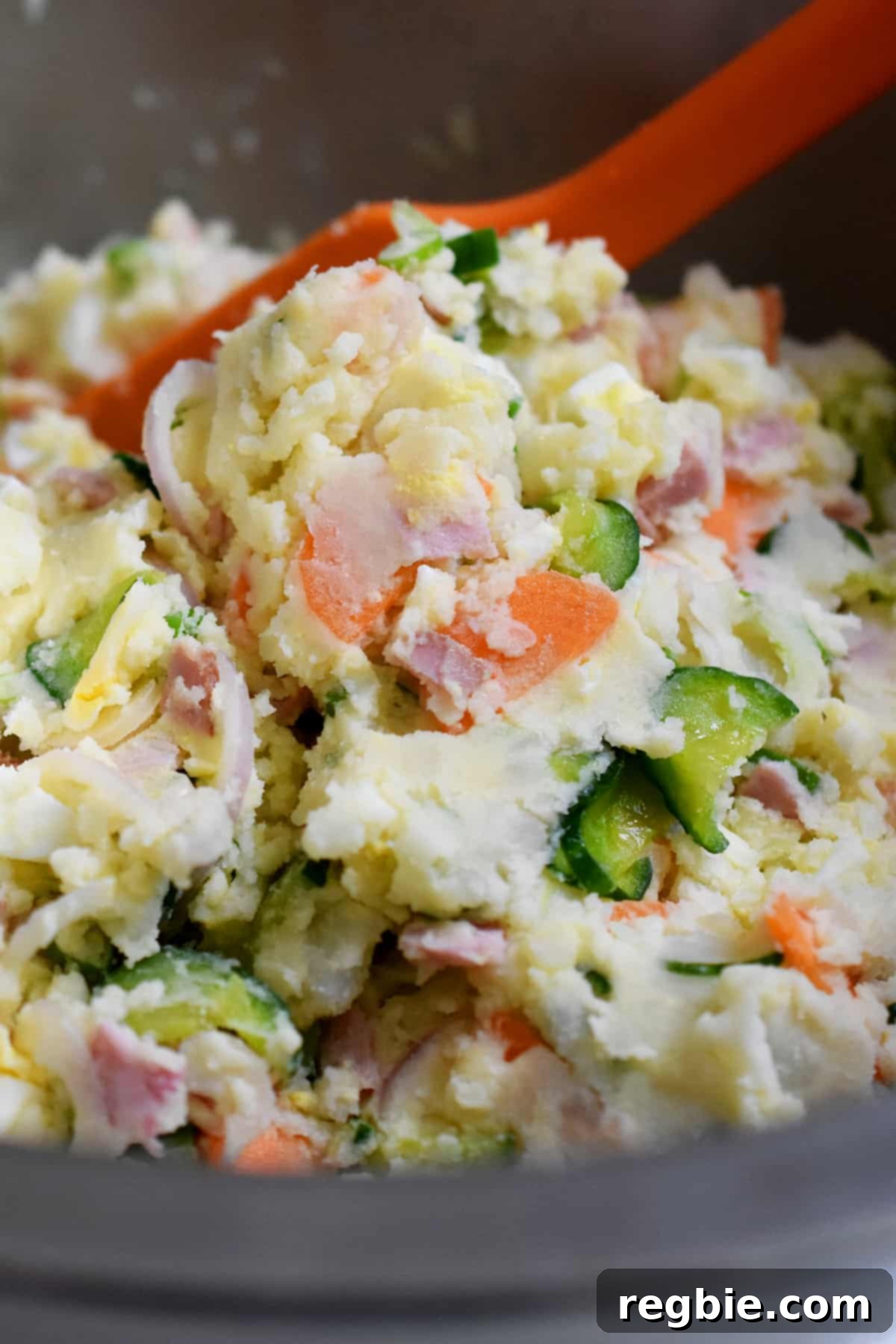
Add the completely cooled potatoes to the bowl containing the mayonnaise mixture. Using a sturdy fork or a potato masher, begin to mash the potatoes, thoroughly incorporating them with the dressing. The goal is a texture that resembles chunky mashed potatoes – creamy and smooth overall, but with some delightful potato chunks remaining for textural interest. Avoid over-mashing, which can make the salad gummy.
5. Fold in Remaining Ingredients and Season
Now it’s time to add all the prepared vegetables and protein. Gently stir in the squeezed cucumbers, sliced carrots, soaked and drained shallots (or red onion), chopped hard-boiled eggs, diced sugar-free ham (if using), and thinly sliced scallions. Fold these ingredients in carefully to distribute them evenly without further mashing the potatoes.
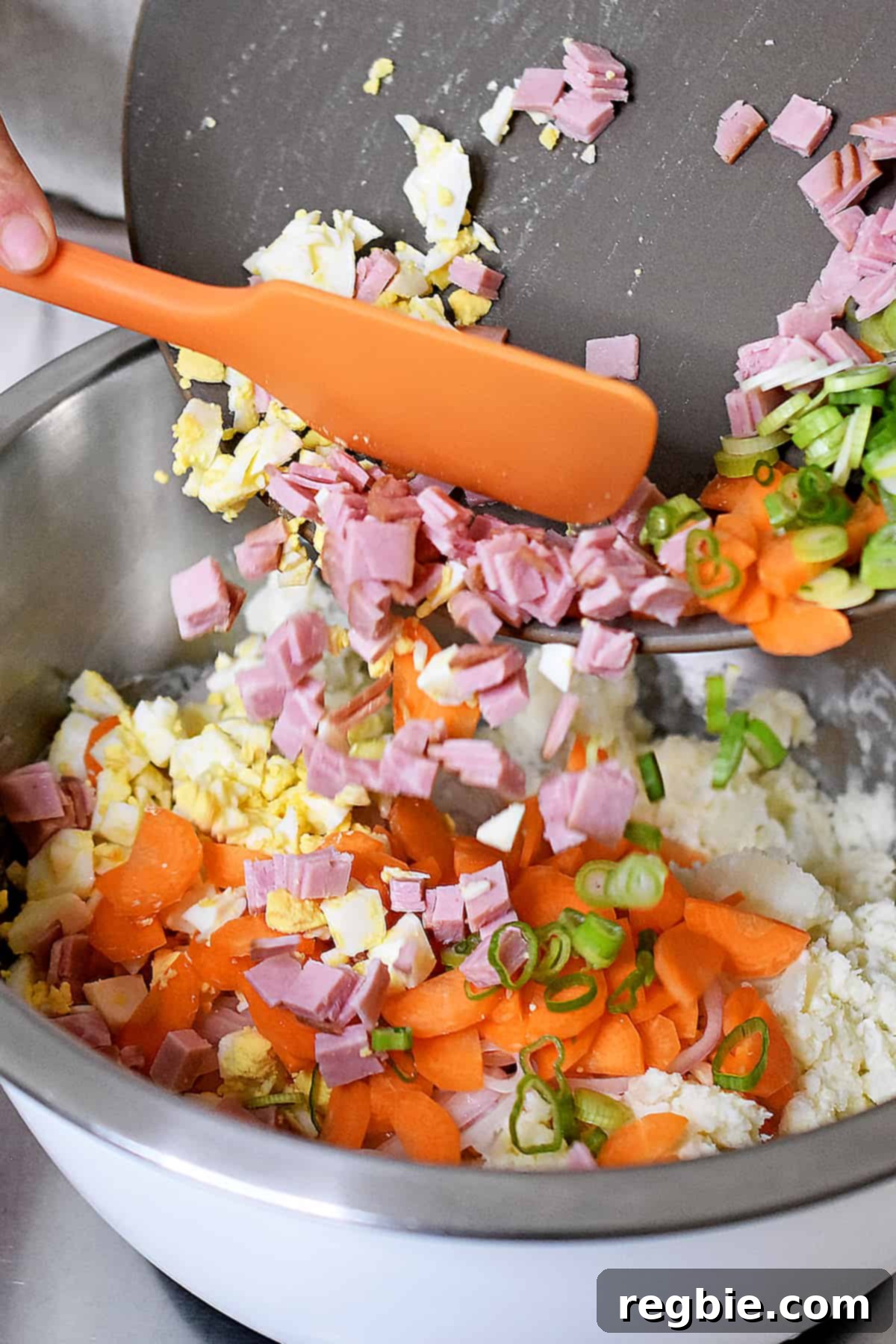
Taste the potato salad for seasoning. This is a crucial step! Adjust with additional kosher salt and freshly ground black pepper to your preference. Remember, proper seasoning elevates all the flavors.
6. Serve or Chill
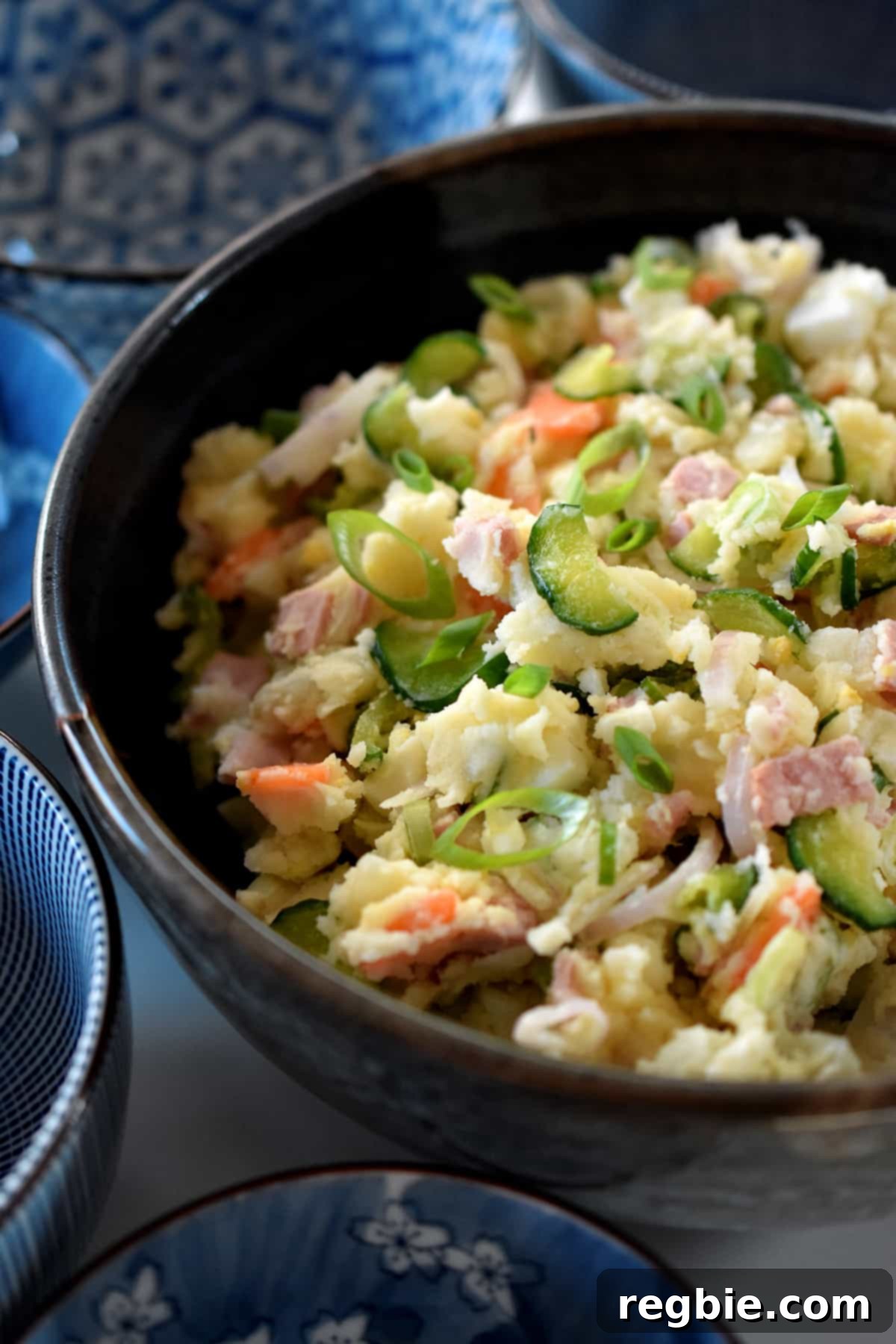
Your Japanese potato salad is now ready! You can serve it immediately and enjoy its fresh flavors, or, for an even better experience, chill it in the refrigerator for at least 30 minutes to an hour before serving. Chilling allows the flavors to meld and deepen, resulting in a more cohesive and refreshing taste. Enjoy this creamy, crunchy, and umami-packed delight!
Storage and Leftovers: Maximizing Freshness
Proper storage is key to enjoying your Japanese potato salad for as long as possible. Leftover potato salad should be transferred to an airtight container immediately after serving. Store it in the refrigerator, where it will remain fresh and delicious for up to 4 days. It’s crucial to keep it chilled to prevent spoilage, especially because it contains mayonnaise and eggs.
While many dishes can be frozen for later consumption, potato salad is generally not a good candidate for freezing. The high water content in potatoes, combined with the emulsion of the mayonnaise, tends to break down upon thawing. This results in an undesirable mushy texture and often a watery, separated dressing, significantly diminishing the quality and enjoyment of the salad. For the best experience, I strongly recommend consuming this Japanese potato salad fresh or within the recommended refrigerated timeframe.
Serving Suggestions: What to Pair with Your Japanese Potato Salad
This versatile Japanese potato salad makes an excellent side dish for a wide array of meals, particularly those with Asian or fusion influences. Its creamy, tangy, and slightly sweet profile beautifully complements savory main courses. Here are some fantastic pairing ideas:
- Tsukune (Japanese Chicken Meatballs): The rich, savory meatballs find a perfect balance with the refreshing salad.
- Beef Enoki Mushroom Rolls: The delicate flavors of beef and mushrooms are wonderfully enhanced by the creamy potato salad.
- Easy Pork Shoulder with Peach Glaze: The sweetness and succulence of the pork create a delightful contrast with the tangy salad.
- Cracklin’ Chicken: The crispy skin and juicy chicken provide a textural counterpoint to the soft potato salad.
- Air Fryer Chicken Nuggets: A family-friendly pairing, especially for picnics or casual meals.
- Grilled Fish or Seafood: The lightness of grilled salmon, cod, or shrimp pairs exquisitely with the rich salad.
- Japanese Curry or Donburi Bowls: Serve it as a refreshing contrast to heartier Japanese rice bowls.
- Sandwiches and Wraps: A fantastic addition to a packed lunch, bringing flavor and substance.
- Picnic Spreads: Its robust flavors and easy portability make it an ideal choice for outdoor gatherings alongside other cold dishes.
Experiment with your favorite grilled meats, pan-seared proteins, or even other light salads to discover new and exciting combinations. This Japanese potato salad is sure to become a cherished recipe in your culinary repertoire!
Looking for more delicious recipe ideas that align with your healthy eating goals? Be sure to head on over to my Recipe Index for a treasure trove of inspiration. You’ll also find exclusive, fan-favorite recipes thoughtfully crafted for balanced living in my critically acclaimed cookbooks: Nom Nom Paleo: Food for Humans (Andrews McMeel Publishing 2013), Ready or Not! (Andrews McMeel Publishing 2017), and our latest sensation, Nom Nom Paleo: Let’s Go! (Andrews McMeel Publishing 2022). Happy cooking!
Japanese Potato Salad – Creamy, Crunchy & Umami-Packed!
20 mins
25 mins
45 mins
8
Michelle Tam
Ingredients
- 1½ pounds russet potatoes, peeled and cut into 1½ inch cubes
- Diamond Crystal kosher salt
- 2 Persian cucumbers, thinly sliced into half-moons
- ⅓ cup paleo mayonnaise
- 2 teaspoons unseasoned rice vinegar
- 1 teaspoon Dijon mustard
- 1 small carrot, thinly sliced into half-moons
- ¼ cup thinly sliced shallot or red onion, soaked for 10 minutes in ice water and drained
- 2 hard boiled eggs, roughly chopped
- ½ cup diced sugar-free ham (optional)
- 2 scallions, thinly sliced
- Freshly ground black pepper
Instructions
-
Place the cubed russet potatoes into a large pot. Add enough cold water to fully submerge the potatoes by at least one inch. Stir in a generous pinch of Diamond Crystal kosher salt. Bring the water to a boil over high heat.
-
Once boiling, reduce the heat to a steady simmer. Cook for 10-15 minutes, or until the potatoes are tender and can be easily pierced with a fork. Drain the cooked potatoes thoroughly and allow them to cool completely to room temperature. For faster cooling, you can place them in the refrigerator.
-
While the potatoes are cooking, toss the thinly sliced cucumber pieces with ½ teaspoon of kosher salt in a small bowl. Set aside for at least 10 minutes to allow excess moisture to be released.
-
Transfer the salted cucumber slices to a clean kitchen towel. Firmly squeeze out and discard as much liquid as possible. Set the dry cucumber slices aside.
-
In a large mixing bowl, combine the paleo mayonnaise, unseasoned rice wine vinegar, and Dijon mustard. Stir until the dressing is smooth and well-combined.
-
Add the cooled potatoes to the bowl with the dressing. Using a fork or a potato masher, mash the potatoes well to incorporate them with the mayonnaise mixture. Aim for a creamy texture that still retains some chunky potato pieces.
-
Gently stir in the prepared cucumbers, sliced carrots, drained shallots (or red onion), chopped hard-boiled eggs, diced ham (if using), and thinly sliced scallions. Taste the salad for seasoning and adjust with additional salt and freshly ground black pepper as needed. Serve immediately, or chill in the refrigerator for at least 30 minutes before serving for enhanced flavor.
Video
Notes
Nutrition
Nutrition information is automatically calculated and should be used as an approximation.
Enjoyed this recipe? Share your thoughts below!
We love hearing from you and seeing your culinary creations. Please leave a comment and consider rating the recipe!