
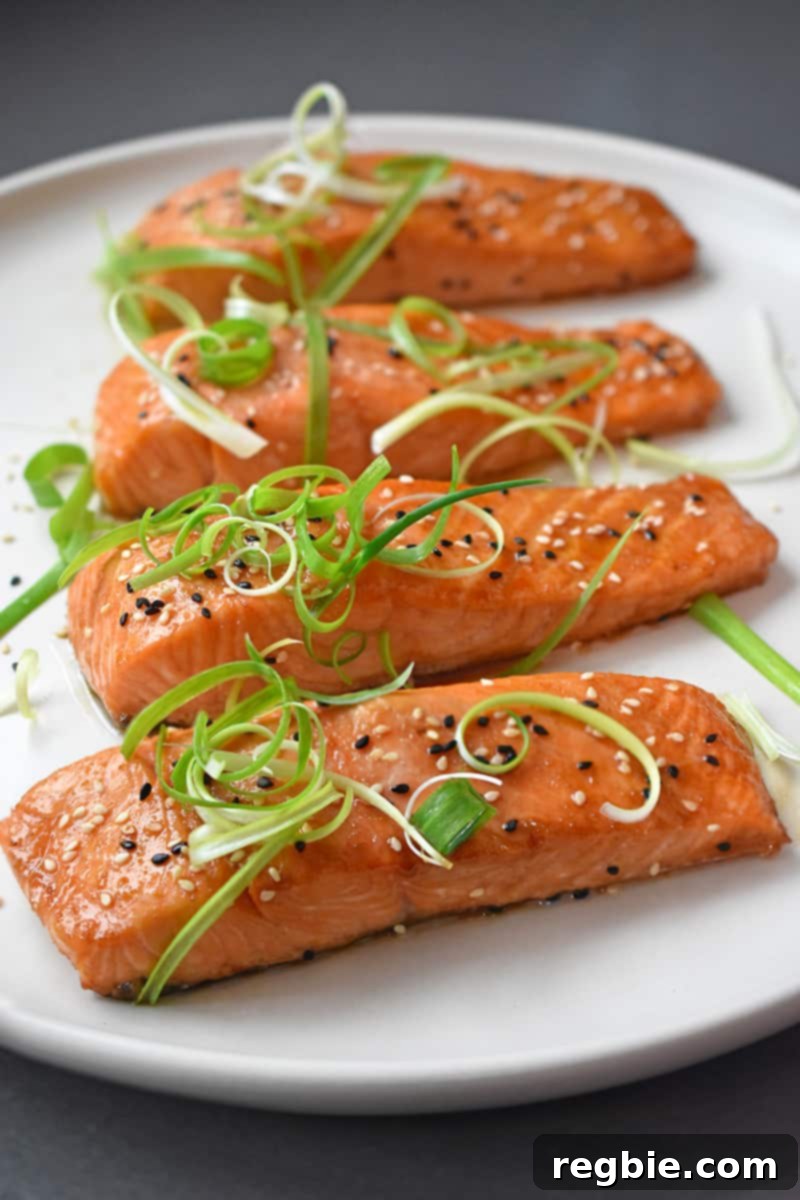
Say goodbye to bland weeknight meals and hello to this incredibly flavorful and easy teriyaki salmon recipe! If you thought enjoying a sweet-and-savory teriyaki dish was off-limits due to dietary restrictions like gluten-free or Whole30, prepare to be delighted. This recipe proves that you can have all the rich taste of classic teriyaki without refined sugars or gluten, making it a perfect, wholesome option for any evening. It’s not just delicious; it’s designed for simplicity, ensuring a fantastic meal even on your busiest days.
Table of Contents
- A Healthy and Easy Baked Teriyaki Salmon Recipe for Busy Weeknights!
- The Secret to Incredible Flavor: It’s All About the Sauce
- Optimal Marination Time for Perfect Teriyaki Salmon
- Choosing the Best Salmon for Your Teriyaki Dish
- Air Fryer Adaptation: Quick Teriyaki Salmon
- Achieving Perfect Salmon Doneness Every Time
- Essential Ingredients for Easy Teriyaki Salmon
- Step-by-Step Guide: How to Make Teriyaki Salmon
- Delicious Side Dishes to Complement Your Teriyaki Salmon
- Storing Leftover Teriyaki Salmon for Future Meals
- Explore More Healthy and Delicious Fish Recipes
- Printer-Friendly Recipe Card
A Healthy and Easy Baked Teriyaki Salmon Recipe for Busy Weeknights!
Are you searching for a healthy, simple, and incredibly flavorful meal that fits seamlessly into your busy schedule? Look no further than this fantastic baked teriyaki salmon recipe! It masterfully captures all the nuanced flavors of a classic teriyaki sauce – the savory depth of soy, the subtle sweetness of mirin, the aromatic warmth of ginger and garlic – but with a wholesome twist. We achieve this delicious balance using only real food ingredients, completely free from gluten and refined sugars. While our homemade sauce might not be as overtly syrupy or cloyingly sweet as some restaurant versions, its authentic taste is absolutely paramount, ensuring a truly satisfying culinary experience.
The proof of its unparalleled flavor and kid-friendliness lies in the fact that even my pickiest eaters, my own children, devour this dish with enthusiasm. Their approval is the highest honor a recipe can receive! Beyond its incredible taste, the true beauty of this teriyaki salmon lies in its sheer simplicity. Forget complicated steps and lengthy cooking times. This recipe streamlines the entire process: a quick marinate, a fuss-free bake, a simple garnish, and then it’s ready to be savored. It’s the ultimate solution for a healthy and hearty weeknight dinner that doesn’t compromise on taste or quality.
The Secret to Incredible Flavor: It’s All About the Sauce
You might be surprised to learn that the magical, gluten-free teriyaki sauce gracing these salmon fillets is none other than my incredibly versatile All-Purpose Stir-Fry Sauce. This sauce is truly a culinary game-changer, designed to be a hyper-versatile flavor booster that can elevate nearly any dish. My initial goal in creating it was to maximize the return on a mere five minutes of preparation time – shaking up a jar of this savory goodness needed to yield exponential flavor, and I’m confident it has succeeded!
The All-Purpose Stir-Fry Sauce forms the heart of this teriyaki salmon, delivering a complex profile of umami, savory, and subtly sweet notes without any added refined sugar or problematic ingredients. It’s crafted with high-quality, real food components that mimic the depth of traditional teriyaki, offering a healthier alternative without sacrificing taste. This sauce is not just for stir-fries; it’s perfect for marinades, glazes, and even as a finishing touch for roasted vegetables. Its ability to effortlessly transform simple ingredients into extraordinary meals is why it’s a staple in my kitchen. Don’t just take my word for it; explore this ever-growing list of recipes where this sauce shines, proving its indispensable role in healthy, flavorful cooking.
Optimal Marination Time for Perfect Teriyaki Salmon
Marinating your salmon is a crucial step that infuses it with deep teriyaki flavor, ensuring every bite is moist and delicious. The beauty of this recipe is its flexibility: you can marinate the salmon fillets for as little as 15 minutes, which is often just enough time for your oven to preheat. This quick option makes it ideal for spontaneous weeknight meals when time is of the essence but flavor is still a priority.
For a more pronounced flavor infusion and an even tenderer texture, you can extend the marination period. The salmon can comfortably marinate for up to 8 hours in a sealed container in the refrigerator. This longer soak allows the savory notes of the All-Purpose Stir-Fry Sauce to penetrate deeper into the fish, resulting in a richer taste. However, it’s important not to push the marination beyond 8 hours. The subtle acidity in the sauce, while beneficial for tenderizing, can begin to break down the delicate structure of the salmon if left too long, potentially leading to a mushy texture. Finding this sweet spot ensures your salmon is perfectly flavored and retains its desirable firm yet flaky consistency.
Choosing the Best Salmon for Your Teriyaki Dish
The type of salmon you choose can significantly impact the final taste and texture of your teriyaki dish. My personal preference leans towards wild king salmon due to its rich, buttery flavor and high fat content, which makes it incredibly forgiving and hard to overcook. However, wild king salmon can be quite expensive, and as a thrifty child of immigrants, I understand the importance of smart choices!
For a more budget-friendly yet still delicious option, I often opt for responsibly farmed steelhead trout or Atlantic salmon. These varieties offer a wonderful balance of flavor and texture that holds up beautifully to the teriyaki marinade. Steelhead trout, in particular, has a mild, sweet flavor and a vibrant color similar to salmon, making it an excellent alternative.
Conversely, I generally don’t prefer sockeye salmon for this recipe. While it’s a popular choice for its deep red color, I find its flavor can sometimes be a bit too “fishy” for teriyaki, and its leaner flesh makes it much easier to overcook and dry out. If my top choices aren’t available, I’d rather pivot to other firm white fish like sea bass, halibut, or cod, which absorb flavors well and cook up moist and flaky.
Navigating the world of sustainable seafood can indeed be confusing. That’s why I always recommend consulting the Monterey Bay Aquarium Seafood Watch. It’s an invaluable resource for the latest recommendations on environmentally responsible seafood choices, ensuring you can enjoy your meal knowing you’ve made a good choice for the planet. Making informed decisions about your fish not only supports sustainability but also guarantees a better-tasting meal.
Air Fryer Adaptation: Quick Teriyaki Salmon
Absolutely! The air fryer is a fantastic tool for achieving perfectly cooked teriyaki salmon with minimal effort and in even less time than oven baking. Its circulating hot air creates a beautifully crispy exterior while keeping the inside tender and juicy. To prepare your salmon for the air fryer, I highly recommend creating a “sling” out of aluminum foil or parchment paper. Simply cut a piece of foil or parchment slightly wider than your salmon fillets and long enough to line the bottom of your air fryer basket with enough overhang on the sides to easily lift the cooked fish out. This prevents sticking and makes cleanup a breeze.
The cooking temperature remains the same as for oven baking: 400°F (200°C). However, the cooking time will be significantly reduced due to the air fryer’s efficient heating. Start checking the doneness of your salmon around the 7-minute mark. Depending on the thickness of your fillets and your specific air fryer model, it could be done anywhere between 7 and 10 minutes. Always rely on a meat thermometer for accuracy, aiming for your desired internal temperature. This method is incredibly convenient for a super-fast and healthy weeknight dinner. (For reference, I personally use this air fryer for excellent results.)
Achieving Perfect Salmon Doneness Every Time
Ensuring your salmon is cooked to perfection is key to enjoying its delicate flavor and moist texture. The most reliable and accurate way to determine doneness is by using a high-quality meat thermometer. Insert the thermometer into the thickest part of the salmon fillet, making sure not to touch the bone if present.
For my family, we prefer our salmon cooked to a beautiful medium doneness. This means the fish is cooked through but remains incredibly moist and flaky, never chalky or dry. This ideal internal temperature typically falls between 130°F to 135°F (54°C to 57°C). If you favor a slightly rarer salmon, aiming for medium-rare, you should target an internal temperature of around 120°F (49°C).
While the USDA recommends cooking salmon to 145°F (63°C) for food safety, in my culinary experience, this often results in an overcooked and drier texture. For optimal flavor and moisture, I find it best to remove the salmon from the heat when it reaches my preferred temperature range. Remember, the fish will continue to cook slightly from residual heat after it’s removed from the oven, so pulling it out a few degrees before your target can prevent overcooking. Visually, a perfectly cooked salmon will flake easily with a fork and have an opaque, light pink interior, with a slightly translucent center if you prefer it on the rarer side.
Essential Ingredients for Easy Teriyaki Salmon
Crafting this delicious and healthy teriyaki salmon requires just a few key components, many of which you might already have in your pantry. Each ingredient plays a vital role in building the incredible flavor profile:
- Salmon fillets, about 5 ounces each: As discussed above, the quality and type of salmon make a difference. Choose fresh, high-quality fillets. For the best taste and texture, refer to my tips on selecting the right salmon for this dish, prioritizing wild king salmon or responsibly farmed steelhead trout/Atlantic salmon.
- All-Purpose Stir-Fry Sauce: This is the star of our teriyaki. Make sure you have a batch ready, as it provides all the sweet, savory, and umami notes without any refined sugar or gluten. It’s the foundation of the marinade and the vibrant finishing glaze.
- Toasted sesame seeds: These tiny seeds add a delightful nutty flavor and a pleasing textural crunch. They also provide a beautiful visual contrast, making the finished dish even more appealing.
- Scallions / Green onions: Freshly sliced scallions are essential for a pop of fresh, mild onion flavor and a touch of vibrant green color. They brighten the dish and add a delicate aromatic finish.
With these simple, high-quality ingredients, you’re well on your way to creating an unforgettable teriyaki salmon dinner that is both incredibly healthy and bursting with flavor.
Step-by-Step Guide: How to Make Teriyaki Salmon
Preparing this easy teriyaki salmon is a straightforward process, designed for maximum flavor with minimal fuss. Follow these simple steps for a perfect weeknight meal:
Step 1: Prepare the Salmon for Marination. Begin by placing your salmon fillets in a high-sided baking dish. Ensure the fillets fit snugly within the dish, which helps to keep them submerged in the marinade and ensures even flavor distribution. A tight fit also minimizes the amount of sauce needed.
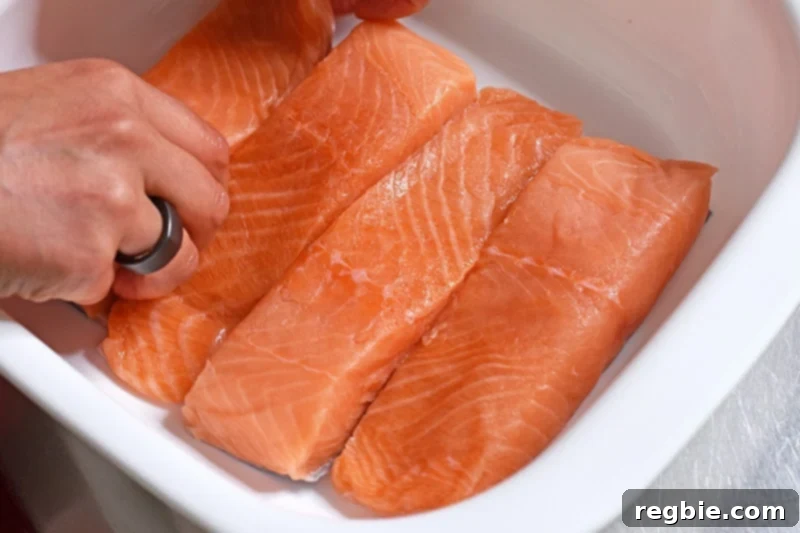
Step 2: Add the Teriyaki Marinade. Pour the majority of your prepared All-Purpose Stir-Fry Sauce over the salmon fillets in the dish. However, remember to reserve about 2 tablespoons of the sauce. This small portion will be used at the very end of the cooking process as a fresh brush-on glaze, adding an extra vibrant punch of umami and glossy finish to your cooked salmon.
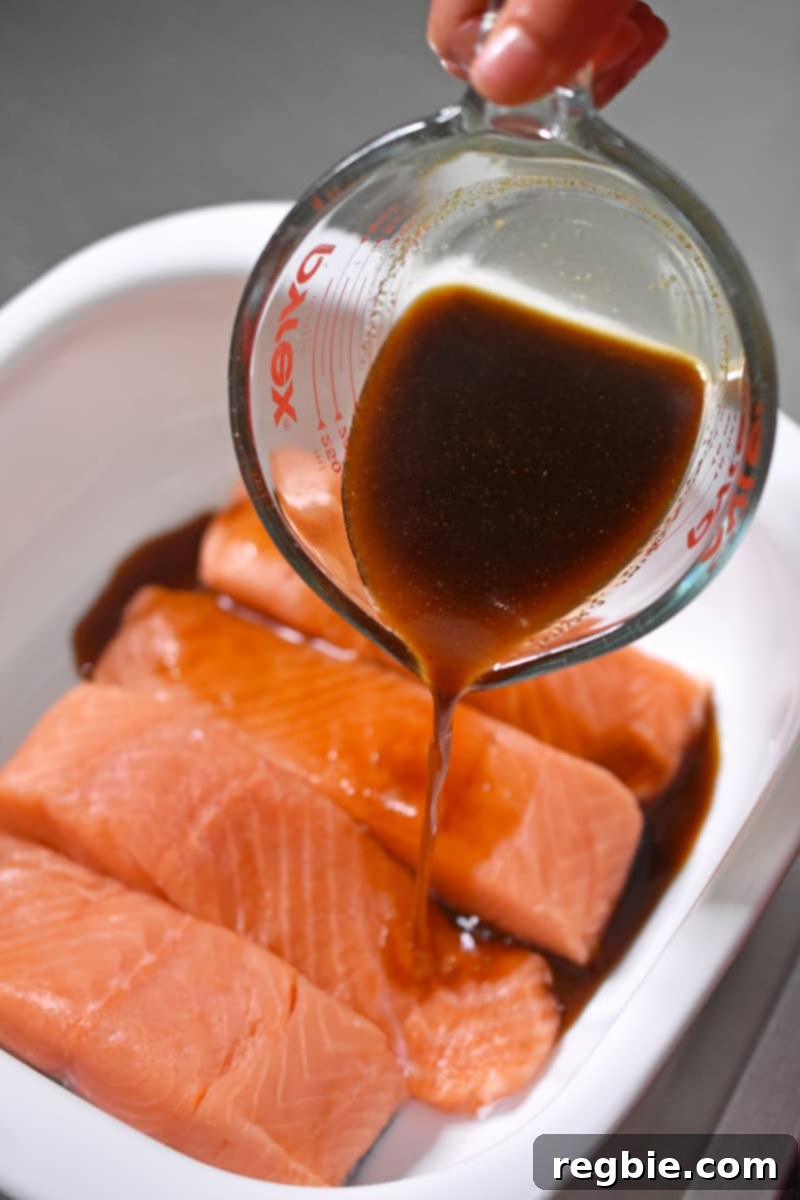
Step 3: Coat the Salmon Evenly. Gently turn the salmon fillets in the teriyaki marinade to ensure every surface is thoroughly coated. This step is crucial for even flavor penetration and helps the fish absorb all the delicious notes of the sauce. Use tongs or your hands (wearing gloves, if preferred) to carefully flip and move the fillets.
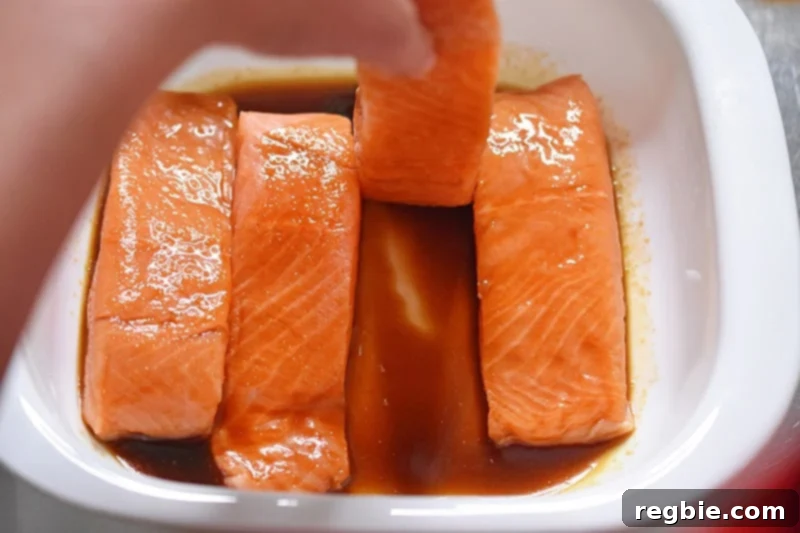
Step 4: Marinate for Optimal Flavor. Arrange the fillets skin-side up in the marinade. This helps protect the flesh of the fish during marination and can lead to a crispier skin when baked. Cover the dish and refrigerate. You can marinate the fish for as little as 15 minutes (while the oven preheats) for a quick flavor boost, or for up to 8 hours for a deeper infusion. Remember, avoid marinating for longer than 8 hours to prevent the salmon from becoming mushy due to the acidity of the sauce.
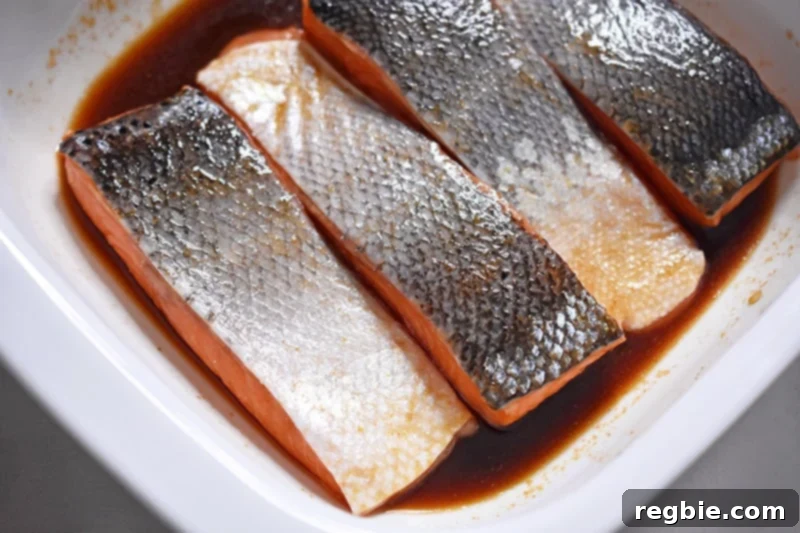
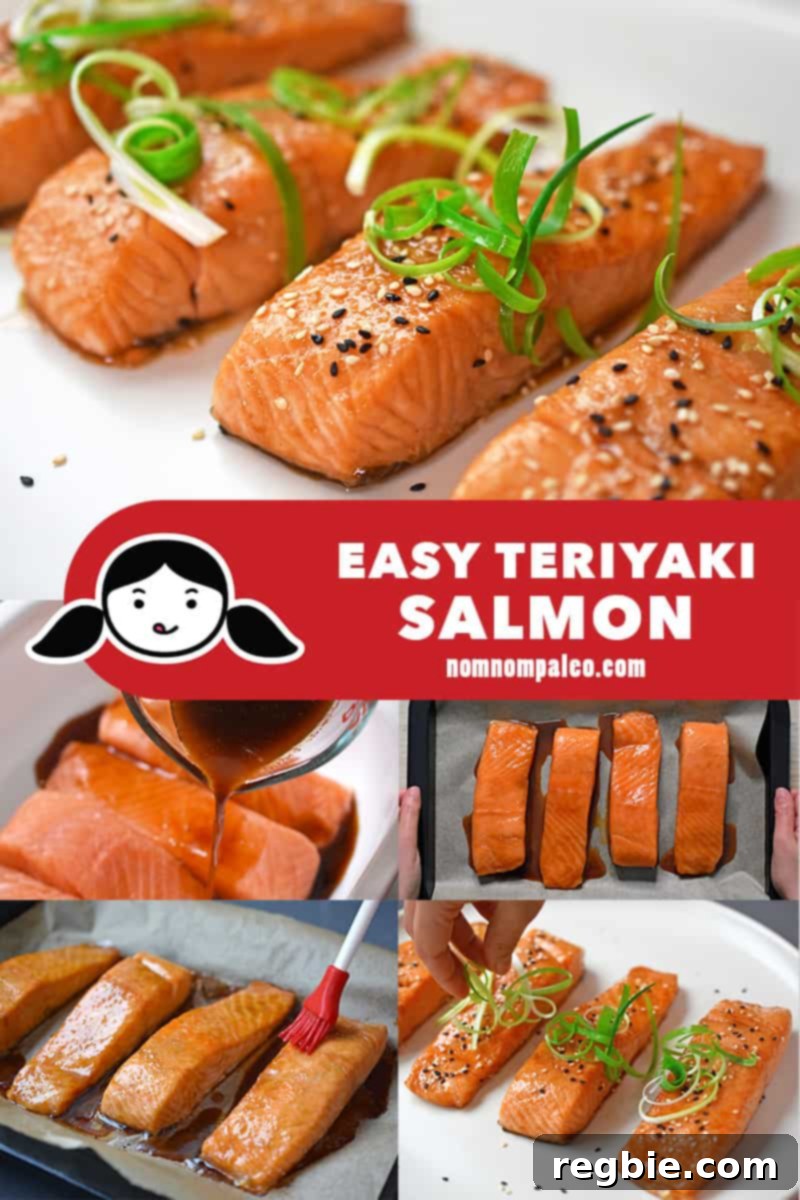
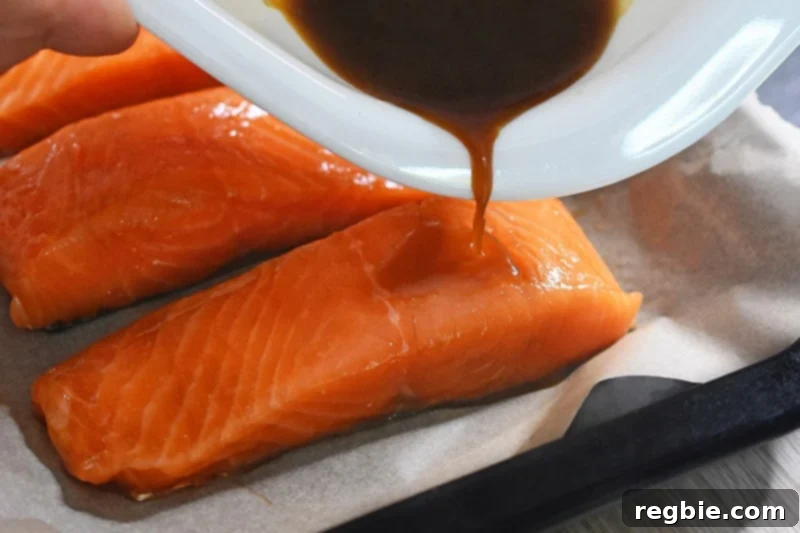
Step 5: Prepare for Baking. When you’re ready to cook your teriyaki salmon, preheat your oven to 400°F (200°C) with an oven rack positioned in the middle. This ensures even cooking. Line a baking sheet with parchment paper; this isn’t strictly necessary but greatly simplifies cleanup by preventing the salmon from sticking. Carefully remove the marinated salmon fillets from the dish and place them, skin-side down, onto the prepared baking sheet.
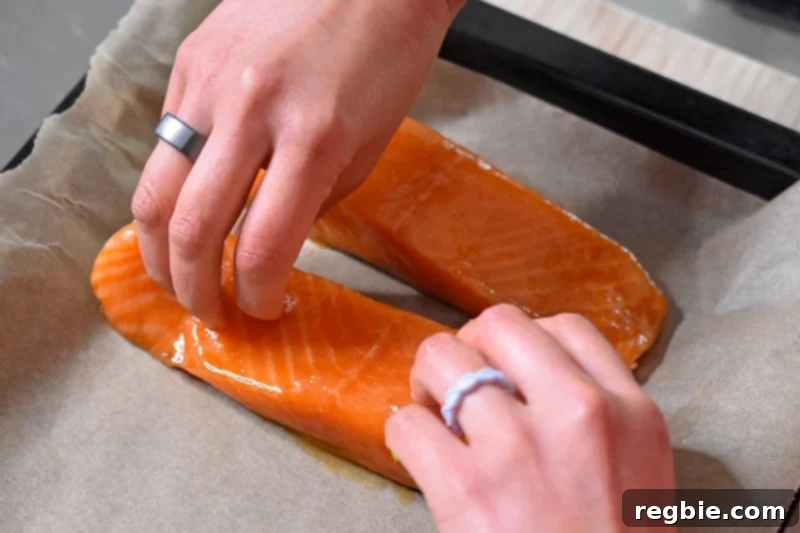
Step 6: Add Extra Marinade for Flavor. Before baking, pour a small amount of the marinade from the dish over the salmon fillets on the baking sheet. This adds another layer of flavor and helps create a lovely glaze as the salmon cooks. Be careful not to use the reserved “clean” All-Purpose Stir-Fry Sauce here; that’s for after baking.
Step 7: Bake to Perfection. Transfer the baking sheet to the preheated oven and bake the salmon for 8 to 12 minutes. The exact cooking time will vary depending on the thickness of your fillets and your desired level of doneness. Use a meat thermometer to confirm the internal temperature.
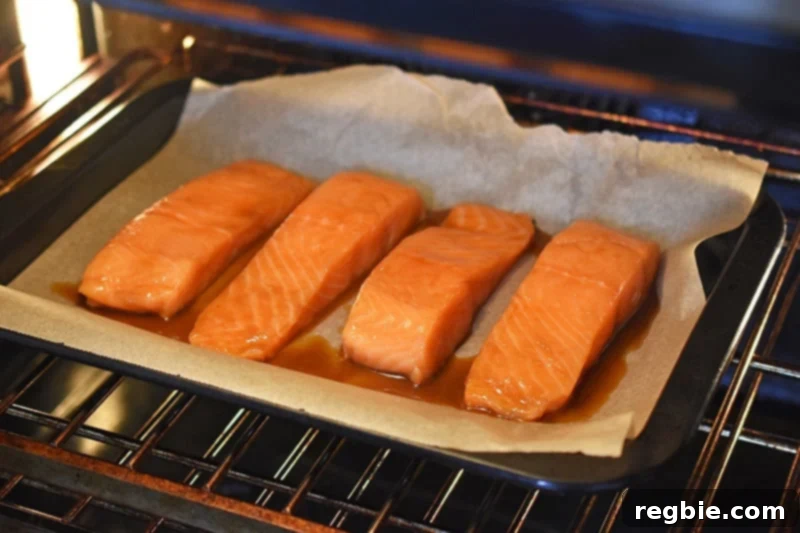
As I mentioned earlier, for a perfectly moist, medium-cooked salmon that’s flaky but not chalky, aim for an internal temperature of about 130°F to 135°F (54°C to 57°C) in the thickest part of the fillet. Remove the salmon from the oven immediately once it reaches your preferred doneness.
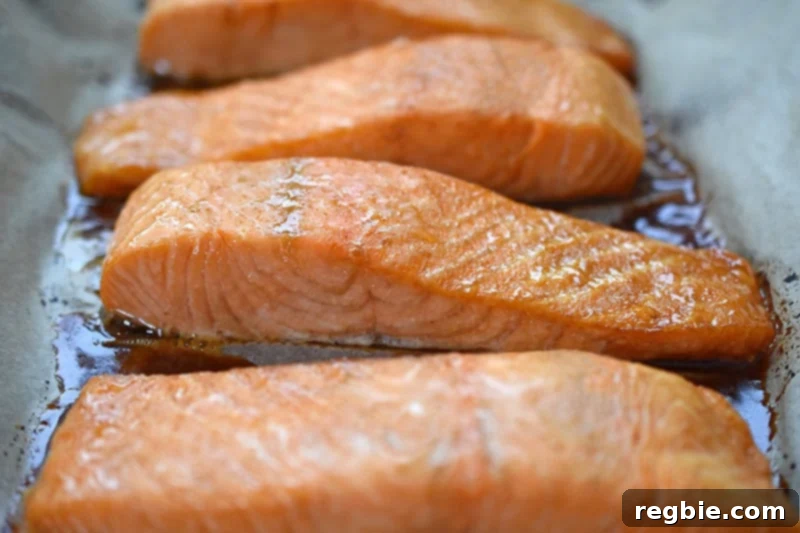
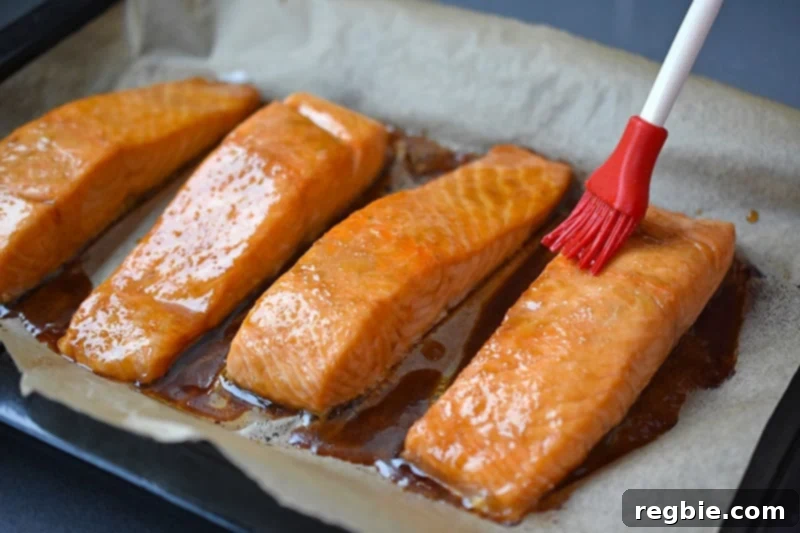
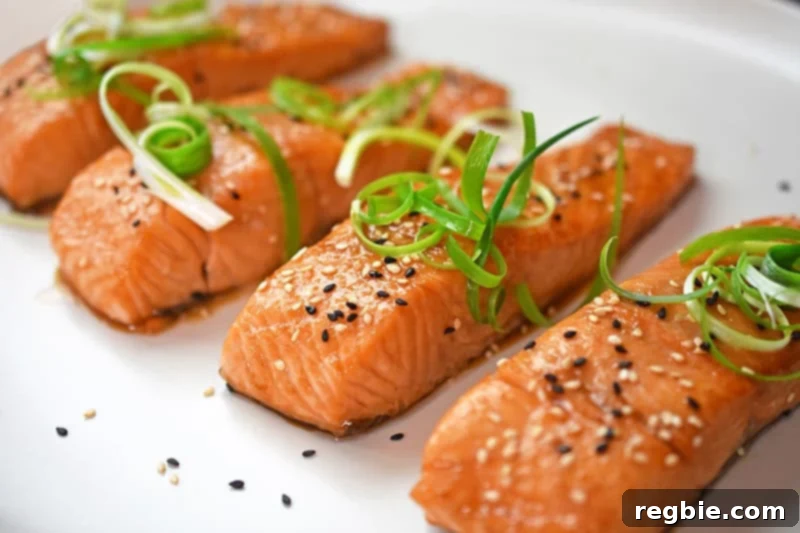
Step 8: Glaze and Garnish. Once your salmon is cooked and fresh out of the oven, take the reserved “clean” All-Purpose Stir-Fry Sauce (the portion you didn’t use for marinating) and brush it generously over the warm fillets. This step adds a bright, fresh kick of flavor and a beautiful glossy sheen, elevating the overall presentation and taste.
Finally, complete your magnificent dish by sprinkling toasted sesame seeds generously over the salmon. Follow this with a scattering of thinly sliced green onions (scallions). These garnishes not only add color and texture but also a fresh, aromatic finish. Serve immediately and enjoy your perfectly prepared, healthy, and easy teriyaki salmon!
Delicious Side Dishes to Complement Your Teriyaki Salmon
Easy Teriyaki Salmon is a versatile main course that pairs wonderfully with a variety of side dishes, creating a balanced and satisfying meal. The key is to choose sides that complement the rich, savory, and slightly sweet flavors of the salmon without overpowering them. Here are some excellent suggestions:
- Simple Cauliflower Rice: A fantastic low-carb and Whole30-compliant option. Its neutral flavor and fluffy texture absorb the teriyaki sauce beautifully, mimicking traditional rice without the grains.
- Pineapple Coleslaw: For a burst of freshness and a touch of tropical sweetness, this coleslaw offers a delightful crunch and a vibrant contrast to the salmon’s richness.
- Roasted Vegetables: A simple sheet pan of roasted broccoli, asparagus, or bell peppers tossed with a little olive oil, salt, and pepper makes for an easy and nutritious addition. Their slight char adds another layer of flavor.
- Japanese Potato Salad: If you’re not strictly Whole30, a creamy and savory potato salad can be a comforting and delicious pairing.
- Stir-Fried Bok Choy: Lightly stir-fried bok choy with garlic is a quick and healthy green side that brings a fresh, slightly bitter note, balancing the richness of the salmon.
- A Big Green Salad: A simple mixed green salad with a light vinaigrette offers a refreshing counterpoint, adding crispness and freshness to your meal.
Remember that the versatile All-Purpose Stir-Fry Sauce isn’t just for the salmon! You can also use it to dress your side dishes, like a quick stir-fry of vegetables or as a flavor enhancer for cauliflower rice, tying the entire meal together seamlessly.
For the ultimate easy dinner, consider turning this into a simple Sheet Pan Teriyaki Salmon meal by baking your salmon alongside a medley of colorful vegetables on one pan. It’s an effortless way to ensure a complete and delicious dinner with minimal cleanup.
Storing Leftover Teriyaki Salmon for Future Meals
Having leftovers of this delicious teriyaki salmon is a wonderful bonus, offering a quick and healthy meal option for another day. Properly stored, leftover teriyaki salmon can be kept in a sealed, airtight container in the refrigerator for up to 4 days. This ensures its freshness and prevents any unwanted odors from permeating your fridge.
While some people prefer to gently reheat cooked salmon, I personally don’t always love the taste or texture of reheated fish. Often, the delicate flesh can become a bit dry or develop a stronger “fishy” aroma when warmed up. My favorite way to enjoy leftover teriyaki salmon is actually cold!
Simply flake the cold salmon over a bed of fresh salad greens, and you have an instant, protein-packed lunch. It’s also excellent crumbled into lettuce wraps, added to a vibrant rice bowl (with cauliflower rice for a Whole30 option), or even mixed into an avocado salad for a quick and satisfying meal. The bold flavors of the teriyaki marinade hold up beautifully when chilled, making these cold applications incredibly delicious and convenient.
Explore More Healthy and Delicious Fish Recipes
If you’ve enjoyed this easy teriyaki salmon and are looking to incorporate more healthy and flavorful fish dishes into your diet, you’re in luck! Fish is an excellent source of lean protein and essential omega-3 fatty acids, making it a fantastic choice for nourishing meals. Here are some more beloved recipes that celebrate the versatility and deliciousness of seafood:
- Fish in Veracruz Sauce
- Air Fryer Fish Sticks
- Tuna Poke with Avocado
- Macadamia-Crusted Sriracha Ranch Salmon
- Air Fryer Salmon with Honey Sriracha Glaze
- Poached Cod in Tomato Sauce
Looking for even more recipe ideas to inspire your culinary adventures? Head on over to my Recipe Index, where you’ll discover a treasure trove of healthy, delicious, and easy-to-follow recipes. Additionally, you’ll find exclusive and innovative recipes in my acclaimed cookbooks: Nom Nom Paleo: Food for Humans (Andrews McMeel Publishing 2013), Ready or Not! (Andrews McMeel Publishing 2017), and the latest, Nom Nom Paleo: Let’s Go! (Andrews McMeel Publishing 2022). Happy cooking!
Printer-Friendly Recipe Card
Easy Teriyaki Salmon
5
25
4 people
Michelle Tam
Equipment
-
Rimmed dish
-
Measuring cup
-
Chef’s knife
-
Cutting board
-
Rimmed baking sheet
-
Parchment Paper
-
Meat thermometer
Ingredients
- 4 salmon fillets 5 ounces each
- ½ cup All-Purpose Stir-Fry Sauce divided
- 1 tablespoon toasted sesame seeds
- 2 scallions thinly sliced
Instructions
-
Place the salmon fillets in a high-sided dish where they’ll fit snugly. Pour in most of the All-Purpose Stir-Fry Sauce, but reserve about 2 tablespoons of it. (You’ll brush it on at the end to add an extra punch of umami.)
-
Turn the salmon in the marinade to coat well. Keep the fillets skin-side up in the marinade until you’re ready to cook. (Marinate the fish for as little as 15 minutes, but no longer than 8 hours in a sealed container in the fridge.)
-
Heat the oven to 400°F (200°C) with the rack in the middle.
-
Place the salmon, skin-side down on a parchment-lined baking sheet. Pour some of the marinade from the dish onto the salmon (not the 2 tablespoons of reserved “clean” All-Purpose Stir-Fry Sauce).
-
Bake the salmon for 8 to 12 minutes or until it is cooked to your preferred doneness. (I like the salmon cooked to about medium, about 130°F to 135°F (54°C to 57°C) in the thickest part of the fillet.)
-
Once the salmon is finished cooking, brush on the reserved “fresh” All-Purpose Stir-Fry Sauce (not the stuff the salmon was marinated in) to add a bright kick of flavor.
-
Sprinkle on toasted sesame seeds and sliced scallions. Serve immediately and enjoy!
Nutrition
Nutrition information is automatically calculated, so should only be used as an approximation.
Like this? Leave a comment below!