
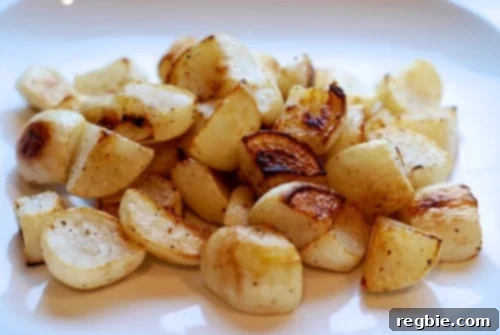
Roasted Turnips: Discover Your New Favorite Healthy Side Dish
For too long, turnips have been unfairly relegated to the bottom of the vegetable drawer, often overlooked in favor of more common root vegetables. Perhaps you’ve experienced this yourself, receiving them in a CSA box and wondering what to do with these humble, often misunderstood roots. Well, get ready for a culinary revelation! Much like other underappreciated vegetables such as celery root, turnips are transformed into something truly spectacular when roasted. Forget everything you thought you knew about turnips – once you try them roasted, you’ll wonder why they weren’t a staple in your kitchen all along.
The truth is, nearly every vegetable reaches its peak flavor and texture when subjected to the high heat of an oven. Roasting caramelizes their natural sugars, intensifying their sweetness and creating a wonderfully tender interior with delightfully crispy edges. Turnips are no exception. This simple cooking method turns them into a remarkably versatile, nutritious, and incredibly delicious side dish that can easily rival, and often surpass, roasted potatoes.
Why Choose Roasted Turnips? A Nutritional Powerhouse
Beyond their delightful flavor and texture when roasted, turnips offer an impressive array of health benefits that make them an excellent addition to any diet. Often overshadowed by potatoes, turnips are actually a fantastic alternative, especially for those looking to reduce carbohydrate intake or boost their nutrient profile.
Turnips are a cruciferous vegetable, part of the same family as broccoli, kale, and Brussels sprouts, which are known for their cancer-fighting properties. They are notably low in calories and carbohydrates compared to potatoes, making them a great choice for paleo, keto, and Whole30 diets, or simply for anyone mindful of their glycemic index. A single serving of roasted turnips provides a significant amount of dietary fiber, which is crucial for digestive health, satiety, and blood sugar regulation.
Furthermore, turnips are packed with essential vitamins and minerals. They are an excellent source of Vitamin C, a powerful antioxidant that supports immune function and skin health. They also provide Vitamin K, important for bone health and blood clotting, as well as folate, potassium, manganese, and calcium. Incorporating roasted turnips into your meals is an easy and delicious way to boost your intake of these vital nutrients.
Mastering the Art of Perfect Roasted Turnips
Achieving perfectly roasted turnips is surprisingly simple, requiring just a few key steps and a keen eye. The process highlights their natural earthy sweetness, creating a side dish that’s both comforting and elegant.
Selecting and Preparing Your Turnips
The journey to delicious roasted turnips begins with selecting the freshest produce. Look for turnips that are firm to the touch, with smooth, unblemished skin. Smaller to medium-sized turnips tend to be sweeter and less fibrous than larger ones. If they come with their greens attached, ensure the greens are vibrant and fresh-looking, as this is often a good indicator of the turnip’s overall freshness.
Once you have your turnips, proper preparation is essential. Start by thoroughly washing them under cold running water. Next, you’ll need to peel them. While some smaller, very young turnips might be tender enough to eat with their skin, most require peeling. Turnip skin can be quite fibrous and bitter, so it’s crucial to peel at least one layer past the initial skin. Use a sharp vegetable peeler to remove the outer layer, and don’t be shy about taking a little extra if the texture feels tough. After peeling, cut the turnips into uniform 1-inch cubes. Uniformity is key here, as it ensures all pieces cook evenly, preventing some from burning while others remain undercooked.
Essential Ingredients for Flavorful Roasting
The beauty of roasted turnips lies in their simplicity, allowing their natural flavors to shine. You don’t need a long list of ingredients to create a truly memorable dish.
- Turnips: Approximately 2 pounds, peeled and cut into 1-inch cubes.
- Melted Ghee or Preferred Fat: 2 tablespoons. Ghee, clarified butter, imparts a rich, nutty flavor and has a high smoke point, making it excellent for roasting. However, you can easily substitute with other high-quality fats like olive oil for a Mediterranean twist, avocado oil for a neutral flavor and high smoke point, or even melted coconut oil for a subtle sweetness. Choose a fat that complements your dietary preferences and desired flavor profile.
- Kosher Salt: Essential for seasoning and bringing out the natural flavors of the turnips. Adjust to taste.
- Freshly Ground Black Pepper: Adds a hint of warmth and a subtle kick. Again, season generously to your liking.
While these are the foundational ingredients, feel free to get creative! A sprinkle of garlic powder, onion powder, or a dash of paprika can add depth. Fresh herbs like rosemary or thyme, added halfway through the roasting process, can infuse a wonderful aromatic quality.
The Roasting Process: Step-by-Step Perfection
With your turnips prepped and ingredients at hand, it’s time for the magic to happen in the oven.
Step 1: Preheat Your Oven. Begin by preheating your oven to a robust 425°F (220°C). A hot oven is crucial for achieving that desired crispy exterior and tender interior. If the oven isn’t hot enough, the vegetables tend to steam rather than roast, resulting in a soft, rather than caramelized, texture.
Step 2: Toss and Season. In a large bowl, combine your cut turnip cubes with the melted ghee (or your chosen fat), kosher salt, and freshly ground black pepper. Toss vigorously to ensure every single turnip cube is evenly coated. Don’t worry if the melted ghee clumps up slightly on the cold turnip cubes; this is completely normal and won’t affect the final outcome. The fat will melt evenly as the turnips heat in the oven, ensuring they roast beautifully.
Step 3: Arrange on Baking Tray. Line a large baking tray with foil or parchment paper for easy cleanup. Spread the seasoned turnip cubes in a single layer on the prepared tray. It’s incredibly important not to overcrowd the pan. If the turnips are piled on top of each other, they will steam instead of roast, leading to soggy results. If necessary, use two baking trays to ensure ample space between the cubes.
Step 4: Roast to Perfection. Place the tray (or trays) into your preheated oven and roast for 20-25 minutes. To ensure even browning and tenderness, make sure to flip the cubes halfway through the cooking time. This allows all sides to come into contact with the hot baking surface, promoting caramelization. The finished roasted turnips should be beautifully golden brown on the edges and fork-tender throughout.
Roasted Turnips Recipe Card
Roasted Turnips

Another great replacement for roasted potatoes!
10 mins
25 mins
35 mins
4
Michelle Tam
Ingredients
- 2 pounds turnips, peeled past the skin and cut into 1-inch cubes
- 2 tablespoons ghee or fat of choice
- Kosher salt (Diamond Crystal recommended)
- Freshly ground black pepper
Instructions
- Preheat your oven to 425°F (220°C). In a large bowl, toss your cut turnip cubes with melted ghee (or chosen fat), salt, and pepper. Don’t worry if the ghee clumps up on your cold turnip cubes; it will melt and coat them nicely during roasting.
- Place the turnip cubes in a single layer on a foil-lined (or parchment-lined) baking tray. Put them in the preheated oven for 20-25 minutes, making sure to flip the cubes halfway through the cooking time. The finished turnips should be nicely browned and tender.
Nutrition
Carbohydrates: 15g |
Protein: 2g |
Fat: 8g |
Fiber: 4g |
Sugar: 9g
Nutrition information is automatically calculated, so should only be used as an approximation.
Elevate Your Roasted Turnips: Creative Variations & Serving Suggestions
While simply roasted with ghee, salt, and pepper is undeniably delicious, turnips are also incredibly versatile, lending themselves to a myriad of flavor enhancements and serving ideas.
Flavor Variations to Try:
- Garlic Herb: Before roasting, toss turnips with a tablespoon of minced garlic and a mix of dried herbs like rosemary, thyme, or oregano.
- Sweet & Savory: Drizzle with a touch of maple syrup or honey during the last 10 minutes of roasting for a hint of sweetness that beautifully complements their earthy flavor.
- Spicy Kick: Add a pinch of red pepper flakes or cayenne pepper to the seasoning mix for those who enjoy a little heat.
- Cheesy Goodness: Sprinkle with grated Parmesan cheese during the last 5 minutes of roasting, allowing it to melt and form a golden crust.
- Smoky Flavor: A dash of smoked paprika can add a wonderful depth and smokiness.
- Balsamic Glaze: Drizzle with a tablespoon of balsamic vinegar during the last few minutes of roasting, or reduce balsamic vinegar separately and drizzle over the finished turnips.
Creative Serving Suggestions:
- Classic Side Dish: Serve alongside roasted chicken, grilled fish, or a hearty steak. They are a fantastic, lighter alternative to traditional potato sides.
- Breakfast Hash: Incorporate leftover roasted turnips into a breakfast hash with eggs, bacon, or sausage for a wholesome morning meal.
- Warm Salad Component: Add them to a warm salad with mixed greens, goat cheese, and a light vinaigrette for a satisfying texture and flavor.
- Meal Prep Bowls: Include roasted turnips in your weekly meal prep bowls with a lean protein and other roasted vegetables.
- Soup & Stew Enhancer: While typically added raw, roasted turnips can bring a caramelized depth of flavor to pureed soups or hearty stews.
Troubleshooting Common Roasting Issues
Even with simple recipes, sometimes things don’t go exactly as planned. Here are a few common issues you might encounter when roasting turnips and how to fix them:
- Turnips Aren’t Crispy Enough:
- Oven Temperature: Ensure your oven is fully preheated to 425°F (220°C). A too-cool oven will steam the vegetables instead of roasting them.
- Overcrowding: This is the most common culprit. If the baking sheet is too full, the turnips release moisture and steam each other, preventing browning. Use two baking sheets if necessary, ensuring a single layer with space between the pieces.
- Moisture Content: Make sure your turnips are as dry as possible after washing and peeling. Excess water can hinder crisping.
- Turnips are Burned on the Outside, Raw on the Inside:
- Oven Temperature Too High: While a hot oven is good, excessively high heat can burn the exterior before the interior cooks through. Ensure your oven thermostat is accurate.
- Uneven Cutting: If some pieces are much smaller than others, they will cook faster and potentially burn. Aim for uniform 1-inch cubes.
- Not Flipping: Forgetting to flip the turnips halfway can lead to one side burning while the other remains undercooked.
- Turnips Taste Bland:
- Insufficient Seasoning: Don’t be shy with salt and pepper! Root vegetables can handle a good amount of seasoning. Taste and adjust as needed.
- Lack of Aromatic Boost: Consider adding garlic powder, onion powder, or fresh herbs like rosemary and thyme to enhance the flavor.
Frequently Asked Questions About Roasted Turnips
Are turnips really a good potato substitute?
Absolutely! Roasted turnips have a similar texture to roasted potatoes – tender on the inside, with crispy, caramelized edges. Their flavor is slightly more earthy and a touch sweeter, but they make an excellent, lower-carb, and nutrient-dense alternative in many dishes where you’d typically use potatoes. They are particularly popular in paleo, keto, and Whole30 diets for this reason.
Do I have to peel turnips before roasting?
For most turnips, especially larger or older ones, peeling is highly recommended. The skin can be quite fibrous and bitter, which can detract from the eating experience. Smaller, very young turnips may have a thinner, more tender skin that can be left on, but it’s generally safer to peel at least one layer past the initial skin for the best texture and flavor when roasting.
How long do roasted turnips last, and how should I store them?
Leftover roasted turnips can be stored in an airtight container in the refrigerator for up to 3-4 days. To reheat, spread them on a baking sheet and warm them in a 350°F (175°C) oven for about 10-15 minutes, or until heated through and slightly re-crisped. Reheating in a microwave might make them softer, so the oven is preferred for maintaining texture.
Can I roast other root vegetables with turnips?
Yes, you certainly can! Turnips roast well with other root vegetables like carrots, parsnips, rutabaga, or even sweet potatoes. Just ensure all vegetables are cut into similar-sized pieces so they cook evenly. You might need to adjust the total roasting time slightly depending on the density and size of the mixed vegetables.
Conclusion: Embrace the Versatility of Turnips
From an often-ignored root vegetable to a delicious and healthy centerpiece or side dish, roasted turnips prove that sometimes, the simplest preparation yields the most rewarding results. Their earthy sweetness, tender texture, and incredible versatility make them a culinary gem waiting to be discovered by more home cooks. Whether you’re seeking a nutritious potato alternative, a new way to enjoy seasonal produce, or simply a flavorful side, roasted turnips are an excellent choice.
So, the next time you spot those humble turnips at the market or in your CSA box, don’t let them languish. Give this recipe a try and experience the delightful transformation yourself. You might just find that these once-overlooked roots earn a permanent spot on your weekly menu, proving that every veggie truly is better roasted.
Discover More Healthy Recipes
If you’ve enjoyed this simple yet satisfying recipe, consider exploring other healthy and delicious options. The world of whole foods offers endless culinary inspiration, from savory main dishes to vibrant side dishes and nutritious snacks. Keep experimenting in your kitchen to discover your next favorite meal!