
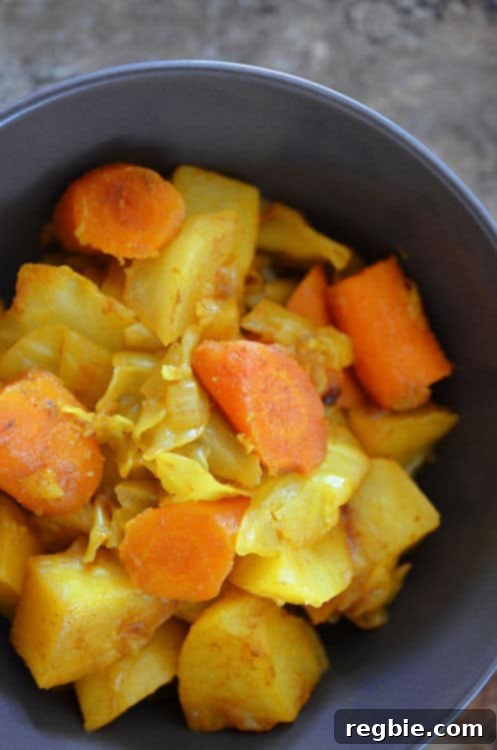
Indulge in the rich, aromatic flavors of Atakilt Wat, a heartwarming Ethiopian vegetable stew that stands out as a true culinary delight. This healthy, Whole30-friendly version is brimming with tender cabbage, soft potatoes, and sweet carrots, all delicately spiced to perfection. It’s not just a meal; it’s a comforting journey for your taste buds.
Discovering the Soulful Flavors of Ethiopia: Atakilt Wat
While many eagerly anticipate autumn for its pumpkin spice offerings, my heart yearns for something deeper, something with a more profound sense of warmth and history: authentic Ethiopian cuisine. My enduring affection for this vibrant food culture began during my first semester in college, a time of new discoveries and expanding horizons. I vividly recall the crisp fall air of Berkeley, a perfect backdrop for savoring hearty stews at my favorite Ethiopian eateries. These cherished memories of communal dining and spice-infused dishes have stayed with me, making the return of autumn a nostalgic trigger for the flavors of East Africa.
Ethiopian cuisine, with its unique blend of spices and focus on fresh, often plant-based ingredients, offers a profound culinary experience. Unlike many Western dishes, Ethiopian food often encourages a hands-on approach, traditionally eaten with injera, a spongy, sour flatbread, perfect for scooping up savory stews. Atakilt Wat, or Atkilt as it’s often affectionately called, is a testament to the simplicity and depth of this culinary tradition. It’s a humble yet incredibly flavorful vegetable stew, often overlooked by those new to Ethiopian fare, but a true gem for those seeking wholesome and delicious comfort food.
My journey to recreating this dish at home has been a passionate one. While I’ve experimented with various recipes over the years, I always strived for that perfect balance of flavors and textures—a challenge many home cooks face. Thankfully, the culinary world is rich with talented chefs willing to share their expertise.
Unlocking Authentic Flavors with Chef Peter Servold’s Paleo By Season
To truly capture the essence of Atakilt Wat, I turned to a trusted source: Chef Peter Servold’s remarkable cookbook, Paleo By Season. For those unfamiliar with Chef Pete, he is the classically trained culinary expert behind Pete’s Paleo, a highly regarded Paleo meal service renowned for shipping delicious, healthy meals across the U.S. What sets Chef Peter apart is his deep understanding of ingredients and his unwavering commitment to quality. Like all exceptional chefs, he champions the use of fresh, locally sourced, and seasonal produce, believing these elements are the true foundation of any outstanding dish. His cookbook beautifully embodies this philosophy, organizing recipes by season to encourage readers to cook with the freshest bounty available, ensuring peak flavor and nutritional value.
As I delved into the “Fall” section of Pete’s cookbook, my excitement grew. To my delight, I discovered not one, but three Ethiopian recipes, each promising a taste of that beloved college nostalgia. Among this trio, Atakilt immediately caught my eye. It was exactly what I had been searching for – a humble, spiced root vegetable stew, promising both nourishment and comfort. My previous attempts at perfecting Atkilt often resulted in a stew that was either lacking in flavor complexity or, regrettably, a bit too mushy. This time, I knew I was in good hands.
Chef Pete’s extensive culinary background includes a significant period working at an Ethiopian restaurant, which means his recipe for Atkilt is, as expected, absolutely spot-on. Preparing his version instantly transported me back to my formative years as an enthusiastic freshman at Cal. The vibrant aroma filling my kitchen evoked vivid images of my younger self, adorned in tie-dyed leggings, jingling Telegraph Avenue jewelry, and my sturdy Doc Martens boots – ready to tackle the world, one delicious Ethiopian meal at a time. It’s this authentic touch, rooted in genuine experience, that makes his Atkilt recipe truly exceptional and a cornerstone for anyone looking to master this wholesome dish.
The Art of Atakilt Wat: A Simple Guide to Ethiopian Vegetable Stew
Atakilt Wat is more than just a stew; it’s a celebration of simple, wholesome vegetables transformed into a dish bursting with flavor. This recipe is designed to be straightforward, making it accessible for home cooks of all skill levels, while still delivering an authentic Ethiopian experience. The magic lies in the gentle cooking process and the interplay of spices, which allow the natural sweetness of the vegetables to shine through.
Serves: 6
Ingredients: What You’ll Need
To create this magnificent Ethiopian vegetable stew, gather these fresh and aromatic ingredients. The quality of your produce will greatly influence the final taste, so opt for the freshest available.
- 2 tablespoons ghee (clarified butter, essential for its rich, nutty flavor in many traditional recipes)
- 2 tablespoons olive oil (a neutral oil works well here to complement the ghee)
- 1 medium onion, diced (provides a foundational sweetness and aroma)
- 1 small green cabbage (approximately 1 pound), cored and cut into 1-inch cubes (the star of the dish, offering tender texture and mild flavor)
- 4 medium carrots (approximately 1 pound), cut into 1-inch rounds (adds natural sweetness and vibrant color)
- 3 teaspoons kosher salt, divided (seasoning is key to balancing flavors)
- 1¾ pounds white potatoes, cut into 1-inch cubes (for a creamy texture and hearty bite. For a lower-carb or strict paleo option, you can substitute with cauliflower florets. Interestingly, potatoes are now Whole30-approved, expanding your healthy eating options!)
- 2 teaspoons ground turmeric (contributes a beautiful golden color and earthy notes, plus anti-inflammatory benefits)
- 1 teaspoon ground cumin (adds warmth and depth to the spice profile)
- 1 teaspoon freshly ground black pepper (for a subtle kick and enhanced aroma)
Instructions: Crafting Your Atakilt Wat
Follow these simple steps to bring this delightful Ethiopian vegetable stew to life in your kitchen. Patience and attention to detail will ensure a truly satisfying result.
- Prepare Your Pan: Heat the ghee and olive oil in a large, heavy-bottomed saucepan or Dutch oven over medium-high heat. Allow the fats to become shimmering hot but not smoking. This initial heat is crucial for developing the foundational flavors of your stew.
- Vegetable Prep (Pro Tip): While the fat is heating, ensure all your vegetables are prepped and ready. For those who prefer a more relaxed pace in the kitchen, consider chopping all your vegetables before turning on the heat. This “mise en place” approach ensures a smoother cooking process, especially if you’re not a Michelin-starred chef!
- Sauté the Aromatics and Initial Vegetables: Once the saucepan is adequately hot, add the diced onions, cubed cabbage, and carrot rounds. Sprinkle in 2 teaspoons of the kosher salt. Stir the mixture well, ensuring all the vegetables are coated with the fat and seasonings.
- First Cook & Softening: Cover the pot tightly with a lid. Allow the vegetables to cook undisturbed for 10 minutes. This steaming process helps soften the harder vegetables and allows their natural juices to release, building a flavorful base. If your stove tends to run hot, you might reduce the heat to medium to prevent scorching.
- Introduce Remaining Ingredients: After the initial 10 minutes, remove the lid. Add the cubed potatoes (or cauliflower, if using), the remaining 1 teaspoon of kosher salt, the ground turmeric, and the ground cumin. These spices are central to the Ethiopian flavor profile of Atakilt Wat.
- Final Seasoning and Simmer: Add the freshly ground black pepper to the pot. Stir all the ingredients thoroughly, ensuring the spices are evenly distributed among the vegetables.
- Long Simmer for Tenderness: Replace the lid on the saucepan. Reduce the heat to medium-low, allowing the stew to gently simmer. Continue cooking for an additional 30 minutes, or until all the vegetables, especially the potatoes and cabbage, are perfectly fork-tender. If you’ve opted for cauliflower, check for tenderness after about 15 minutes, as it cooks more quickly. The goal is tender, not mushy, vegetables.
- Taste and Serve: Once the vegetables are tender, taste the stew and adjust the seasoning with additional salt or pepper if needed. This Paleo-friendly comfort food with an East African twist is ready to be enjoyed!
Serving Suggestions & Variations for Your Ethiopian Vegetable Stew
This Atakilt Wat is incredibly versatile and makes a fantastic meal on its own or as a vibrant side dish. For a truly authentic experience, serve it alongside Doro Wat (Spicy Ethiopian Chicken Stew), a classic pairing that creates a balanced and flavorful spread. While traditionally served with injera, this Whole30 Atkilt pairs beautifully with cauli-rice or even a simple side salad for a complete, healthy meal.
If you’re looking to explore different textures or make it vegan, the cauliflower substitution works wonderfully. You can also experiment with other root vegetables like parsnips or sweet potatoes, adjusting cooking times as necessary. The key is to maintain the generous proportions of cabbage and carrots to keep the dish true to its origins.
For those seeking even more convenience, an Instant Pot version of Atakilt Wat is also an option! You can find a dedicated recipe for the pressure cooker here, offering a faster route to this delicious stew without compromising on flavor.
Making this dish brings back so many fond memories, transporting me back to a time before mortgages and family responsibilities, to the carefree days of youth and culinary exploration. Thank you, Pete, for crafting such a brilliant recipe that allows us to relive those delicious moments.
(First published: September 17, 2014. Updated for enhanced clarity, SEO, and reader experience.)
Hungry for more healthy and flavorful recipe ideas? Explore my comprehensive Recipe Index for a wide array of options designed to nourish and delight. You’ll also find exclusive recipes on my iPhone and iPad app, and within my collection of cookbooks: Nom Nom Paleo: Food for Humans (Andrews McMeel Publishing 2013), Ready or Not! (Andrews McMeel Publishing 2017), and Nom Nom Paleo: Let’s Go! (Andrews McMeel Publishing 2021). Dive into a world of healthy, delicious eating today!
PRINTER-FRIENDLY RECIPE CARD: Atkilt (Ethiopian Vegetable Stew)
Atkilt (Ethiopian Vegetable Stew)
15 mins
45 mins
1 hr
6
Michelle Tam

Atkilt is a flavorful, spiced Ethiopian vegetable stew featuring tender cabbage, potatoes, and carrots. This healthy version is not only delicious but also Whole30-friendly!
Ingredients
- 2 tablespoons ghee
- 2 tablespoons olive oil
- 1 medium onion diced
- 1 small cabbage cored and cut into 1-inch cubes (approx. 1 pound)
- 4 medium carrots cut into 1-inch rounds (approx. 1 pound)
- 3 teaspoons kosher salt divided
- 1¾ pounds white potatoes cut into 1-inch cubes (substitute with cauliflower florets for a lower-carb option)
- 2 teaspoons ground turmeric
- 1 teaspoon ground cumin
- 1 teaspoon freshly ground black pepper
Instructions
- Heat the ghee and olive oil in a large saucepan over medium-high heat. Once hot, add the onions, cabbage, carrots, and 2 teaspoons of kosher salt.
- Stir everything thoroughly, then cover the pot. Cook the vegetables undisturbed for 10 minutes. (Reduce heat to medium if your stove runs hot.)
- After 10 minutes, add the potatoes (or cauliflower), the remaining 1 teaspoon of salt, turmeric, and cumin. Add freshly ground black pepper and stir well to combine.
- Replace the lid, decrease the heat to medium-low, and continue cooking for an additional 30 minutes, or until all vegetables are fork-tender. (If using cauliflower, check for tenderness after 15 minutes.)
- Taste and adjust seasoning as needed. Serve warm, perhaps with Doro Wat, Ethiopian Chicken Stew!
Notes
For an Instant Pot version of this delicious dish, find the recipe here!
Nutrition (per serving)
Carbohydrates: 32g
Protein: 6g
Fat: 10g
Fiber: 9g
Nutrition information is automatically calculated and should be used as an approximation.