
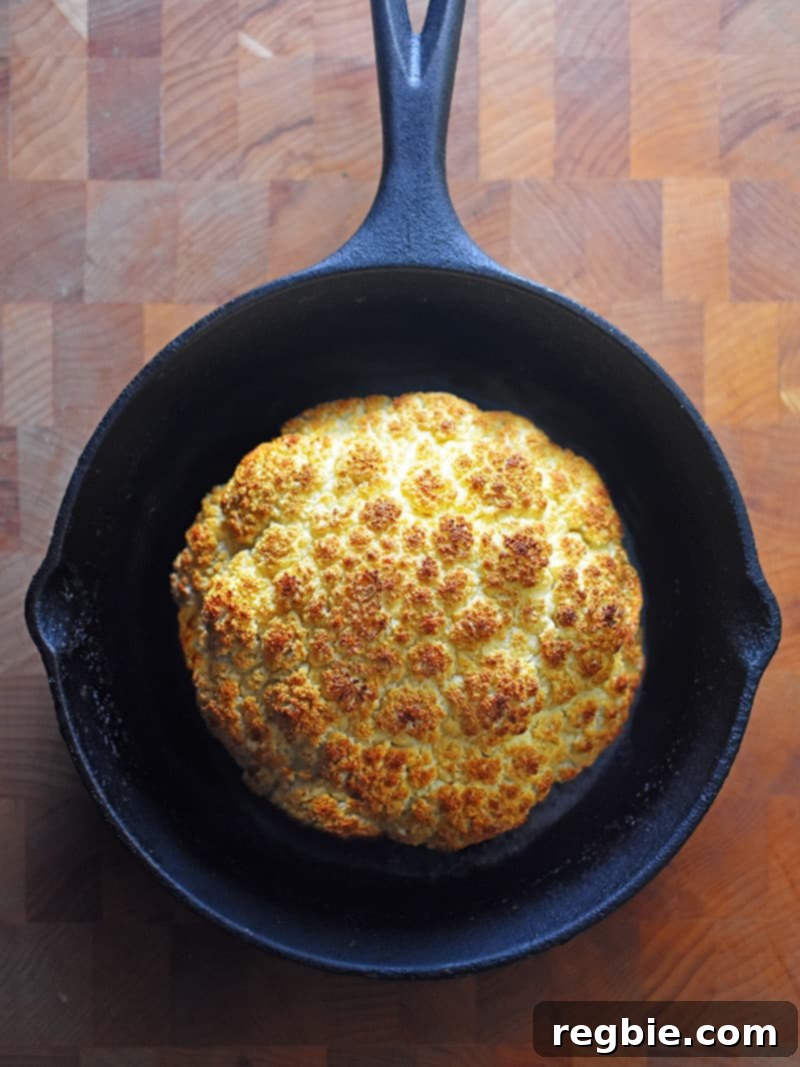
Transform a humble head of cauliflower into a show-stopping dish with this incredibly simple Whole Roasted Cauliflower recipe. Perfect for any occasion, from a casual weeknight dinner to an elegant holiday feast, this dish is naturally Whole30-friendly, keto, and vegan. Requiring just three essential ingredients, it’s a foolproof way to impress your guests and delight your palate with minimal effort.
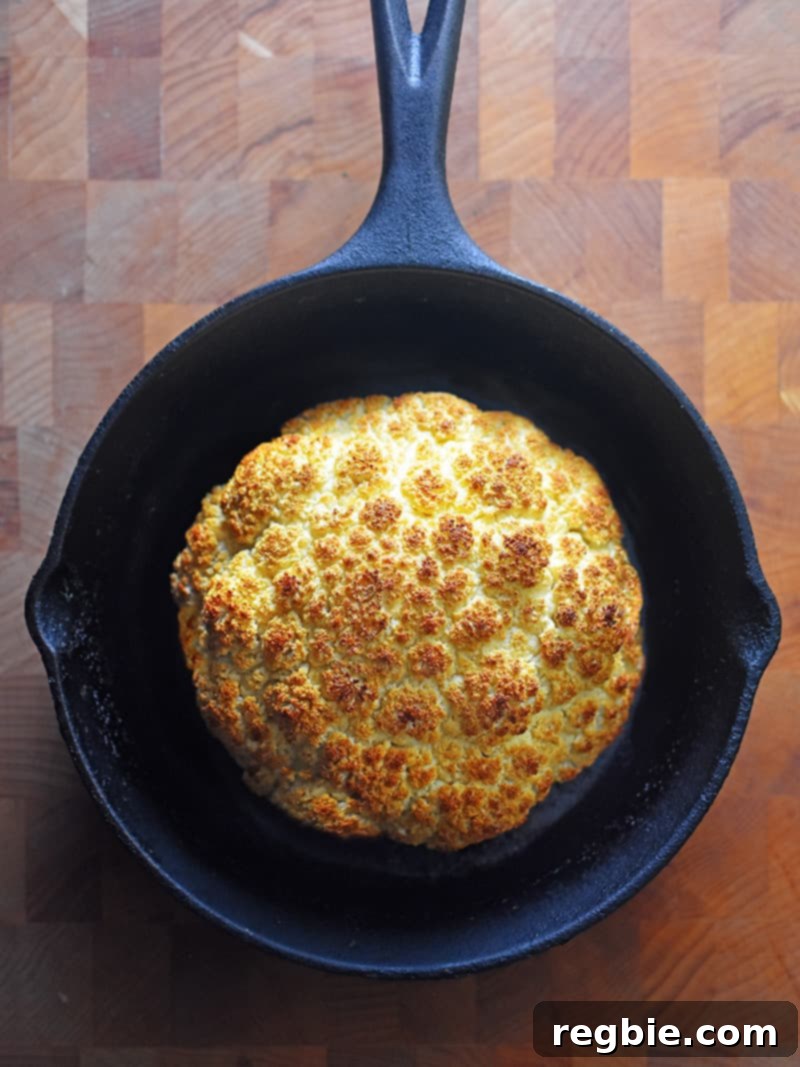
Table of Contents
- The Magic of Whole Roasted Cauliflower
- Why This Recipe Stands Out: A Journey to Perfection
- Essential Ingredients and Flavor Variations
- Step-by-Step Guide: How to Make Whole Roasted Cauliflower
- Tips for Success and Troubleshooting
- Serving Suggestions for Your Roasted Masterpiece
- Storing and Reheating Leftovers
- Frequently Asked Questions About Whole Roasted Cauliflower
- More Delicious Cauliflower Recipes to Explore
- Printer-Friendly Whole Roasted Cauliflower Recipe Card
The Magic of Whole Roasted Cauliflower
While florets often steal the spotlight, roasting a whole head of cauliflower is a culinary revelation that’s rapidly gaining traction in kitchens and restaurants worldwide. Imagine a dish that boasts a beautifully caramelized, slightly crispy exterior giving way to an incredibly tender, almost creamy interior. This visually striking preparation of a whole head of cauliflower isn’t just for chefs; it’s a surprisingly simple yet sophisticated option for any home cook looking to elevate their vegetable game.
Its appeal is multi-faceted: it’s remarkably budget-friendly, making it an excellent choice for feeding a crowd without breaking the bank. The preparation is straightforward, requiring minimal active time, and the “wow” factor upon presentation is undeniable. Whether served as a stunning vegetarian centerpiece or a versatile side dish, whole roasted cauliflower is guaranteed to impress. Even your most skeptical vegetable eaters or vegetarian friends will be asking for seconds!
Why This Recipe Stands Out: A Journey to Perfection
When it comes to simple dishes, the technique truly makes all the difference. For whole roasted cauliflower, achieving that coveted golden-brown crust and a uniformly tender inside can be surprisingly tricky. Many recipes exist, but not all deliver consistent, outstanding results. That’s why I embarked on a rigorous testing journey, exploring various methods to find the one that offers the biggest impact for the least amount of effort.
My culinary experiments involved trying a myriad of popular techniques. I started by considering methods that suggested boiling the cauliflower first, but quickly found this to be too laborious and messy, often leading to a waterlogged vegetable that struggled to crisp up later. Another approach involved roasting it in a preheated skillet with a separate pan of water in the oven. While this produced a decent crust, the interior often remained slightly undercooked and firm, lacking the desired melt-in-your-mouth tenderness.
I also attempted roasting the cauliflower in a covered Dutch oven for the initial hour. This method, while promising, often resulted in an overly mushy interior with inconsistent browning on the outside. The cauliflower would steam rather than roast, preventing the lovely caramelization that adds so much flavor and texture. After multiple rounds of adjustments and refinements, I finally landed on a crazy-easy, two-stage roasting method that consistently delivers a perfectly bronzed, flavorful crust and a supremely tender, succulent center every single time.
This streamlined process eliminates unnecessary steps and guarantees an impressive result, proving that thoughtful testing truly pays off. With five roasted heads sitting in my fridge right now from all the trials, I can confidently say this method is a game-changer. It creates a “blank slate” canvas, seasoned simply with salt and olive oil, making it incredibly versatile. This allows you to pair it with an endless array of your favorite sauces and herbs, from a vibrant pesto to a rich marinara, or even just a squeeze of fresh lemon juice. The possibilities are limitless!
Essential Ingredients and Flavor Variations
This recipe prides itself on its simplicity, relying on just three core ingredients to achieve remarkable flavor. However, don’t let the minimal list limit your imagination! There are plenty of ways to adapt and enhance this dish to suit your taste preferences.
- Whole Cauliflower Head: The star of our show! For optimal roasting, aim for a medium-sized cauliflower, typically around 2 pounds. Larger heads may require a slightly longer cooking time to become tender all the way through. Choose a head that is firm, compact, and free of dark spots.
- Extra Virgin Olive Oil: This is crucial for both flavor and achieving that beautiful golden crust. Its fruity notes complement the mildness of the cauliflower beautifully. If you’re looking for alternatives, melted ghee works wonderfully and adds a rich, nutty flavor. Avocado oil is another excellent choice for its high smoke point and neutral taste, while refined coconut oil can also be used for a subtle tropical hint. Feel free to experiment with your favorite healthy fats.
- Diamond Crystal Kosher Salt: A good quality kosher salt is key for seasoning. Its larger flakes allow for more even distribution and a more pronounced flavor without being overly salty. If using table salt, reduce the amount by about half, as it’s much denser. Freshly ground black pepper can also be added for an extra layer of flavor.
Optional Flavor Boosters:
While delicious with just salt and oil, don’t hesitate to get creative with additional seasonings:
- Garlic Powder & Onion Powder: For an savory depth.
- Smoked Paprika: Adds a beautiful color and smoky flavor.
- Cumin & Coriander: For a warm, earthy profile.
- Italian Herbs: Dried oregano, basil, thyme for an aromatic touch.
- Curry Powder: For an exotic, warm spice blend.
- Lemon Zest: Grated over the cauliflower before roasting for a bright, citrusy aroma.
Simply mix your desired spices with the olive oil before rubbing it onto the cauliflower, or sprinkle them on along with the salt. The goal is to create a flavorful crust that complements the tender interior.
Step-by-Step Guide: How to Make Whole Roasted Cauliflower
Achieving a perfectly roasted whole cauliflower is simpler than you might think. Follow these detailed steps to ensure a tender inside and a wonderfully golden-brown exterior.
-
Prepare Your Oven and Cauliflower:
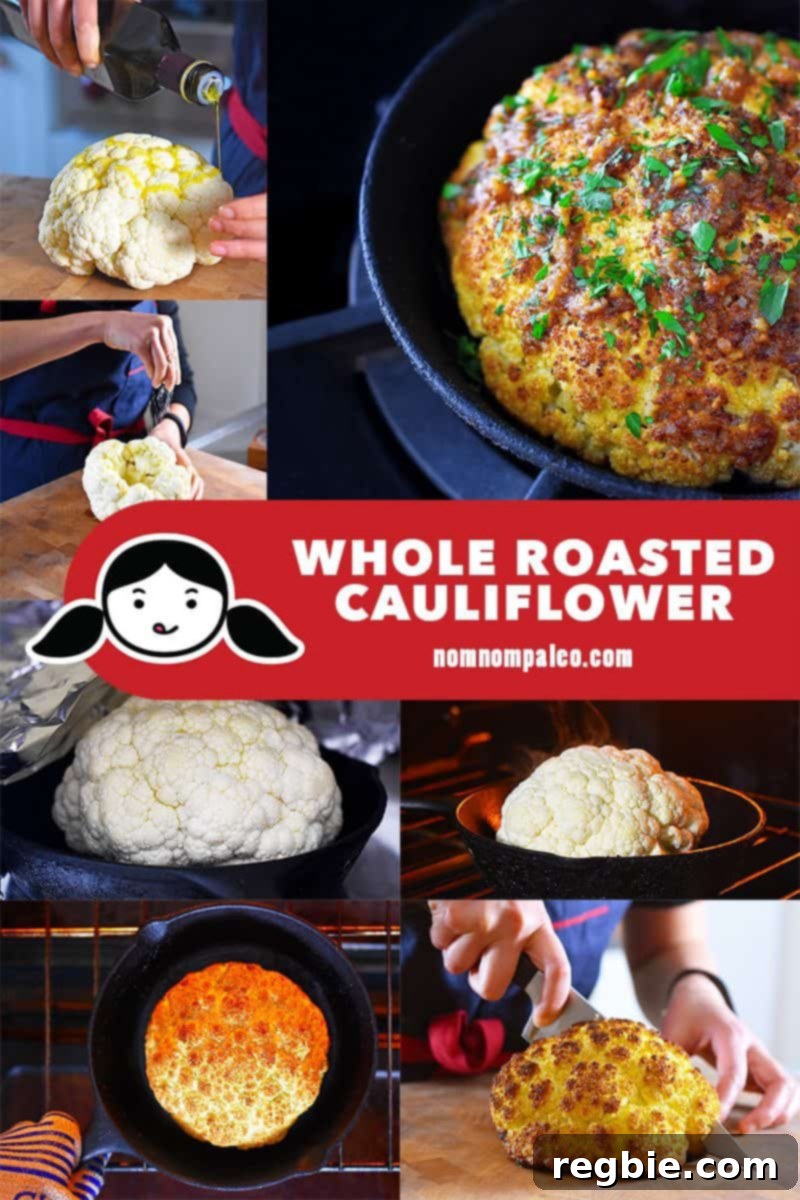
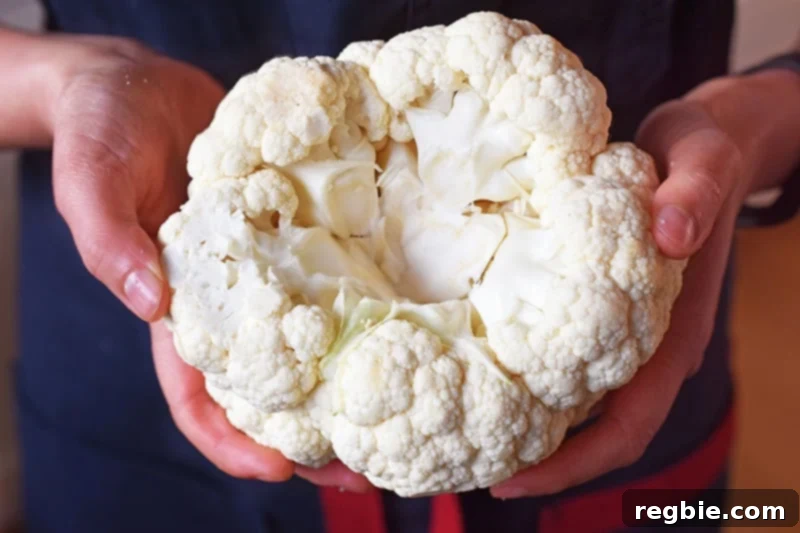
Preheat your oven to 375°F (190°C). Position an oven rack in the middle to ensure even cooking. Take your whole cauliflower head and carefully trim away all the outer green leaves at the bottom. Next, using a sharp paring knife, meticulously cut out and remove the tough stem and core from the base. Be cautious to keep the florets and the overall head of cauliflower intact. This creates a cavity that helps the heat penetrate, ensuring even cooking.

Properly trimming the stem and leaves ensures even cooking. -
Oil and Season Liberally:
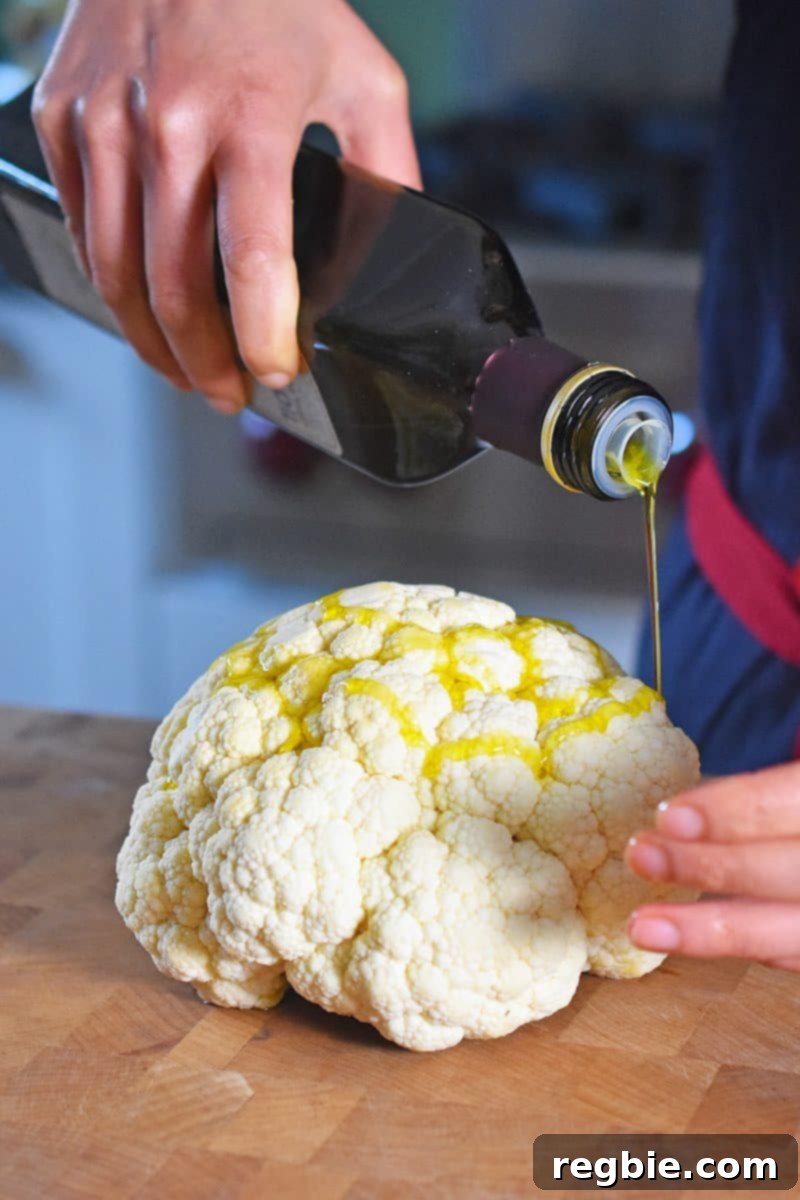
Once trimmed, rinse the cauliflower head under cold water and pat it thoroughly dry with paper towels. Removing excess moisture is crucial for achieving a crispy exterior. Then, generously drizzle about ½ cup of extra virgin olive oil (or your chosen fat like melted ghee or avocado oil) all over the cauliflower. Don’t be shy with the oil – it contributes significantly to the flavor and browning.
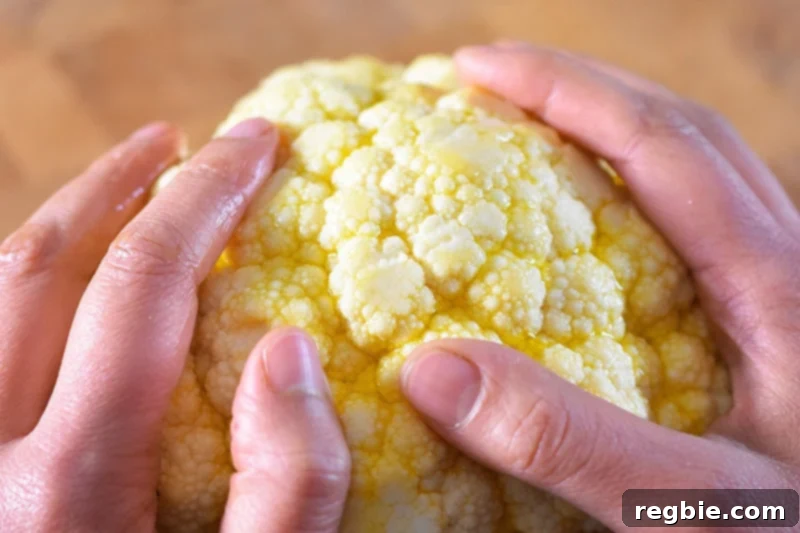
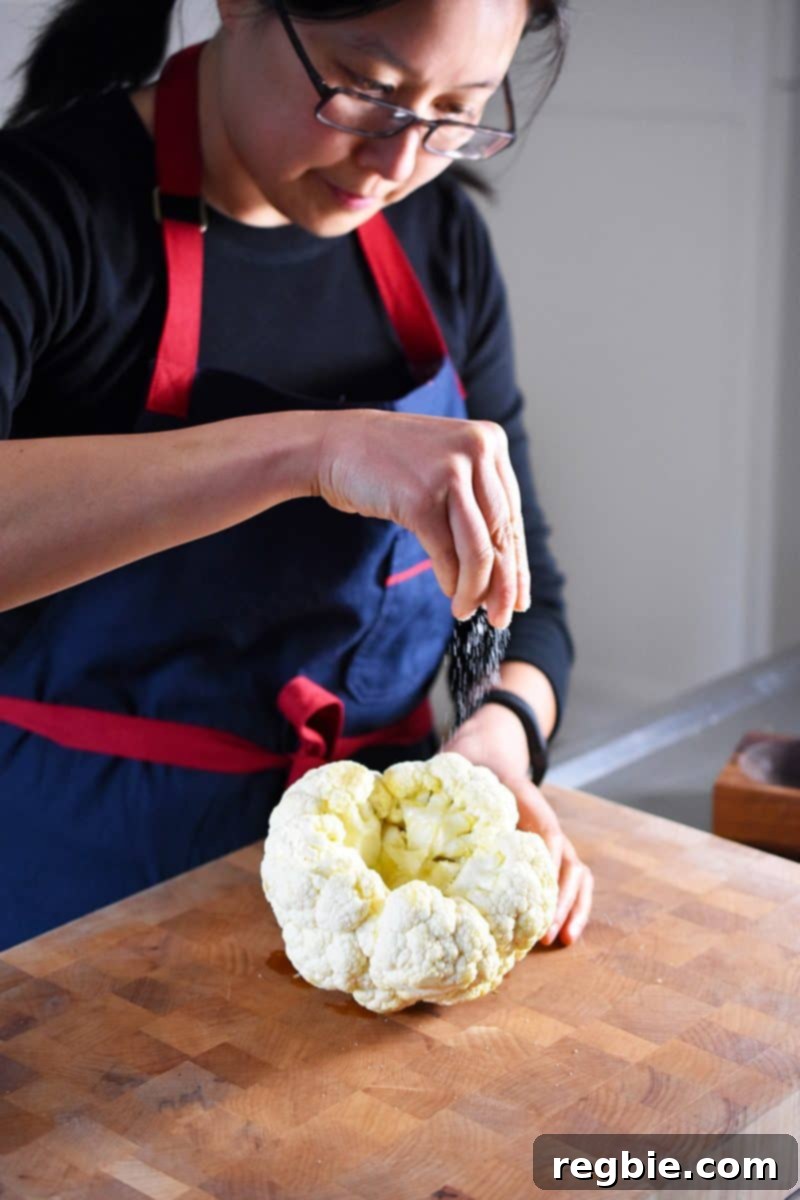
Generously coat the cauliflower with olive oil for optimal flavor and texture. Using your hands, rub the oil carefully and thoroughly over the entire surface of the cauliflower, including the top, bottom, and into the crevices. Ensure every part is well coated. Following this, sprinkle both sides of the cauliflower liberally with Diamond Crystal kosher salt. Don’t underestimate the power of good seasoning; make it rain! For added flavor, this is also the stage to add any additional spices you desire, such as garlic powder, smoked paprika, or dried herbs.
Ensure the cauliflower is thoroughly coated with oil for even roasting and flavor. Don’t be shy with the salt! Liberal seasoning brings out the best flavor. -
First Stage Roasting (Covered):
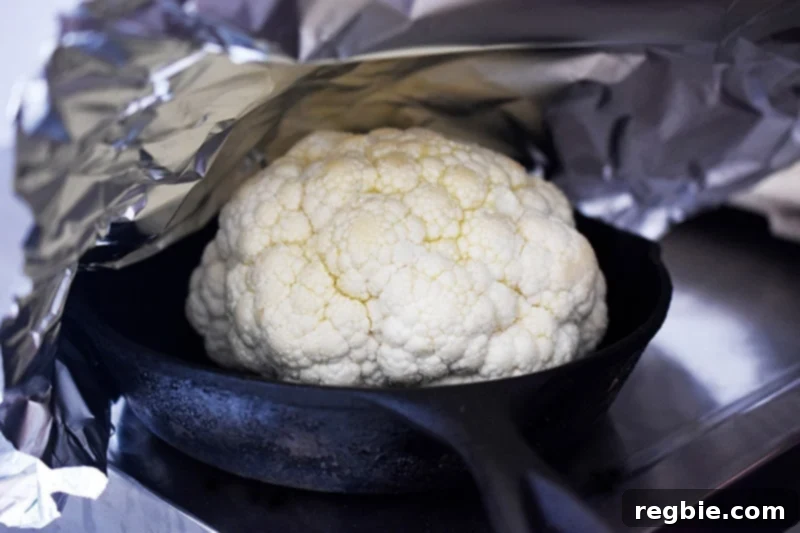
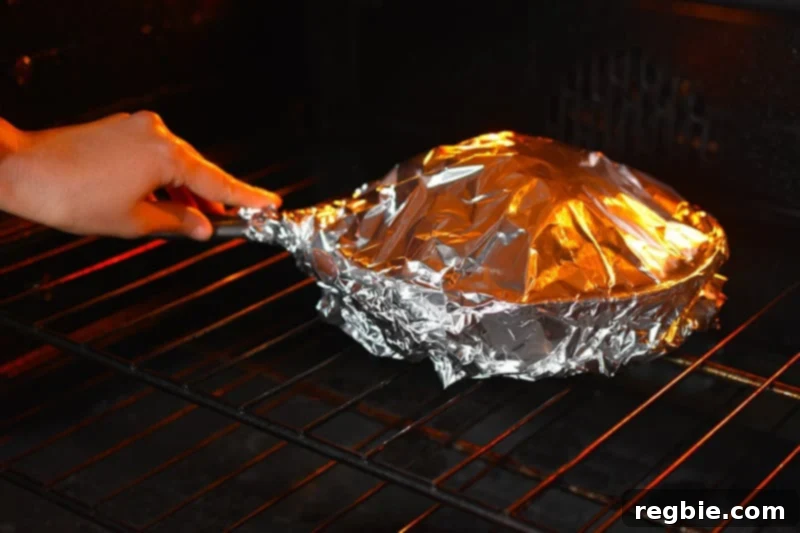
Place the seasoned cauliflower, florets-side up, into a cast iron skillet or a sturdy oven-safe baking dish. Cast iron works exceptionally well for retaining and distributing heat evenly, aiding in crust formation. Cover the skillet tightly with aluminum foil. This initial covered roasting period steams the cauliflower, ensuring it becomes tender throughout before developing a crust. Place the covered skillet on the middle rack in your preheated oven and cook for 30 minutes.
Covering the cauliflower ensures it steams and becomes tender before browning. Allow the cauliflower to cook covered for the initial phase to tenderize. -
Second Stage Roasting (Uncovered):
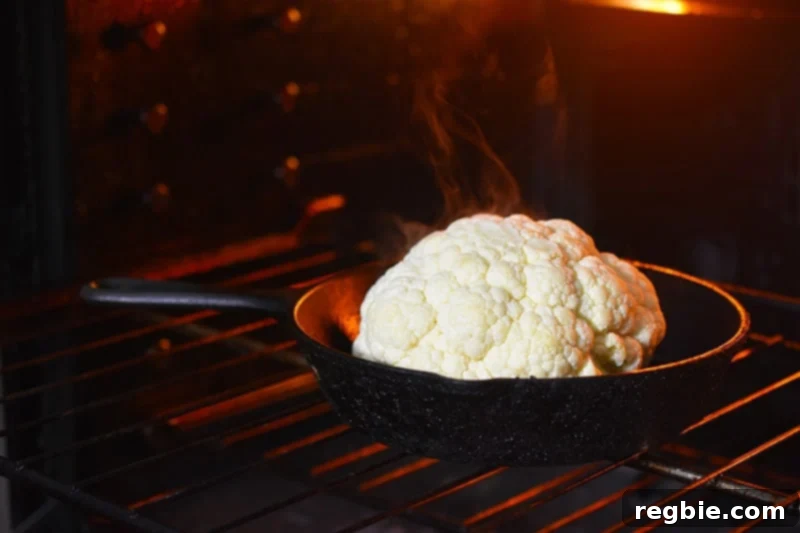
After 30 minutes, carefully remove the foil from the skillet. Be mindful of the hot steam escaping. Return the uncovered skillet to the oven and continue to roast for an additional 60 minutes. During this phase, the cauliflower will begin to caramelize and turn a beautiful golden-brown. Keep an eye on it to ensure it doesn’t burn, especially towards the end. The exact roasting time may vary slightly depending on your oven and the size of your cauliflower.
Uncover the cauliflower to allow it to brown and crisp up beautifully. -
Check for Doneness and Serve:
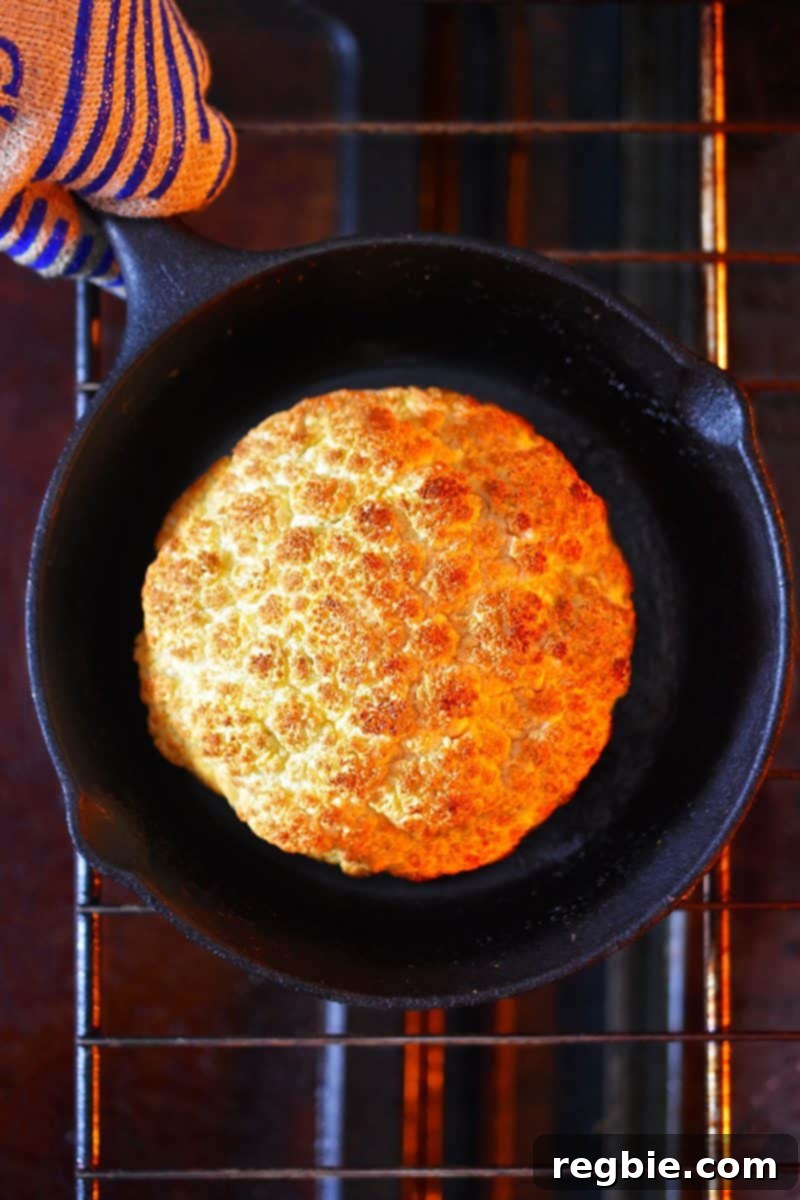
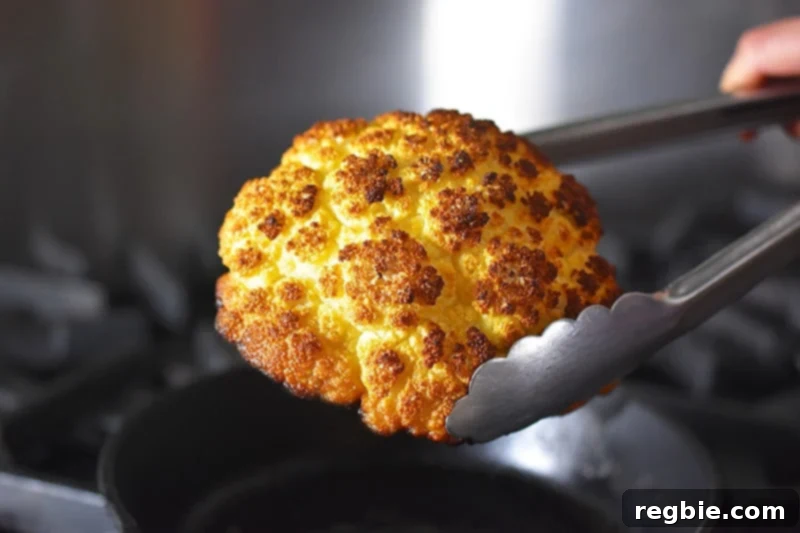
The cauliflower is ready when it is gloriously golden brown on the outside and exceptionally tender on the inside. To test for doneness, carefully insert a knife into the thickest part of the cauliflower. It should slide in and out with very little to no resistance, much like softened butter. Once perfectly cooked, remove the skillet from the oven.
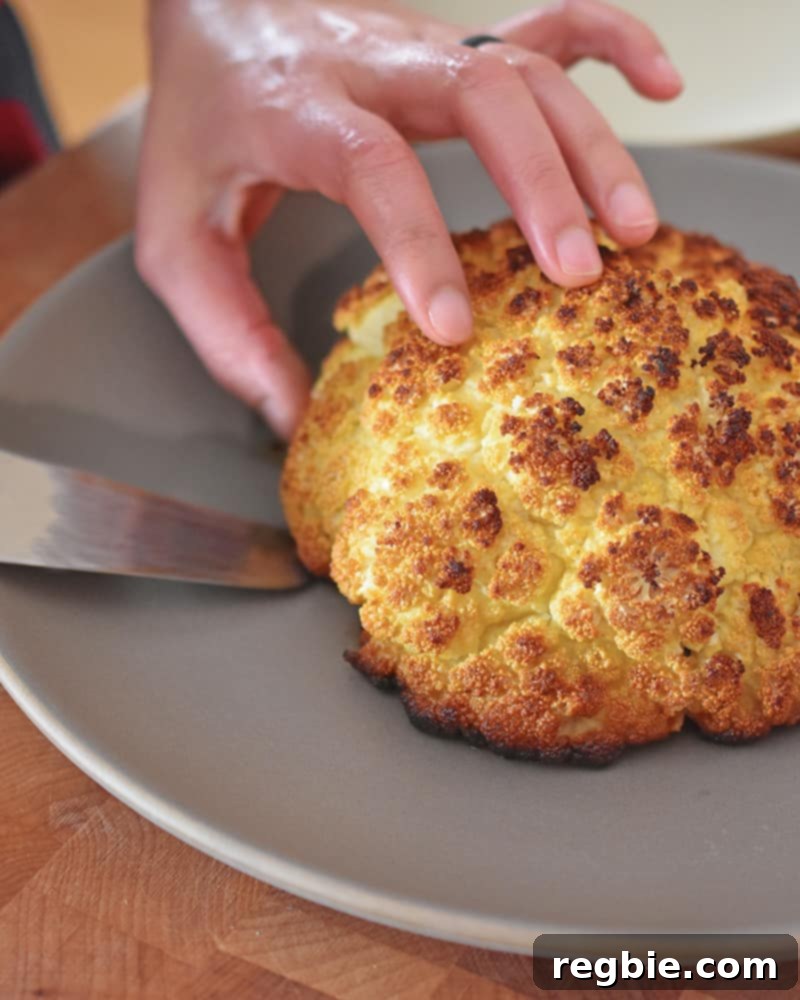
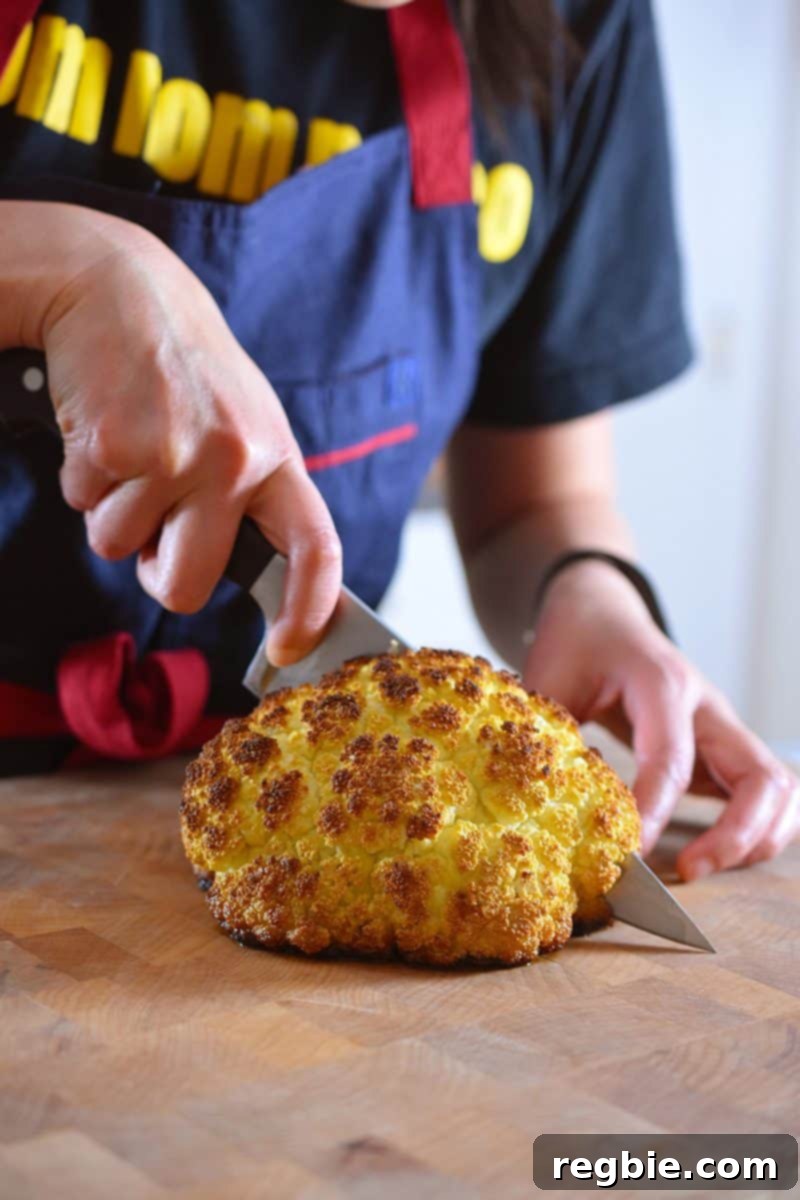
Look for a rich golden-brown color and fork-tender texture. Carefully transfer the whole roasted cauliflower head from the skillet to a serving platter. A large spatula or a pair of tongs can assist in this delicate maneuver. Carve it into wedges or florets at the table, just as you would a roast. Serve it as-is to savor its natural, earthy flavor, or enhance it further with a drizzle of your favorite sauce, a squeeze of fresh lemon juice, and a scattering of fresh herbs like parsley or chives.
Carefully transfer the cauliflower to a platter for an impressive presentation. This deceptively simple three-ingredient recipe yields a dish that’s elegant enough for a special occasion like Thanksgiving or Christmas dinner, yet humble and easy enough to be a go-to weeknight side dish. Enjoy the incredible flavors and textures!
Carve into generous wedges and serve warm with your favorite accompaniments.
Tips for Success and Troubleshooting
Even with a foolproof recipe, a few extra tips can ensure your whole roasted cauliflower turns out perfect every time.
- Choose the Right Cauliflower: Select a head that is firm, dense, and uniformly white or off-white. Avoid any with soft spots, yellowing, or excessive bruising. A medium-sized head (around 2 lbs) works best for the stated cooking times.
- Don’t Skimp on the Oil: The olive oil is not just for flavor; it helps the cauliflower brown and prevents it from drying out. A generous coating is essential for that beautiful golden crust.
- Seasoning is Key: Cauliflower loves salt! Don’t be afraid to season liberally. Remember, the core of the cauliflower might be less seasoned than the exterior, so ensure a good coating all around.
- Ensure Even Heat: Using a cast iron skillet helps tremendously with heat distribution and achieving a crispy bottom. If you don’t have one, a heavy-bottomed oven-safe dish will work.
- The Covered/Uncovered Method: The initial covered roasting traps steam, allowing the cauliflower to cook through and become tender without drying out or burning the exterior. Removing the foil for the second half then allows for perfect browning and caramelization.
- Check for Tenderness: The knife test is crucial. If there’s any resistance, give it a bit more time in the oven. An undercooked center is no fun.
- Preventing Over-Browning: If your cauliflower is browning too quickly during the uncovered phase but isn’t yet tender, you can loosely tent it with foil again for the remaining cooking time.
- Customizing Flavor: Before roasting, consider adding a dry rub of your favorite spices (paprika, cumin, chili powder) to the olive oil. After roasting, a sprinkle of fresh herbs, a drizzle of balsamic glaze, or a squeeze of lemon juice can brighten the flavors.
Serving Suggestions for Your Roasted Masterpiece
The beauty of whole roasted cauliflower is its incredible versatility. It can be the star of a vegetarian meal or a superb accompaniment to a variety of main courses.
- Sauce It Up: As mentioned, this dish is a fantastic blank canvas for sauces. Try serving it with homemade pesto, a robust marinara, a creamy tahini sauce, a spicy romesco, or even a simple lemon-herb vinaigrette.
- As a Main Course: For a hearty vegetarian meal, serve the whole roasted cauliflower with a side of quinoa or couscous, a fresh green salad, and perhaps some toasted nuts for crunch.
- With Proteins: It pairs beautifully with roasted chicken, grilled fish, pan-seared steak, or even lamb chops. Its light, earthy flavor complements richer meats without overpowering them.
- Holiday Feasts: Its impressive presentation makes it a perfect addition to Thanksgiving, Christmas, or other holiday tables, offering a substantial and delicious vegetarian option alongside traditional dishes.
- Simple Sides: A sprinkle of fresh parsley, chives, or a dash of red pepper flakes can brighten and enhance its simple flavors.
Storing and Reheating Leftovers
Cooked whole roasted cauliflower is excellent for meal prep or enjoying throughout the week. To keep it fresh, store any leftovers in an airtight container in the refrigerator for up to four days. The flavors tend to meld and deepen slightly, making it arguably even more delicious on subsequent days.
When it comes to reheating, avoid the microwave if you want to maintain some of its original texture, as this can make the cauliflower mushy. Instead, reheat individual portions in an oven preheated to 350°F (175°C) for about 10-15 minutes, or until warmed through. Alternatively, a toaster oven or even an air fryer can help restore some of its crispy exterior. I do not recommend freezing roasted cauliflower, as the thawing process can severely alter its texture, typically resulting in a watery and unappetizingly mushy consistency.
Frequently Asked Questions About Whole Roasted Cauliflower
Here are answers to some common questions about making this impressive dish:
-
Can I use a larger or smaller cauliflower head?
Yes, but adjust cooking times accordingly. A larger head (over 2.5 lbs) might need an extra 15-30 minutes of covered roasting time, and potentially longer uncovered. A smaller head will cook faster, so start checking for doneness earlier.
-
What if my cauliflower isn’t getting brown enough?
Ensure your oven is accurately preheated to 375°F (190°C). If it’s still not browning after the suggested uncovered time, you can increase the oven temperature to 400°F (200°C) for the last 10-15 minutes, keeping a close eye on it to prevent burning.
-
Can I add other vegetables to the pan?
It’s generally best to roast the whole cauliflower by itself to ensure even cooking. Adding other vegetables might release too much moisture or cook at different rates. If you wish to serve other roasted vegetables, roast them separately.
-
Is this recipe truly suitable for Whole30, Keto, and Vegan diets?
Absolutely! Cauliflower is a cornerstone of low-carb and plant-based diets. Using extra virgin olive oil (or avocado oil/ghee for Whole30) and kosher salt keeps it compliant with all these dietary guidelines.
-
How can I make this dish spicier?
To add a kick, sprinkle red pepper flakes along with the salt and oil before roasting. You can also mix a pinch of cayenne pepper into your olive oil. For a fresh spice, drizzle with a hot sauce or a chili-garlic oil after roasting.
-
What’s the best way to get the oil and seasoning into all the crevices?
After drizzling the oil, use your hands to really massage it into the entire surface, including the tighter areas between florets. For seasoning, sprinkle liberally from a distance, allowing the salt to fall naturally into the crevices. You can also turn the cauliflower gently to ensure all sides are coated.
More Delicious Cauliflower Recipes to Explore
If you’ve fallen in love with cauliflower after trying this whole roasted version, there’s a whole world of delicious cauliflower recipes waiting for you. This versatile vegetable can be transformed into countless satisfying dishes:
- Baked Buffalo Cauliflower: A spicy and tangy crowd-pleaser, perfect as an appetizer or snack.
- Tandoori Whole Roasted Cauliflower: Infuse exotic Indian flavors into your whole roasted cauliflower.
- Mexican Cauliflower Rice: A flavorful, low-carb alternative to traditional rice.
- Cauliflower Colcannon: A creamy, comforting Irish side dish with a healthy twist.
- Asian Cauliflower Fried Rice: A quick and easy stir-fry that’s lighter than the original.
- Roasted Curried Cauliflower: Simple roasted florets with a vibrant, aromatic curry spice blend.
Looking for even more recipe ideas and culinary inspiration? Head on over to my Recipe Index for a vast collection of delicious and healthy meals. You’ll also find exclusive recipes and my unique approach to healthy eating in my acclaimed cookbooks: Nom Nom Paleo: Food for Humans (Andrews McMeel Publishing 2013), Ready or Not! (Andrews McMeel Publishing 2017), and my latest release, Nom Nom Paleo: Let’s Go! (Andrews McMeel Publishing 2022). Happy cooking!
Printer-Friendly Whole Roasted Cauliflower Recipe Card
Whole Roasted Cauliflower
15
1
45
2
4 servings
Michelle Tam

Ingredients
- 1 whole cauliflower head about 2 pounds
- ½ cup extra virgin olive oil or melted ghee
- Diamond Crystal kosher salt
Instructions
-
Preheat the oven to 375°F (190°C) and place a rack in the middle position. Trim away the leaves at the bottom of the cauliflower head. Carefully cut off and remove the stem and tough core, ensuring the head remains intact.
-
Rinse and pat dry the trimmed cauliflower head. Then generously drizzle olive oil or melted ghee all over it.
-
With your hands, rub the oil evenly on the surface (both top and bottom) until the cauliflower is well coated. Season both sides of the cauliflower liberally with salt.
-
Place the cauliflower florets-side up on a cast iron skillet or oven-safe dish, and cover tightly with aluminum foil. Put the skillet on the middle rack in the oven. Cook for 30 minutes, covered.
-
Remove the foil from the skillet and roast for an additional hour in the oven. The cauliflower is done when it is golden brown on the outside and tender on the inside. A knife should slide in and out without any resistance.
-
Transfer the cauliflower head to a platter. Carve and serve as-is, or drizzle on your favorite sauce and fresh herbs for added flavor.
Nutrition
Calories: 275kcal
|
Carbohydrates: 7g
|
Protein: 3g
|
Fat: 27g
|
Fiber: 3g
Nutrition information is automatically calculated and should be used as an approximation only.
Like this? Leave a comment below!