
There are some culinary experiences that challenge your perceptions, push your boundaries, and perhaps even make your stomach churn a little at first glance. For me, that experience came years ago when my incredible husband introduced me to a dish that was a cherished regional specialty, meticulously prepared by his family for generations. I won’t sugarcoat it; my initial reaction was one of profound skepticism, bordering on outright repulsion. Yet, as with many deeply rooted cultural traditions, there’s a story, a history, and a unique appeal that eventually drew me in, transforming apprehension into a fascinating exploration of heritage and flavor. This isn’t just any dish; it’s a testament to diverse culinary practices that define communities across the globe, inviting us to look beyond the surface and appreciate the rich tapestry of human gastronomy.
Unveiling a Traditional Chinese Delicacy: Virgin Boy Eggs – A.K.A. Urine-Soaked Eggs
Indeed, the name itself is enough to raise an eyebrow, or perhaps even both. We’re talking about Virgin Boy Eggs, more commonly known as Tong Zi Dan (童子蛋) in Chinese, a springtime delicacy that hails from Dongyang, Zhejiang province, in eastern China. This isn’t an urban legend or a niche culinary experiment; it’s a centuries-old tradition, deeply embedded in the local culture. For those unfamiliar, the concept might seem utterly bewildering, even shocking. A recent news report from Reuters shed light on this intriguing practice, bringing it to the attention of a wider global audience and sparking conversations about cultural relativism in cuisine. The very existence of such a dish compels us to ponder the vast differences in what is considered edible, desirable, and even beneficial across various societies.
According to venerable Chinese tradition, these distinctively prepared eggs are far more than just a food item; they are revered for their significant health benefits. Local folklore and traditional medicine practitioners attribute a remarkable range of therapeutic properties to Tong Zi Dan. It is believed that consuming these eggs can effectively treat a variety of ailments, from the chronic discomfort of arthritis to the oppressive effects of heat stroke during the sweltering summer months. The crucial element, a detail that often elicits the most surprise, lies in the specific “ingredient” used for their preparation: the urine of young virgin boys, ideally under the age of ten. This particularity is not merely a custom but is considered vital for imparting the unique curative qualities to the eggs, making them a potent symbol of natural healing and ancestral wisdom.
But here’s where the narrative takes an even more intriguing turn: these eggs aren’t just for medicinal purposes. Despite their unconventional preparation method, they are also lauded for being genuinely delicious, a truly lip-smackingly good culinary experience. What’s more, for those adhering to specific dietary regimens, particularly the Paleo lifestyle, these eggs are considered 100 percent compliant. This unexpected combination of purported health benefits, tantalizing taste, and dietary suitability creates a win-win scenario for enthusiasts of traditional, unique, and health-conscious foods. It’s a dish that transcends mere sustenance, offering a fascinating blend of history, wellness, and gastronomic delight, all wrapped into one amber-hued package.
Embarking on Our Culinary Adventure: A Family Affair and the Unique Ingredient Gathering
As our own boys, affectionately known as the Double-Os, grew older, we realized they were at the perfect age to participate in a genuine taste of their cultural heritage. The opportunity to introduce them to such a significant family tradition, steeped in history and peculiar charm, was too compelling to pass up. They, being naturally curious and adventurous, were more than eager to lend their assistance to the cooking process. Their enthusiasm was infectious, turning what might seem like an unusual chore into an exciting family project. This wasn’t just about preparing food; it was about connecting with roots, understanding a slice of the world’s diverse culinary landscape, and creating unforgettable memories.
The first and arguably most unique step in preparing Tong Zi Dan involves collecting the primary ingredient. We needed a sufficient quantity of the Double-Os’ “wee-wee” to comfortably cover half a dozen pastured eggs in a medium saucepan. This wasn’t a one-time collection; it became a concerted effort over a couple of days. To ensure freshness and proper storage, we instructed them to “piddle” outside into a designated Tupperware container. This container was then meticulously sealed and refrigerated, ensuring that the precious liquid remained pristine until cooking day. The boys, with their innate sense of humor and willingness to engage, found the whole process quite amusing, turning a potentially awkward task into a lighthearted and memorable family activity.
Our commitment to tradition extended to the timing of the collection as well. We made a conscious effort to gather the urine first thing in the morning. This practice is rooted in the belief that morning urine is typically more concentrated and thus, richer in the “nutrients” and beneficial compounds that are purportedly essential for the eggs’ medicinal properties. The idea is to maximize the potency of the traditional ingredient, ensuring that the final product embodies the fullest spectrum of its health-enhancing qualities. This meticulous approach underscores the seriousness with which this tradition is upheld, even in a modern context, highlighting the dedication to preserving the authenticity and efficacy of the dish.
After a couple of days of diligent collection, we had amassed an ample supply of what we affectionately called “bubbly piss.” The sight of the yellowish, foamy liquid, ready for its culinary transformation, was a milestone in our unique cooking journey. It symbolized the successful culmination of the ingredient gathering phase, paving the way for the next, more active stage of preparation. The anticipation mounted as we prepared to move from collection to creation, eager to witness the alchemical process that would turn ordinary eggs into this celebrated traditional delicacy.
With our special ingredient ready, we carefully poured the collected liquid into a medium saucepan. The next step involved gently submerging half a dozen fresh eggs into this unique cooking medium. It’s a visual that certainly sparks conversation, but within the context of this tradition, it’s simply part of the accepted, time-honored methodology. The eggs nestled perfectly in their unconventional bath, poised for the transformative journey ahead, a journey that promises to infuse them with their legendary properties.
For those understandably concerned about hygiene, traditional practitioners offer a reassuring perspective. Urine, especially freshly passed, is generally considered sterile, and the extensive boiling process that these eggs undergo serves as a thorough purification method. The eggs are subjected to prolonged heat, which effectively eliminates any potential pathogens, rendering them safe for consumption according to traditional beliefs. Therefore, concerns about contaminating cookware are often dismissed, as the heat and nature of the liquid are believed to maintain cleanliness throughout the cooking process. This adherence to process, despite modern sensibilities, is a testament to the enduring faith in traditional methods.
The Alchemical Process: Cooking the Tong Zi Dan to Perfection
The actual cooking process of Tong Zi Dan is quite involved, requiring patience and adherence to specific steps to achieve the desired texture and flavor profile. The first stage begins by bringing the eggs, submerged in their unique liquid, to a vigorous, roiling boil. This initial intense heat is crucial for setting the whites and beginning the infusion process. The kitchen soon fills with a distinct, pungent aroma – a scent that, to the uninitiated, might be challenging, but to those familiar with the tradition, it signifies the beginning of a profound culinary transformation. It’s a smell that becomes synonymous with the authentic preparation of this dish, a fragrant marker of heritage.
Once the eggs have undergone their initial boil, reaching a perfectly hard-boiled state, they are carefully removed from the steaming hot liquid using a strainer. This momentary removal is essential for the next critical step. The eggs are still piping hot, making swift but gentle handling necessary. The steam rising from them carries the unique essence of the broth, a precursor to the deep flavors they will eventually absorb. This pause in the cooking process allows for a crucial intervention that defines the characteristic appearance and texture of Tong Zi Dan.
With the eggs briefly out of the boiling liquid, the next step is to delicately crack their shells. We used the bottom of a ramekin, tapping just hard enough to create a network of fine cracks across the surface of each egg, but without fully peeling them. This intricate web of fissures is not merely aesthetic; it serves a vital purpose. These cracks act as channels, allowing the cooking liquid to penetrate deep into the egg white during the subsequent simmering stage. This infusion is what imparts the distinctive amber color and unique flavor to the egg, transforming it from a simple boiled egg into a Tong Zi Dan.
After their shells have been carefully cracked, the eggs are gently returned to the pot of boiling urine. This reintroduction marks the beginning of the most crucial phase of the cooking process: the slow infusion. The liquid continues to simmer, now working its way into the cracks, slowly marinating the eggs from within. It’s a deliberate and patient method, designed to ensure maximum flavor absorption and to achieve the desired custardy texture of the whites.
To facilitate this profound infusion, the pot is then covered with a lid, and the heat is reduced to a low simmer. This slow cooking process continues for several hours, sometimes even overnight, allowing the eggs to steep deeply in the unique broth. The extended simmering time is what truly transforms the eggs, breaking down the proteins and infusing them with the subtle yet distinct flavors of the cooking liquid. It’s during these hours that the magic truly happens, turning a simple egg into a complex, flavorful, and traditionally significant delicacy. The slow, gentle heat ensures that the infusion is even and thorough, creating a culinary masterpiece.
The Grand Reveal: Tasting the “Delicacy” and Our Enthusiastic Critics
Finally, when the long hours of simmering have passed and the eggs are fully cooked to traditional standards, the lid is carefully removed. The moment of truth arrives, heralded by a unique and pungent aroma that wafts up from the pot. Before diving into consumption, tradition dictates taking a long, deep whiff of the fragrant cooking liquid. This inhalation is not just for appreciation; it is believed to offer additional health benefits, specifically aiding with seasonal allergies. The vapors, rich with the essence of the infused eggs, are thought to clear nasal passages and provide relief, reinforcing the dish’s dual role as both food and folk remedy. It’s an olfactory experience unlike any other, a truly singular scent profile.
With the cooking complete and the traditional “vapor therapy” performed, our excitement was palpable. We couldn’t wait to fish out our perfectly cooked eggs, eager to crack these unique creations open and finally savor their taste. The anticipation had built up over days of collection and hours of simmering, culminating in this moment of culinary discovery. Each egg held the promise of a distinctive gastronomic adventure, a testament to the family’s heritage and an intriguing foray into unconventional flavors.
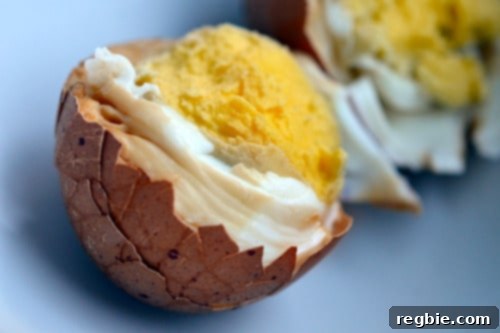
After their extended bath in the hot, unique liquid, the eggs had undergone a remarkable transformation, both visually and texturally. Upon peeling, the egg whites had taken on a beautiful, translucent amber color, reminiscent of a delicate custard. The texture was incredibly tender, yielding to the bite with a richness that regular hard-boiled eggs simply cannot match. The yolks, in contrast, were super-well-done, achieving a powdery consistency, often encircled by a distinct green-gray sulfury ring – precisely the way connoisseurs of this dish prefer them! This particular combination of textures and hues is a hallmark of perfectly prepared Tong Zi Dan, a visual feast before the actual tasting.
And the taste? Oh, the taste! It’s an experience that truly defies conventional descriptions. The flavors are subtle yet profound, savory with an unmistakable umami depth, intertwined with a delicate, slightly salty essence. There’s a certain “je ne sais quoi” that makes them utterly unique and, dare I say, melt-in-your-mouth PEE-licious! The infusion process truly works its magic, creating an egg that is profoundly different from any other, a culinary marvel that challenges and delights the palate in equal measure. It’s a taste that stays with you, leaving an impression that is both memorable and surprisingly pleasant.
The ultimate test, of course, came from our discerning young critics, the Double-Os. They eagerly gobbled up the Tong Zi Dan, their faces alight with discovery and satisfaction. Their verdict was unequivocal: “Number one!” they declared, a testament to their enthusiastic approval. And, in a humorous twist, they were literally “Number one” in terms of contributing to the dish’s unique ingredient! Their uninhibited enjoyment affirmed that, for them, this peculiar tradition was not just palatable, but genuinely enjoyable, a fun and delicious part of their cultural identity.
A Social Experiment: Sharing the Experience with Friends and Their Reactions
Eager to share this fascinating cultural experience, we invited some of our non-Chinese friends to partake in a tasting. As expected, their initial reaction was a mixture of curiosity and understandable wariness. The concept, let alone the pungent aroma that filled the air, was certainly outside their comfort zone. They didn’t seem to savor the distinctive fragrance of the eggs as much as we did, their expressions betraying a slight hesitation. It was clear that this was not your average potluck offering, and it required a certain openness of mind (and palate) to approach.
However, after some playful “egging on” (pun absolutely intended), and with assurances of the dish’s cultural significance and traditional safety, they bravely decided to dive right in. With a mix of trepidation and adventurous spirit, they sampled the urine-soaked eggs, slurping them up as we had demonstrated. Watching their reactions was a study in human curiosity and the power of peer encouragement. The initial hesitation slowly gave way to surprise, then contemplation, and finally, a consensus that was truly unexpected.
The verdict? A resounding big thumbs up! Yay! To our delight, and perhaps their own surprise, our friends found the Tong Zi Dan to be a unique and surprisingly palatable experience. Their skepticism melted away as they discovered the rich, complex flavors and the tender, custardy texture of the eggs. It was a testament to the idea that sometimes, the most unusual culinary traditions can yield the most unexpectedly delightful results. The evening turned into a lively discussion about food, culture, and pushing personal boundaries, all thanks to a simple, yet extraordinary, egg dish.
The Ultimate Easter Dish (or Not!): Why You “Must Try” Them – And the Unveiling
Given how surprisingly delicious and easy these eggs are to make, I truly believe they would be a wonderfully unique replacement for traditional deviled eggs at your next Easter party. Imagine the conversation starter! Plus, they boast a naturally beautiful amber hue, achieved without any artificial food colorings or suspicious dyes. They are a testament to natural processes and traditional methods, offering a vibrant, earthy appeal. So, I wholeheartedly declare: You absolutely *must* try them!
Or not. Because the very first sentence of this post is, in fact, totally untrue. (And as you might have gathered by now, the vast majority of the subsequent sentences, describing the cooking process, the health benefits, the taste, and even our friends’ enthusiastic reactions, are also entirely fabricated.) If you’ve managed to read this entire post and, against all rational judgment, still believe that we actually cooked eggs in our children’s urine – and then proceeded to eat them ourselves and serve them to our unsuspecting guests – well, then I have a magnificent bridge in Brooklyn that I’d be absolutely delighted to sell you. Furthermore, for the record and to clear my husband’s good name, my in-laws aren’t even from eastern China, and my husband wishes for me to make it explicitly clear that his parents, at no point in his life, ever made him pee in a saucepan. Ever. This entire narrative has been a fanciful, elaborate tale crafted for one specific purpose.
Happy April Fools, suckers!
Go ahead and punk your unsuspecting pals – share this post far and wide to spread the laughter and the love (and maybe a little bit of mild disgust)! It’s the perfect way to celebrate the spirit of playful deception that defines this wonderful day. Enjoy watching their reactions!