
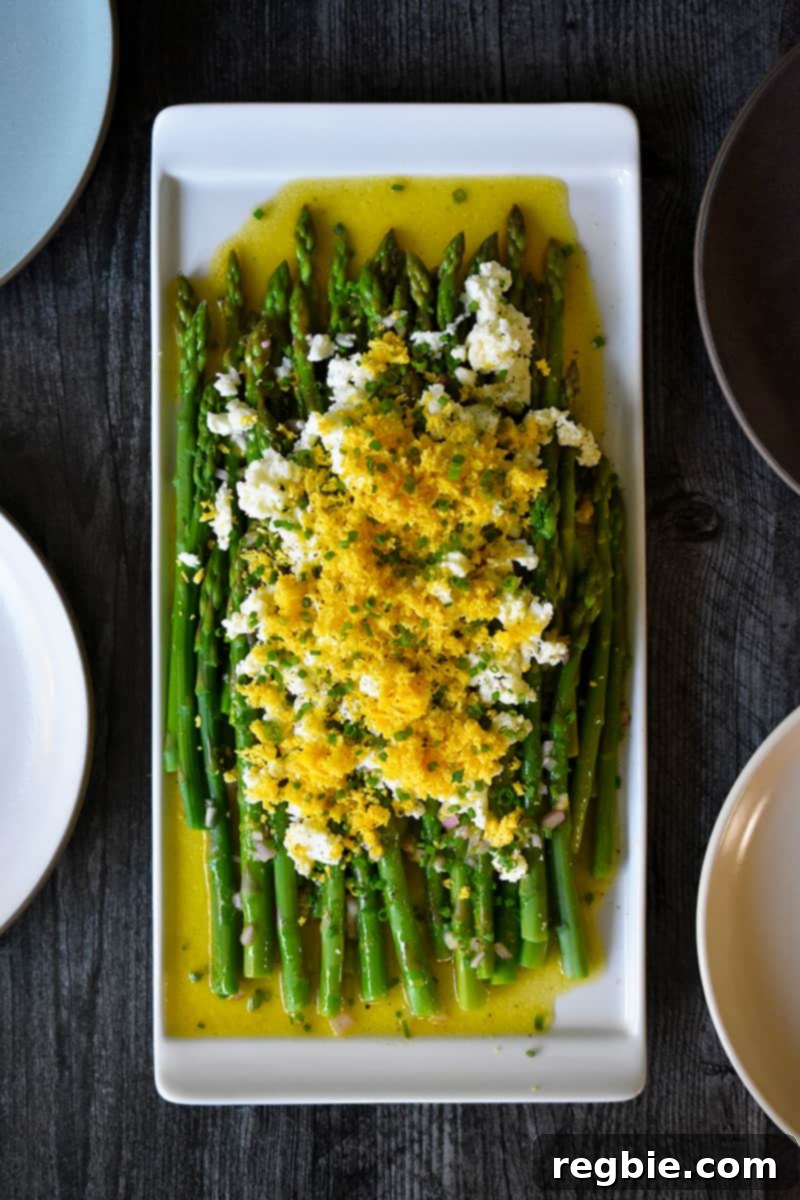
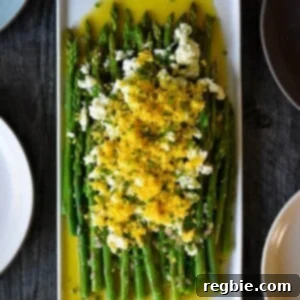
Asparagus Mimosa is more than just a dish; it’s a celebration of spring, beautifully presented and bursting with fresh flavors. This classic French recipe brings together vibrant, tender-crisp asparagus with a bright, zesty lemon vinaigrette, elegantly crowned with fluffy, sieved hard-boiled eggs. It’s the quintessential vegetable dish, perfect for elevating a leisurely Sunday brunch or adding a pop of color and freshness to any spring supper. Whether you’re following a Whole30, Paleo, or Keto lifestyle, this simple yet sophisticated recipe fits seamlessly into your healthy eating plan.
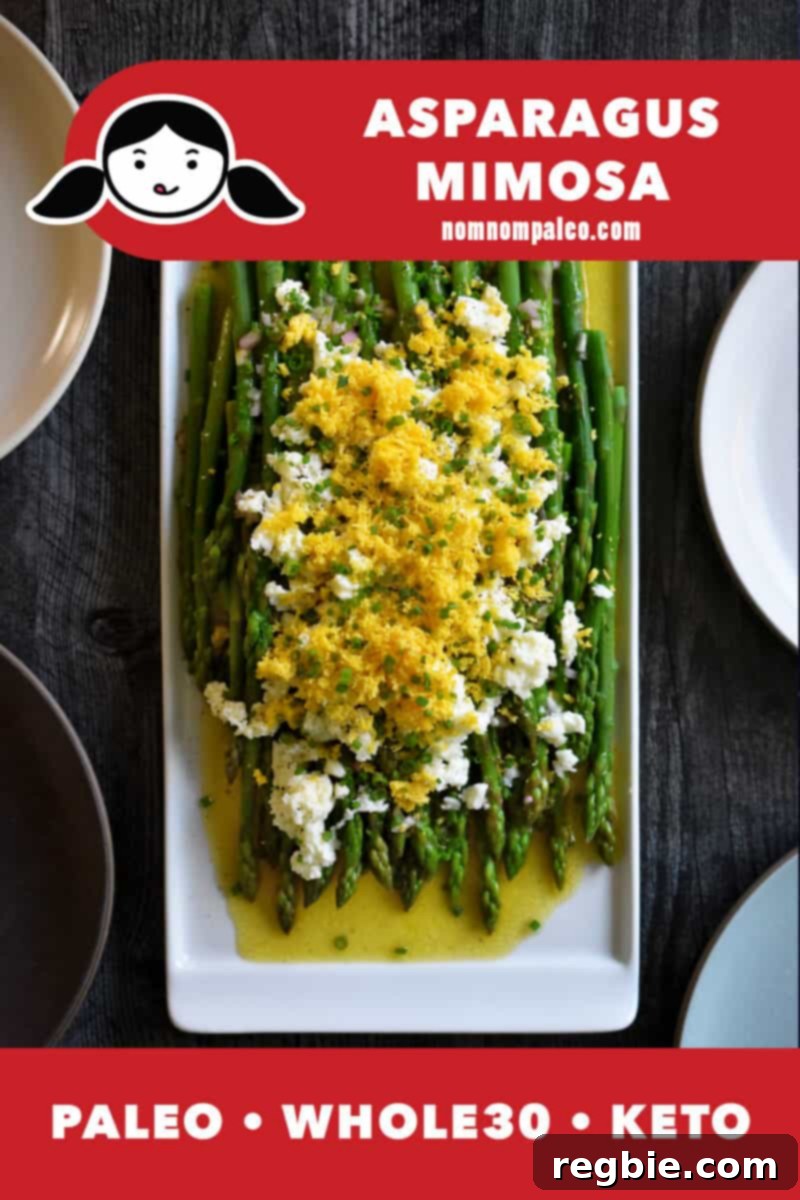
Table of Contents
- Why is this dish called Asparagus Mimosa?
- Why You’ll Love This Asparagus Mimosa Recipe
- Asparagus Mimosa Ingredients: The Stars of the Show
- Choosing the Perfect Asparagus
- Crafting the Zesty Lemon Vinaigrette
- The Art of Perfect Hard-Boiled Eggs
- Elevate with Fresh Herb Garnish
- Make-Ahead Instructions & Storage Tips
- How to Make Asparagus Mimosa: A Step-by-Step Guide
- Serving Suggestions for Asparagus Mimosa
- Variations & Substitutions
- Frequently Asked Questions (FAQ)
- Asparagus Mimosa (Whole30, Paleo, Keto) Recipe
Why is this dish called Asparagus Mimosa?
The enchanting name “Asparagus Mimosa” conjures images of delicate beauty, and it’s all thanks to its signature topping. This beloved old-school asparagus salad recipe is traditionally adorned with finely sieved hard-boiled eggs. The process of pushing the cooked egg yolks and whites through a fine-mesh sieve creates a wonderfully fluffy, crumbly texture. The bright yellow yolks, in particular, bear a striking resemblance to the tiny, fluffy, yellow flowers of the mimosa tree (scientifically known as Acacia dealbata), which herald the arrival of spring in many parts of the world. It’s a delightful visual homage that adds both charm and flavor to the dish.
Interestingly, the popular brunch cocktail, also called a Mimosa, shares the same floral inspiration. This effervescent drink, a cheerful blend of chilled champagne and orange juice, perfectly matches the sunny yellow hue of the mimosa flowers. While the cocktail isn’t an ingredient in the dish, serving Asparagus Mimosa alongside a classic Mimosa cocktail creates a beautifully themed, truly mimosa-inspired meal, ideal for an elegant weekend brunch or a special springtime celebration. It’s a culinary and botanical coincidence that simply enhances the joy of the season.
Why You’ll Love This Asparagus Mimosa Recipe
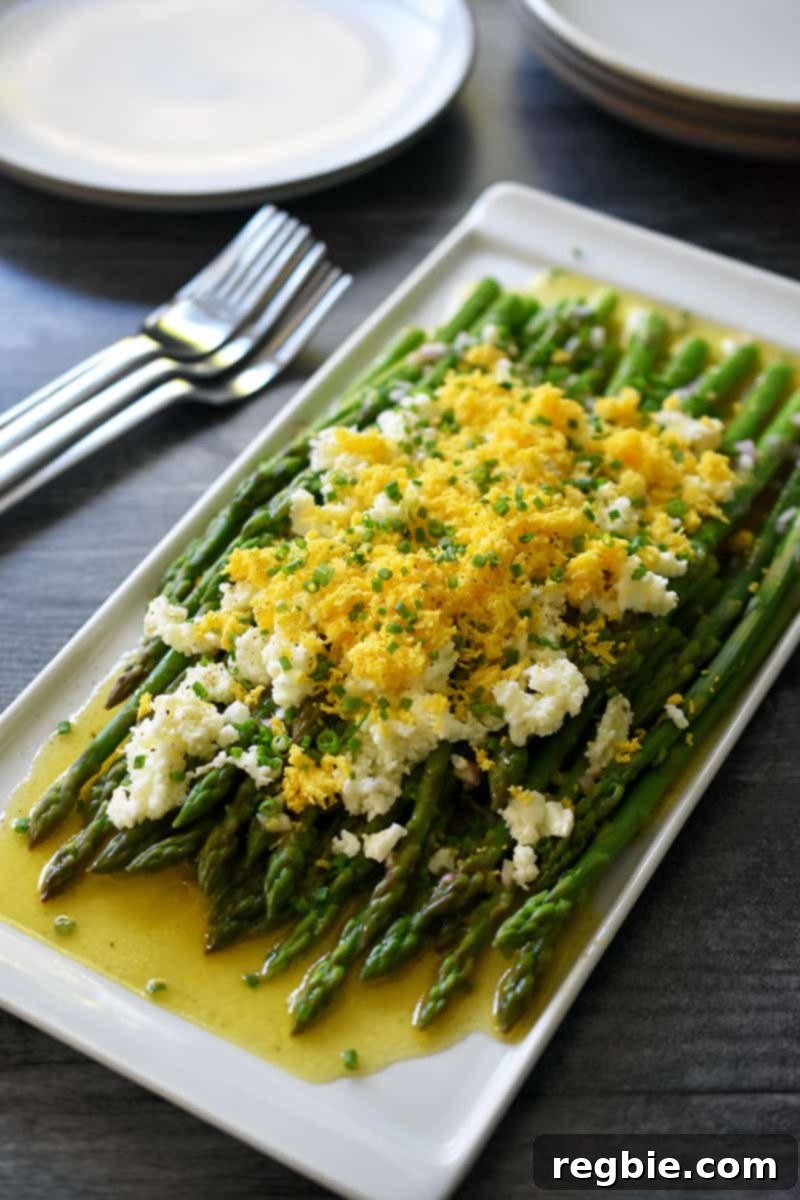
This Asparagus Mimosa recipe is more than just a seasonal side dish; it’s a culinary experience you’ll want to recreate year after year. Here’s why it deserves a spot on your spring menu:
- Embraces Spring’s Bounty: Asparagus is at its peak in spring, offering unparalleled freshness and flavor. This recipe truly lets the star ingredient shine.
- Elegantly Simple: Despite its sophisticated appearance, Asparagus Mimosa is incredibly straightforward to prepare. It’s a dish that impresses without requiring hours in the kitchen.
- Bright & Zesty Flavors: The homemade lemon vinaigrette provides a vibrant, tangy counterpoint to the subtle sweetness of the asparagus and the richness of the eggs.
- Nutrient-Packed: Asparagus is loaded with vitamins (K, A, C, E), folate, and fiber. Eggs add high-quality protein, making this a wholesome and satisfying dish.
- Diet-Friendly: Naturally gluten-free, this recipe is also perfectly suited for Whole30, Paleo, and Keto diets, making it a fantastic option for a wide range of dietary needs.
- Make-Ahead Convenience: Most components can be prepared in advance, allowing for quick assembly just before serving, which is ideal for entertaining.
- Versatile Serving: Whether as a fancy brunch item, a light lunch, or an elegant side dish for dinner, Asparagus Mimosa adapts beautifully to various meal settings.
Asparagus Mimosa Ingredients: The Stars of the Show
Creating an exceptional Asparagus Mimosa starts with selecting the finest ingredients. Each component plays a crucial role in delivering the delightful flavors and textures of this classic dish.
Choosing the Perfect Asparagus
Since asparagus is the undisputed hero of this dish, its quality is paramount. When shopping, look for asparagus stalks that are bright green, firm to the touch, and have tight, compact buds at the tips. Avoid any spears that appear dull, withered, or have soft, open buds. The trimmed ends should look fresh, not dried out or woody. Whether you prefer thin or thick spears, consistency is key – try to select stalks of similar diameter so they cook evenly. This ensures every bite has that perfect tender-crisp texture.
Storage Tip: To keep your asparagus fresh and vibrant for up to a week, treat it like a bouquet of flowers! Trim about an inch off the bottom of the stalks, then stand them upright in a mason jar or glass with about an inch of water. Loosely cover the jar with a plastic bag to maintain humidity and store it in the refrigerator. This simple trick prevents wilting and keeps them crisp.
Crafting the Zesty Lemon Vinaigrette
The vinaigrette is the soul of this salad, tying all the flavors together with its bright, tangy notes. Our rendition features a harmonious blend of:
- Minced Shallots: These provide a delicate, mild onion flavor, less pungent than regular onions, adding depth without overpowering.
- Lemon Zest & Juice: Fresh lemon is indispensable! The zest offers aromatic oils and intense citrus flavor, while the juice provides essential acidity.
- Champagne Vinegar: Its subtle, sophisticated tang is ideal. If unavailable, white balsamic vinegar or a good quality sherry vinegar are excellent substitutes. In a pinch, a bit more fresh lemon juice can also work to maintain the acidity.
- Dijon Mustard: Acts as an emulsifier, helping the oil and vinegar combine into a smooth, creamy dressing, and adds a gentle tang.
- Extra Virgin Olive Oil: The base of the vinaigrette, contributing richness and a fruity note. Use a good quality oil for the best flavor.
- Salt & Pepper: Essential for seasoning and balancing all the flavors. Freshly ground black pepper is always recommended.
Allowing the shallots to sit in the lemon juice and vinegar for a few minutes before adding the oil helps to mellow their sharpness, creating a smoother, more integrated flavor profile.
The Art of Perfect Hard-Boiled Eggs
The “mimosa” element, the fluffy hard-boiled eggs, is what gives this dish its iconic name and visual appeal. The key is to achieve perfectly cooked eggs with firm yolks and whites.
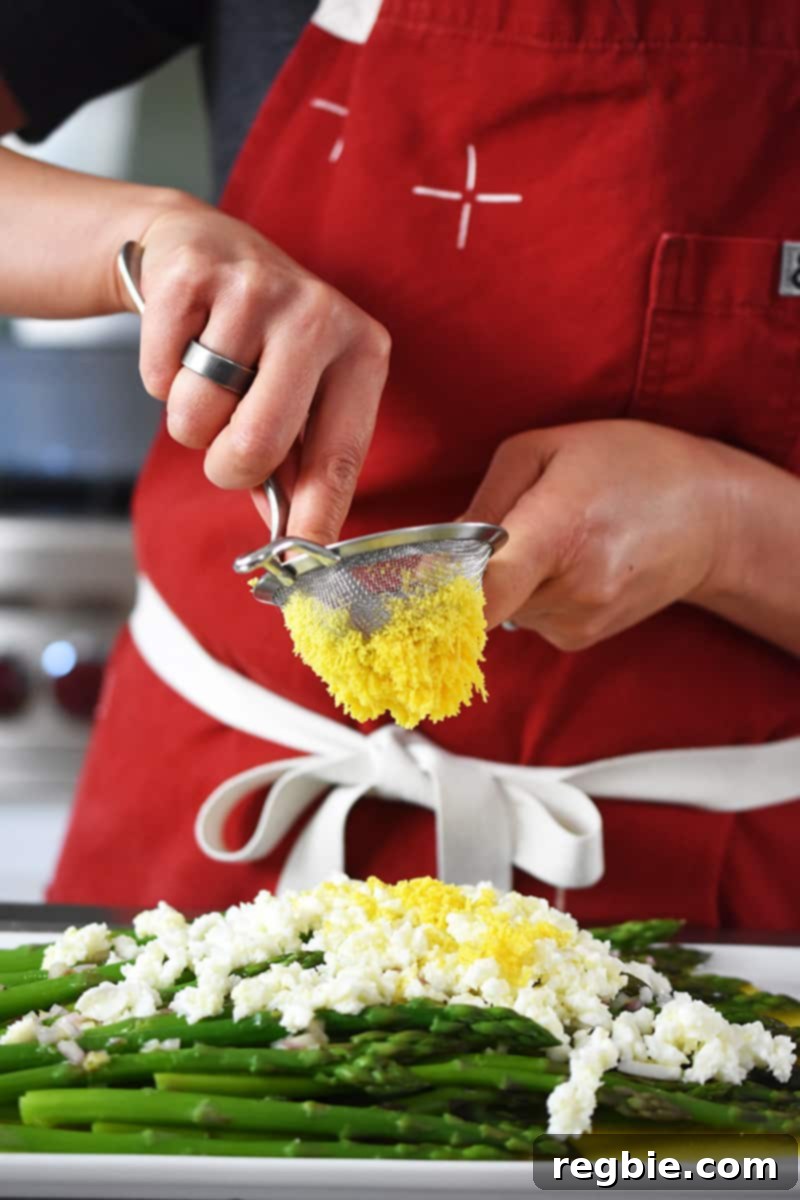
While the classic method involves pushing the entire hard-boiled egg through a fine-mesh sieve, you can also achieve a beautiful “mimosa” effect by using the small holes of a box grater or simply chopping them very finely. For a striking visual contrast, it’s often preferred to separate the yolks from the whites before “mimosa-ing” them. This allows you to create distinct layers of fluffy white and sunny yellow, making the dish truly pop.
Pro Tip for Perfect Eggs: For consistently easy-to-peel and perfectly cooked hard-boiled eggs, many home cooks swear by methods like the Instant Pot or steaming. If you prepare your eggs ahead of time, this dish comes together in mere minutes!
Egg Allergy? No Problem! If you have an egg allergy or simply prefer to omit them, the asparagus salad with its zesty vinaigrette is still absolutely delicious and a fabulous standalone dish. For a similar visual or textural element, consider finely crumbled roasted chickpeas or toasted, finely chopped nuts (e.g., pistachios or almonds for color and crunch) – though these would change the classic “mimosa” aspect, they offer tasty alternatives.
Elevate with Fresh Herb Garnish
A sprinkle of fresh herbs at the end adds a final layer of flavor, aroma, and visual appeal. They brighten the dish and provide a fresh, herbaceous counterpoint to the other ingredients. I love using whatever fresh herbs are abundant and vibrant at the market. Some excellent choices include:
- Chives: Offer a delicate oniony flavor that complements the asparagus and eggs beautifully.
- Italian Parsley: Provides a fresh, clean, slightly peppery note.
- Tarragon: Adds a unique anise-like, slightly sweet flavor, characteristic of French cuisine.
- Chervil: A subtle, delicate herb with a mild flavor similar to parsley and a hint of anise.
- Dill: For a fresh, slightly tangy dimension, especially good if you enjoy a more Mediterranean twist.
- Mint: A small amount of finely chopped mint can add an unexpected, refreshing lift.
Choose one or a combination of two for a more complex profile. The vibrant green of the herbs contrasts beautifully with the yellow eggs and green asparagus.
Make-Ahead Instructions & Storage Tips
One of the best features of Asparagus Mimosa, especially when entertaining, is that many of its components can be prepared in advance. This allows for quick and stress-free assembly just before serving, ensuring maximum freshness and vibrant presentation.
- Cooked Asparagus: Once blanched and thoroughly dried, the asparagus can be stored in an airtight container in the refrigerator for up to 3-4 days. Ensure it is completely cool before storing to prevent condensation.
- Hard-Boiled Eggs: Perfectly cooked, peeled hard-boiled eggs can be kept in the refrigerator for up to 5-7 days. You can even sieve them ahead of time and store the fluffy whites and yolks separately in airtight containers.
- Vinaigrette: While the vinaigrette can be made a day in advance and stored in the fridge, it’s often best to prepare it closer to serving time. The flavors of fresh lemon and shallots are most potent when freshly made. If making ahead, allow it to come to room temperature and whisk vigorously before dressing the asparagus.
Important Note on Dressing: To maintain the asparagus’s beautiful bright green color and crisp texture, avoid pouring the vinaigrette over the spears more than a few hours before serving. The acid in the dressing can cause the asparagus to lose its vibrant hue and become a dull greenish-brown, diminishing its visual appeal. For the best results, dress the asparagus within an hour or two of serving, then top with the eggs and herbs right before presentation.
How to Make Asparagus Mimosa: A Step-by-Step Guide
Follow these simple steps to create a show-stopping Asparagus Mimosa that’s sure to impress!
-
Prepare Your Mise en Place: Blanching Setup
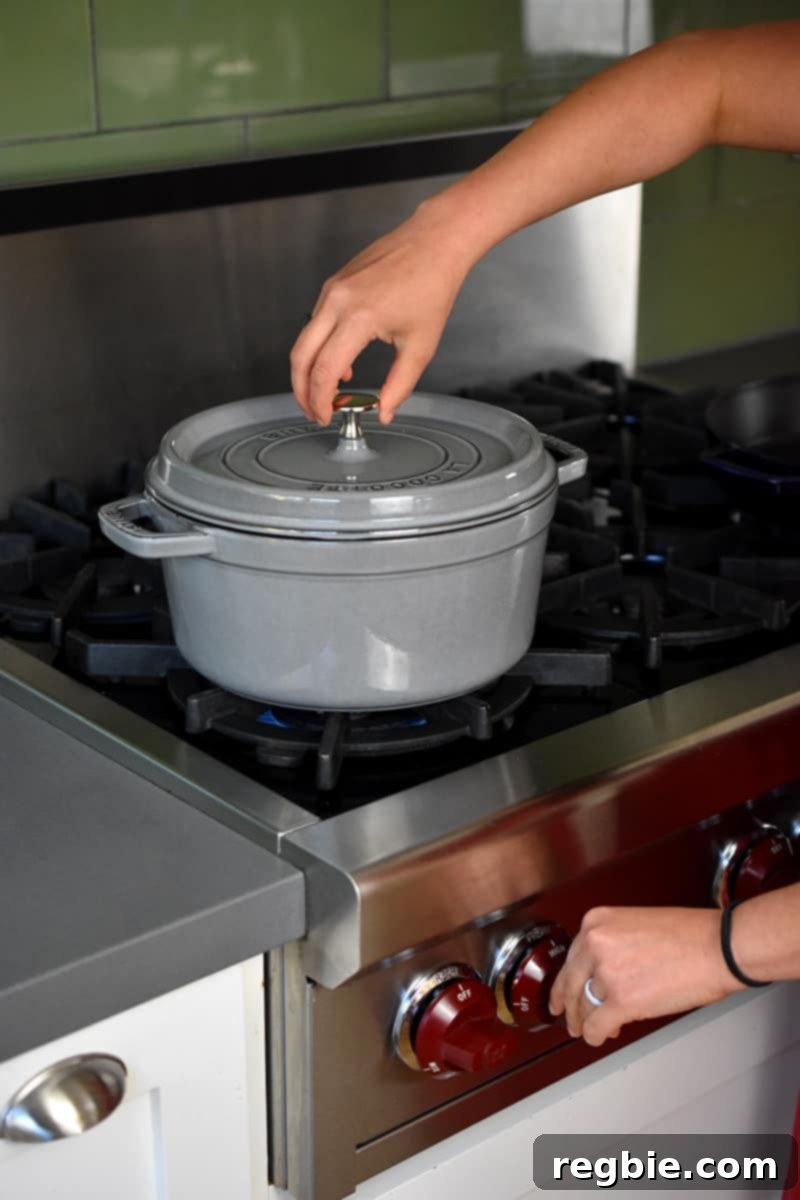
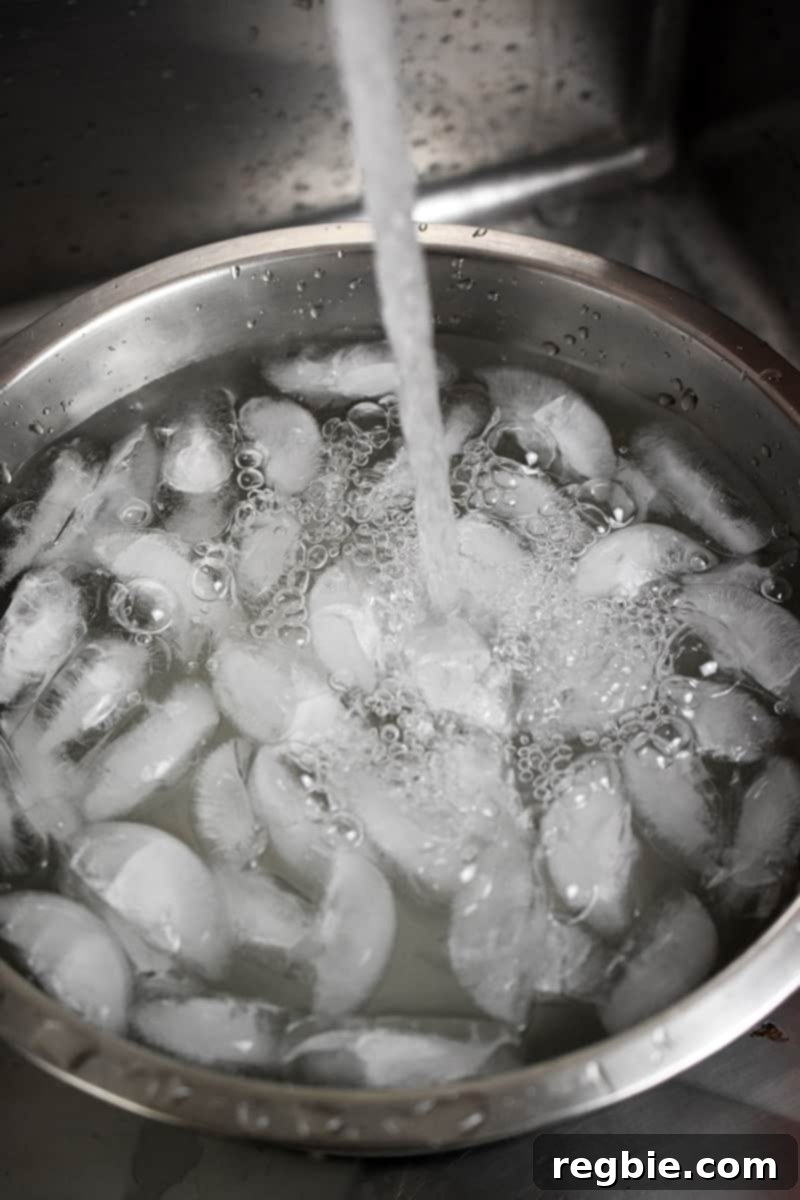
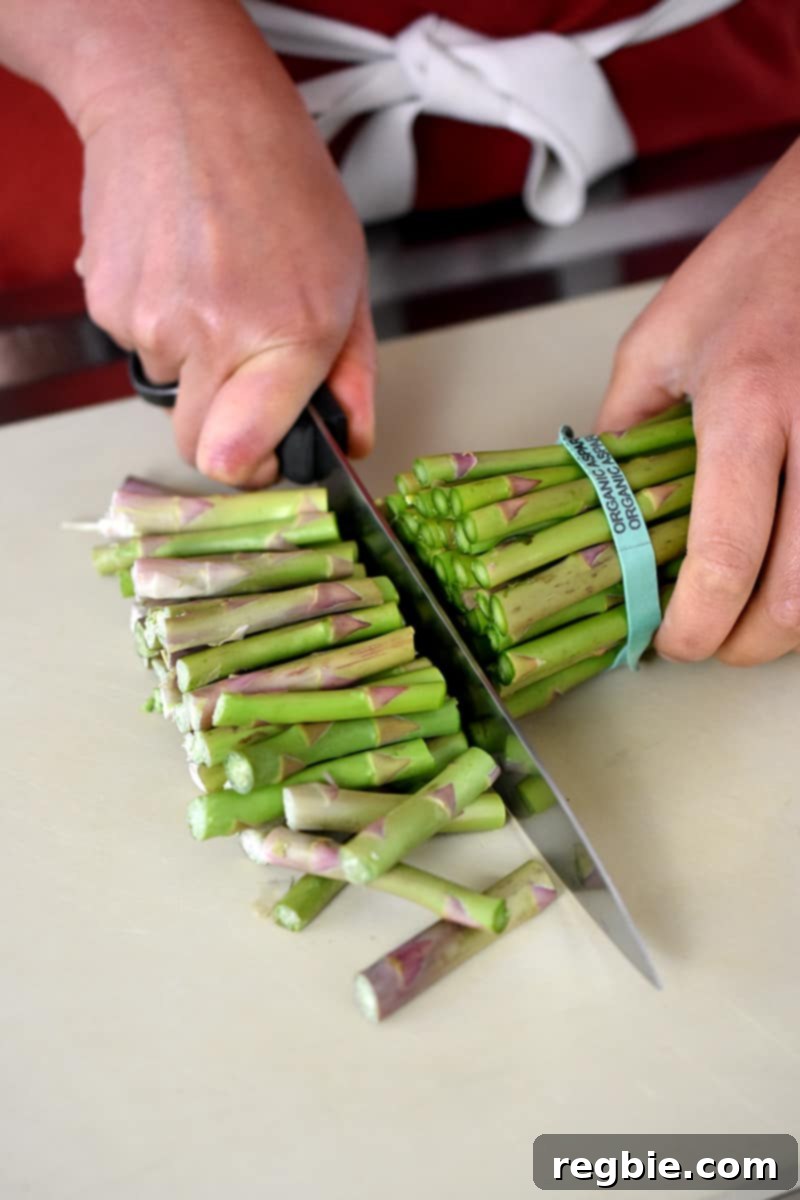
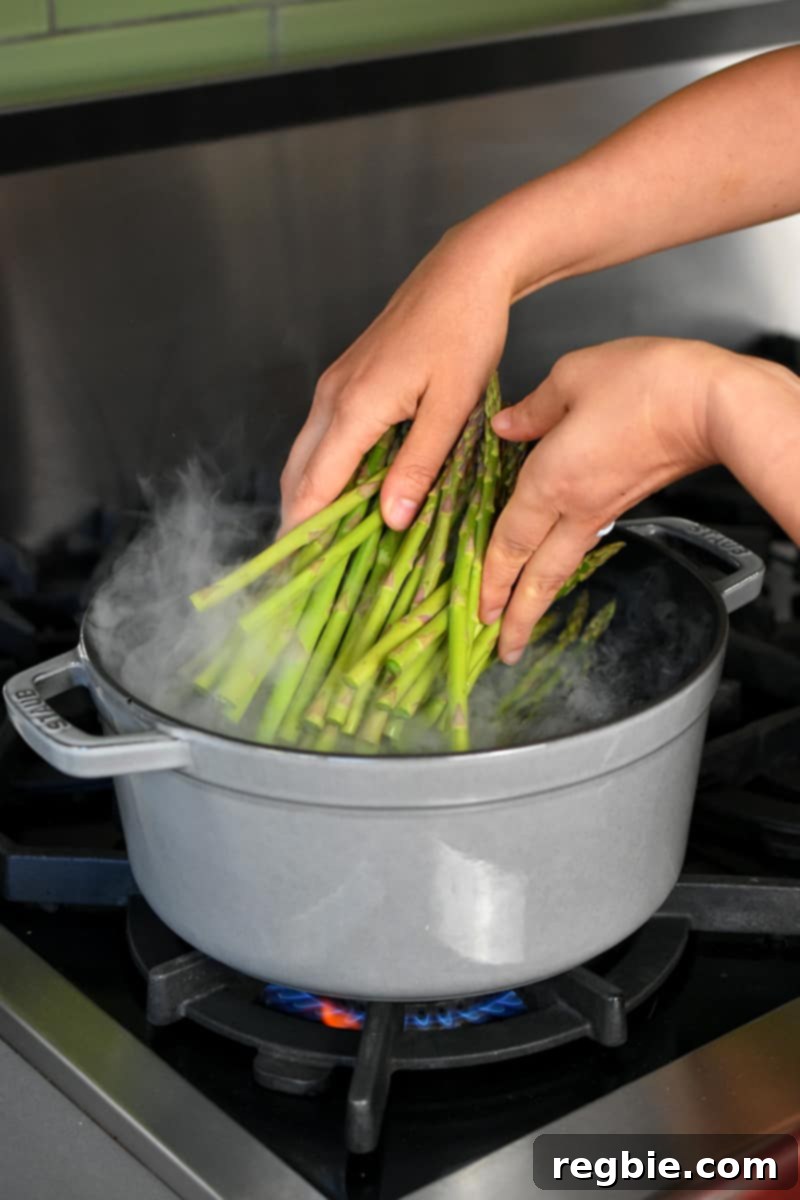
Start by filling a large bowl with ice water and setting it aside. This will be your ice bath, crucial for stopping the cooking process of the asparagus. Next, bring a large pot of water (with a lid) to a rolling boil over high heat. While the water heats, take your asparagus and carefully snap or cut off the bottom two inches of each spear, removing the woody ends.

Prepare a large pot for blanching the asparagus. An ice bath is essential for crisp, vibrant asparagus. Trim the woody ends for tender asparagus spears. -
Blanch the Asparagus
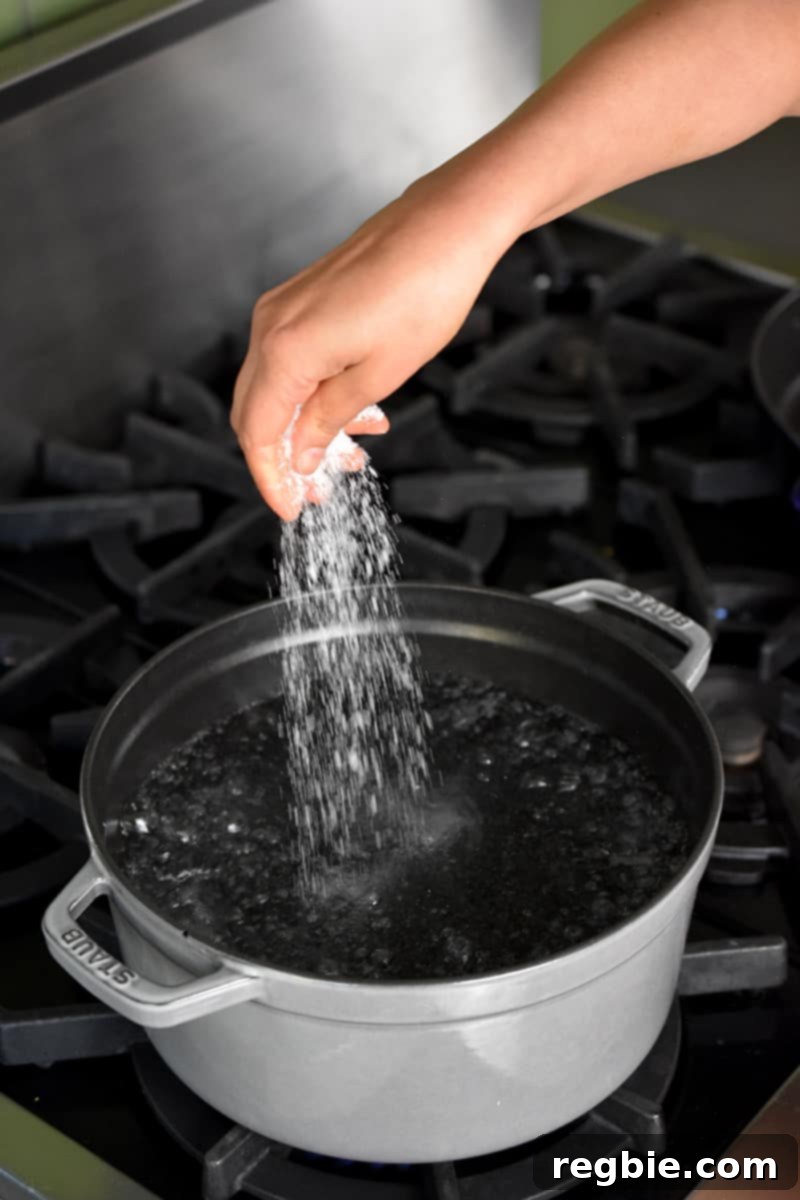
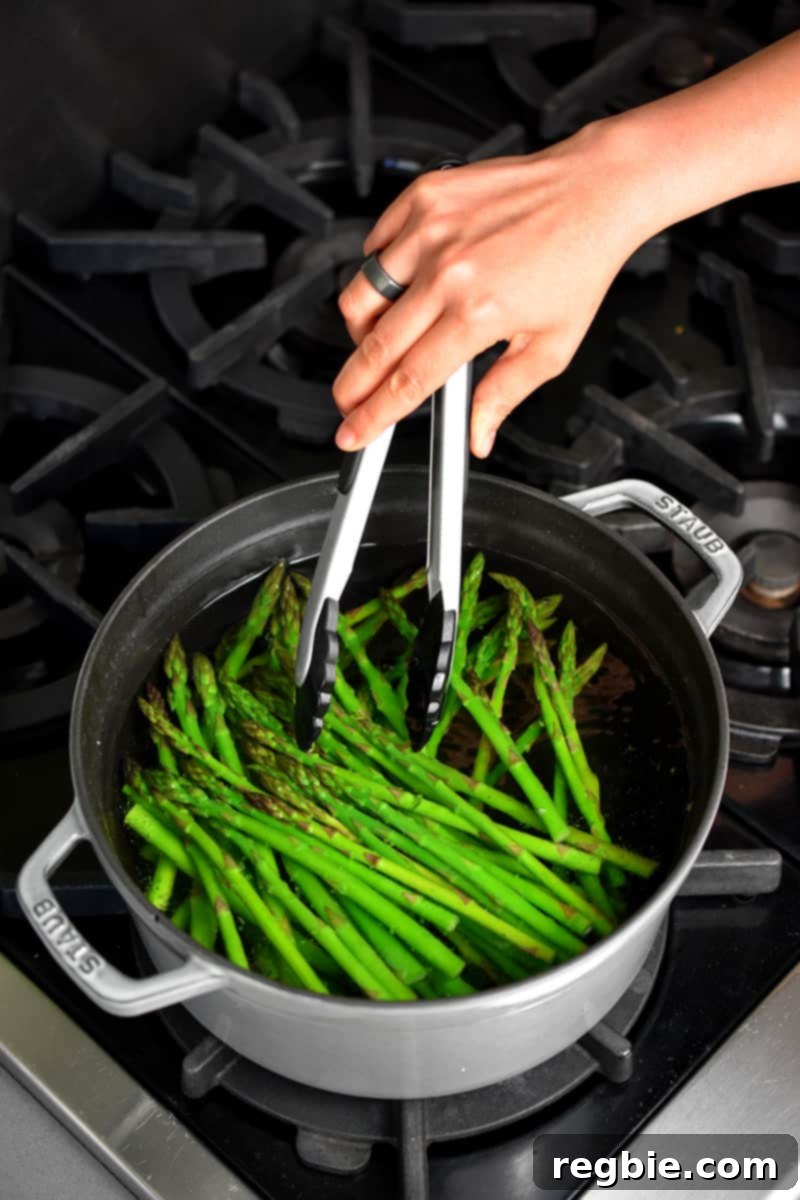
Once your water is vigorously boiling, add a generous pinch of kosher salt and stir until dissolved. Carefully immerse the trimmed asparagus spears into the boiling water. Cook for approximately 2 to 6 minutes, depending on the thickness of your asparagus. Thinner spears will cook faster, while thicker ones will require more time. The goal is a vibrant green color and a tender-crisp texture – still firm with a slight snap when bitten.
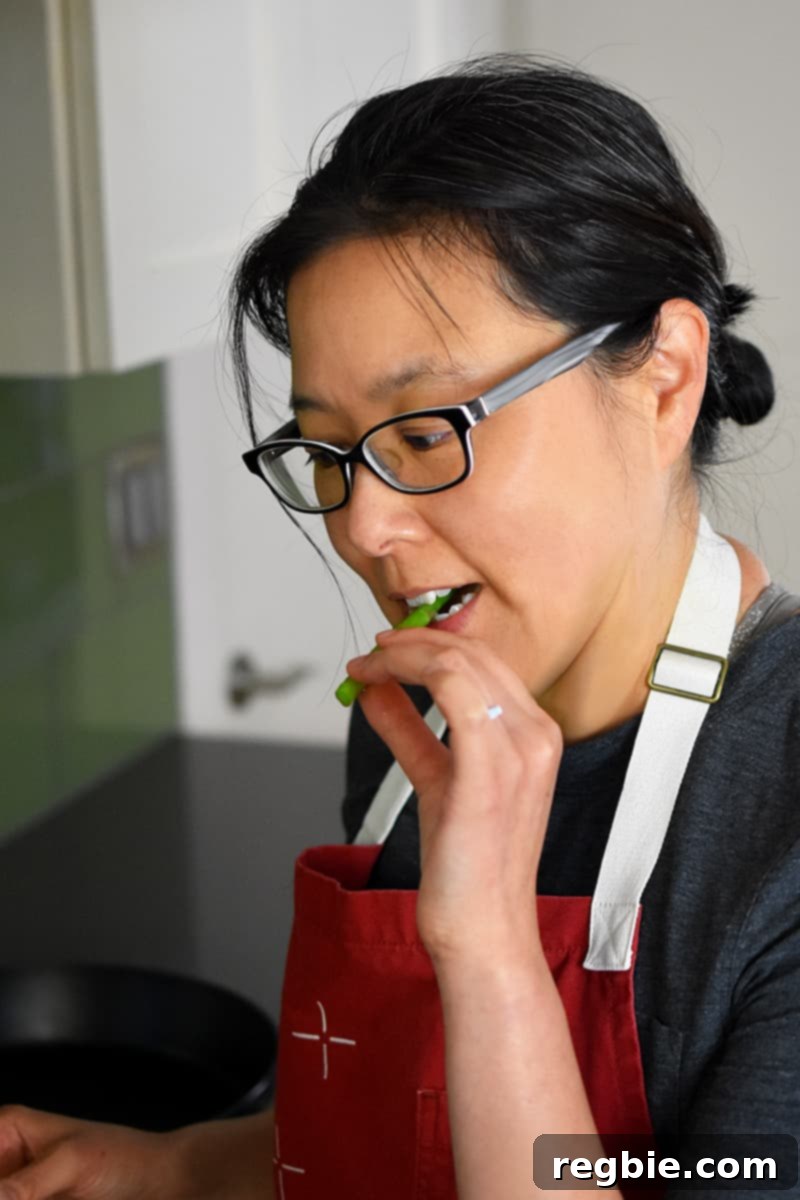
Season the boiling water with salt before adding asparagus. Cook asparagus until bright green and tender-crisp. Stir gently to ensure even cooking. Don’t Overcook! The difference between perfectly tender-crisp and mushy asparagus is often just a minute or two. Taste a spear to ensure the texture is exactly to your liking before proceeding.
A quick taste test ensures perfect texture. -
Shock and Dry
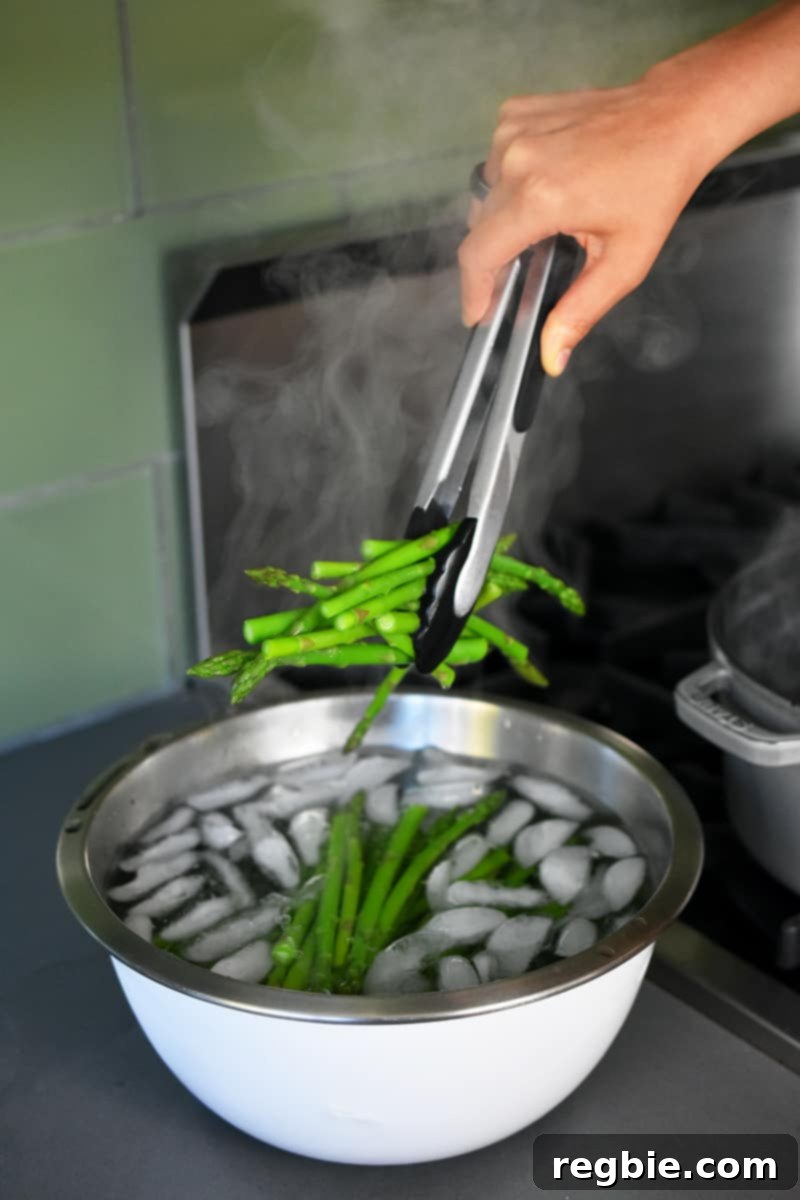
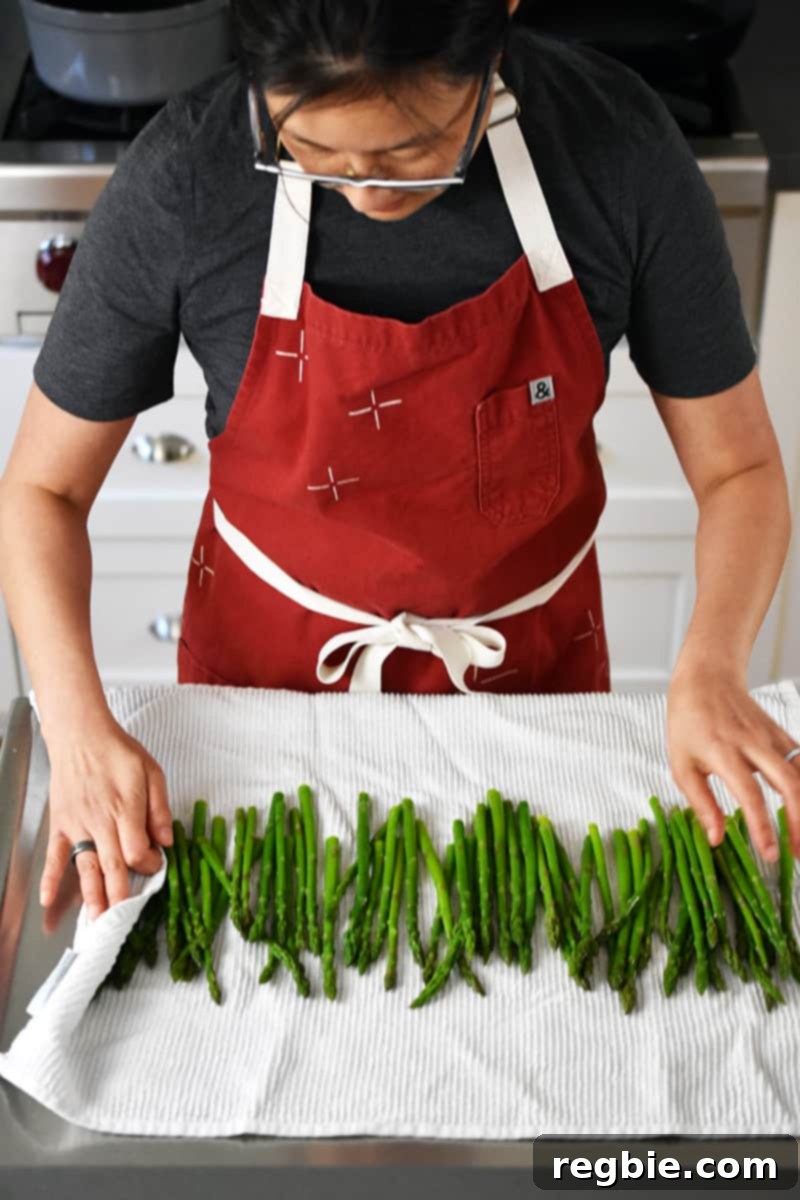
Immediately transfer the cooked asparagus from the boiling water to the prepared ice bath using a pair of tongs. This “shocking” process rapidly halts the cooking, preserving the vibrant green color and crisp texture. Let them cool in the ice water for a few minutes, then remove and carefully pat them completely dry with paper towels or a clean kitchen towel. Thorough drying is crucial; any excess moisture will prevent the vinaigrette from adhering properly to the spears. Arrange the dried asparagus spears neatly on your chosen serving platter.
Transfer asparagus to an ice bath to stop cooking. Pat asparagus thoroughly dry to ensure the dressing adheres. -
Whip Up the Zesty Vinaigrette
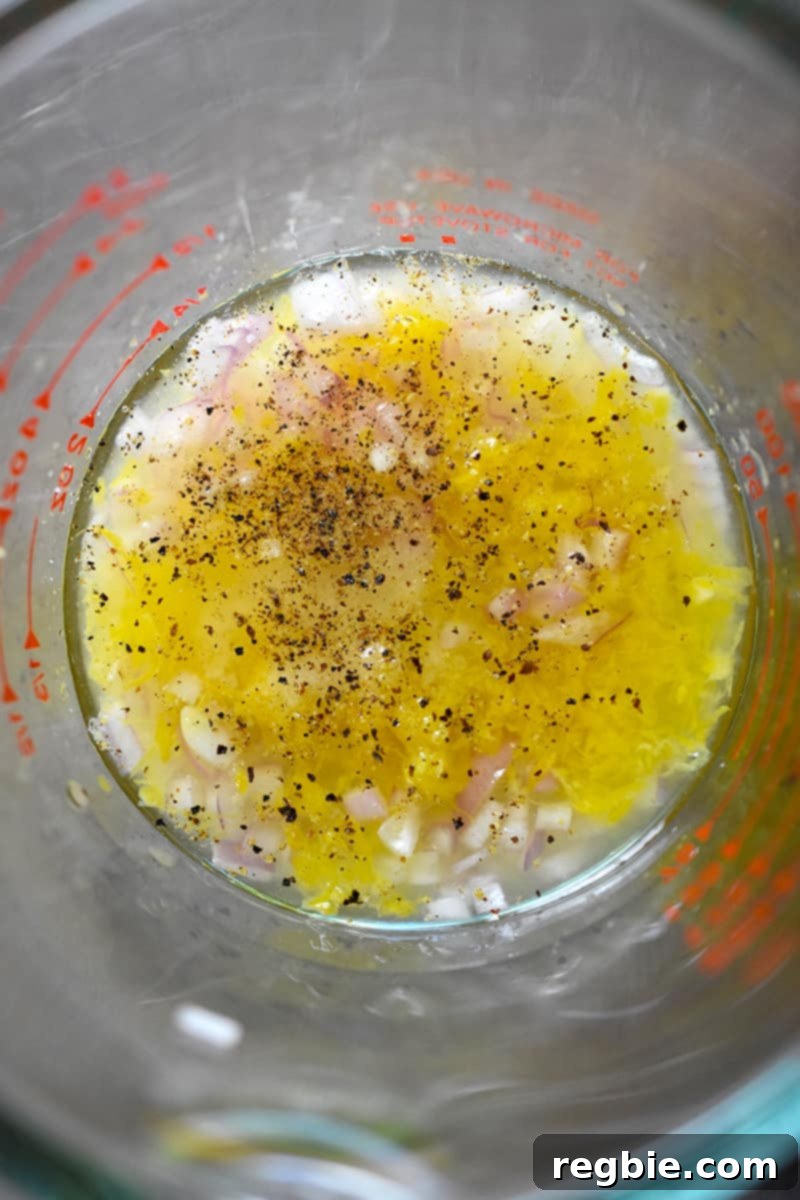
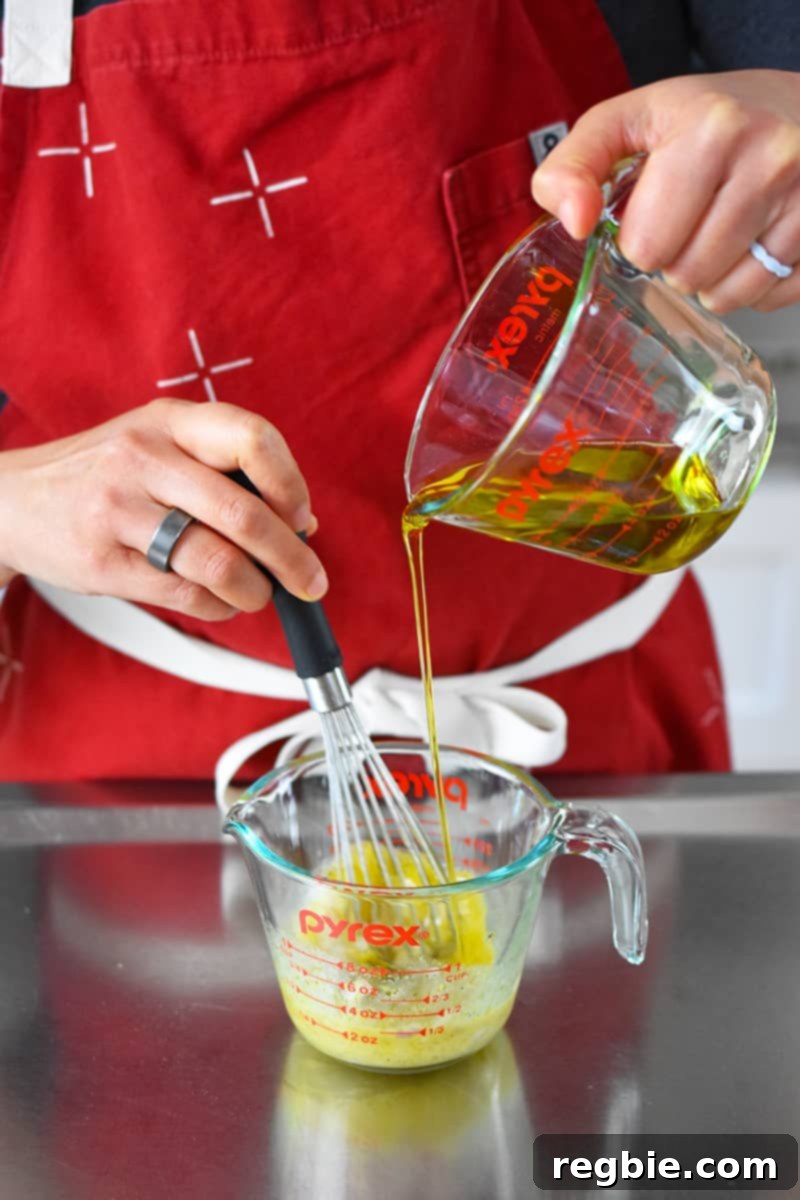
In a small bowl or liquid measuring cup, combine the minced shallots, lemon zest, fresh lemon juice, champagne vinegar, kosher salt, and black pepper. Stir everything together and let it sit for a few minutes. This brief resting period helps to mellow the sharpness of the shallots, integrating their flavor more harmoniously into the dressing. Then, add the Dijon mustard. While continuously whisking, slowly drizzle in the extra virgin olive oil until the vinaigrette is beautifully emulsified and creamy. Taste and adjust the seasoning as needed; you might want a little more salt, pepper, or a touch more lemon for extra zing.
Combine vinaigrette ingredients, allowing shallots to mellow. Slowly whisk in olive oil to emulsify the dressing. -
Dress the Asparagus
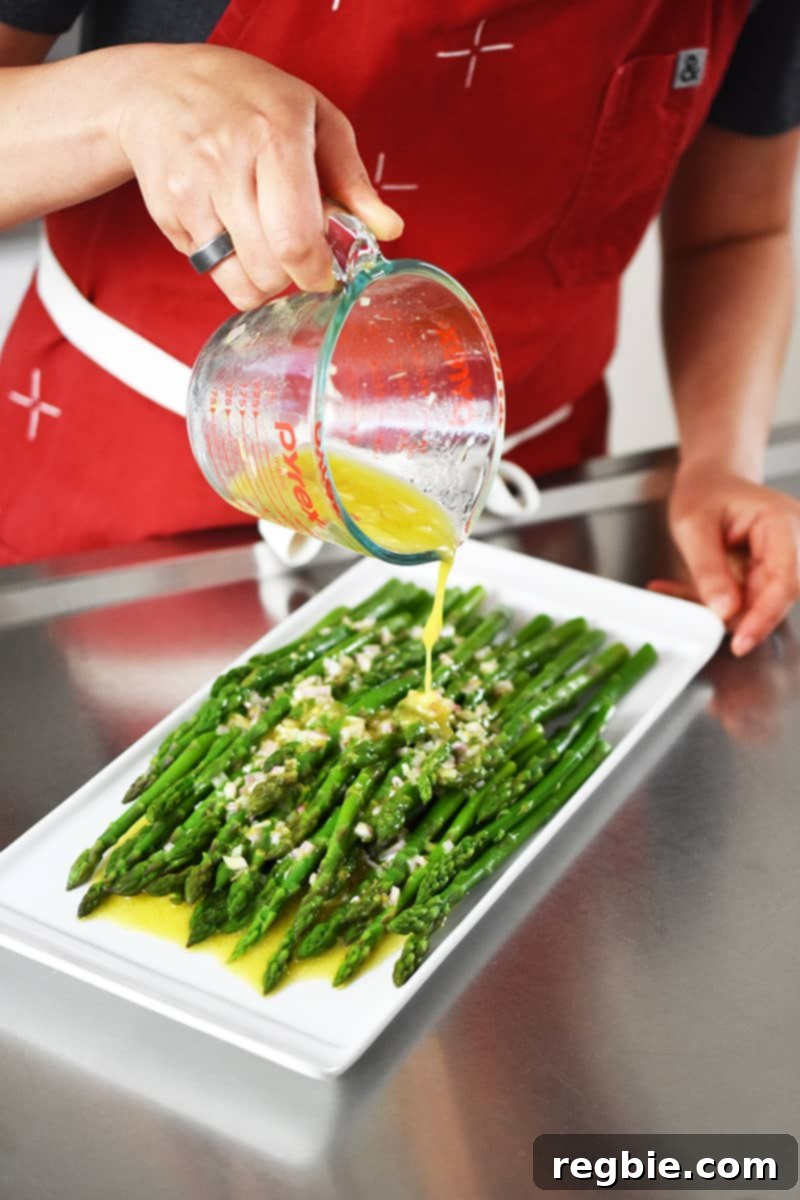
Generously pour the freshly prepared vinaigrette over the dried asparagus spears arranged on your serving platter. Gently toss the asparagus to ensure each spear is thoroughly coated in the zesty dressing. This step adds a crucial layer of flavor and moisture.
Drizzle the vibrant lemon vinaigrette over the asparagus. -
“Mimosa” the Eggs
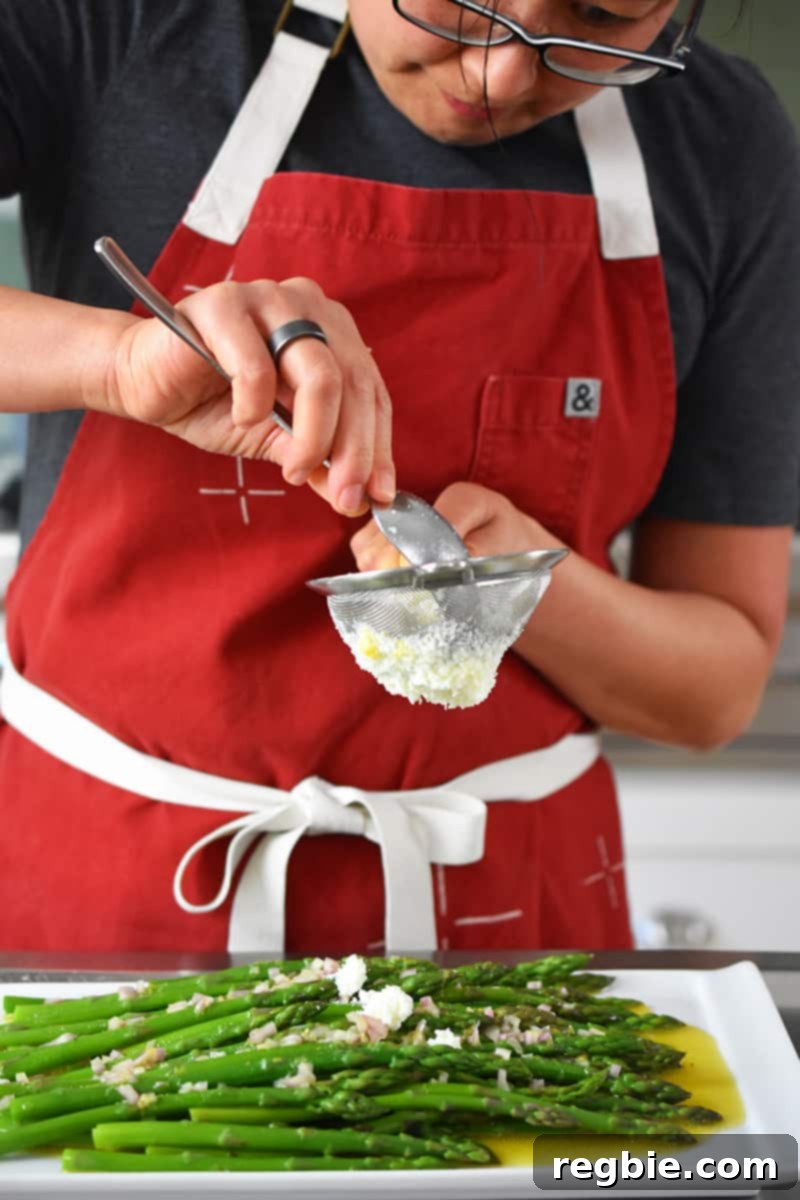
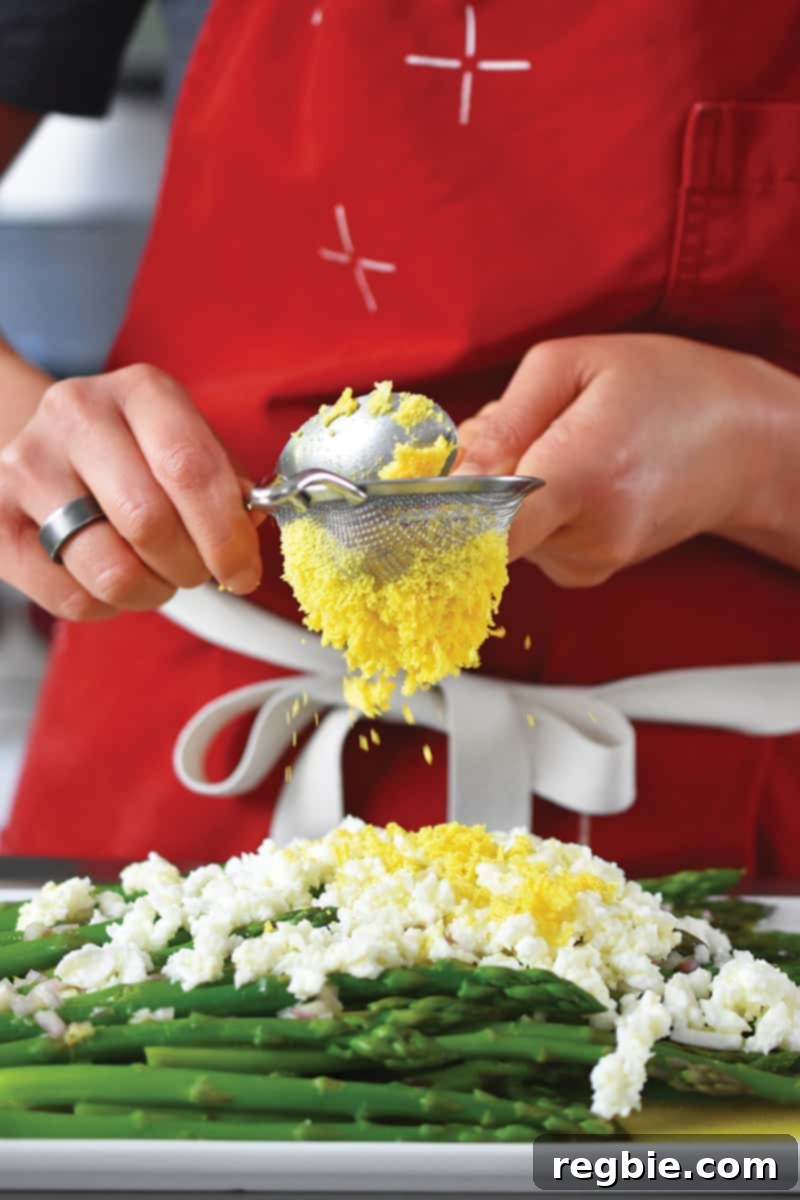
Take your hard-boiled eggs and cut them in half. Carefully separate the cooked yolks from the whites. Using a fine-mesh sieve and the back of a metal spoon, gently push the egg whites through the sieve directly over the dressed asparagus. This creates a fluffy, snow-like layer of whites. Next, repeat the process with the egg yolks, pushing them through the sieve to create a beautiful, sunny yellow topping. Don’t forget to scrape the outside of the sieve to gather all the delightful eggy goodness!
Sieve the egg whites for a delicate, fluffy layer. Follow with the sieved yolks to create the iconic “mimosa” effect. -
Garnish and Serve
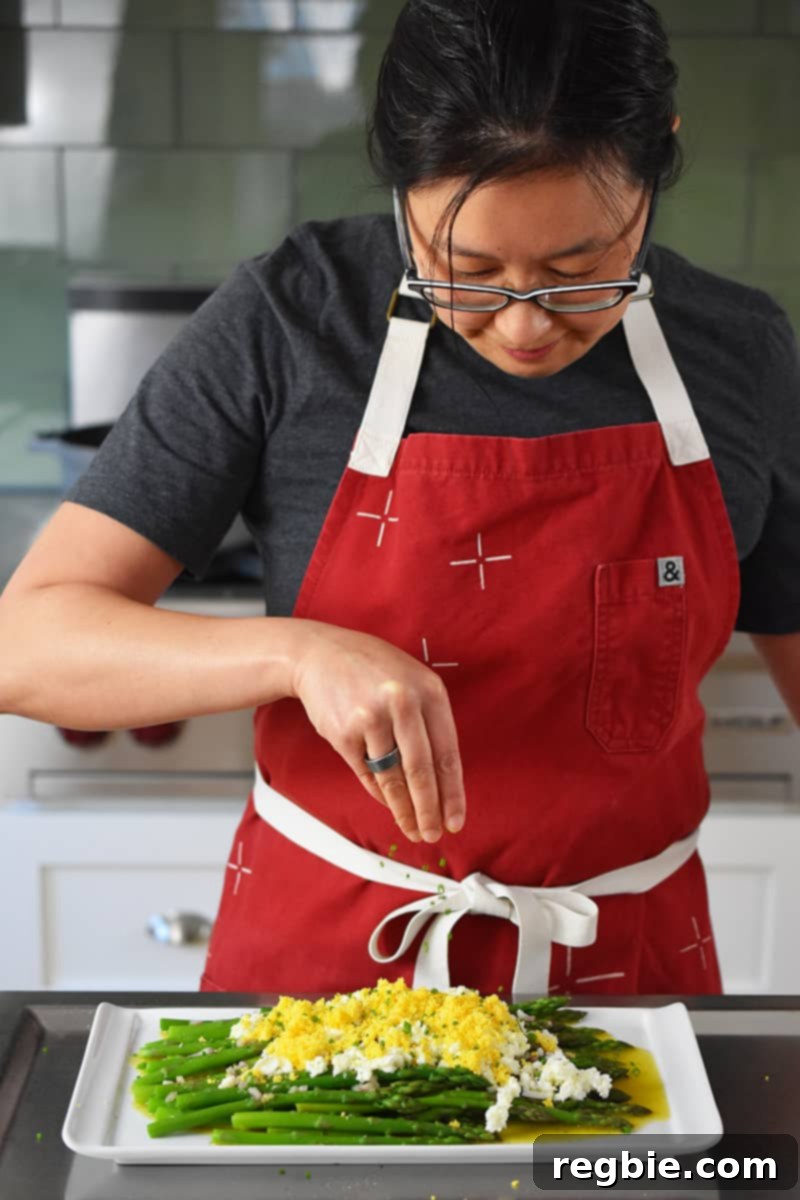
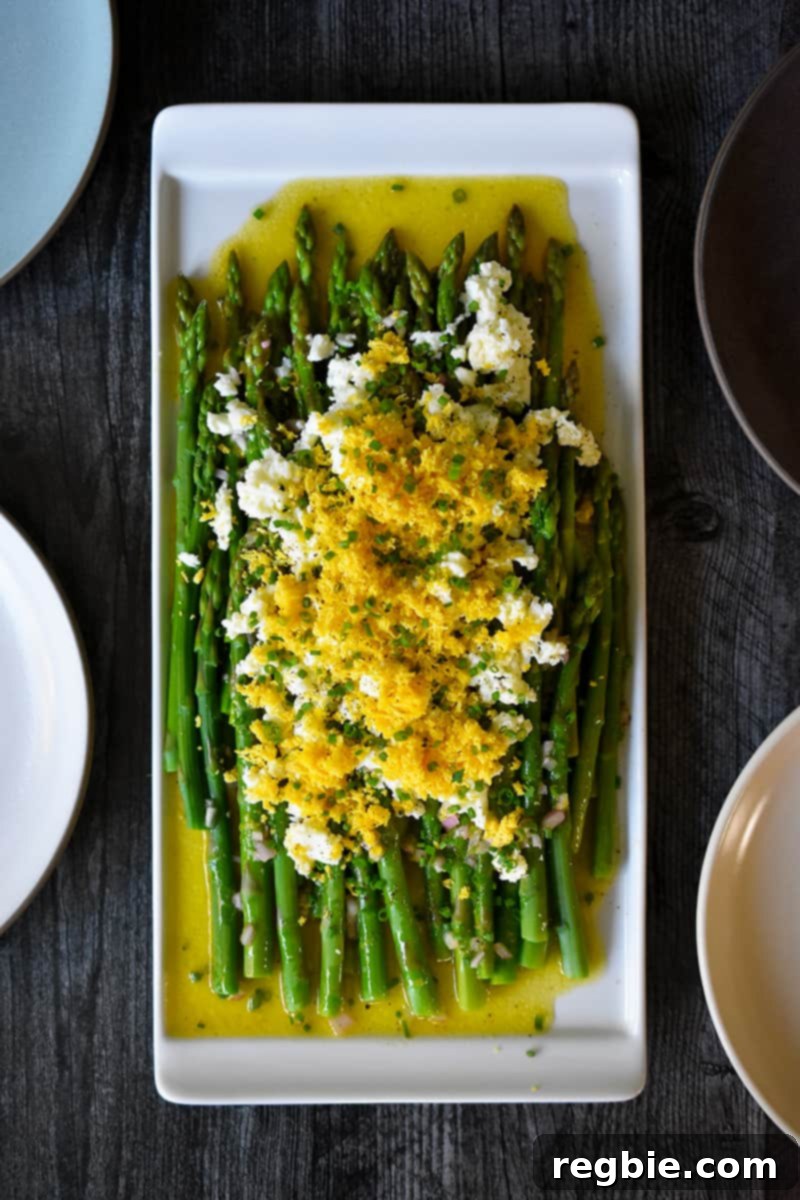
Finish your Asparagus Mimosa with a final crack of fresh black pepper and a generous sprinkle of your favorite minced fresh herbs, such as chives, Italian parsley, or tarragon. The fresh herbs add a burst of color and a fragrant finish. Your elegant and delicious Asparagus Mimosa is now ready to be enjoyed!
A final sprinkle of fresh herbs completes this beautiful dish. Enjoy this vibrant and delicious celebration of spring!
Serving Suggestions for Asparagus Mimosa
Asparagus Mimosa is incredibly versatile and makes a stunning addition to almost any meal, particularly during the spring season. Its light, fresh, and vibrant profile pairs beautifully with a variety of main courses and other side dishes.
- Brunch Elegance: Serve it alongside classic brunch fare like scrambled eggs, quiches, smoked salmon, or crispy bacon. It adds a sophisticated touch to any breakfast or brunch spread.
- Light Lunch: Enjoy Asparagus Mimosa as a light and refreshing main course salad, perhaps with some grilled chicken or fish flakes mixed in for added protein.
- Dinner Side Dish: It’s an ideal accompaniment to roasted chicken, grilled salmon, pan-seared scallops, or a tender pork tenderloin. The bright vinaigrette cuts through richer flavors beautifully.
- Vegetarian Meal: Pair it with a hearty lentil soup, a quinoa pilaf, or a vegetable frittata for a complete and satisfying vegetarian meal.
- Part of a Spring Spread: Combine it with other seasonal favorites like roasted radishes, sugar snap peas with mint, or a fresh green salad for a colorful and diverse spring feast.
- Appetizer Platter: For a more casual setting, arrange the asparagus spears on a platter with other crudités, cheeses, and dips.
No matter how you choose to serve it, Asparagus Mimosa is guaranteed to be a crowd-pleaser and a visual delight!
Variations & Substitutions
While the classic Asparagus Mimosa is perfect as is, you can easily customize it to suit your taste or dietary needs. Here are a few ideas to get you started:
- Different Vinegars: Experiment with other mild, flavorful vinegars in the vinaigrette, such as white wine vinegar, apple cider vinegar, or even a delicate rice vinegar for a slightly different tang.
- Herb Profile: Don’t limit yourself to the suggested herbs! Try fresh dill for a Nordic touch, chervil for a true French classic, or even finely chopped fresh mint for an unexpected burst of freshness.
- Garlic Addition: For garlic lovers, a tiny pinch of finely minced fresh garlic can be added to the vinaigrette for an extra layer of savory flavor. Be mindful not to overpower the delicate asparagus.
- Spicy Kick: A tiny pinch of red pepper flakes in the vinaigrette can add a subtle warmth if you enjoy a little heat.
- Roasted Asparagus: While blanching is traditional, roasting the asparagus can bring out a different depth of flavor with slightly caramelized edges. Toss asparagus with a little olive oil, salt, and pepper and roast at 400°F (200°C) until tender-crisp.
- Grilled Asparagus: For a smoky flavor, grill the asparagus spears until tender and slightly charred. This adds another dimension to the dish.
- Egg Alternatives (for allergies or preference): As mentioned, finely crumbled roasted chickpeas, toasted pine nuts, or even a sprinkle of nutritional yeast can offer a different textural and savory element if eggs are not an option.
- Creamier Vinaigrette (not Whole30/Paleo/Keto): For a richer dressing, you could blend in a spoonful of mayonnaise (ensure it’s Whole30 compliant if needed) or a touch of Greek yogurt (not Whole30/Paleo/Keto) into the vinaigrette.
Frequently Asked Questions (FAQ)
- Can I use frozen asparagus for Asparagus Mimosa?
- While fresh asparagus is highly recommended for its texture and vibrant color, you can use frozen asparagus in a pinch. However, be aware that frozen asparagus tends to be softer and less crisp when cooked. If using frozen, thaw it first and pat it very dry before blanching (for a shorter time) or roasting.
- What’s the best way to trim asparagus?
- There are two popular methods: either snap the tough, woody ends off by hand (they naturally break where the tough part ends), or carefully cut about 1-2 inches off the bottom of each spear, ensuring you remove the fibrous, inedible portion.
- My vinaigrette isn’t emulsifying. What went wrong?
- The most common reasons are adding the oil too quickly or not whisking vigorously enough. Ensure your mustard is fresh, and try adding the oil in a very slow, steady stream while whisking continuously. If it separates, a quick pulse with an immersion blender can often bring it back together.
- Can I make this dish without the eggs?
- Absolutely! The asparagus with the zesty lemon vinaigrette is a delicious and refreshing dish on its own. While it won’t be “mimosa” without the eggs, it will still be a fantastic spring salad.
- How long does Asparagus Mimosa last in the fridge?
- Once fully assembled and dressed, Asparagus Mimosa is best enjoyed immediately or within a few hours. The asparagus can lose its vibrant color and crispness when left dressed for too long. If you’ve stored components separately, the dressed dish will be fresh for up to 24 hours, but ideally, dress and assemble just before serving.
Asparagus Mimosa (Whole30, Paleo, Keto) Recipe
Asparagus Mimosa (Whole30, Paleo, Keto)
Asparagus Mimosa is a classic French recipe that’s the embodiment of spring on a plate! Combining tender-crisp asparagus stalks with a lemony vinaigrette and topped with fluffy, sieved hard-boiled eggs—it’s the perfect vegetable dish to serve with Sunday brunch or a colorful spring supper.
Prep Time: 10 mins
Cook Time: 15 mins
Servings: 4
Author: Michelle Tam
Ingredients
- 1½ pounds asparagus
- Diamond Crystal kosher salt (for blanching and vinaigrette)
- 2 tablespoons minced shallots
- Zest from one lemon
- 2 tablespoons lemon juice
- 1 tablespoon champagne vinegar
- ¼ teaspoon freshly ground black pepper, plus more to taste
- 1 teaspoon Dijon mustard
- 6 tablespoons extra virgin olive oil
- 2 hard-boiled eggs
- 2 tablespoons minced chives, Italian parsley, tarragon, or chervil (for garnish)
Instructions
- Fill a large bowl with ice water and set aside. Bring a large covered pot of water to a boil over high heat.
- While the water is heating up, cut the bottom 2 inches off the asparagus spears to remove the woody ends.
- When the water is boiling, add a large pinch of salt and stir to dissolve.
- Carefully drop the trimmed asparagus spears into the boiling water and cook for about 2 to 6 minutes (depending on thickness) or until bright green and tender-crisp.
- Use tongs to immediately transfer the asparagus to the bowl of ice water to stop the cooking process.
- Carefully dry the blanched asparagus with paper towels or a clean kitchen towel. Ensure the spears are completely dry so the dressing adheres well. Arrange the dried spears on a serving platter.
- To make the vinaigrette: In a small bowl or liquid measuring cup, combine the minced shallots, lemon zest, lemon juice, champagne vinegar, ¾ teaspoon kosher salt, and ¼ teaspoon black pepper. Let it sit for a few minutes. Add the Dijon mustard, then slowly whisk in the extra virgin olive oil until emulsified. Taste and adjust seasoning as needed.
- Pour the prepared vinaigrette over the asparagus, tossing gently to coat thoroughly.
- Cut the hard-boiled eggs in half and separate the cooked yolks from the whites.
- Push the egg whites through a fine-mesh sieve with the back of a metal spoon, directly over the dressed asparagus. Next, push the yolks through the fine-mesh sieve, ensuring you scrape the outside to gather all the fluffy egg.
- Crack additional black pepper over the top and sprinkle with the minced chives or your favorite chopped fresh herbs. Serve immediately and enjoy!
Notes
Make-Ahead Instructions: The cooked asparagus and hard-boiled eggs can be stored in the fridge for up to 4 days. While the vinaigrette can be made a day ahead, for optimal freshness and flavor, it’s best prepared on the day of serving. Avoid dressing the asparagus more than a few hours ahead of time, as the acid can dull its vibrant green color.
Nutrition (Approximate per serving)
Calories: 266kcal | Carbohydrates: 8g | Protein: 7g | Fat: 24g | Fiber: 4g | Sugar: 4g
Nutrition information is automatically calculated and should only be used as an approximation. Actual values may vary.
Looking for more recipe ideas? Head on over to our Recipe Index. You’ll also find exclusive recipes in our cookbooks, Nom Nom Paleo: Food for Humans, Ready or Not!, and Nom Nom Paleo: Let’s Go!