
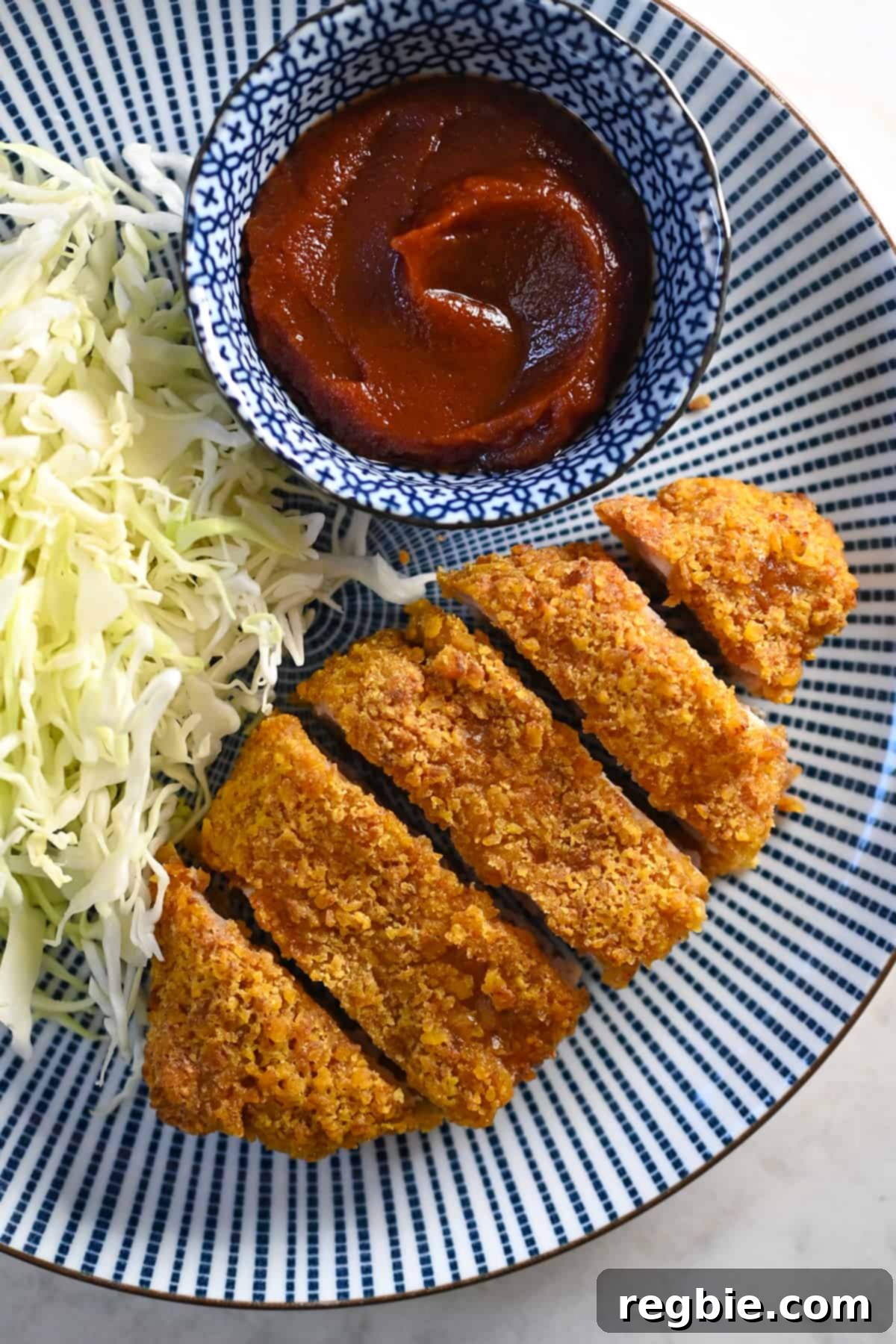
Prepare to be amazed by this incredibly juicy and crispy Air Fryer Tonkatsu! This recipe offers a simple, healthy, and utterly delicious way to enjoy a classic Japanese dish. The secret to its perfectly crunchy, paleo, and gluten-free crust lies in an ingenious ingredient: crushed plantain chips! Say goodbye to deep-frying and hello to a lighter, quicker version of your favorite pork cutlet.
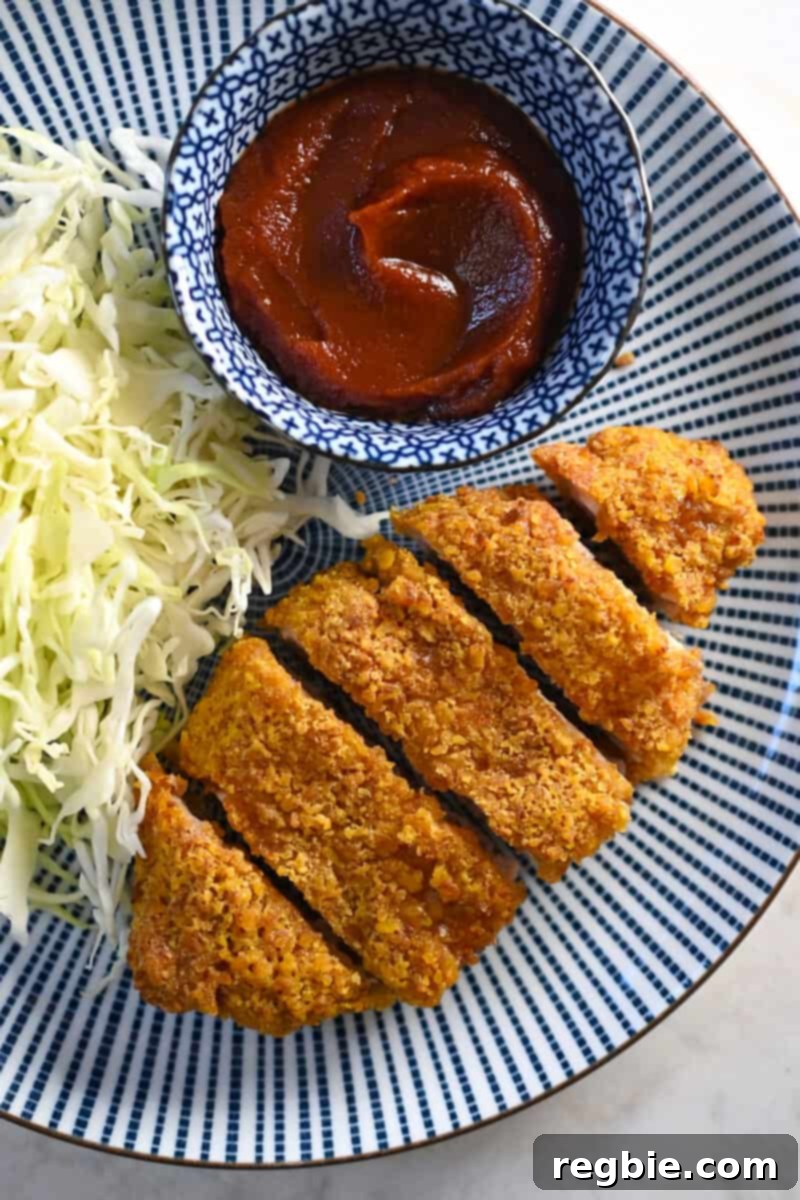
Table of Contents
- What is Tonkatsu?
- Why This Version is a Game-Changer
- Can You Make Paleo Tonkatsu in the Oven?
- Can You Make Keto Tonkatsu?
- Essential Ingredients for Paleo Tonkatsu
- How to Make Air Fryer Tonkatsu (Step-by-Step)
- Preparing the Pork Loin Chops
- Crafting the Crunchy Tonkatsu Coating
- Setting Up Your Breading Station
- Expertly Coating the Pork Chops
- Air Frying Tonkatsu to Perfection
- Oven-Baked Tonkatsu Alternative
- Serving Your Homemade Tonkatsu
- Tips for Perfect Tonkatsu Every Time
- Storage and Reheating Instructions
- More Paleo Japanese-Inspired Recipes
- Healthy Tonkatsu (Air Fryer or Oven Baked) Recipe Card
What is Tonkatsu?
Tonkatsu, often simply called pork katsu, is a beloved and iconic dish in Japanese cuisine. It features a boneless pork loin chop, typically about 1/2 to 3/4 inch thick, coated in light, crispy panko breadcrumbs and traditionally deep-fried to a golden perfection. This indulgent cutlet is served with a generous mound of thinly sliced cabbage, which provides a refreshing contrast, and a drizzle of tangy Tonkatsu Sauce – a sweet and savory condiment often compared to a Japanese-style Worcestershire sauce.
For many, the rich flavor of the juicy pork combined with the irresistible crunch of the breading makes tonkatsu a standout dish. However, when I transitioned to a paleo and gluten-free lifestyle, I feared my days of enjoying this Japanese comfort food were over. The challenge was to recreate that signature crispy crust without traditional breadcrumbs and the need for deep-frying. After much culinary experimentation, I discovered that finely crushed plantain chips make an extraordinary paleo and gluten-free breading. This breakthrough led me to develop a healthier, equally delicious version that can be made in an air fryer or oven, eliminating the messy and less-healthy deep-frying process. I’m thrilled to share this recipe that allows everyone to savor the magic of tonkatsu!
Why This Version is a Game-Changer
If you’re looking for a healthier, simpler, yet equally delicious way to enjoy tonkatsu, this recipe is for you. Here’s why this air fryer or oven-baked version stands out:
- No Deep-Frying Required: The biggest advantage! Skip the hassle of dealing with gallons of hot, splattering oil, messy clean-up, and the heavy feeling that often comes with deep-fried foods. Our method uses minimal oil spray, making it much lighter.
- Perfectly Paleo, Gluten-Free, and Grain-Free: By ingeniously using plantain chips as a breading, this recipe completely sidesteps common allergens and dietary restrictions. It’s ideal for those following paleo, gluten-free, or grain-free diets without compromising on taste or texture.
- Quick & Convenient: From prep to plate, this air fryer or oven-baked tonkatsu can be cooked and ready in less than 30 minutes. It’s perfect for busy weeknights when you crave a homemade, satisfying meal without spending hours in the kitchen.
- A Guaranteed Family Favorite: This crispy pork cutlet is universally loved! Even picky eaters will enjoy the crunchy exterior and tender interior. It’s a wonderful way to introduce delicious Japanese flavors to your family in a wholesome, accessible format.
- Healthier Alternative: With significantly less oil, this tonkatsu offers a lower-fat option compared to its deep-fried counterpart, making it a healthier choice you can feel good about.
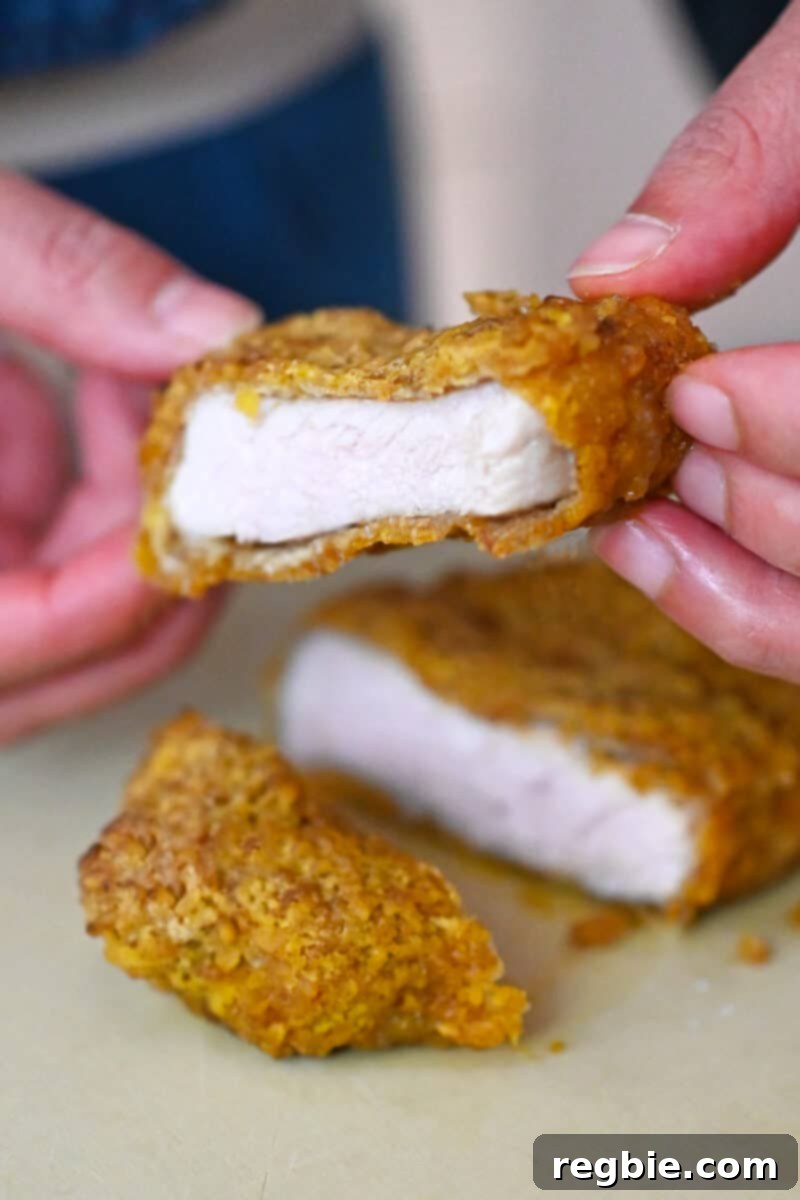
- Incredible Flavor and Texture: Despite being air-fried or oven-baked, the plantain chip crust delivers an amazing crunch that rivals traditional panko. The pork remains incredibly juicy, creating a delightful contrast that makes every bite satisfying.
Can You Make Paleo Tonkatsu in the Oven?
Absolutely! While the air fryer tends to deliver an extra level of crispness, you can certainly achieve fantastic results by baking this paleo tonkatsu recipe in your oven. The key is to optimize for air circulation and even cooking. For the best crunchy crust and perfectly cooked pork, follow these tips:
- Use a Wire Rack: Always place your breaded pork chops on an oven-safe wire rack set inside a rimmed baking sheet. This elevates the cutlets, allowing air to circulate all around them, which promotes even cooking and prevents the bottom from becoming soggy.
- Convection Mode is Your Friend: If your oven has a convection setting, use it! Convection ovens circulate hot air more efficiently, mimicking some of the effects of an air fryer and resulting in a crispier exterior.
- Preheat Thoroughly: Ensure your oven is fully preheated to the recommended temperature before adding the tonkatsu. A hot oven helps to instantly set the crust and seals in the juices.
- Don’t Overcrowd: Give each pork chop space on the rack. Overcrowding can lower the oven temperature and trap steam, leading to a less crispy result.
My detailed oven-baked tonkatsu instructions are provided below in the step-by-step guide and the printable recipe card, ensuring you get a delicious meal, even without an air fryer.
Can You Make Keto Tonkatsu?
Yes, you can adapt this recipe to be keto-friendly! The primary modification involves substituting the plantain chips with a suitable low-carb alternative for the breading. I’ve successfully made this air fryer tonkatsu using crushed pork rinds (also known as chicharrones) in place of the plantain chips.
When using pork rinds:
- Choose Plain Pork Rinds: Opt for unflavored pork rinds to avoid any unwanted seasoning that might clash with the tonkatsu flavor profile.
- Process Finely: Just like with plantain chips, crush the pork rinds into a coarse powder using a food processor or by hand. The finer the crush, the better it adheres and the more even the crust will be.
- Flavor Consideration: While pork rinds provide an excellent crunch, they do impart a distinct savory flavor. While delicious, some may find the taste and texture of the plantain chip coating to be a more authentic (paleo) tonkatsu experience. Experiment to see which you prefer!
The rest of the recipe steps and ingredients (pork loin, eggs, avocado oil spray, Tonkatsu Sauce if keto-friendly) remain the same, making it easy to enjoy this delicious dish on a ketogenic diet.
Essential Ingredients for Paleo Tonkatsu
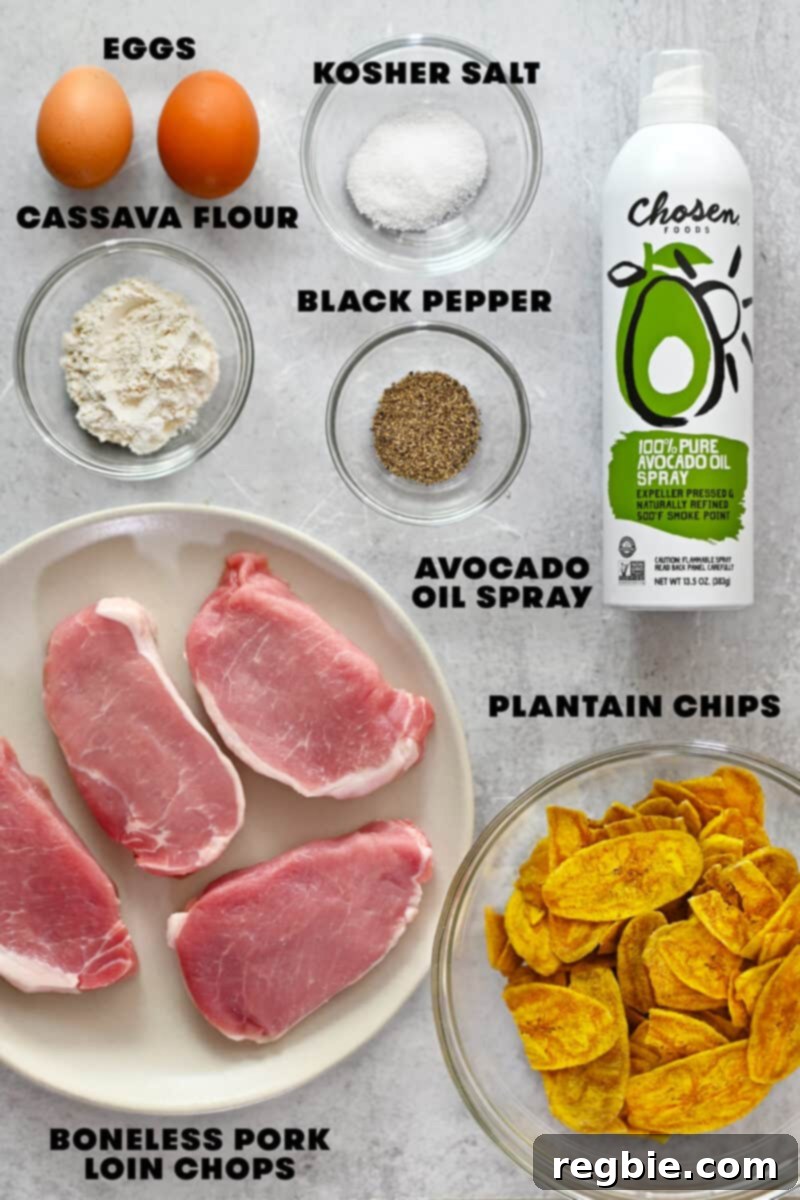
Crafting the perfect paleo tonkatsu requires a few key ingredients. Here’s a breakdown of what you’ll need and why each component is important:
- Boneless Pork Loin Chops: The star of the show! Look for boneless pork loin chops that have a thin layer of fat around the edges. This fat helps keep the pork juicy and adds flavor. The ideal thickness is between ½-inch to ¾-inch. Thinner chops cook faster and ensure the crust remains crispy, preventing it from getting soggy while the pork finishes cooking.
- Plantain Chips or Strips: This is the secret to our incredible paleo and gluten-free crunchy coating, replacing traditional panko breadcrumbs. I recommend buying plantain chips or strips fried in healthy fats like sustainable palm oil or coconut oil to keep the dish strictly paleo-friendly. Brands like Artisan Tropics are excellent choices.
- Cassava Flour: Used for a light dredge, cassava flour helps the egg wash adhere evenly to the seasoned pork, creating a perfect base for the plantain crumbs. If cassava flour isn’t available, you can substitute with gluten-free all-purpose flour (for non-paleo), tapioca flour, or arrowroot powder.
- Large Eggs: Absolutely essential! The eggs act as a binder, ensuring the plantain crumbs stick firmly to the pork chops. There’s no effective paleo substitute for eggs in this breading process.
- Diamond Crystal Kosher Salt: Our seasoning of choice for both the pork and the egg wash. Its larger flakes provide excellent flavor without over-salting.
- Freshly Ground Black Pepper: Adds a subtle aromatic spice that complements the pork beautifully.
- Avocado Oil Spray: Key for achieving a golden, crispy crust in the air fryer or oven without excess oil. Be sure to use an avocado oil spray that contains no propellants or additives, as these can cause a sticky residue buildup in your air fryer basket.
- Homemade or Store-Bought Tonkatsu Sauce: While optional, a sweet and tangy Tonkatsu Sauce is the traditional and perfect accompaniment, elevating the flavors of the pork cutlet. Many paleo-friendly recipes for homemade tonkatsu sauce are available, or you can find compliant store-bought options.
How to Make Air Fryer Tonkatsu (Step-by-Step)
Creating this healthy and crispy tonkatsu at home is simpler than you think. Follow these detailed steps for a delicious meal!
Preparing the Pork Loin Chops
- Pat Dry the Pork: Begin by thoroughly patting your boneless pork loin chops dry with paper towels. This crucial step helps ensure a crispier crust by removing excess moisture.
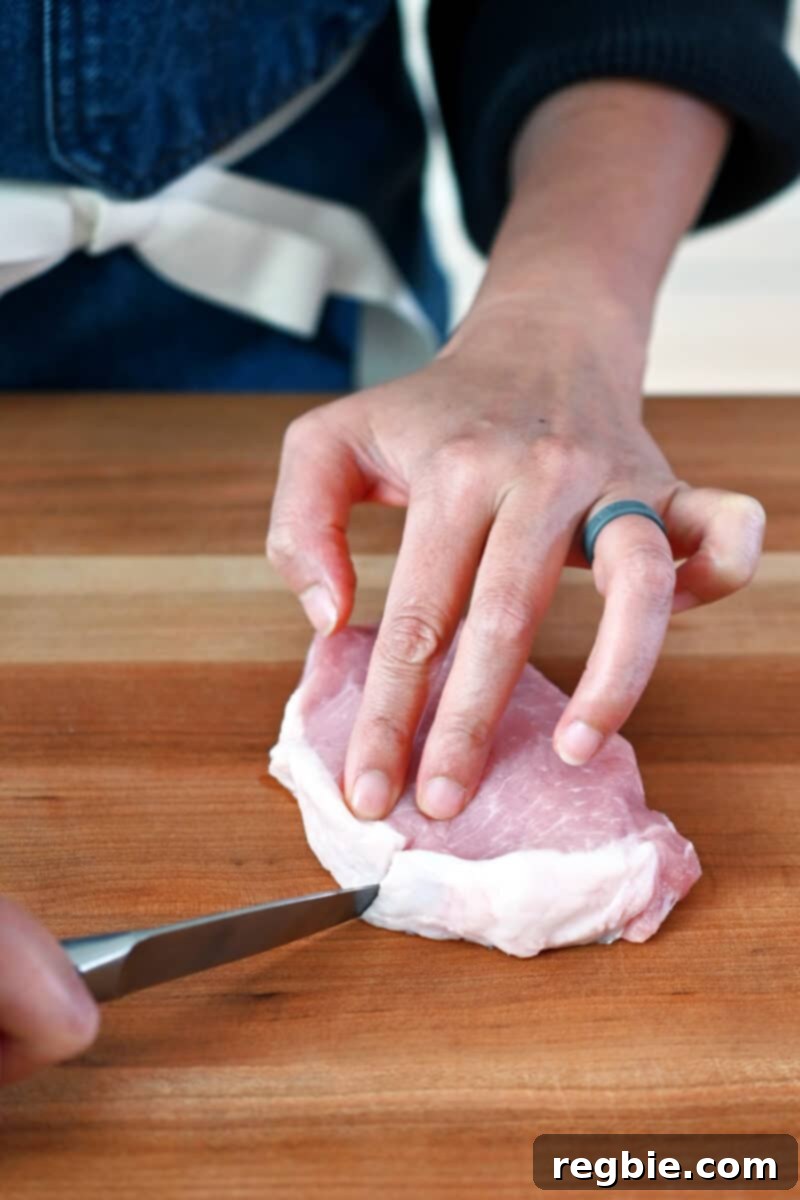
- Prevent Curling: Use a sharp paring knife to make two shallow slits on the fatty edge of each pork chop. This prevents the edges from curling up during cooking, ensuring even browning and a flat cutlet.
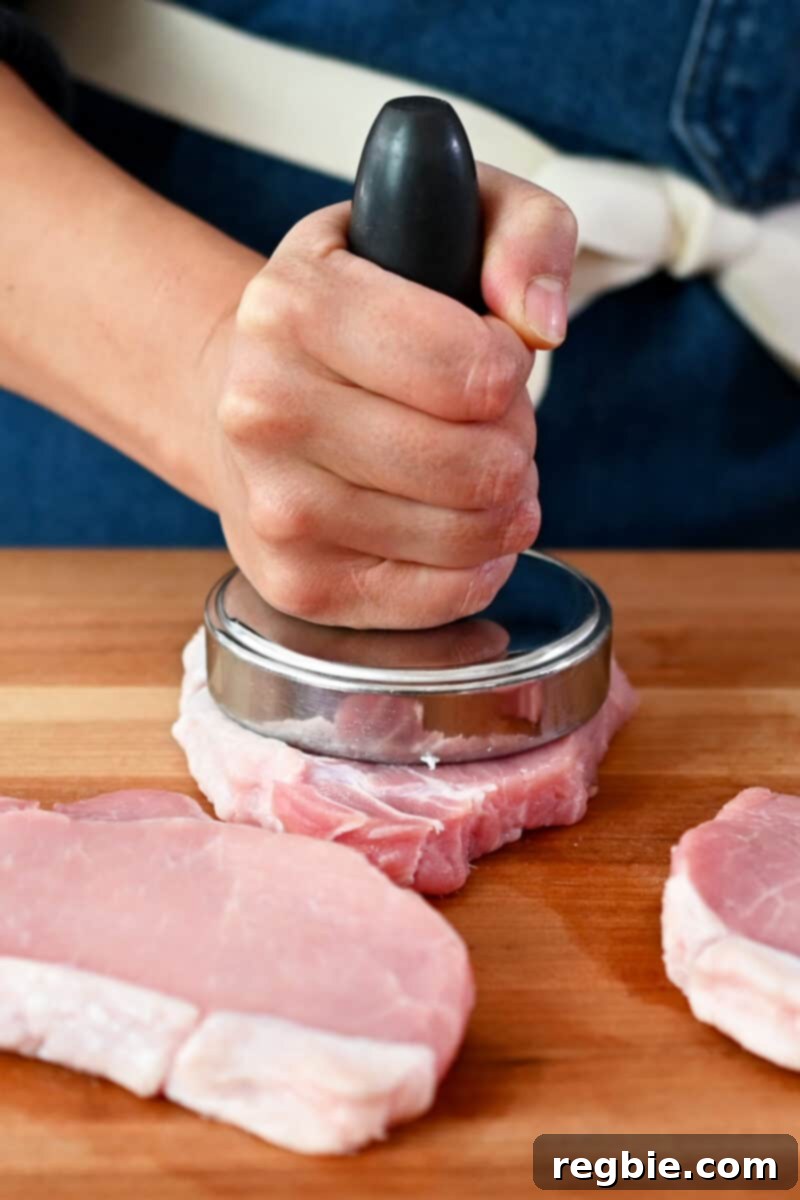
- Pound to Even Thickness: If your pork chops are thicker than ½-inch, use a meat pounder or meat mallet to gently smash them until they reach a uniform ½-inch thickness. This ensures even cooking and tenderness. If they’re already thin enough, you can skip this step.
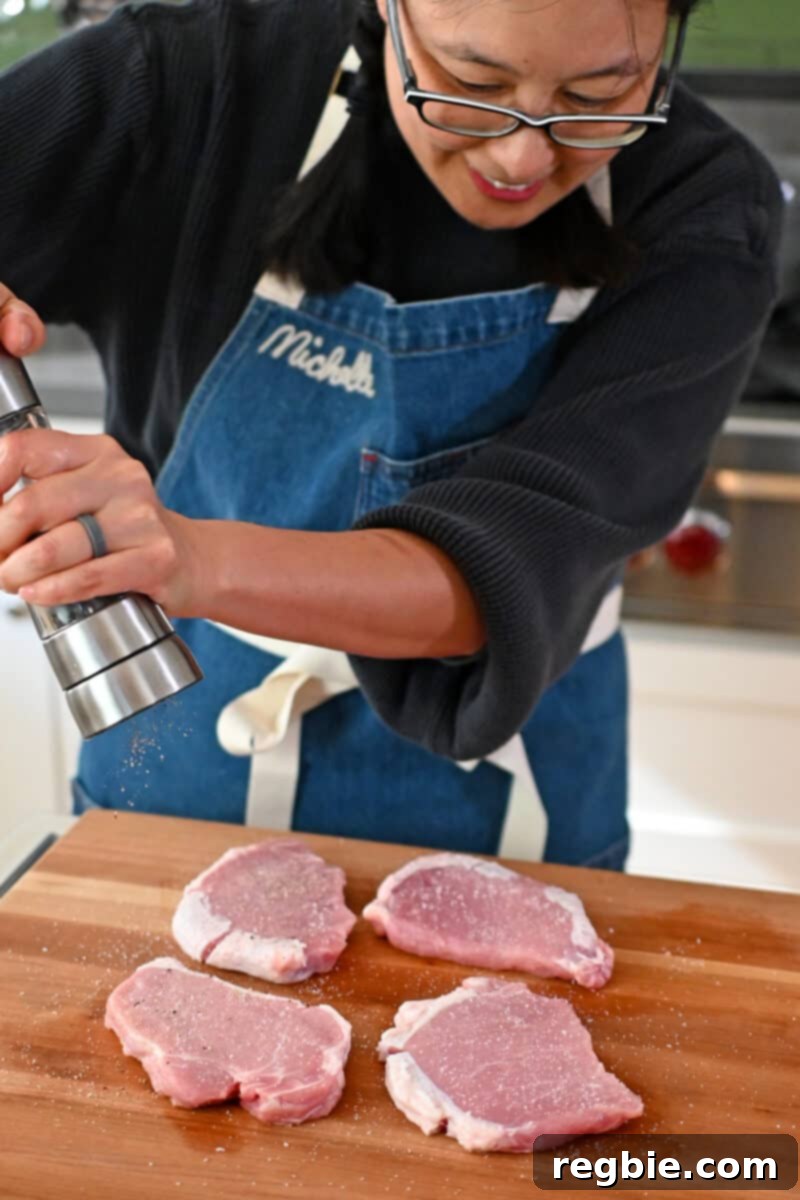
- Season Generously: Season both sides of the pork cutlets liberally with Diamond Crystal kosher salt and freshly ground black pepper. Don’t be shy – proper seasoning is key to flavor.
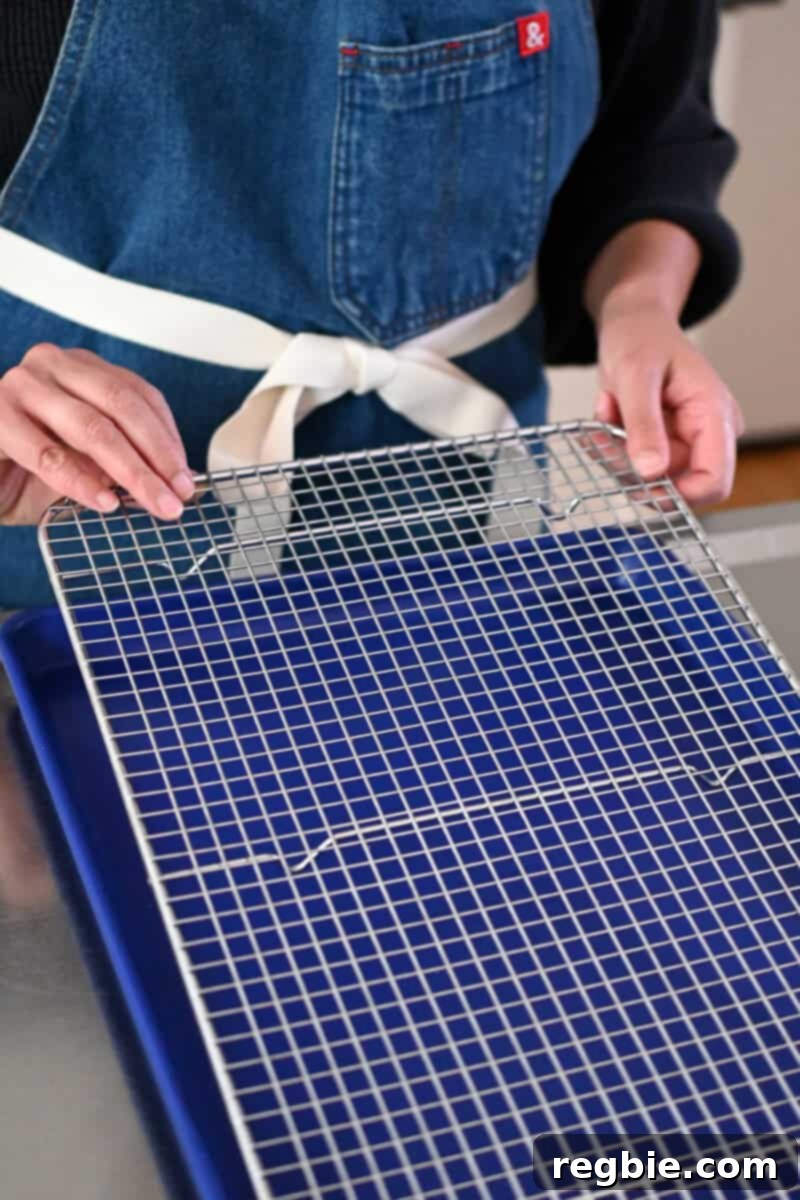
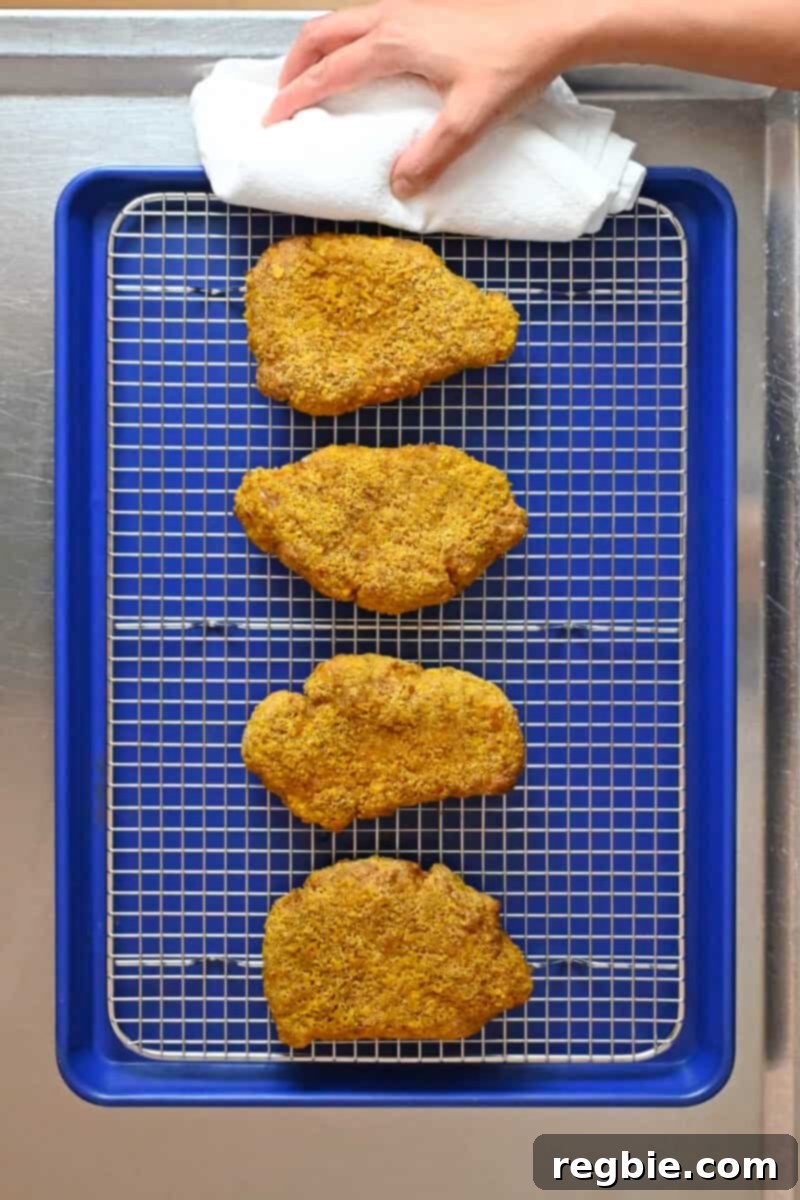
- Prepare the Resting Rack: Place a wire rack inside a rimmed baking sheet and set it aside. This setup will hold your breaded pork chops before cooking, preventing the bottom crust from becoming soggy.
Crafting the Crunchy Tonkatsu Coating
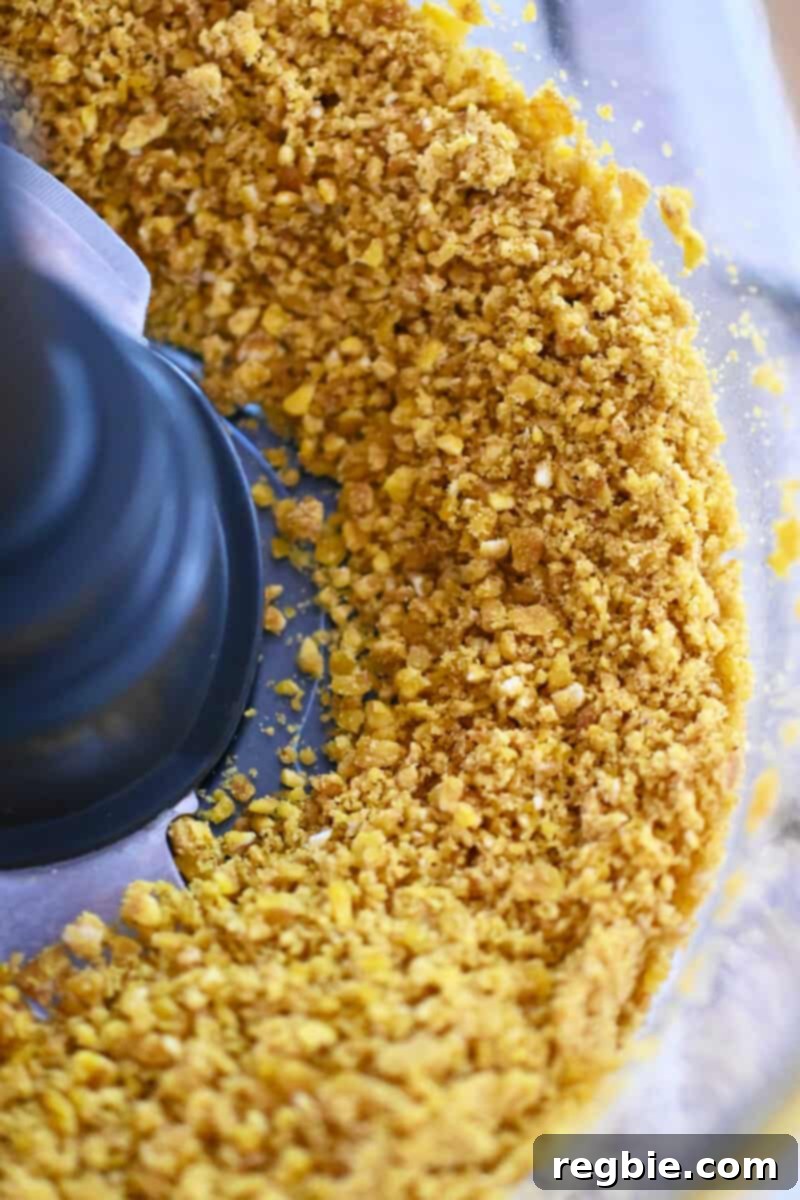
- Process Plantain Chips: Transfer the plantain chips or strips into a food processor. Process them until a coarse, breadcrumb-like powder is formed. The texture should be similar to traditional panko. If you don’t have a food processor, place the chips in a sturdy plastic food storage bag and crush them with a rolling pin or other heavy object until finely pulverized. You should aim for about 1 cup of crushed plantain crumbs.
Setting Up Your Breading Station
- Arrange Three Shallow Dishes: Set up a classic breading station using three shallow dishes or bowls:
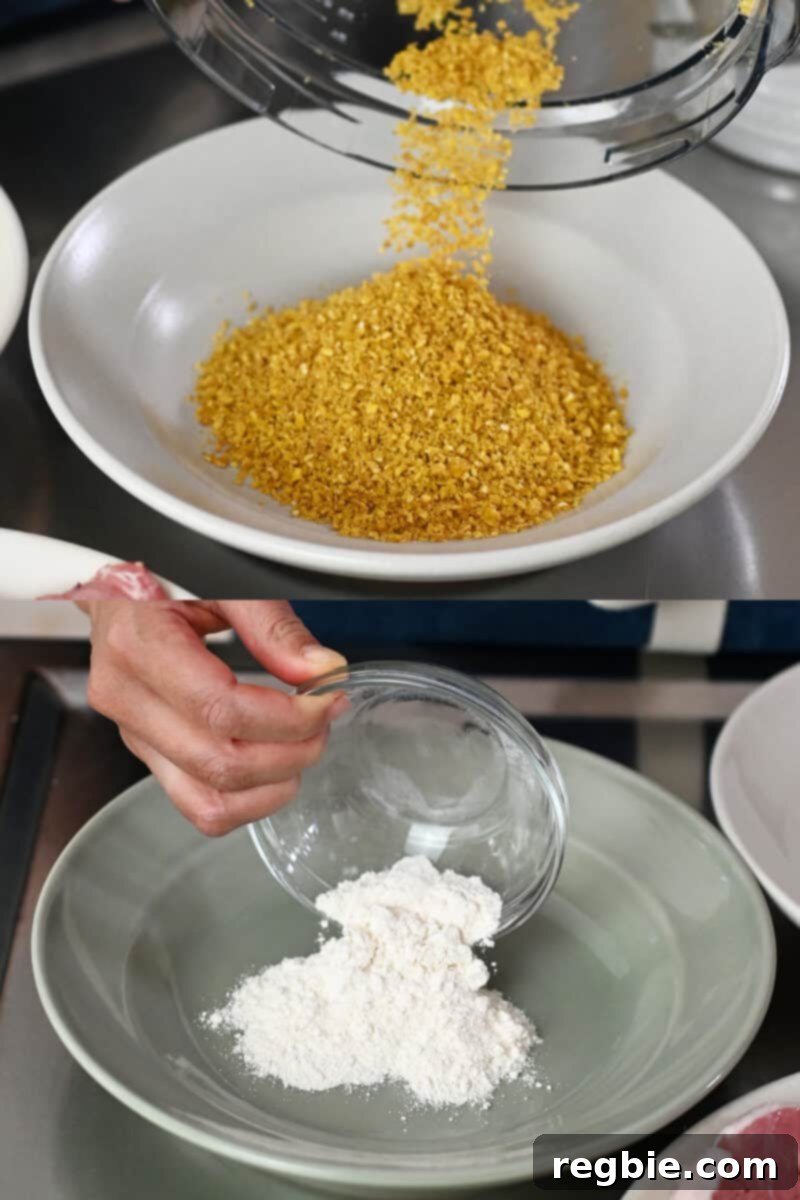
- Dish 1 (Plantain Crumbs): Pour the crushed plantain chips into the first dish. It’s a good idea to reserve about half of the crumbs initially and add more as needed to ensure you have enough for all four pork chops.
- Dish 2 (Cassava Flour): Add the cassava flour to the second dish.
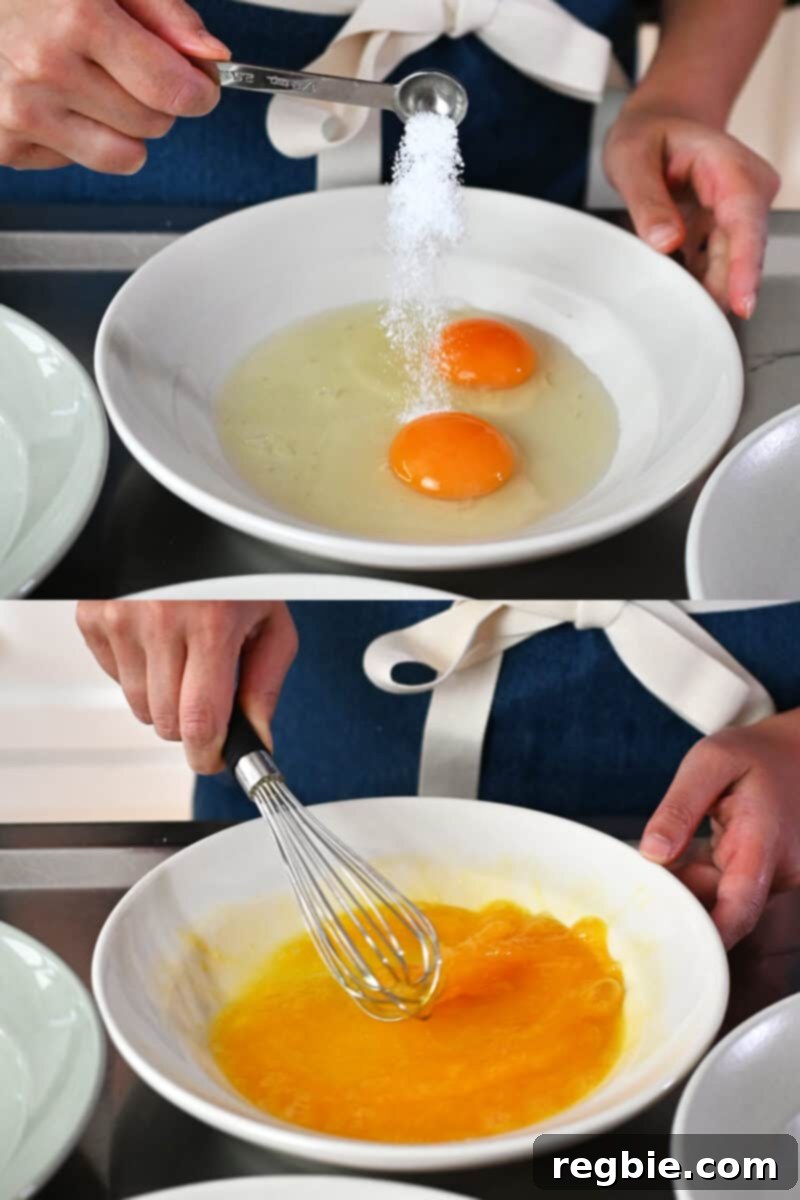
- Dish 3 (Egg Wash): In the third bowl, whisk together the large eggs with ½ teaspoon of Diamond Crystal kosher salt until well combined.

Expertly Coating the Pork Chops
- Breading Process: Take one seasoned pork chop and follow these steps for a perfect coating:
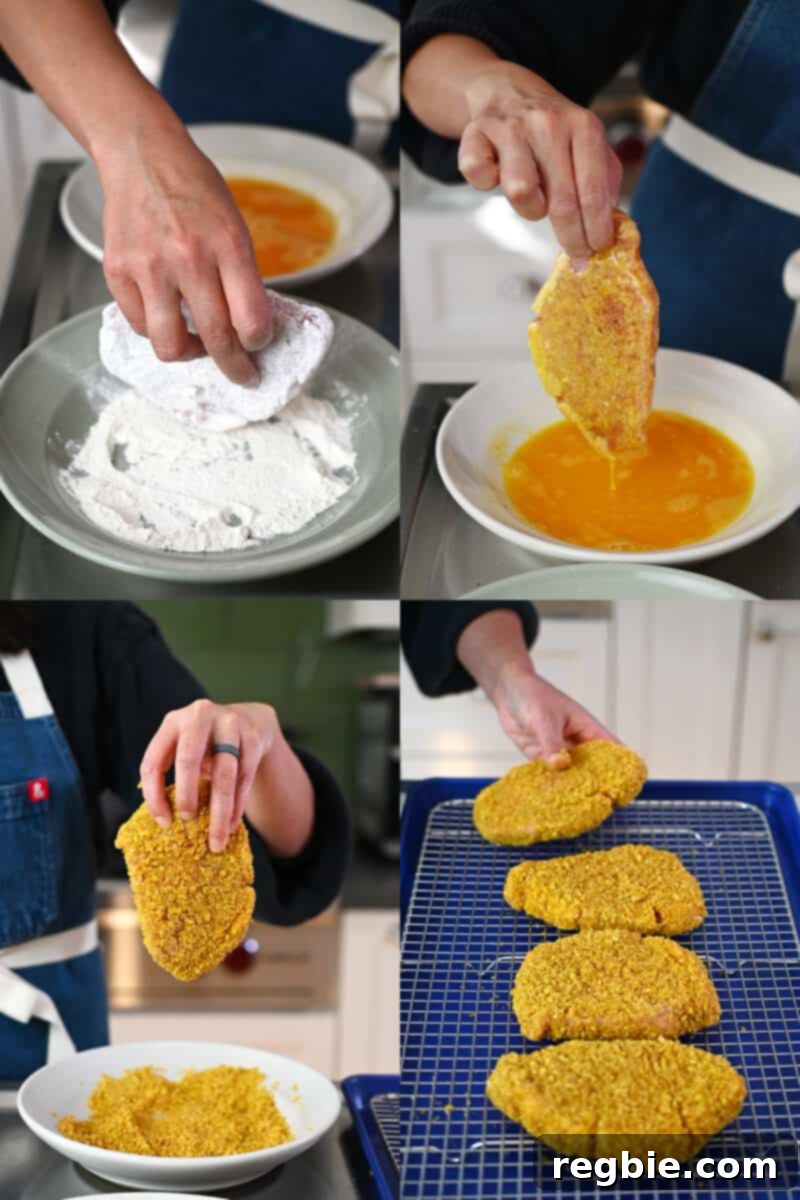
- Flour First: Lightly dredge the pork chop in the cassava flour, ensuring it’s evenly coated, then shake off any excess flour.
- Egg Wash: Next, dip the floured chop into the egg mixture. Make sure it’s fully coated, but allow any major drips to fall back into the bowl to prevent a “goopy” layer.
- Plantain Crumbs: Finally, transfer the egg-washed pork chop to the crushed plantain chips. Press firmly to ensure the crumbs adhere completely and create a thick, even crust on all sides.
Place the fully coated pork chop on the prepared wire rack on the baking sheet. Repeat this breading process for the remaining pork chops.
Air Frying Tonkatsu to Perfection
- Preheat Air Fryer: Preheat your air fryer to 400°F (200°C). Allow it to come to full temperature for consistent cooking.
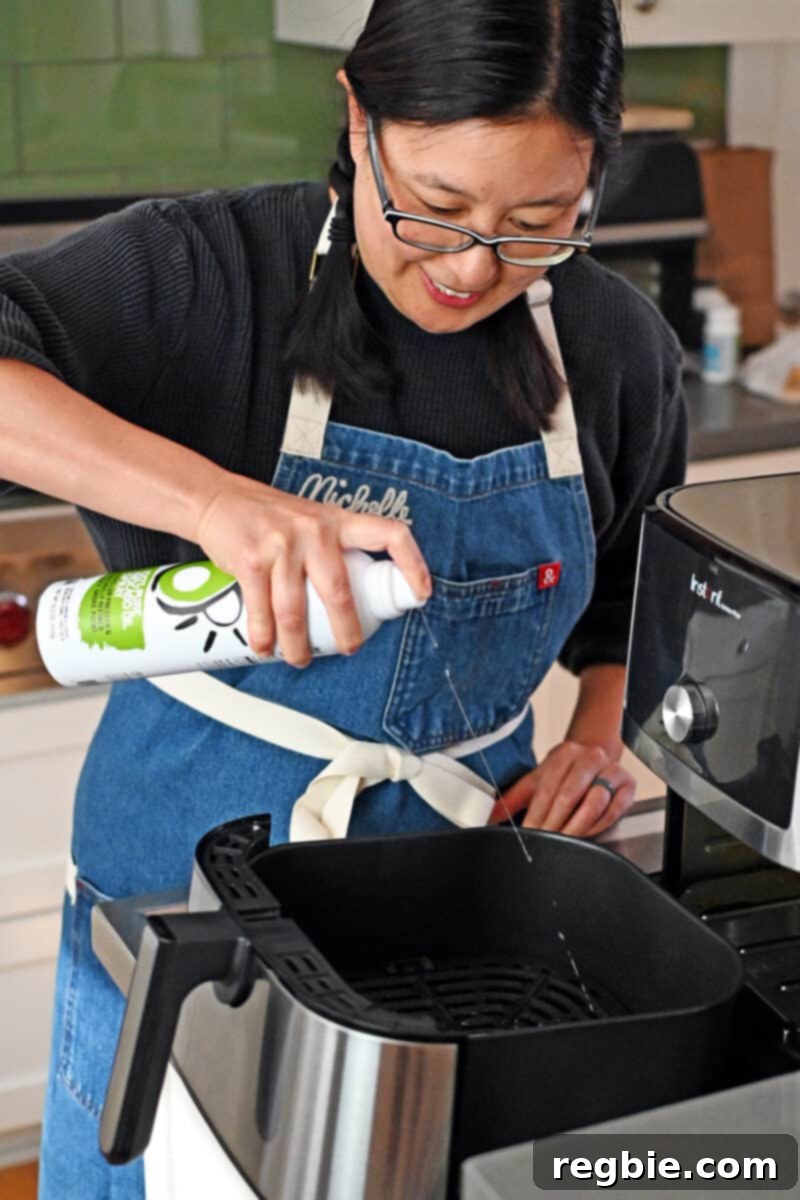
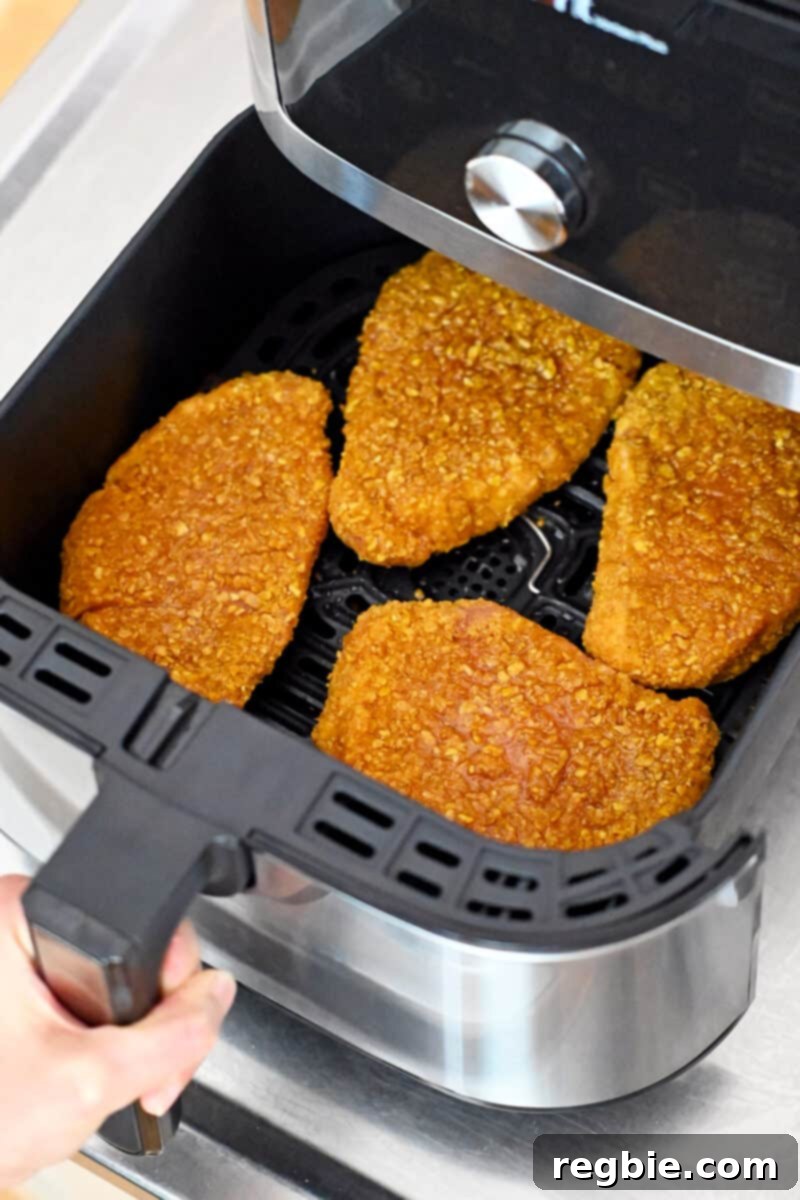
- Arrange in Air Fryer: Once preheated, lightly spray the bottom of the air fryer basket with avocado oil spray. Carefully arrange the breaded pork chops in a single layer, ensuring they do not overlap. You may need to cook them in batches depending on the size of your air fryer.
- Spray Tops: Generously spray the tops of the pork chops with avocado oil. This helps achieve that beautiful golden-brown color and extra crispiness.
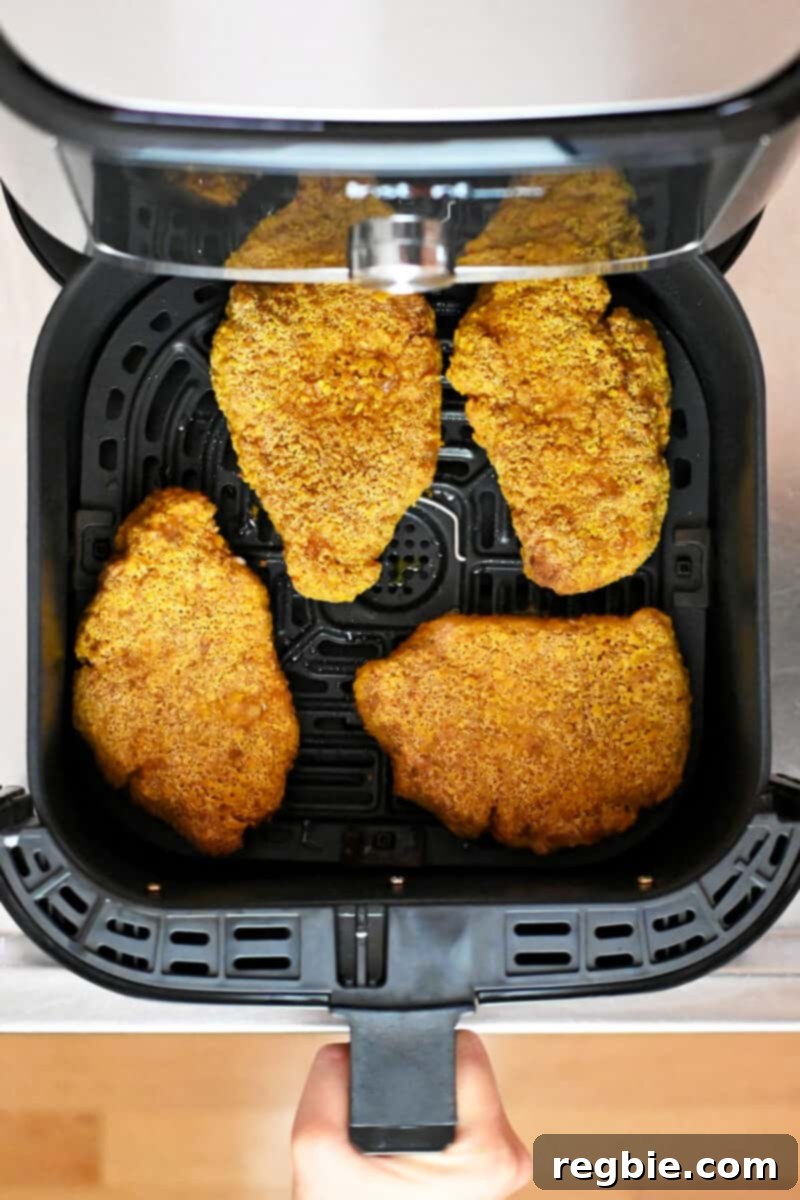
- Air Fry: Air fry the pork katsu at 400°F (200°C) for 8 to 10 minutes. The cooking time can vary slightly depending on your air fryer model and pork chop thickness. Flip halfway through if desired for even browning. Cook until the outsides are golden brown and crispy, and the internal temperature of the pork reaches 145°F (63°C) when checked with an instant-read thermometer. The center should be barely pink.
Oven-Baked Tonkatsu Alternative
- Preheat Oven: Preheat your oven to 425°F (220°C) for conventional bake, or 400°F (200°C) for convection bake. Position an oven rack in the middle of the oven.
- Arrange on Rack: Place the breaded pork cutlets on an oven-proof wire rack set in a rimmed baking sheet. Ensure there is space between each cutlet for optimal air circulation.
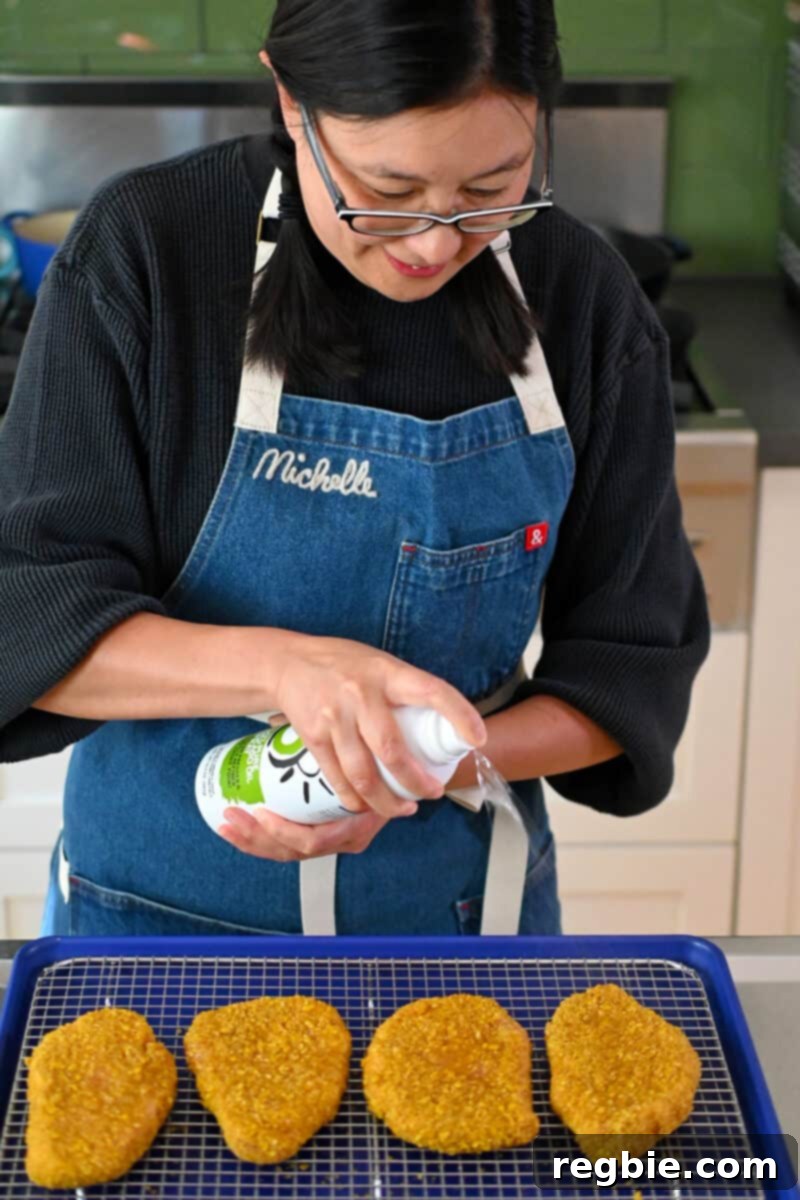
- Spray Tops: Spray the tops of the breaded chops generously with avocado oil spray. This step is crucial for achieving a crispy, golden crust in the oven.
- Bake to Perfection: Bake for approximately 10 to 13 minutes, or until the outside is beautifully golden brown and crispy, and the internal temperature of the pork reaches 145°F (63°C).
Serving Your Homemade Tonkatsu
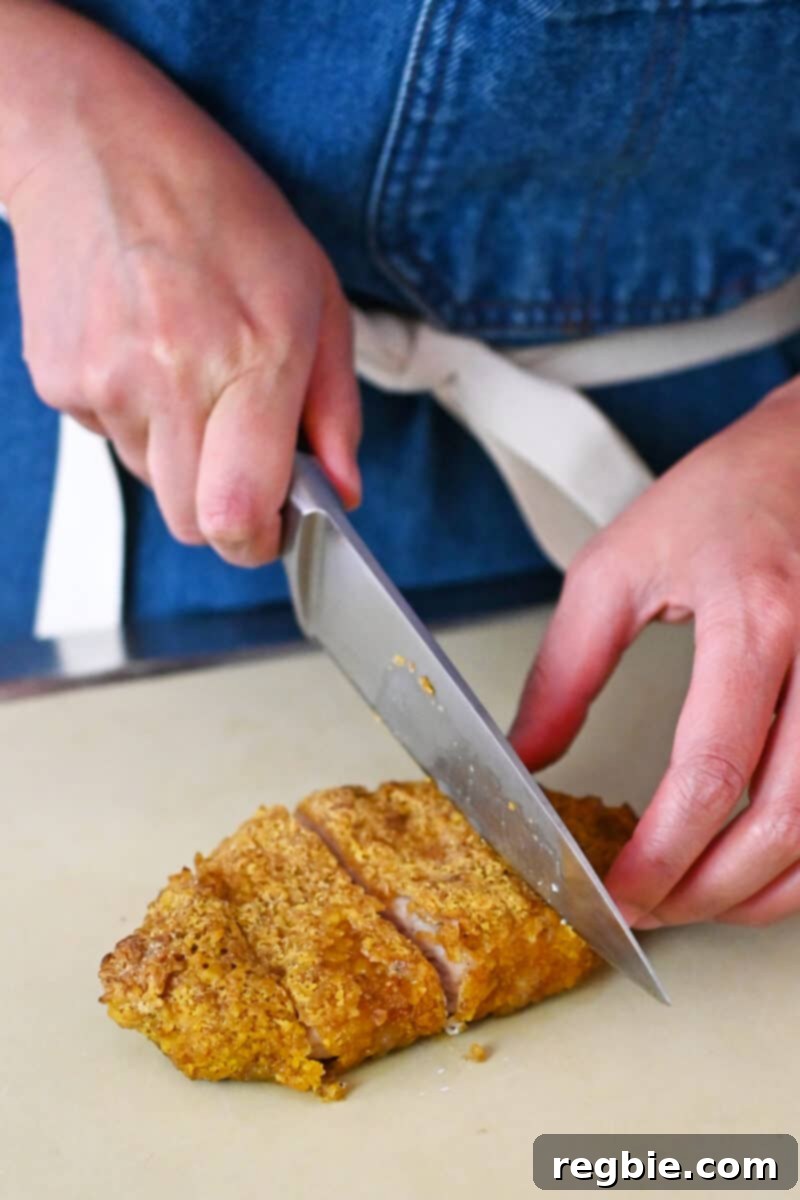
- Slice and Serve: Once cooked, remove the tonkatsu from the air fryer or oven and let it rest for a minute or two before slicing into thick strips.
- Classic Accompaniments: Serve the crunchy pork with a generous pile of thinly shredded cabbage. For an extra layer of flavor, dress the cabbage with a sesame ginger dressing. And, of course, no tonkatsu is complete without a side of sweet and tangy Tonkatsu Sauce for dipping!
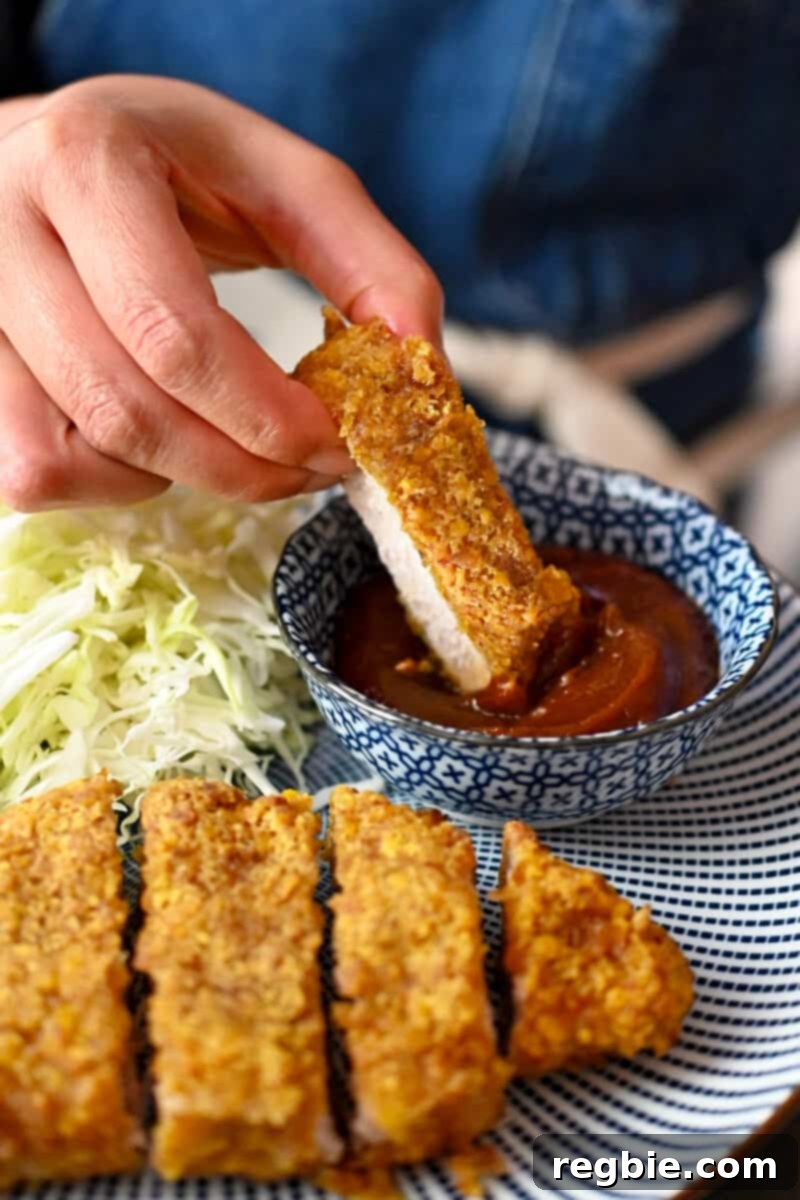
Pro Tip: If you are not strictly following a paleo diet, feel free to transform these crispy pork chops into traditional katsudon rice bowls by serving them over a bed of steamed white rice with a drizzle of sauce and perhaps an egg. This makes for an even heartier meal!
Tips for Perfect Tonkatsu Every Time
- Even Thickness is Key: Pounding the pork to a uniform ½-inch thickness ensures that it cooks evenly and quickly, preventing some parts from being overcooked while others are undercooked. This also helps the crust cook uniformly.
- Don’t Skip the Slits: Making small cuts in the fatty edge of the pork loin is a simple trick that makes a big difference. It prevents the chop from curling up, ensuring maximum surface area for a crispy crust.
- Chill for Better Adhesion: After breading, if you have time, let the pork chops chill in the refrigerator for 15-30 minutes. This helps the coating adhere better, reducing the chance of it falling off during cooking.
- Avoid Overcrowding: Whether you’re using an air fryer or an oven, always cook in a single layer without overcrowding the basket or rack. Overcrowding reduces air circulation, leading to steamed rather than crispy results. Cook in batches if necessary.
- Internal Temperature Check: Always use an instant-read thermometer to check the internal temperature of the pork. For pork, 145°F (63°C) is the safe minimum internal temperature, followed by a 3-minute rest. This guarantees juicy, perfectly cooked pork.
- Freshly Ground Plantain Chips: While pre-crushed crumbs might seem convenient, crushing them fresh just before breading yields the best texture and crunch.
- Season in Layers: Seasoning the pork itself and adding a pinch of salt to the egg wash builds layers of flavor throughout the dish.
Storage and Reheating Instructions
Enjoying your crispy tonkatsu leftovers is easy with these tips to maintain its delicious texture:
- Storing Leftovers: Allow any leftover tonkatsu to cool completely before transferring it to an airtight container. Store in the refrigerator for up to 3-4 days.
- Reheating in an Air Fryer: This is the best method for restoring crispness. Preheat your air fryer to 350°F (175°C). Place the tonkatsu in a single layer in the basket and air fry for 5-7 minutes, or until thoroughly heated through and crispy again.
- Reheating in an Oven: Preheat your oven to 375°F (190°C). Place the tonkatsu on a wire rack set over a baking sheet. Bake for 10-15 minutes, or until heated through and the crust is crisp.
- Avoid Microwave: While convenient, reheating tonkatsu in the microwave will result in a soggy crust and is not recommended if you want to preserve the texture.
More Paleo Japanese-Inspired Recipes
If you loved this paleo tonkatsu, you’ll surely enjoy exploring more Japanese-inspired dishes that fit a paleo lifestyle. Here are some of our favorites:
- Japanese Potato Salad (Paleo Version)
- Gyudon (Japanese Beef Bowl – Paleo Adapted)
- Oyakodon (Japanese Chicken and Egg Bowl – Paleo Friendly)
- Tsukune (Japanese Chicken Meatballs with a Paleo Twist)
- Savory Beef Enoki Mushroom Rolls
Looking for even more healthy and delicious recipe ideas? Head on over to our comprehensive Recipe Index. You’ll also find exclusive recipes and culinary inspiration in our award-winning cookbooks: Nom Nom Paleo: Food for Humans, Ready or Not!, and Nom Nom Paleo: Let’s Go!
Healthy Tonkatsu (Air Fryer or Oven Baked) Recipe Card
Healthy Tonkatsu (Air Fryer or Oven Baked)
10 mins
20 mins
4
Michelle Tam
Ingredients
- 4 boneless pork loins (try to get pork chops that are ½-inch to ¾-inch thick)
- Diamond Crystal kosher salt
- ¼ teaspoon freshly ground black pepper
- 4 ounces green plantain chips
- 2 tablespoons cassava flour (or tapioca or arrowroot powder)
- 2 large eggs
- Avocado oil spray
- Tonkatsu Sauce (optional dipping sauce)
Instructions
Prepare the pork chops
- Pat the pork chops dry with a paper towel. Then, use a sharp paring knife to cut two small slits on the fatty edge of the pork chops—this will keep the pork chop edges from curling up when they cook in the air fryer or oven.
- Use a meat pounder or meat mallet to smash the chops so they’re about ½-inch thick. If your pork chops are already ½-inch thick, you don’t need to pound them.
- Sprinkle the pork cutlets on both sides with Diamond Crystal kosher salt and freshly ground black pepper.
- Place a wire rack in a rimmed baking sheet and set aside.
- Plop the plantain chips or plantain strips in a food processor and process until a coarse powder is formed. (No food processor? You can place the chips in a ziplock bag and bash them with something heavy until the chips are pulverized.) You should end up with 1 cup of crushed plantain crumbs.
- Grab three shallow bowls for your breading station. In the first one, pour in the crushed plantain chips. You can reserve half of the plantain crumbs to ensure that you have enough for all four pork chops (pour in extra crumbs as needed). In the second one, add the cassava flour. In the last bowl, whisk together the eggs and ½ teaspoon Diamond Crystal kosher salt.
- Lightly coat a pork chop in the cassava flour, shaking off the excess flour. Then, dip it in the egg mixture, making sure it is well coated but not super goopy. In the last step, coat the pork chop completely with crushed plantain chips and place the pork chop on the prepared wire rack in the rimmed baking sheet. Repeat the process with the rest of the pork chops.
Air Fryer Tonkatsu Instructions
- Preheat the air fryer to 400°F (200°C). When the air fryer is ready, lightly spray the bottom of the air fryer with avocado oil spray and place the pork chops in a single layer.
- Spray the tops of the pork chops with avocado oil.
- Air fry the pork katsu at 400°F (200°C) for 8 to 10 minutes or until the outside is golden brown and the center is barely pink and the internal temperature is 145°F (63°C).
- Slice up the tonkatsu and serve it with tonkatsu sauce (a sweet Worcestershire sauce) and shredded cabbage dressed with sesame ginger dressing, if desired.
Oven Baked Tonkatsu Instructions
- Heat the oven to 425°F (220°C) conventional or 400°F (200°C) convection bake with the rack in the middle. Place the pork cutlets on an oven-proof wire rack in a rimmed baking sheet. Spray the tops of the breaded chops with avocado oil spray.
- Bake the tonkatsu until the outside is golden brown and the pork is barely pink and the internal temperature is 145°F (63°C), about 10 to 13 minutes.
- Slice up the tonkatsu and serve it with tonkatsu sauce (a sweet Worcestershire sauce) and shredded cabbage dressed with sesame ginger dressing, if desired.
Notes
Nutrition
Carbohydrates: 25g |
Protein: 34g |
Fat: 20g |
Fiber: 1g |
Sugar: 0.2g
Nutrition information is automatically calculated, so should only be used as an approximation.
Like this? Leave a comment below!