
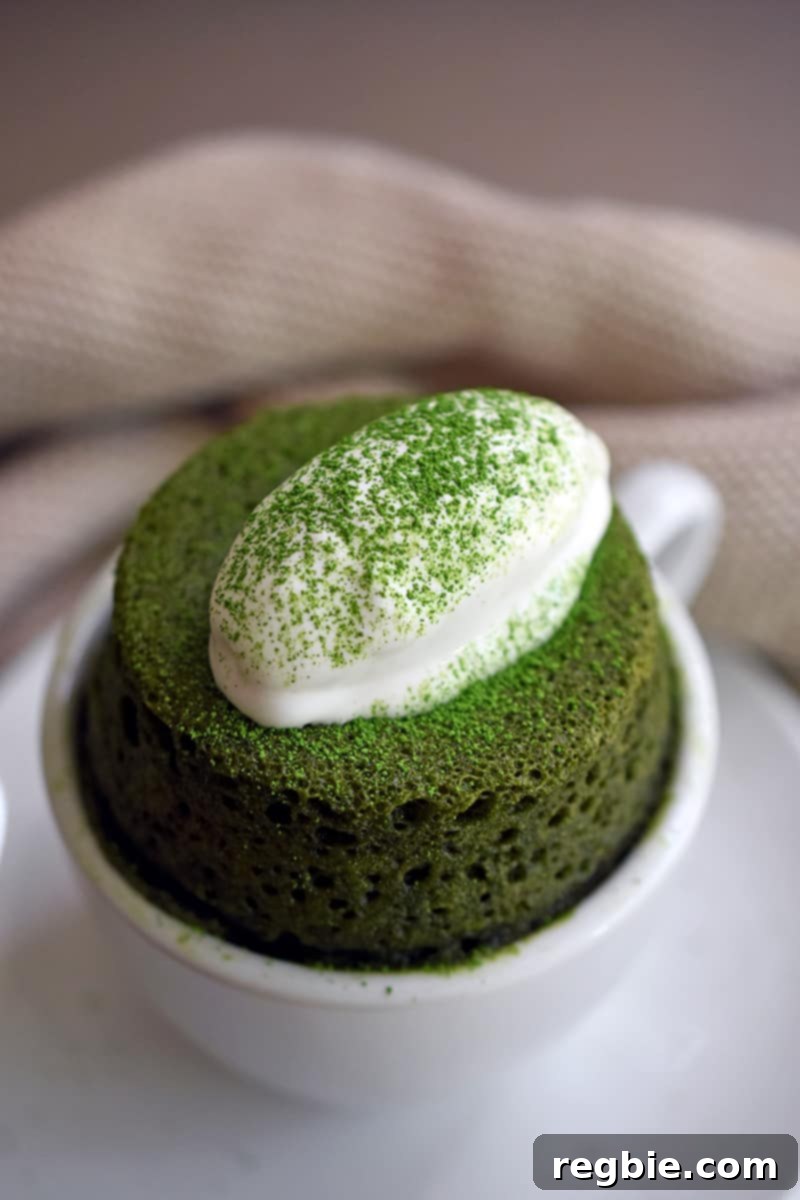
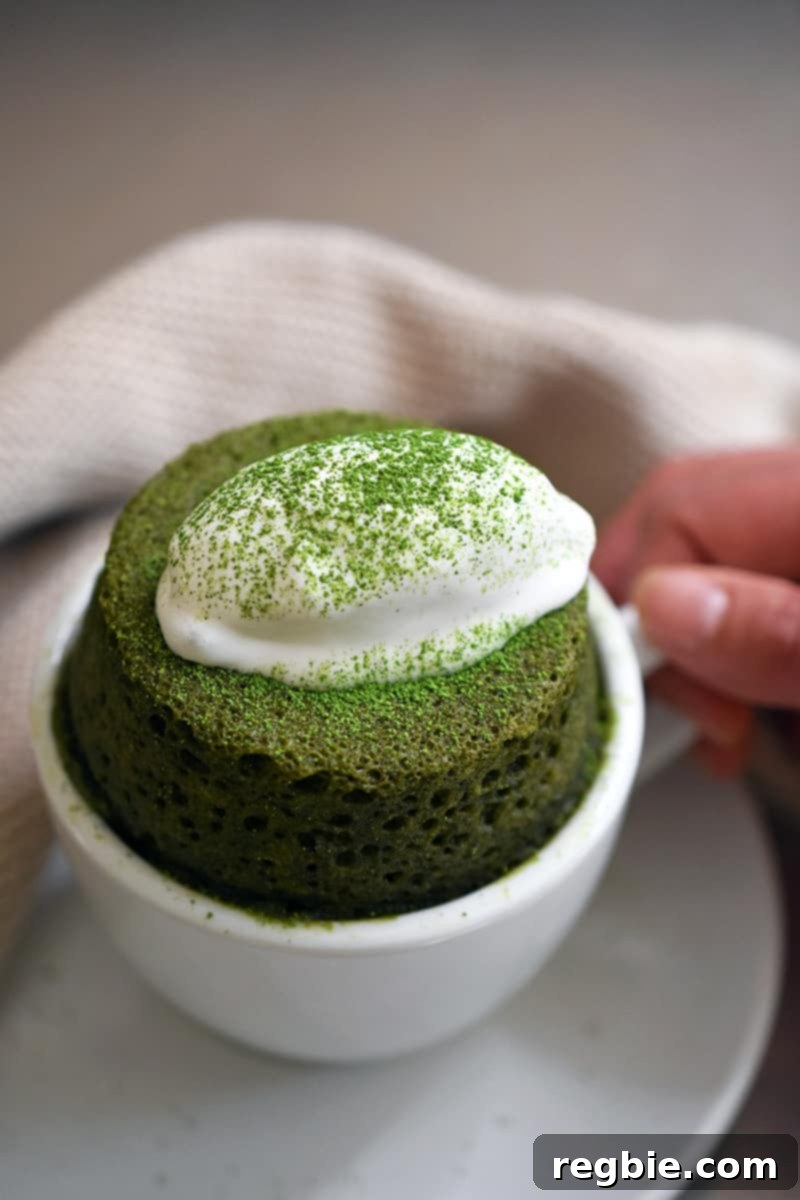
Craving a delicious, single-serving dessert that aligns with your dietary goals? Discover how to effortlessly create a homemade, gluten-free, paleo, and keto-friendly Matcha Mug Cake in mere minutes. This vibrant emerald-hued sponge cake is not only incredibly tasty but also remarkably easy to bake in your microwave or toaster oven, offering a guilt-free indulgence anytime inspiration strikes.
Indulge in a Perfectly Spongy Mug Cake in Minutes!
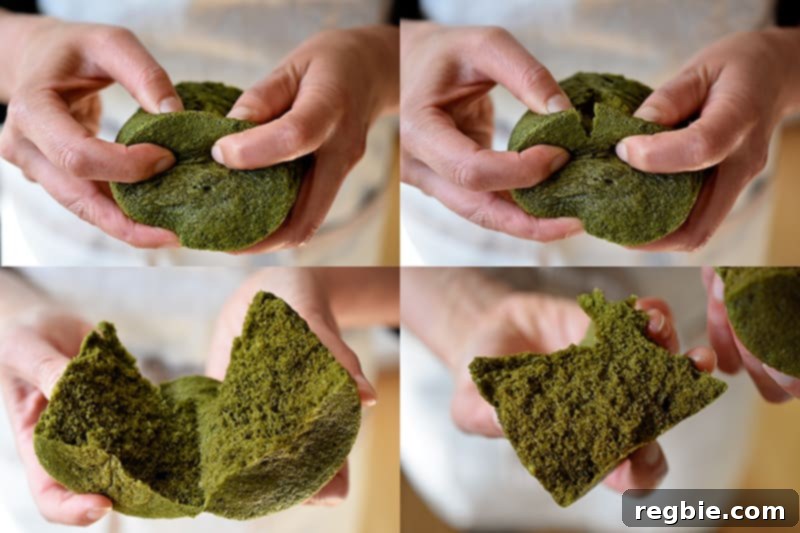
Imagine the delight of having a warm, freshly baked cake ready in less time than it takes to boil water. This dream becomes a reality with our Matcha Mug Cake. The magic lies in its simplicity: a few common pantry staples, a quick whisk, and a minute or two in the microwave transform into a wonderfully bouncy, green tea-flavored sponge cake that’s surprisingly light and satisfying. It’s the ultimate solution for those sudden sweet cravings, offering a wholesome alternative to processed snacks.
What sets this matcha mug cake apart is its delicate sweetness, striking the perfect balance to tantalize your taste buds without overwhelming them. For many, this unique texture and subtle flavor evoke fond memories of traditional sponge cakes from Asian bakeries. It’s a nostalgic treat reimagined for modern, health-conscious lifestyles, proving that healthy eating doesn’t mean sacrificing flavor or convenience. Whether you’re adhering to a paleo, gluten-free, or keto diet, this recipe ensures you don’t have to miss out on the simple pleasure of cake.
Unlocking the Flavor: Choosing the Best Matcha for Your Mug Cake
Matcha, a finely ground powder of specially grown and processed green tea leaves, is more than just an ingredient; it’s an experience. Originating from Japan, matcha is celebrated not only for its distinctive earthy flavor but also for its impressive health benefits, including a rich supply of antioxidants and a calming, sustained energy boost. As a passionate admirer of this vibrant green tea, I love incorporating it into both beverages and desserts.
However, navigating the wide array of matcha brands and grades can feel daunting. For baking applications like mug cakes, cheesecakes, puddings, or even iced lattes, the quality of your matcha significantly impacts the final taste and appearance. Generally, there are two main grades: ceremonial and culinary. While ceremonial grade matcha is typically reserved for traditional tea ceremonies due to its refined flavor and smooth texture, culinary grade matcha is specifically processed to stand up to the rigors of baking and cooking. Its robust flavor ensures the matcha notes shine through other ingredients, and its slightly bolder taste pairs wonderfully with sweeteners.
For an exceptionally vibrant green hue and a less bitter profile in your desserts, opting for a high-quality culinary reserve or even a cold brew grade matcha is highly recommended. Brands like Breakaway Matcha, for example, offer excellent options that deliver on both color and taste, ensuring your matcha mug cake is as visually stunning as it is delicious. When selecting your matcha, look for a bright green color – a dull or yellowish tint can indicate lower quality or older matcha. The aroma should be fresh and slightly grassy, not fishy or stale. Investing in good matcha will elevate your mug cake from good to extraordinary.
No Microwave? No Problem! Alternative Baking Methods
While the microwave offers unparalleled speed for this single-serving delight, you don’t need one to enjoy a warm, homemade matcha mug cake. This recipe is wonderfully versatile and can be adapted for traditional ovens, toaster ovens, and even air fryers. Each method yields a slightly different texture, allowing you to choose your preferred consistency.
For those using an oven or toaster oven, simply pour your prepared batter into an oven-safe 6-ounce ramekin. Bake it at 350°F (175°C) for approximately 18-20 minutes. If you have an air fryer, set it to 325°F (160°C) and bake for 13-15 minutes. Regardless of the method, the cake is ready when it has puffed up and a toothpick inserted into the center comes out clean. It’s important to note that oven-baked versions tend to be denser and wonderfully moist, providing a rich, satisfying bite that differs from the airy, bouncy texture achieved in the microwave. Although these alternative methods require a bit more time—around ten times longer than microwaving—the resulting mug cake is undoubtedly worth every moment of anticipation.
Explore a Spectrum of Mug Cake Flavors
While this matcha mug cake is a star, the beauty of mug cakes lies in their adaptability. If matcha isn’t your preferred flavor, or if you simply don’t have it on hand, this base recipe can be easily transformed into other equally delightful variations. For a classic taste, simply skip the matcha and follow the core instructions to create a comforting vanilla mug cake. To satisfy chocolate cravings, incorporate a tablespoon of unsweetened cocoa powder into the dry ingredients for a rich chocolate rendition.
The possibilities extend far beyond the basics. Imagine a cozy pumpkin mug cake, perfect for autumn, or a refreshing apple mug cake with hints of cinnamon. For an adventurous twist, a black sesame mug cake offers a unique nutty and earthy flavor profile that’s both intriguing and delicious. Each of these variations builds upon the same simple, single-serving concept, allowing you to experiment with different spices, extracts, and mix-ins to create your perfect personalized treat. Check the notes section of the full recipe card below for specific ingredient adjustments for vanilla and chocolate versions, and feel free to get creative with your own flavor combinations!
Making Your Mug Cake Nut-Free
For those with nut allergies or preferences, enjoying a paleo or gluten-free cake can sometimes be a challenge, as almond flour is a common base. Fortunately, this matcha mug cake recipe offers a fantastic nut-free alternative without compromising too much on quality. You can confidently substitute the almond flour with cassava flour in a 1:1 ratio. Cassava flour, derived from the cassava root, is a naturally gluten-free and grain-free option that performs surprisingly well in this recipe.
While the cakes will still puff up beautifully in the microwave using cassava flour, it’s worth noting that the crumb texture will be slightly different. Cassava flour tends to produce a less tender crumb and can sometimes result in a tad more gritty texture compared to the fine consistency of almond flour. However, these are minor differences, and the cassava flour version remains a delightful and satisfying dessert, especially when you’re craving a nut-free paleo treat in a hurry. It’s an excellent option to ensure everyone can enjoy a slice of this quick and easy cake.
Crafting a Perfect Keto Matcha Mug Cake
Embarking on a ketogenic diet doesn’t mean bidding farewell to delicious desserts. This matcha mug cake is incredibly adaptable for a keto lifestyle, thanks to modern sweeteners that offer excellent taste without the glycemic impact of traditional sugars. My personal favorite, and one I highly recommend for its superb flavor and lack of aftertaste, is allulose. Allulose is a “rare sugar” that tastes like sugar but has almost no calories and doesn’t raise blood sugar levels, making it ideal for keto baking.
When converting this recipe to be keto-friendly, you can substitute the maple syrup or honey with liquid allulose. As allulose is approximately 70% as sweet as sugar, you’ll need to use slightly more to achieve the desired sweetness—around 2 tablespoons of liquid allulose in place of the original 1.5 tablespoons of maple syrup. Granulated allulose can also be used, though it might result in a slightly drier cake. Another minor difference you might notice is that allulose can sometimes make baked goods a little darker, but this is a purely aesthetic change that doesn’t affect the taste. The nutrition facts for the keto-friendly mug cake made with allulose are conveniently provided in the notes section of the printable recipe card below, allowing you to track your macros accurately while enjoying this guilt-free treat.
Understanding Ingredient Substitutions in Baking
Baking is often described as a precise science, and for good reason. Unlike cooking, where a pinch of this or a dash of that can lead to delicious improvisation, baking relies on exact measurements and the specific chemical properties of each ingredient to achieve the desired texture, rise, and flavor. Therefore, when it comes to ingredient substitutions in recipes like this matcha mug cake, it’s important to proceed with caution.
If a potential substitution hasn’t been explicitly mentioned within the recipe or its notes, it’s usually because its outcome hasn’t been tested or cannot be guaranteed. For instance, swapping an egg for applesauce or a flax egg, or replacing almond flour with a different nut flour, or using an alternative sweetener not discussed, can significantly alter the moisture content, binding properties, or leavening reaction of the cake. These changes can lead to unexpected results, from a dense, uncooked center to a crumbly, dry texture. While experimentation can be fun, for consistent success, it’s best to stick to the recommended ingredients. However, if you do venture into making a substitution and discover a successful variation, please share your findings in the comments section. Your valuable insights can help other bakers in the community expand their culinary horizons!
Essential Ingredients for Your Matcha Mug Cake
- Blanched Almond Flour: Provides the gluten-free, paleo, and low-carb base, contributing to a tender crumb.
- Matcha: The star ingredient, bringing its unique green tea flavor and vibrant color. Ceremonial grade will yield the brightest green, though culinary grade works beautifully for baking.
- Baking Soda: A leavening agent that helps the cake rise and achieve its spongy texture.
- Diamond Crystal Kosher Salt: Enhances all the flavors and balances the sweetness.
- Maple Syrup: Our natural sweetener of choice, providing warmth and moisture. Honey or allulose can be used as alternatives (allulose for a keto-friendly option).
- Avocado Oil or Melted Ghee: Adds necessary fat and moisture to the cake.
- Vanilla Extract: A classic flavor enhancer that complements the matcha.
- Large Egg: Acts as a binder and contributes to the cake’s structure and richness.
- Whipped Coconut Cream (optional): A dairy-free topping that adds a luxurious finish.
Recommended Equipment for Easy Baking
To whip up this delightful matcha mug cake, you’ll need a few basic kitchen tools. All my favorite kitchen essentials are listed in my general kitchen tools collection. Specifically for this recipe, I find that sturdy 6-ounce microwave-safe coffee mugs work best to ensure even cooking and a perfect rise. A measuring cup and a whisk are also essential for combining your ingredients smoothly. These simple pieces of equipment are all you need to create a gourmet-quality dessert right in your own kitchen.
Step-by-Step Guide: How to Make a Matcha Mug Cake
Creating your matcha mug cake is a straightforward process that delivers delicious results with minimal effort.
Begin by combining all your dry ingredients. In a measuring cup, add the blanched almond flour, matcha powder, baking soda, and a pinch of Diamond Crystal kosher salt. Whisk these ingredients thoroughly until they are uniformly combined. This step is crucial for ensuring that the leavening and flavor are evenly distributed throughout your cake.
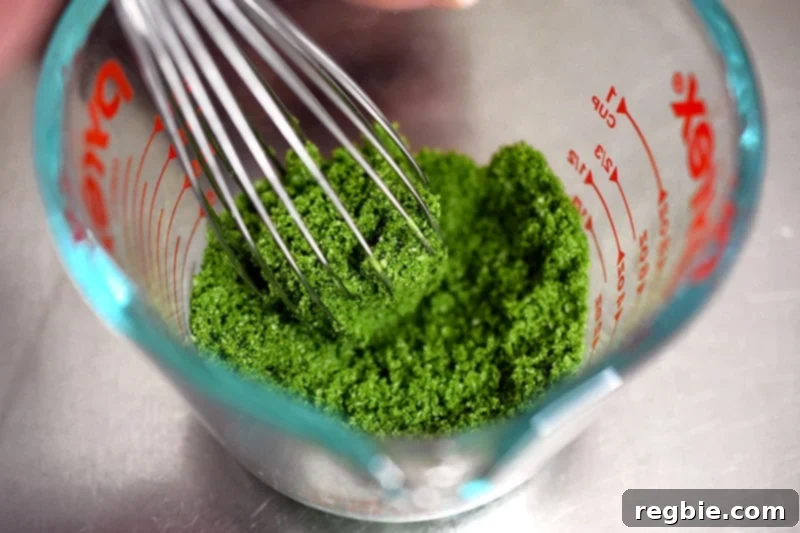
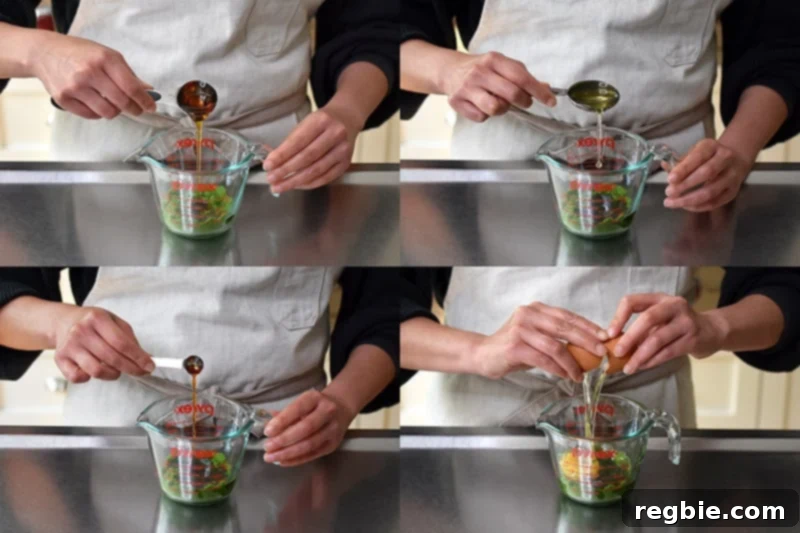
Next, it’s time to incorporate the wet ingredients. To the dry mixture in your measuring cup, add the maple syrup (or your chosen sweetener like honey or allulose), avocado oil, vanilla extract, and one large egg. Continue to whisk the batter until it is completely smooth and free of lumps. A well-mixed batter ensures a consistent texture in your finished cake.
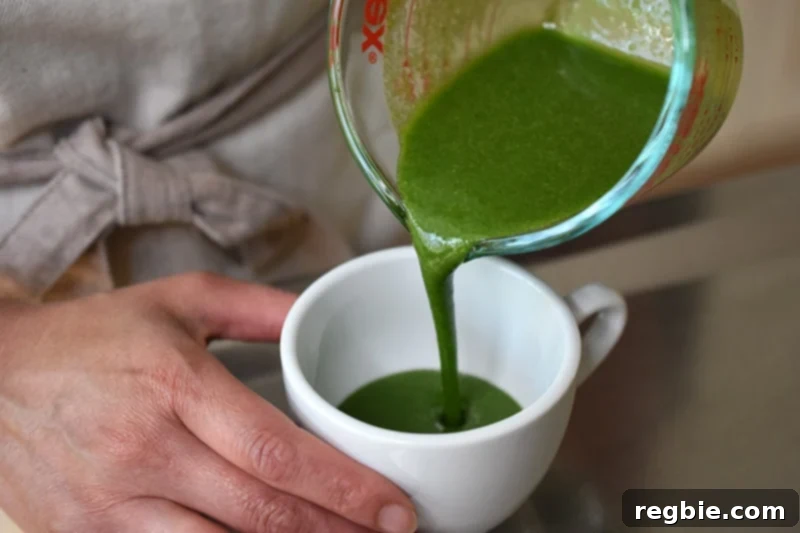
Once your batter is perfectly mixed, carefully pour it into a microwave-safe mug. An ideal size is a 6- to 8-ounce mug, allowing ample space for the cake to rise without overflowing. Ensure the mug is placed directly in the center of your microwave turntable; this placement promotes more even heating and a balanced rise, preventing one side from cooking faster than the other.
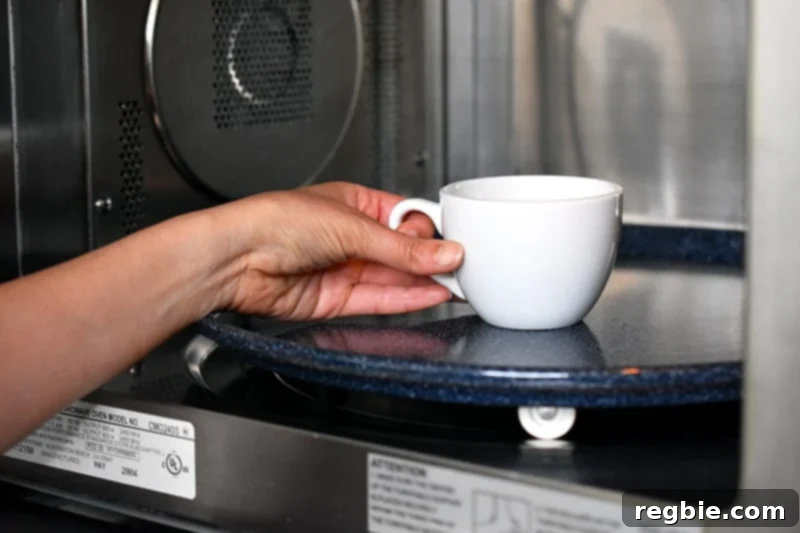
Cook the mug cake on high power for 1-2 minutes. Cooking times can vary based on your microwave’s wattage. For reference, a 900-watt microwave typically bakes this cake to perfection in about 90 seconds. If your microwave has a higher wattage, you might need to slightly decrease the cooking time, while a less powerful microwave may require a little longer. Keep a close eye on it during the last 30 seconds to prevent overcooking. The cake is fully cooked when it has beautifully puffed up and a toothpick inserted into its center comes out clean, indicating no wet batter remains.
Once cooked, gently remove the mug from the microwave. The paleo matcha mug cake will be puffed and fragrant, ready for its finishing touches.

Allow the cake to cool in the mug for a few minutes before adding your desired toppings. A dollop of whipped coconut cream is a fantastic, dairy-free option that adds a creamy contrast to the earthy matcha flavor, making it an even more indulgent treat.
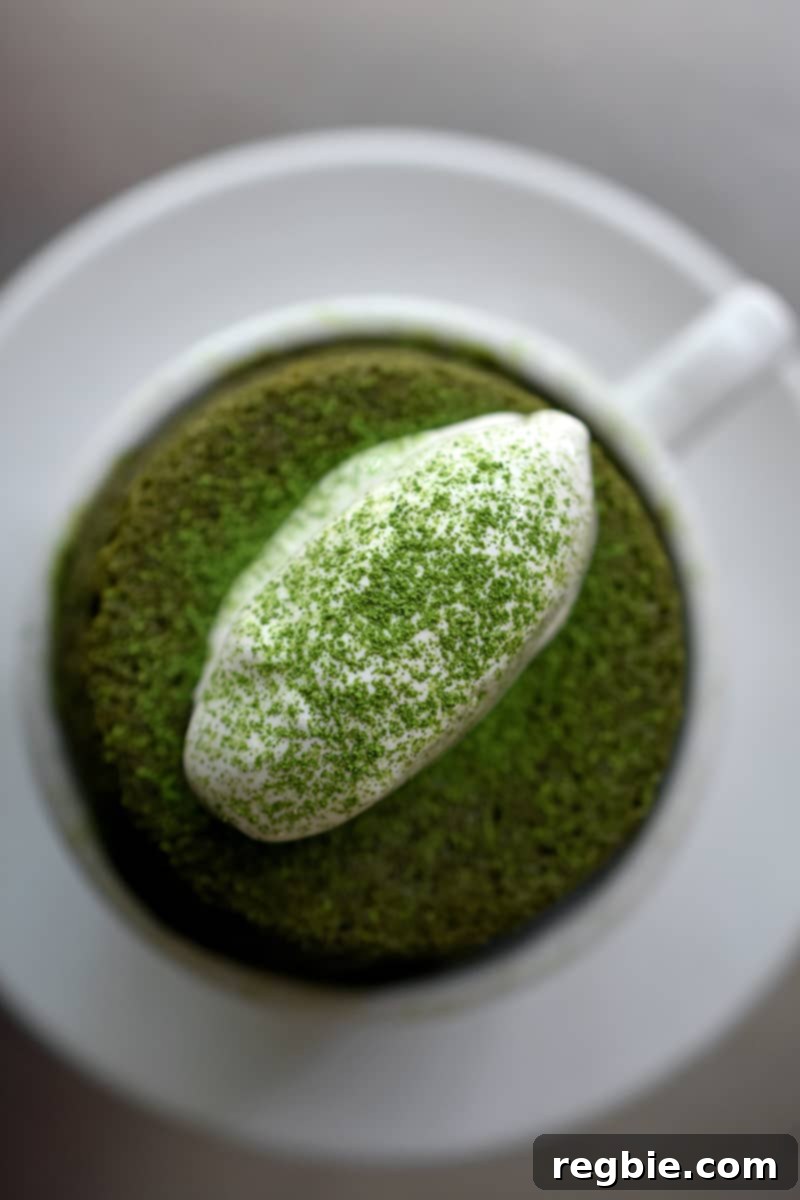
There’s nothing quite like a freshly made mug cake, so enjoy your paleo matcha mug cake immediately! It’s best savored warm, offering a delightful and satisfying experience with every single bite.
For more culinary inspiration and innovative recipes, don’t hesitate to explore my comprehensive Recipe Index. You’ll also find a treasure trove of exclusive recipes in my published cookbooks: Nom Nom Paleo: Food for Humans (Andrews McMeel Publishing 2013), Ready or Not! (Andrews McMeel Publishing 2017), and Nom Nom Paleo: Let’s Go! (Andrews McMeel Publishing 2022). Each book is packed with delicious, health-conscious meals designed to make healthy eating both easy and enjoyable.
PRINTER-FRIENDLY RECIPE CARD
Matcha Mug Cake (Paleo, Gluten-free, Keto-friendly)
3 mins
2 mins
Ingredients
- 3 tablespoons finely ground almond flour or cassava flour
- 1 teaspoon matcha
- ⅛ teaspoon baking soda
- ⅛ teaspoon Diamond Crystal kosher salt
- 1½ tablespoons maple syrup or 1 tablespoon honey or 2 tablespoons allulose (keto-friendly)
- 1 tablespoon avocado oil or melted ghee
- ¼ teaspoon vanilla extract
- 1 large egg
- 1 tablespoon whipped coconut cream optional
Instructions
- In a measuring cup, add the almond flour, matcha, baking soda, and salt. Whisk until uniform.
- Add the maple syrup or sweetener of choice, avocado oil, vanilla extract, and egg and whisk the batter until smooth.
- Pour the batter into a microwave-safe mug (6- to 8-ounce size is optimal), place the mug in the center of your microwave (it will rise more evenly in that spot), and cook on high power for 1-2 minutes. The paleo matcha mug cake is finished cooking when it puffs up and a toothpick inserted into the center comes out clean.
(I have a 900 watt microwave and my mug cakes are done in 90 seconds. Adjust the cooking time depending on the strength of your microwave—decrease the time if you have a higher wattage microwave and increase it if you have a less powerful microwave.) - Let the cake cool for a few minutes and top with whipped coconut cream, if desired.
Notes
- 3 tablespoons (21g) blanched almond flour
- ⅛ teaspoon baking soda
- ⅛ teaspoon Diamond Crystal kosher salt
- 1 tablespoon avocado oil or melted ghee
- 1½ tablespoon maple syrup or 1 tablespoon honey or 2 tablespoons allulose (for ket0)
- 1 teaspoon vanilla extract
- 1 large egg
For a chocolate mug cake:
- 3 tablespoons (21 g) blanched almond flour
- 1 tablespoon unsweetened cocoa
- ⅛ teaspoon baking soda
- ⅛ teaspoon Diamond Crystal kosher salt
- 1 tablespoon avocado oil or melted ghee
- 1½ tablespoon maple syrup or 1 tablespoon + 1 teaspoon honey or 2 tablespoons allulose (for ket0)
- ¼ teaspoon vanilla extract
- 1 large egg
No microwave? No problem!
Pour the batter into an oven-safe 6-ounce ramekin and bake it in a 350°F oven or toaster oven for 18-20 minutes or a 325°F air fryer for 13-15 minutes. The tiny single serve cake is done when a toothpick inserted in the middle comes out clean.
Nutrition Facts for Keto-friendly mug cake made with allulose:
Calories: 308kcal | Carbohydrates: 35g | Protein: 10g | Fat: 29g | Fiber: 2g | Sugar: 1g
Net carbs: 3g (Total carbs 35g – Fiber 2g – Allulose 30g = 3g Net Carbs)
Nutrition
Nutrition information is automatically calculated, so should only be used as an approximation.