
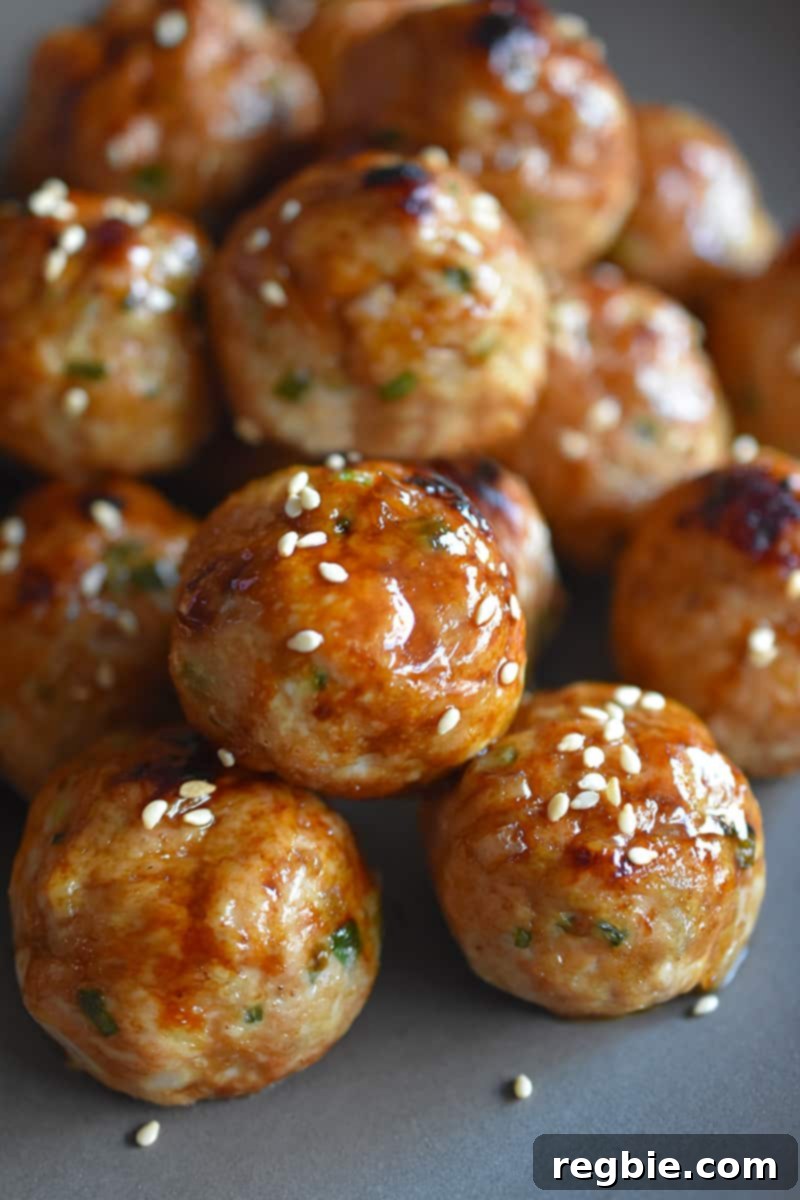
Whole30 & Gluten-Free Tsukune: Savory Japanese Chicken Meatballs
Craving authentic Japanese flavors but sticking to a Whole30 or gluten-free diet? Look no further! Our recipe for Tsukune, savory Japanese grilled ground chicken meatballs, is not only Whole30-friendly and gluten-free but also incredibly easy to make at home. We’ve streamlined the traditional process, allowing you to broil these umami-packed bites in your oven whenever the craving strikes for a delicious, healthy meal.
Table of Contents
- The Delight of Paleo and Gluten-Free Tsukune
- Mastering the Easy Whole30 Tare Sauce
- Essential Tips for Perfect Homemade Tsukune
- Key Ingredients for Savory Tsukune
- Step-by-Step Guide: How to Make Tsukune
- What to Serve with Tsukune: Side Dishes
- Storing and Reheating Leftover Tsukune
- Printer-Friendly Tsukune Recipe Card
The Delight of Paleo and Gluten-Free Tsukune
Long ago, the smoky, savory flavors of Tsukune captured my heart at a bustling yakitori restaurant. After indulging in countless grilled chicken skewers, it was the succulent, glazed ground chicken meatballs, generously coated in a sweet and tangy tare sauce, that truly stole the show. Our family would order them again and again, captivated by their unique texture and irresistible umami.
However, my discovery of gluten intolerance meant that the joy of dining at yakitori establishments diminished significantly. The delicious tare sauce, typically soy sauce-based, was off-limits, leaving me longing for a healthy, compliant version of my beloved Tsukune. This culinary dilemma sparked a mission to recreate these Japanese favorites in my own kitchen, ensuring they fit seamlessly into a Whole30 and Paleo lifestyle without compromising on flavor.
This recipe transforms the classic Tsukune into a delicious dish suitable for those following strict dietary guidelines. By carefully selecting ingredients and adapting cooking methods, we’ve managed to retain all the authentic taste and juicy texture of traditional Tsukune, making it accessible for everyone to enjoy at home. Whether you’re adhering to Whole30, Paleo, or simply seeking a healthier, gluten-free option, these Japanese chicken meatballs are sure to become a cherished addition to your recipe repertoire.
Mastering the Easy Whole30 Tare Sauce
The secret to exceptional Tsukune lies in its glaze – the Tare sauce. Traditionally, Tare is a rich blend of soy sauce, mirin, sake, and sugar, which delivers a perfect balance of sweet, salty, and savory notes. For those avoiding gluten, soy, and refined sugars, recreating this complex flavor profile can be a challenge. Fortunately, my versatile All-Purpose Stir-Fry Sauce comes to the rescue!
This remarkable sauce serves as an ideal Whole30-friendly and gluten-free alternative to traditional Tare. It perfectly mimics the depth of flavor and luscious glaze you’d expect, yet it contains none of the common allergens or restrictive ingredients like soy, gluten, sake, mirin, or refined sugar. This innovation proves that with a little creativity, healthy eating doesn’t mean sacrificing authentic taste. The All-Purpose Stir-Fry Sauce not only shines in this Tsukune recipe but also serves as a fantastic base for countless other dishes, truly living up to its name.
Essential Tips for Perfect Homemade Tsukune
Achieving restaurant-quality Tsukune at home is easier than you think, especially with these insider tips:
- Opt for Ground Chicken Thighs: This is a non-negotiable step for juicy, flavorful meatballs. Unlike lean breast meat, chicken thighs contain enough fat to keep the Tsukune moist and tender. Dry meatballs are a definite no-go! You can find ground chicken thighs at specialty grocery stores like Whole Foods or Japanese markets. If not readily available, ask a good butcher to grind boneless, skinless chicken thighs for you, or cube them yourself, freeze for 30 minutes, then pulse in a food processor until ground.
- Prepare in Advance: The meatball mixture can be prepared up to a day ahead and stored in the refrigerator. This makes meal prep incredibly convenient, allowing you to simply form and cook the meatballs when you’re ready to serve.
- The Shiitake Umami Secret: Incorporating finely grated dried shiitake mushroom into the mixture is a game-changer! This brilliant tip, shared by my chef sister (also the co-creator of my Magic Mushroom Powder), infuses the meatballs with an incredible depth of umami flavor that elevates them from good to unforgettable. A microplane works perfectly for this task.
- Always Taste for Seasoning: Before cooking the entire batch, fry a small patty of the Tsukune mixture. This crucial step allows you to taste and adjust the seasoning (adding more salt if needed) to ensure your meatballs are perfectly flavored. It’s a small effort that yields big deliciousness.
- Avoid Raw Ginger: Resist the urge to add raw ginger to the mixture. Raw ginger contains an enzyme that can break down protein, resulting in mushy, unappetizing meatballs. Stick to the specified ingredients for optimal texture.
- Triple Basting for Max Flavor and Glaze: Baste the chicken Tsukune three times with the All-Purpose Stir-Fry Sauce during the broiling process. This layering technique ensures each meatball is beautifully coated with a glossy, flavorful glaze, enhancing both taste and appearance.
- Skip the Skewers: While traditional Tsukune is often served on skewers, it’s an unnecessary step for home cooking. It can be a hassle to skewer the soft meatballs, and let’s be honest, most people remove them from the bamboo sticks to eat anyway. Save yourself the effort and enjoy them as delicious standalone meatballs!
Key Ingredients for Savory Tsukune
Gathering the right ingredients is the first step to creating these delectable Japanese chicken meatballs:
- Ground Chicken Thigh: The star of the show. While chicken is traditional, feel free to substitute with ground pork, beef, or turkey if you prefer, adjusting for fat content as needed.
- Diamond Crystal Kosher Salt: Known for its balanced flavor and easy dissolution. (If using a fine-grain salt, reduce the amount by half.)
- Toasted Sesame Oil: Adds a nutty, aromatic depth characteristic of Asian cuisine.
- Scallions (Green Onions): Provides a mild, fresh onion flavor and a pop of color.
- Shallot: Offers a delicate, sweet onion flavor that is less pungent than a regular onion.
- Dried Shiitake Mushroom: Crucial for that intense umami boost, grated finely into the mixture.
- Avocado Oil or High-Temperature Cooking Fat of Choice: Used for greasing the baking sheet, chosen for its high smoke point, ideal for broiling.
- All-Purpose Stir-Fry Sauce: Our special Whole30, gluten-free, and soy-free Tare substitute, essential for the glaze.
- Toasted Sesame Seeds (Optional): For garnish, adding a pleasant crunch and visual appeal.
Step-by-Step Guide: How to Make Tsukune
Preparation: Mixing the Meatball Base
Begin by combining the ground chicken, salt, sesame oil, finely minced scallions, and shallot in a large mixing bowl. Ensure all ingredients are well-distributed for even flavor.
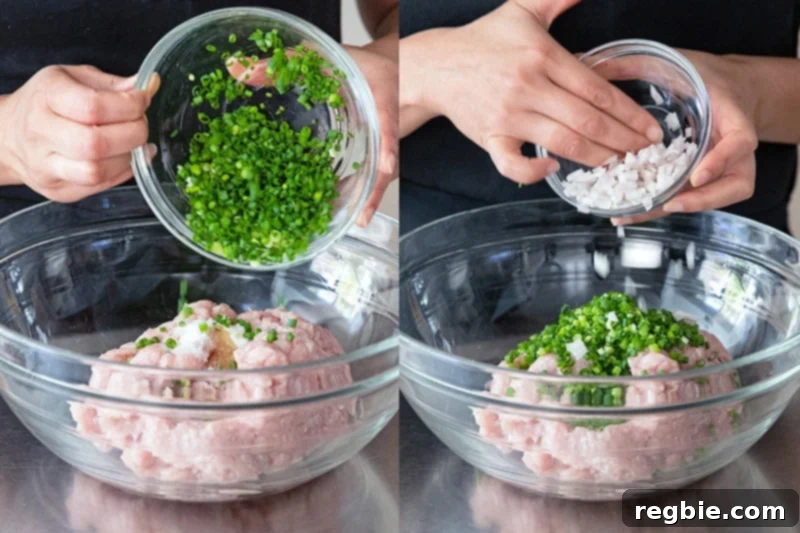
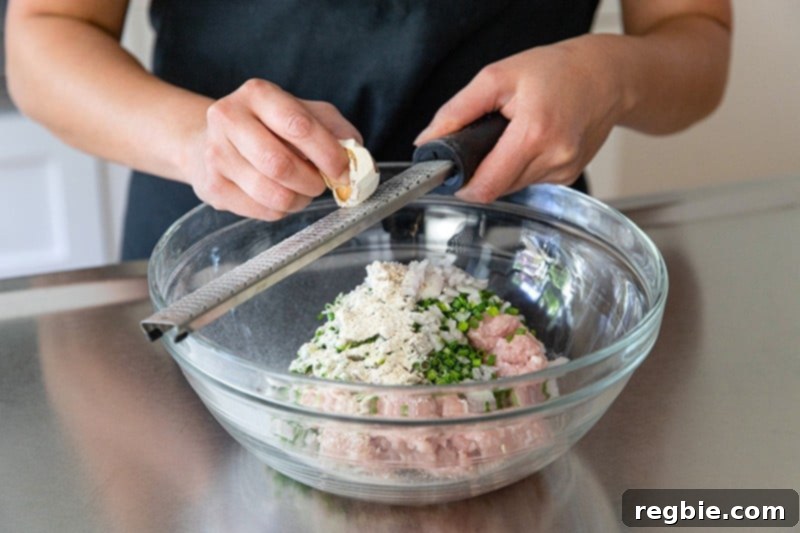
Next, take your dried shiitake mushroom and use a microplane to finely grate it directly over the meatball mixture. This ensures the mushroom disperses evenly, infusing the meatballs with its signature umami.
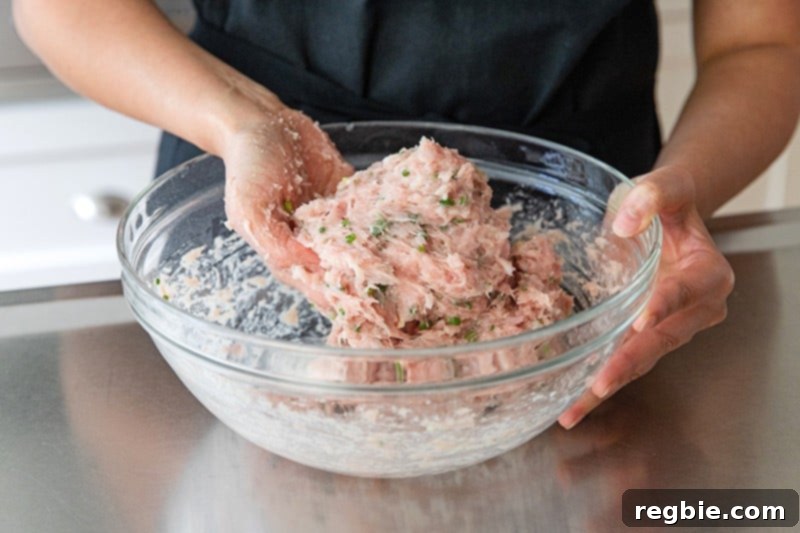
Now, it’s time to get your hands dirty! Knead the mixture thoroughly with your hands for several minutes. The goal is to develop the proteins in the meat, resulting in a sticky and tacky texture. This stickiness is key for meatballs that hold their shape and have a pleasing bite.
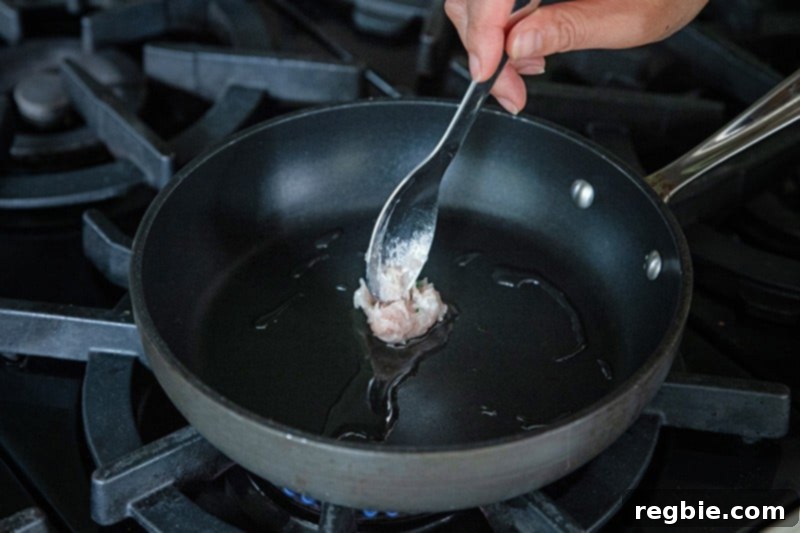
Before proceeding, fry a tiny patty of the mixture in a small pan to taste for seasoning. This simple step ensures your Tsukune are perfectly balanced. Adjust with additional salt if necessary based on your preference.
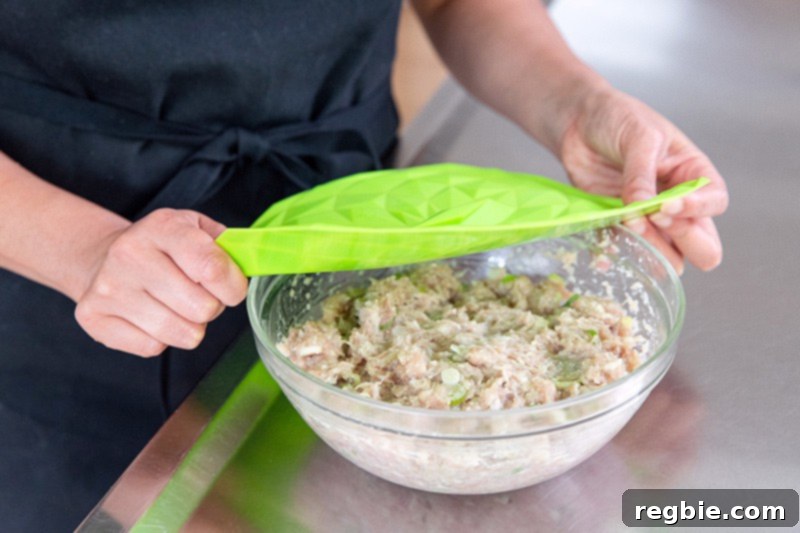
Cover the bowl containing the meatball mixture and chill it in the refrigerator for at least one hour, or even up to a full day. Chilling firms up the mixture, making it much easier to roll into uniform meatballs. However, if time is short, you can proceed directly to forming and cooking.
Cooking: Broiling to Perfection
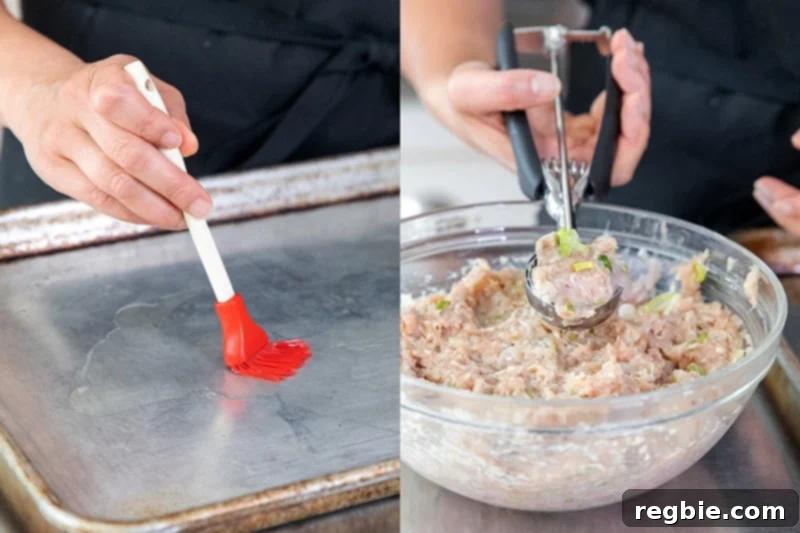
When you’re ready to cook, preheat your broiler and adjust an oven rack so it’s approximately 6 inches from the heating element. While the oven warms up, brush a rimmed baking sheet or broiler pan generously with avocado oil to prevent sticking.
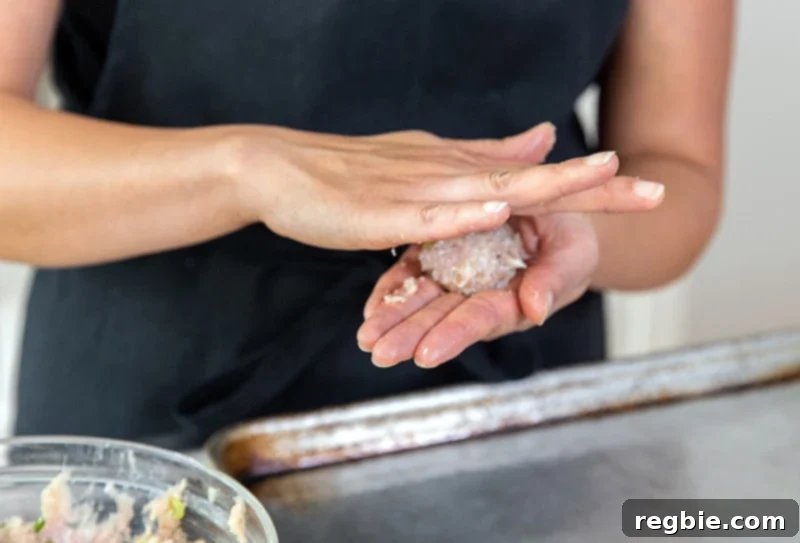
Using a #40 disher (about 1½ tablespoons), scoop out approximately 24 meatballs. For easier handling, lightly oil your hands with avocado oil before rolling them into uniform, smooth balls. This technique prevents the mixture from sticking to your hands.
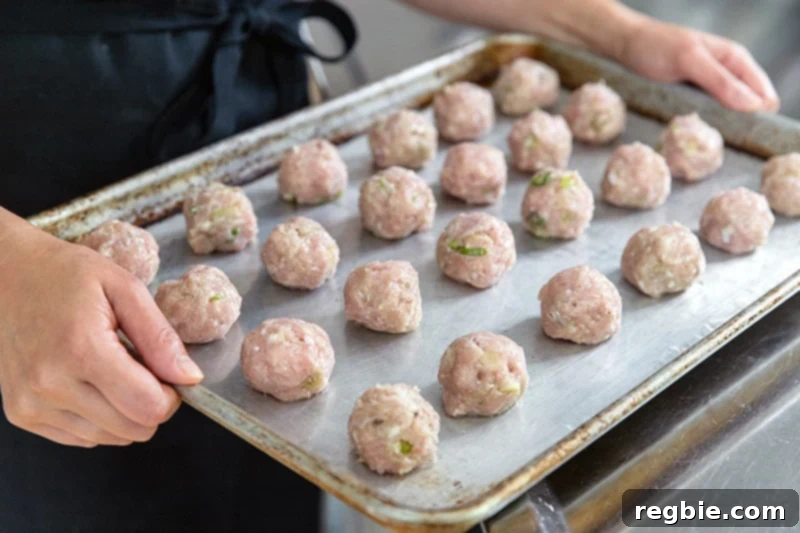
Carefully arrange the formed chicken meatballs in a single layer on the prepared greased baking sheet, ensuring they are evenly spaced to allow for proper cooking and browning.
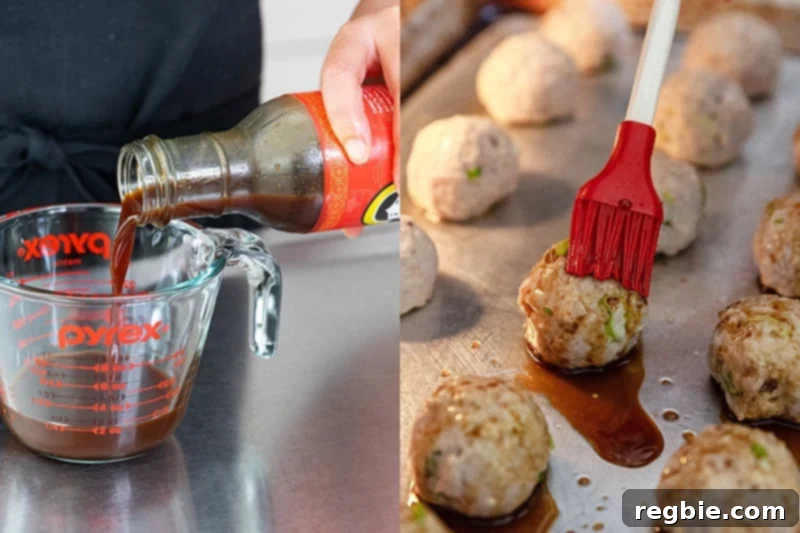
Place the baking sheet under the broiler. Broil the meatballs for 2 minutes. After this initial broiling period, remove the tray and generously brush the meatballs with the All-Purpose Stir-Fry Sauce. Rotate the tray 180 degrees to ensure even cooking and browning.
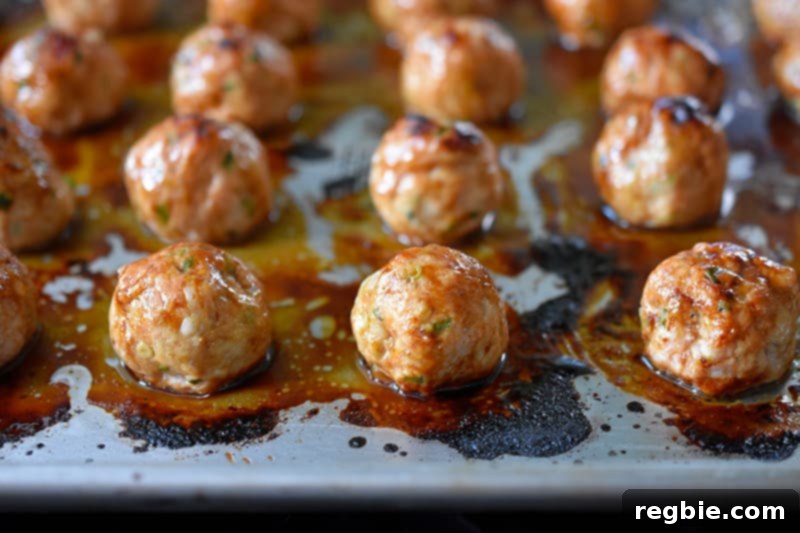
Continue this process: broil for another 2 minutes, brush with sauce, and rotate the tray. Repeat this step one more time. In total, the meatballs will be broiled for 8 minutes (excluding basting time) and basted three times, creating a beautiful, caramelized glaze.
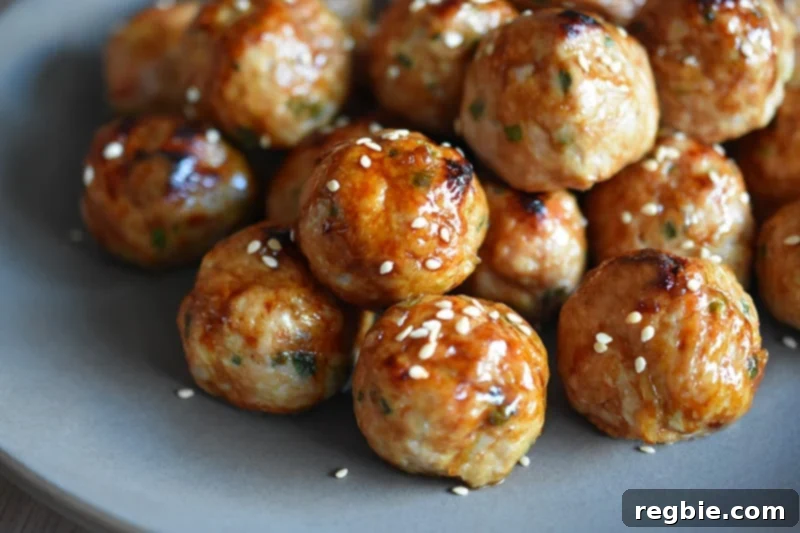
The Tsukune are finished cooking when their tops are beautifully browned and they are cooked through. Be vigilant to prevent them from burning or becoming overcooked, which can lead to dryness. The internal temperature should reach 165°F (74°C) for food safety.
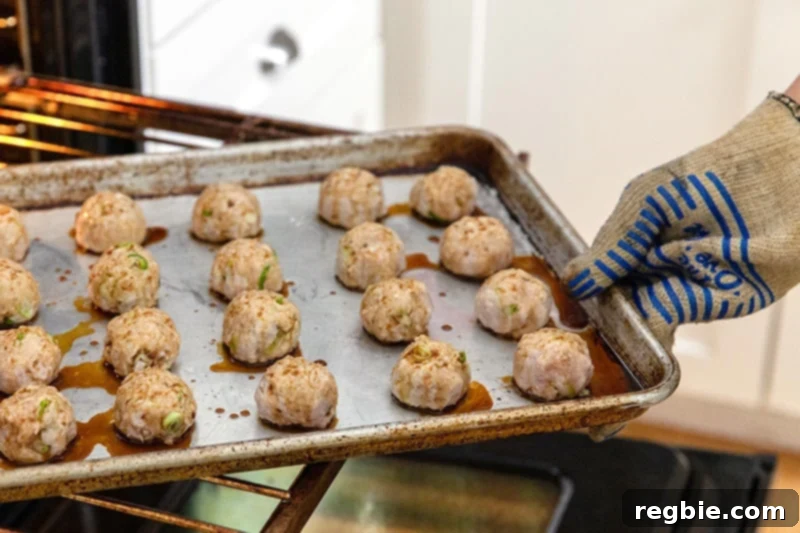
Once cooked, remove the tray from the oven. The Tsukune should have a lovely golden-brown exterior and be perfectly juicy inside.
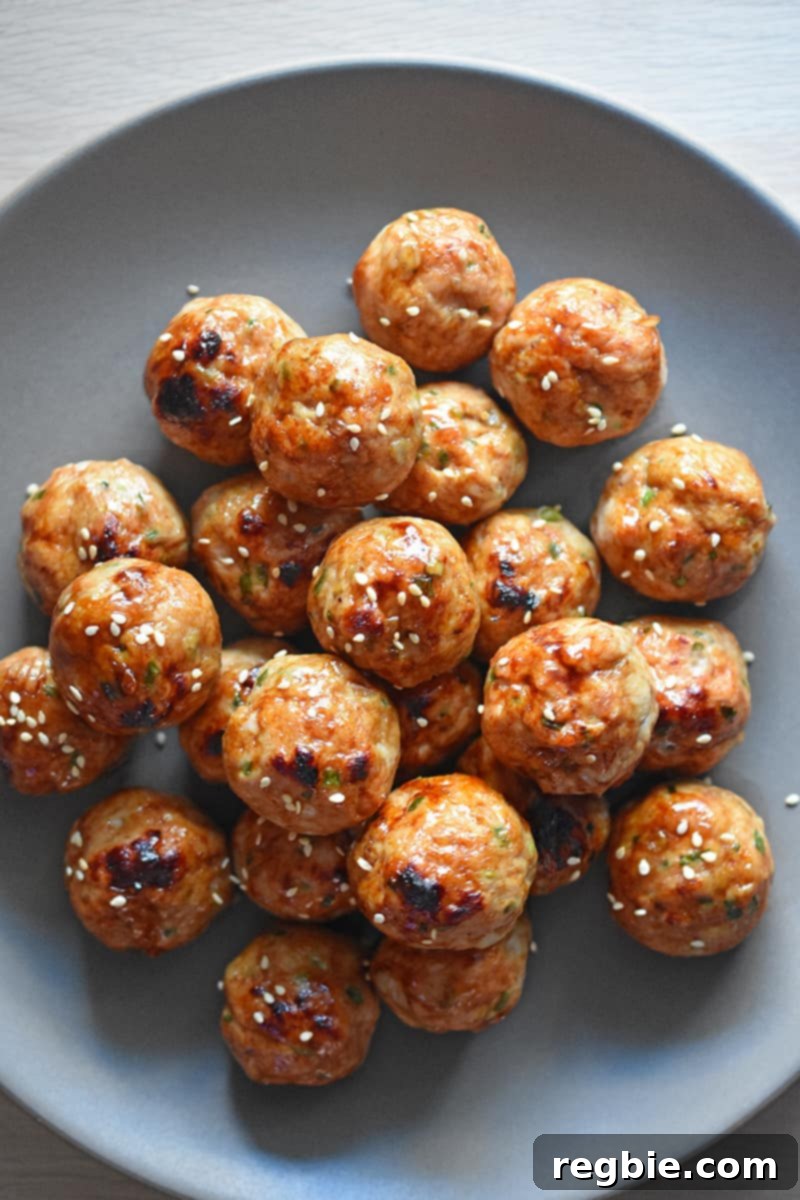
If desired, sprinkle with toasted sesame seeds for an added layer of flavor and texture. Serve immediately while hot and enjoy these incredibly delicious, Whole30 Japanese chicken meatballs!
What to Serve with Tsukune: Side Dishes
Tsukune are incredibly versatile and pair wonderfully with a variety of vegetable side dishes. For a complete and satisfying meal, consider these delicious and healthy options:
- Asian Cauliflower Fried Rice: A flavorful and low-carb alternative to traditional fried rice that complements the Japanese flavors of Tsukune perfectly.
- Smashed Cucumber and Carrot Salad: Refreshing and crunchy, this salad offers a vibrant contrast to the savory meatballs, with a tangy dressing that cleanses the palate.
- Steamed or Roasted Vegetables: Simple yet effective. Broccoli, asparagus, green beans, or bok choy, lightly seasoned and steamed or roasted, make for an easy and nutritious accompaniment.
- Instant Pot Vegetable Soup: A warm and comforting bowl of vegetable soup can be a lovely addition, especially on a cooler evening.
- A Simple Green Salad: When in doubt, a fresh green salad with a light vinaigrette is always a great choice, adding freshness and fiber to your meal.
Don’t overthink it – any of your favorite compliant vegetables will work beautifully to create a balanced and delicious meal with these Tsukune.
Storing and Reheating Leftover Tsukune
These delicious Tsukune are perfect for meal prep! To store leftovers, simply transfer the cooked meatballs to an airtight container and place them in the refrigerator. They will keep fresh for up to 4 days. For longer storage, Tsukune freeze exceptionally well. Arrange cooled meatballs in a single layer on a baking sheet to flash freeze, then transfer to a freezer-safe bag or container for up to 6 months. This method prevents them from sticking together.
When you’re ready to enjoy your frozen Tsukune, it’s best to thaw them overnight in the refrigerator before reheating. To reheat, you can use an oven set to 350°F (175°C) for about 10-15 minutes until warmed through, or use an air fryer at 375°F (190°C) for 5-8 minutes, which helps them regain some crispness. Always ensure they are heated to an internal temperature of 165°F (74°C).
Looking for more healthy and delicious recipe ideas? Head on over to our Recipe Index. You’ll also find exclusive recipes in our cookbooks: Nom Nom Paleo: Food for Humans (Andrews McMeel Publishing 2013), Ready or Not! (Andrews McMeel Publishing 2017), and Nom Nom Paleo: Let’s Go! (Andrews McMeel Publishing 2022).
Printer-Friendly Recipe Card
Tsukune (Whole30 Japanese Chicken Meatballs)
Rated 4.83 out of 5 stars by 28 votes.
Print Recipe
These Whole30-friendly Tsukune, a savory Japanese grilled ground chicken meatball, can easily be baked at home in the oven!
Ingredients
- 1½ pounds ground chicken thighs
- 1½ teaspoons Diamond Crystal kosher salt (use only ¾ teaspoon if using a fine-grain salt)
- ½ teaspoon toasted sesame oil
- 2 scallions, minced
- 1 medium shallot, minced
- 1 dried shiitake mushroom, grated
- 1 tablespoon avocado oil or high-temperature cooking fat of choice
- ⅓ cup All-Purpose Stir-Fry Sauce
- 2 tablespoons toasted sesame seeds (optional, for garnish)
Instructions
- Combine the ground chicken, salt, sesame oil, minced scallions, and minced shallot in a large bowl. Use a microplane to grate the dried shiitake mushroom directly onto the meatball mixture.
- Knead the mixture very thoroughly with your hands until it becomes sticky and tacky in texture.
- Fry a tiny patty of the mixture to taste for seasoning. Adjust with additional salt if needed to suit your preference.
- Cover the bowl and chill the meatball mixture in the fridge for at least an hour and up to a day. Chilling helps the meatballs hold their shape, but you can proceed immediately if short on time.
- When ready to cook, turn on the broiler and arrange an oven rack 6 inches from the heating element. Brush a rimmed baking sheet or broiler pan with avocado oil.
- Scoop out 24 meatballs using a #40 disher (~1½ tablespoons) and roll them into uniform balls with oiled hands to prevent sticking. Arrange them evenly on the greased baking sheet.
- Broil the meatballs for 2 minutes. Remove the tray, brush the meatballs with All-Purpose Stir-Fry Sauce, and rotate the tray 180 degrees.
- Repeat the previous step twice more, so the meatballs are broiled for a total of 8 minutes (not including basting time) and basted three times.
- The meatballs are finished when the tops are browned and cooked through. Ensure they do not burn or get overcooked; the internal temperature should reach 165°F (74°C).
- Top with toasted sesame seeds if desired for garnish. Serve immediately and enjoy your homemade Tsukune!
Video
Watch how to make Whole30-friendly Tsukune in this video:
Notes
- Broiler temperatures vary, so cooking times may differ. Keep a close eye on your meatballs and use a meat thermometer to confirm they are cooked to 165°F (74°C) internally.
- Alternatively, you can cook these meatballs in an air fryer at 400°F (200°C), following the basting directions from step 7 onward. Adjust cooking time as needed.
Nutrition
Nutrition information is automatically calculated and should only be used as an approximation.