
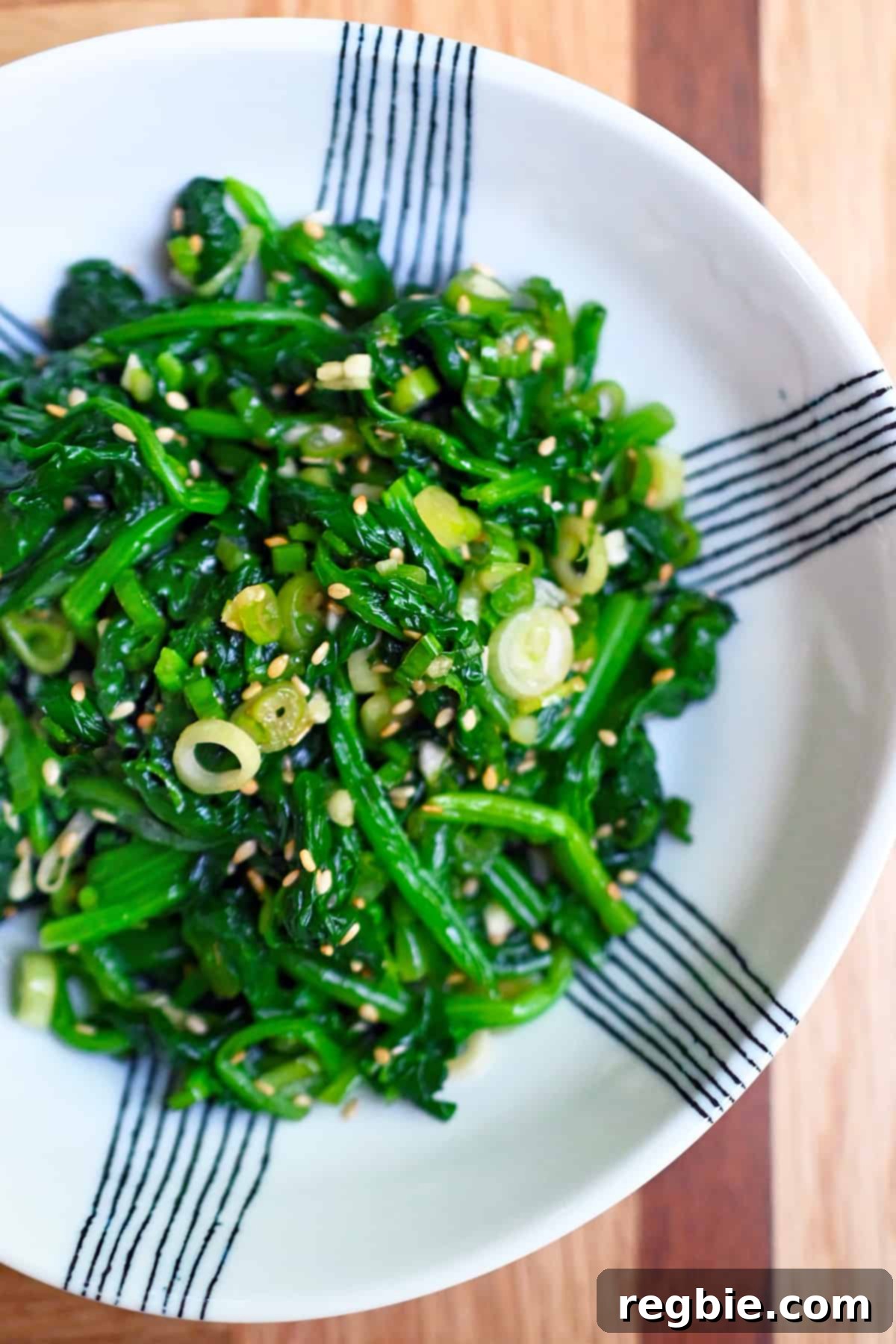
Prepare to transform your perception of side dishes with this incredible Paleo and Whole30 version of Sigeumchi Namul. This traditional Korean spinach side dish is not only incredibly simple to prepare but also bursts with fresh flavors and essential nutrients. It’s light, wonderfully refreshing, and makes for an ideal meal prep component, tasting fantastic straight from the refrigerator! Perfect for a healthy addition to any meal, this recipe brings the authentic taste of Korea right to your table, adapted for specific dietary needs without sacrificing an ounce of flavor.
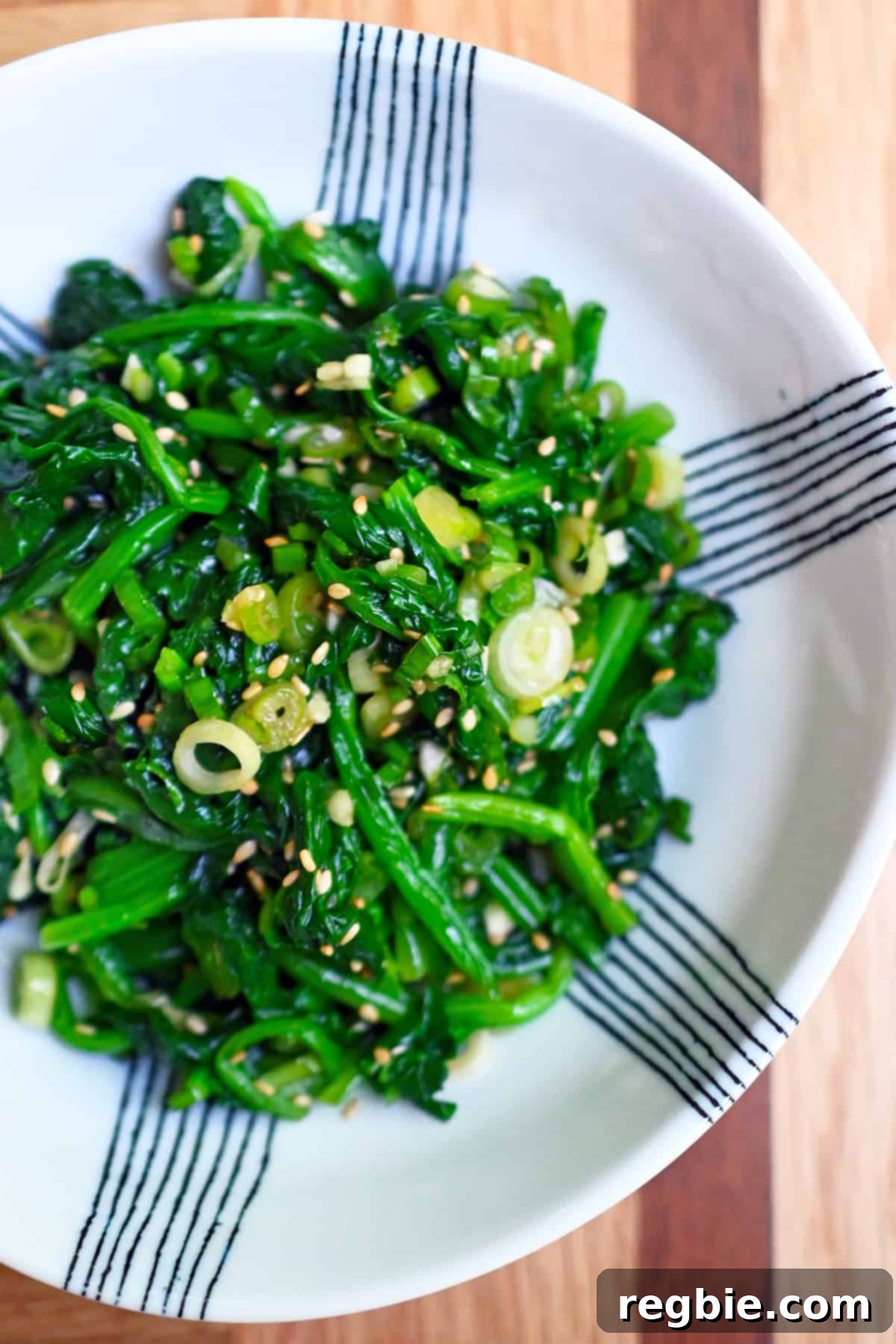
Table of Contents
- What is Sigeumchi Namul?
- Why You’ll Love This Paleo & Whole30 Sigeumchi Namul
- Essential Ingredients for Authentic Flavor (and Healthy Twists)
- Two Simple Ways to Perfectly Cook Your Spinach
- Blanching the Spinach in Boiling Water
- Microwaving the Spinach for Speed
- Step-by-Step Guide: How to Make Korean Spinach Side Dish
- Cook the Spinach Perfectly!
- Chill the Spinach Rapidly!
- Squeeze the Liquid Out of the Spinach for Best Texture!
- Chop the Spinach to Ideal Eating Size!
- Season the Spinach to Perfection!
- Chill and Serve for Optimal Flavor!
- Serving Suggestions & Pairing Ideas
- Make-Ahead & Storage Tips
- Frequently Asked Questions (FAQ)
- More Paleo Korean Recipes You’ll Love
- Korean Spinach Side Dish (Sigeumchi Namul) Recipe
What is Sigeumchi Namul?
Sigeumchi Namul (시금치나물) is an iconic Korean side dish, known as banchan, that showcases the simple elegance of fresh spinach. In its traditional form, it features blanched and chilled spinach meticulously seasoned with a harmonious blend of aromatic garlic, nutty sesame oil, a touch of sugar, and savory soy sauce. This humble yet incredibly satisfying vegetable dish is a staple in Korean cuisine, celebrated for its refreshing quality and ability to complement a wide array of main courses, from fluffy steamed rice to more elaborate dishes like bibimbap or succulent galbi (Korean BBQ Short Ribs).
Our unique recipe for Sigeumchi Namul takes this classic to a new level, specially crafted to be compatible with Paleo, Gluten-Free, and Whole30 dietary guidelines. The key difference from the traditional version lies in our mindful ingredient substitutions: we use coconut aminos instead of soy sauce, providing a similar umami depth with a hint of natural sweetness, and we completely omit added sugar. Rest assured, these thoughtful adaptations do not compromise the authentic taste or delightful texture. Most palates will find this soy-free and sugar-free rendition just as incredibly easy to make and delicious as the original seasoned vegetable dish. It’s proof that healthy eating can be bursting with flavor!
Why You’ll Love This Paleo & Whole30 Sigeumchi Namul
This Sigeumchi Namul isn’t just a side dish; it’s a vibrant celebration of healthy, flavorful eating. Here’s why this recipe deserves a permanent spot in your culinary repertoire:
- Nutrient Powerhouse: Spinach is a superfood, packed with vitamins A, C, and K, iron, and folate. This dish is a fantastic way to incorporate more greens into your diet, boosting your overall health and well-being.
- Incredibly Flavorful: Despite its simplicity, the combination of fresh garlic, toasted sesame oil, and umami-rich coconut aminos creates a deeply satisfying flavor profile that is both savory and subtly sweet, with a delightful nutty undertone. The optional gochugaru adds a pleasant kick without overwhelming the dish.
- Dietary Friendly: Perfect for those following Paleo, Whole30, Gluten-Free, Soy-Free, and even Keto diets! It’s a versatile dish that accommodates various health-conscious lifestyles without compromise.
- Quick and Easy to Make: From start to finish, this recipe takes mere minutes to prepare. Whether you blanch your spinach or use a microwave, the process is straightforward and requires minimal effort, making it ideal for busy weeknights or impromptu gatherings.
- Ultimate Meal Prep Champion: Sigeumchi Namul tastes even better the next day as the flavors meld and deepen in the refrigerator. Its excellent shelf life (up to 4 days) makes it a perfect component for your weekly meal prep, ensuring you always have a healthy and delicious side ready to go.
- Refreshing Texture: The blanched and chilled spinach retains a pleasant crunch while being tender, offering a delightful contrast to richer main courses. It’s a palate cleanser that brightens any meal.
Essential Ingredients for Authentic Flavor (and Healthy Twists)
The beauty of Sigeumchi Namul lies in its reliance on fresh, quality ingredients. Here’s a closer look at what you’ll need to create this delightful Korean side dish, along with tips for best results:

- Spinach: For this recipe, we recommend using regular spinach. Its slightly thicker leaves and stems hold up wonderfully to blanching and chilling, maintaining a pleasant texture that baby spinach leaves, which can become mushy, simply cannot achieve. Aim for a fresh, vibrant bunch.
- Green Onion (Scallions): Thinly sliced green onion adds a mild, fresh onion flavor and a delightful textural contrast. If fresh scallions aren’t available, a tiny bit of minced chives or even a dash of onion powder can serve as a substitute, though fresh is always preferred for aroma.
- Small Garlic Clove: Raw minced garlic is a potent flavor enhancer in this dish. Unlike cooked garlic, a little goes a long way here, so measure carefully – you want its pungent freshness to shine through without overpowering the other delicate flavors. If fresh garlic is out of reach, a small sprinkle of garlic powder can be used sparingly.
- Coconut Aminos: This is our stellar substitute for traditional soy sauce, making the dish Paleo, Whole30, and soy-free. Coconut aminos impart a rich umami depth with a subtle sweetness. It’s generally less salty than soy sauce, so you might find yourself adding a pinch of extra Diamond Crystal kosher salt to achieve the perfect balance.
- Toasted Sesame Oil: The nutty, aromatic essence of toasted sesame oil is fundamental to Sigeumchi Namul’s unique flavor. This ingredient, combined with the coconut aminos, creates that quintessential Korean taste that makes this simple spinach dish so incredibly addictive and delicious.
- Diamond Crystal Kosher Salt: Essential for seasoning to taste and balancing the flavors. Start with a small amount and adjust as needed, especially since coconut aminos are less salty than soy sauce.
- Toasted Sesame Seeds: These are not just for garnish; they add another layer of nutty flavor and a pleasing textural crunch. Stir them in at the end for maximum impact.
- Gochugaru or Red Pepper Flakes (Optional): For those who appreciate a touch of heat, a sprinkle of Korean red pepper flakes (gochugaru) or standard red pepper flakes will add a lovely, subtle warmth to the dish. Add to taste, starting with a small amount.
Two Simple Ways to Perfectly Cook Your Spinach
Achieving perfectly cooked spinach is crucial for the ideal Sigeumchi Namul. It should be tender yet still have a slight bite and a vibrant green color. Here are two convenient methods to cook your spinach:
Blanching the Spinach in Boiling Water
The traditional and often preferred method for cooking spinach for namul is blanching. This technique involves briefly submerging the spinach in boiling water, which helps to preserve its bright green color and tender-crisp texture. While it requires waiting for water to boil, the results are consistently excellent.
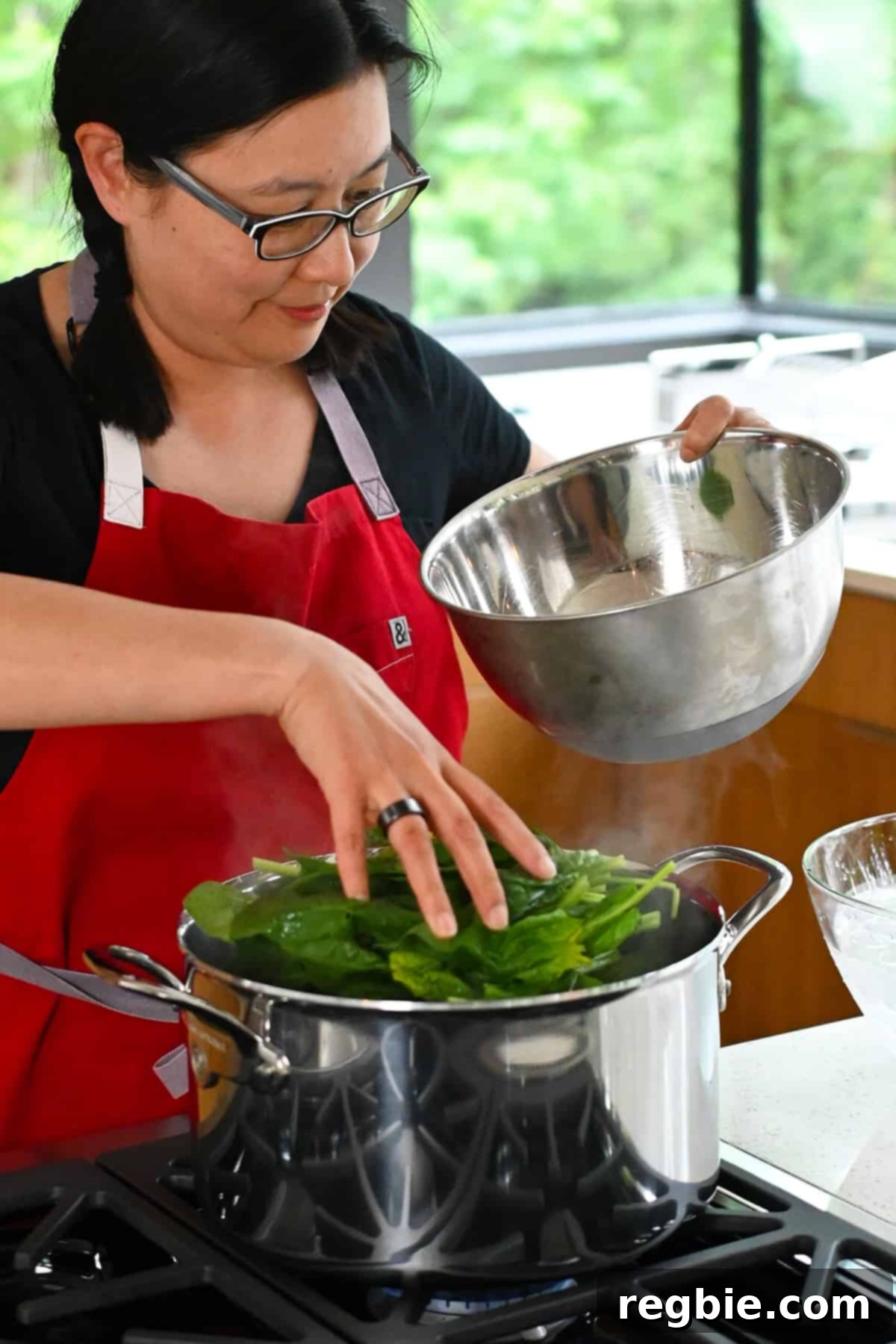
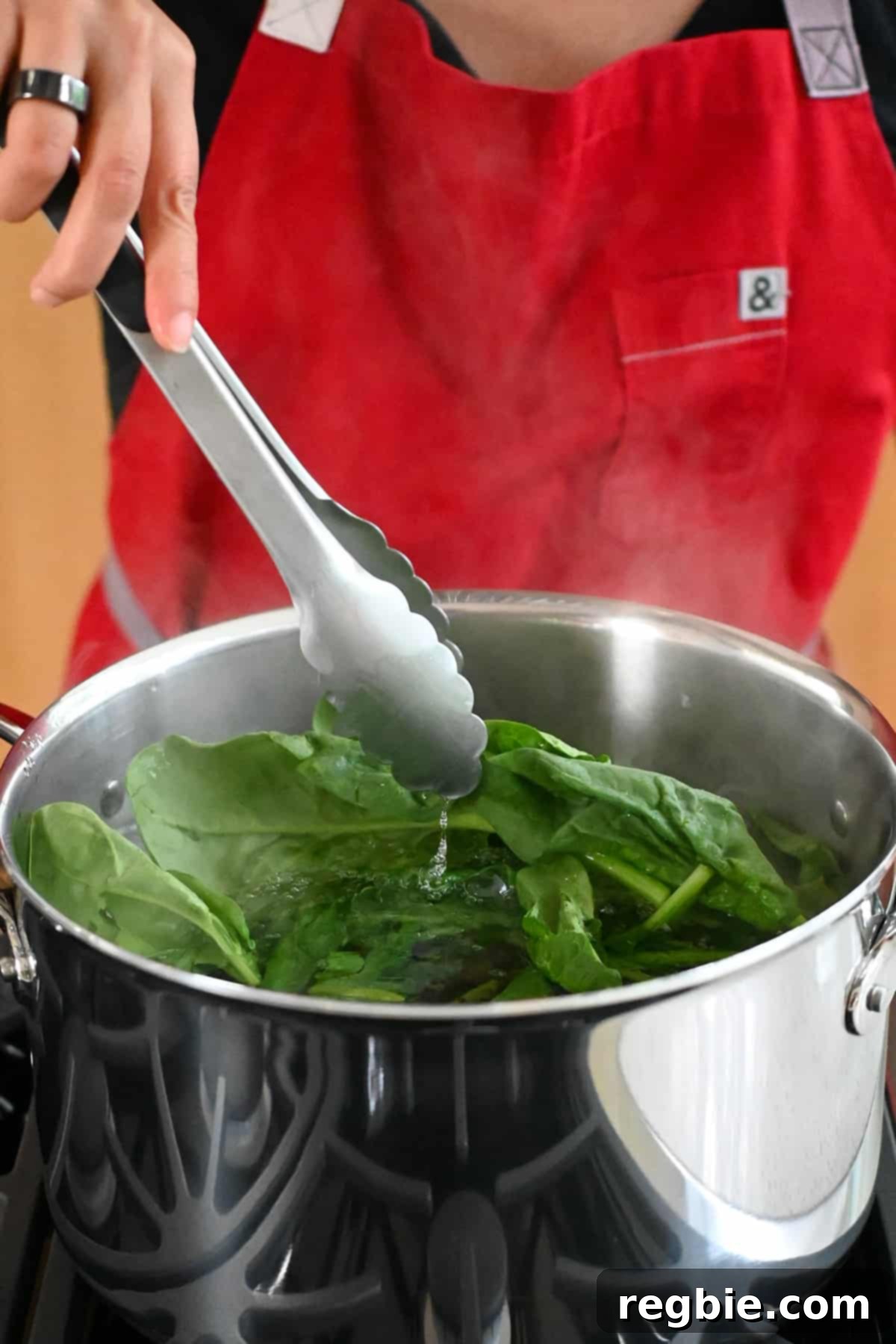
To blanch, bring a large pot of water to a rolling boil. Add the cleaned spinach and cook for only 30 seconds to 1 minute, or until the leaves turn a brilliant green and are just tender. Immediately transfer the spinach to an ice bath to halt the cooking process and lock in that vibrant color.
Microwaving the Spinach for Speed
For those times when you need speed and ultimate convenience, the microwave is your best friend. This method steams the spinach quickly and effectively, with minimal cleanup.
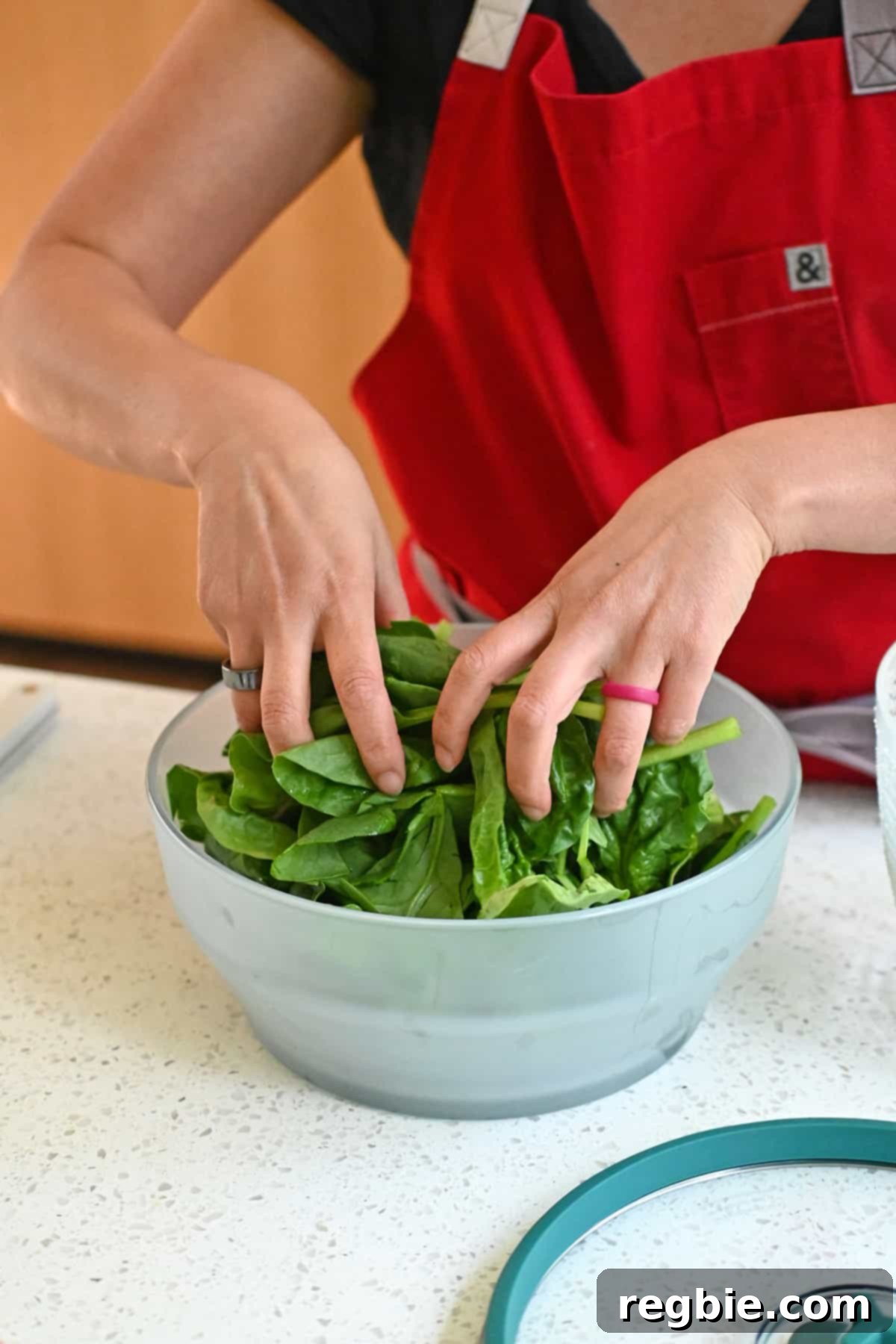
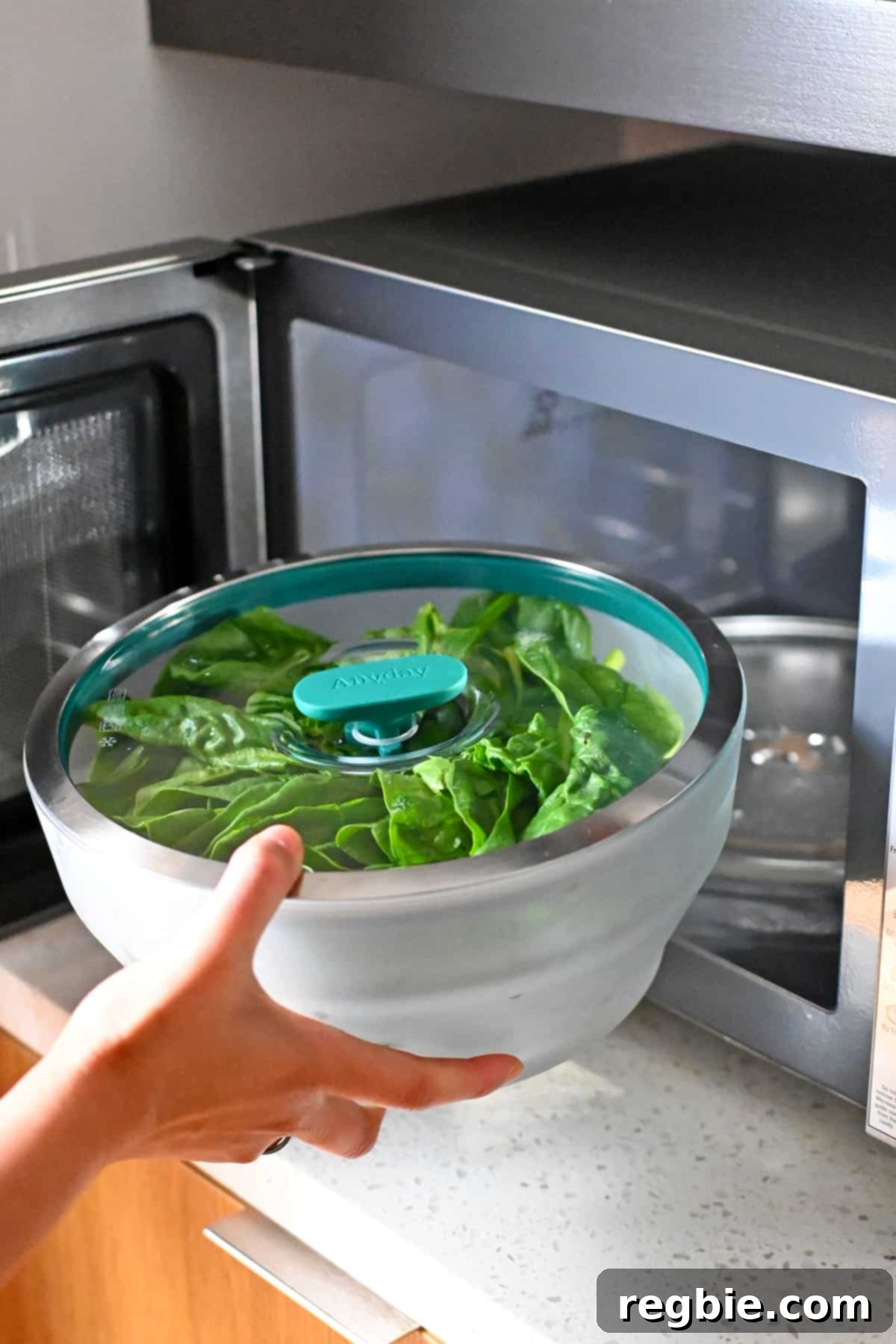
Simply place a generous bunch of spinach into a covered, vented microwave-safe dish, such as an Anyday Large Deep Dish. Microwave on high for approximately 2 minutes, or until the spinach leaves and stems are brightly green and just tender. These specialized microwave bowls are designed to perfectly steam vegetables without the need for additional liquid, making the process incredibly efficient.
Once your spinach is cooked using either method, the remaining steps are universal: chill it, drain it thoroughly, and then mix in your exquisite seasonings. Easy peasy and delicious!
Step-by-Step Guide: How to Make Korean Spinach Side Dish
Follow these detailed steps to create your own irresistible Paleo and Whole30 Sigeumchi Namul. Precision in each stage ensures the best flavor and texture.
Cook the Spinach Perfectly!
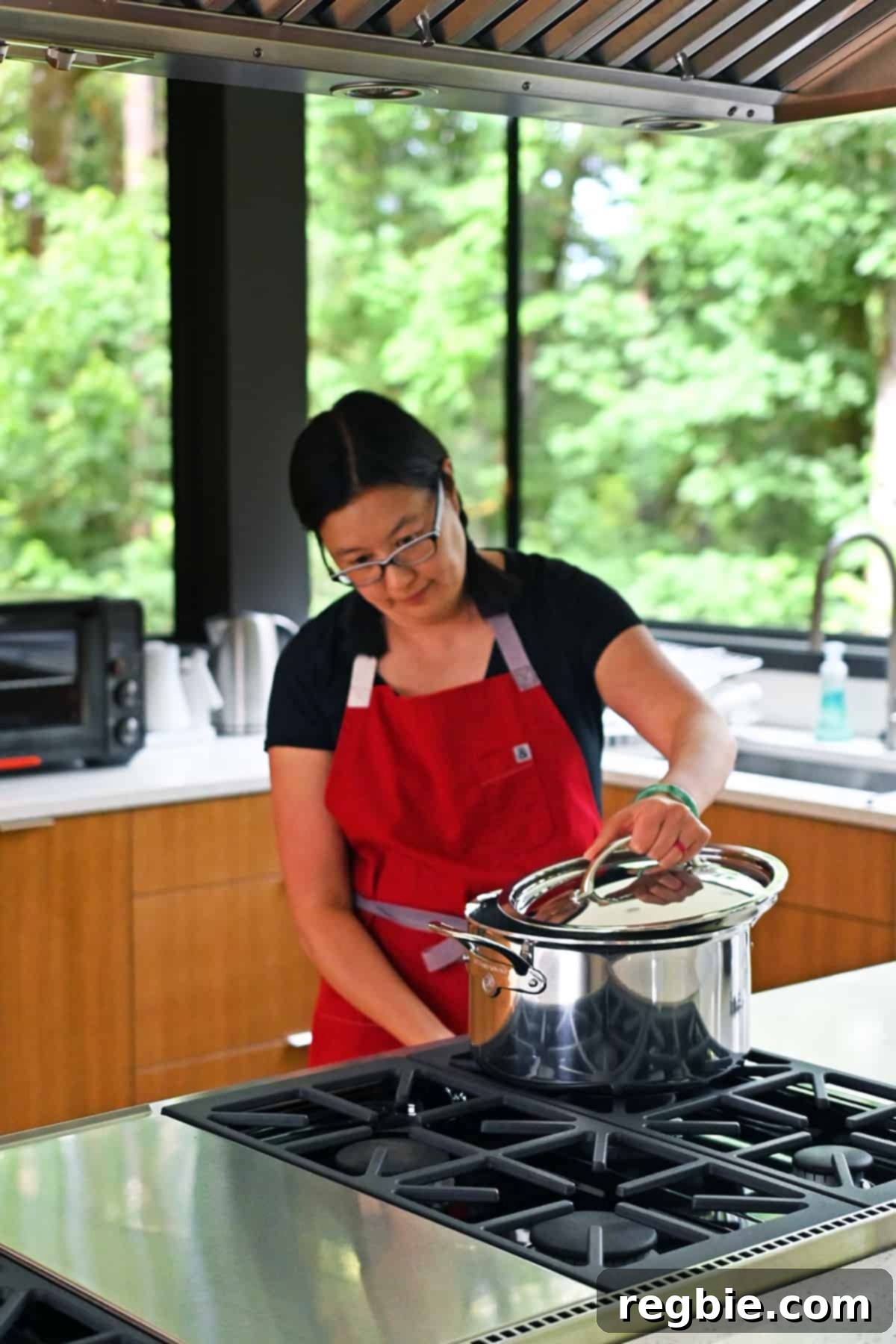
Stovetop Method: Begin by bringing a large, covered pot of water to a vigorous boil over high heat. Once the water is boiling rapidly, remove the lid.
Carefully add your washed and trimmed spinach to the boiling water. Cook, uncovered, for a brief 30 seconds to 1 minute. The goal is for the spinach leaves to turn a brilliant, vibrant green and become just tender, but not mushy. Overcooking will result in a less desirable texture and color.
Microwave Method: As an alternative, for a quicker approach, place your cleaned spinach in an Anyday Large Deep Dish microwave glass bowl. Cover it and microwave for approximately 2 minutes, or until the spinach is thoroughly cooked through and vividly green.
Chill the Spinach Rapidly!
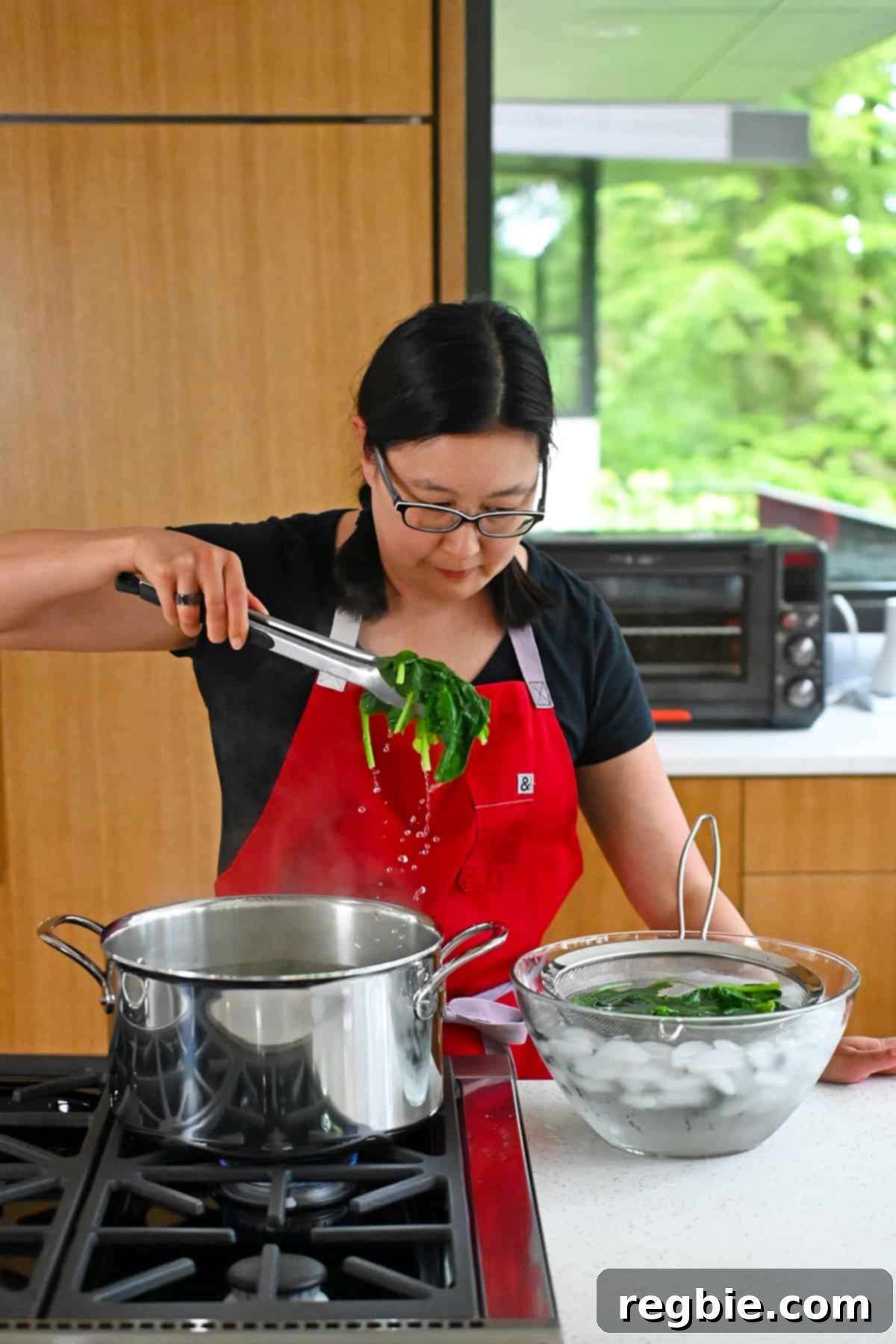
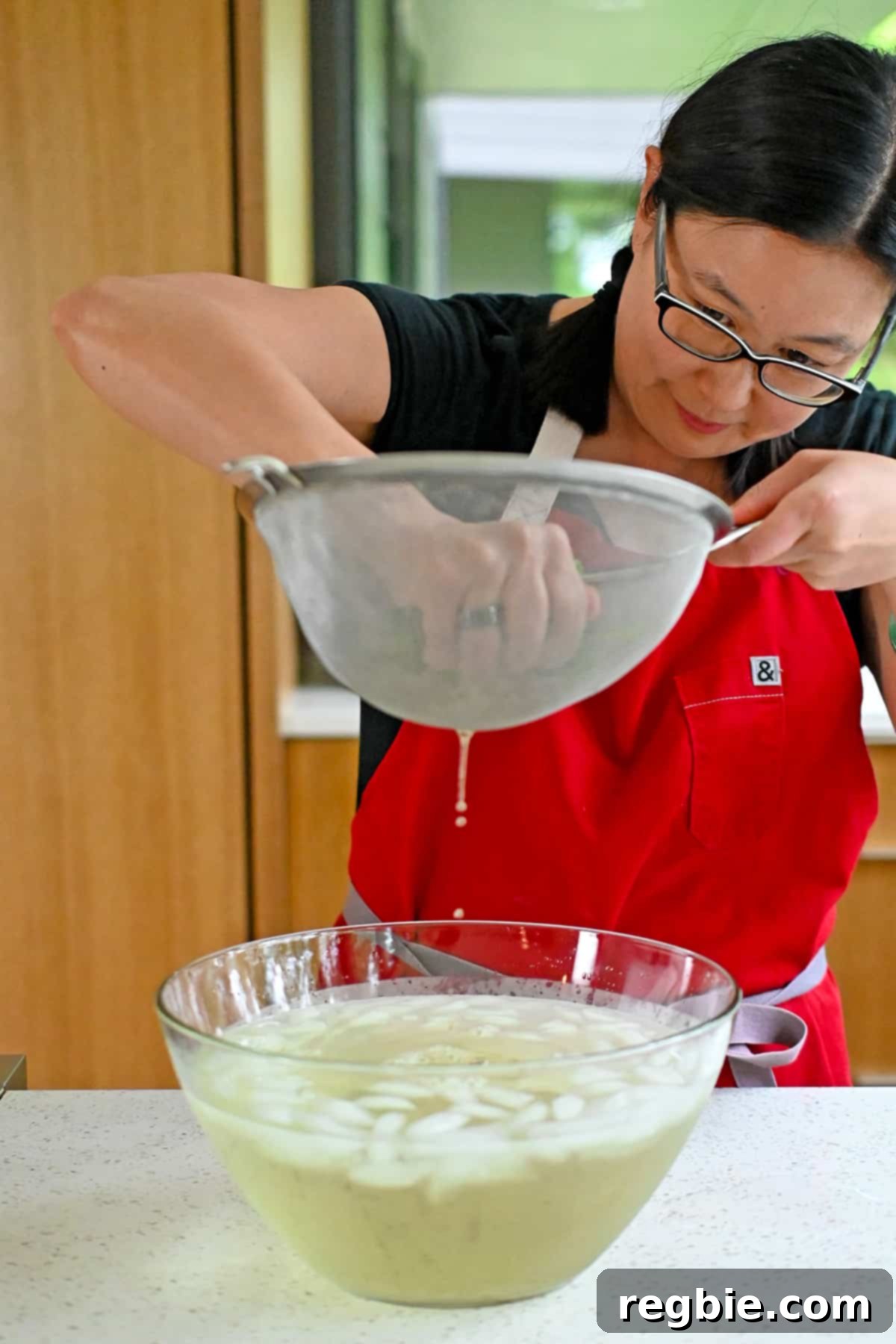
Once cooked, immediately transfer the spinach into a sieve or colander placed within a large bowl of ice water. This crucial step, known as an ice bath, rapidly halts the cooking process, preserving the spinach’s vibrant green color and crisp texture. If you’re short on time, a thorough rinse under very cold running water can also suffice to stop the cooking, though an ice bath yields slightly better results.
Squeeze the Liquid Out of the Spinach for Best Texture!
After chilling, retrieve the spinach from the ice water (or cold rinse). This is a critical step for Sigeumchi Namul: gently but firmly squeeze out all excess water from the spinach. You can gather it into a ball and squeeze it between your hands. Removing the liquid prevents the dish from becoming watery and allows the seasonings to properly adhere and infuse the spinach, resulting in a more concentrated and flavorful side dish.
Chop the Spinach to Ideal Eating Size!
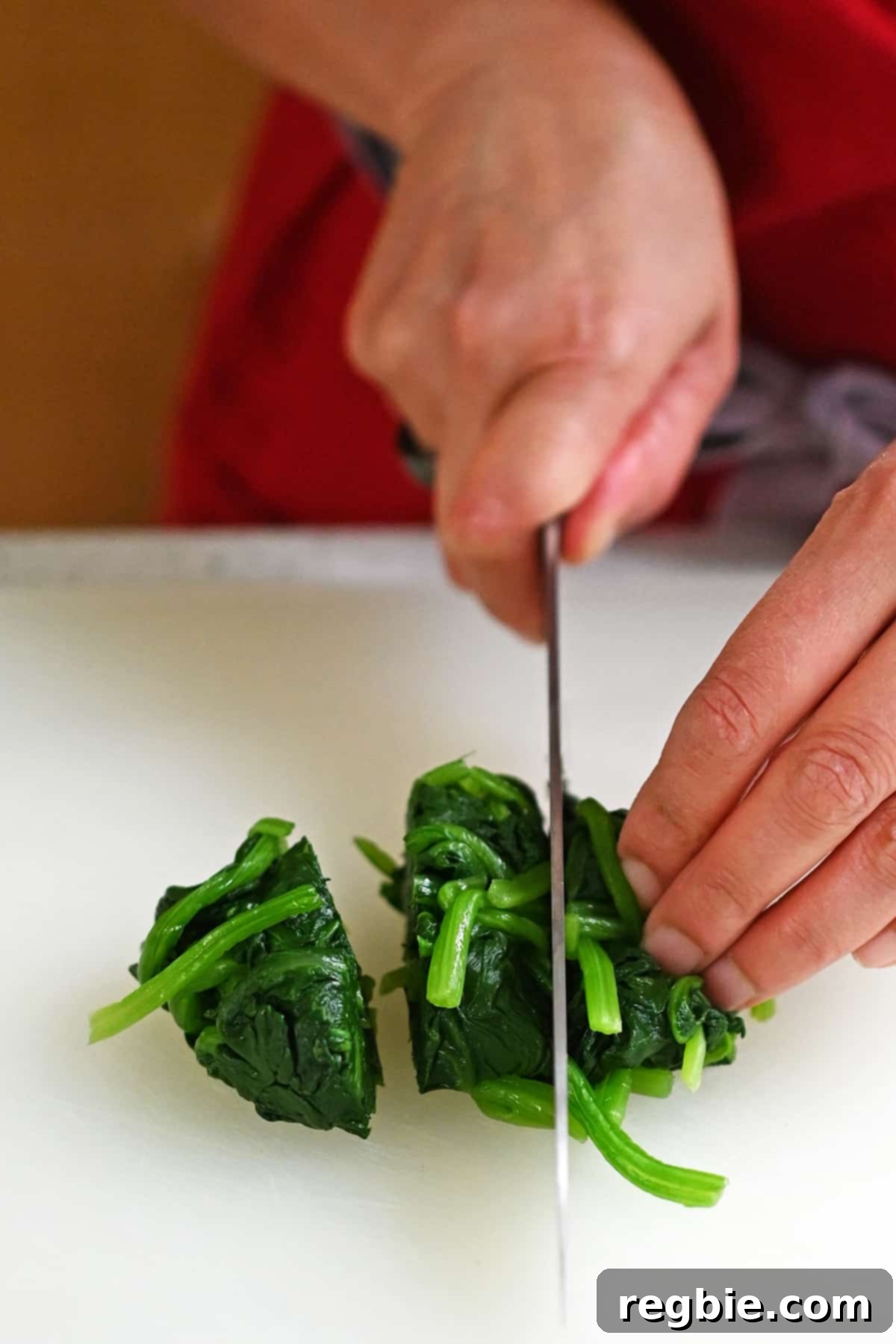
Once squeezed dry, the spinach will likely form a compact mass. Place it on a cutting board and use a chef’s knife to chop it into three roughly equal sections. This makes the spinach easier to manage and eat, especially with chopsticks, ensuring a more enjoyable dining experience.
Season the Spinach to Perfection!
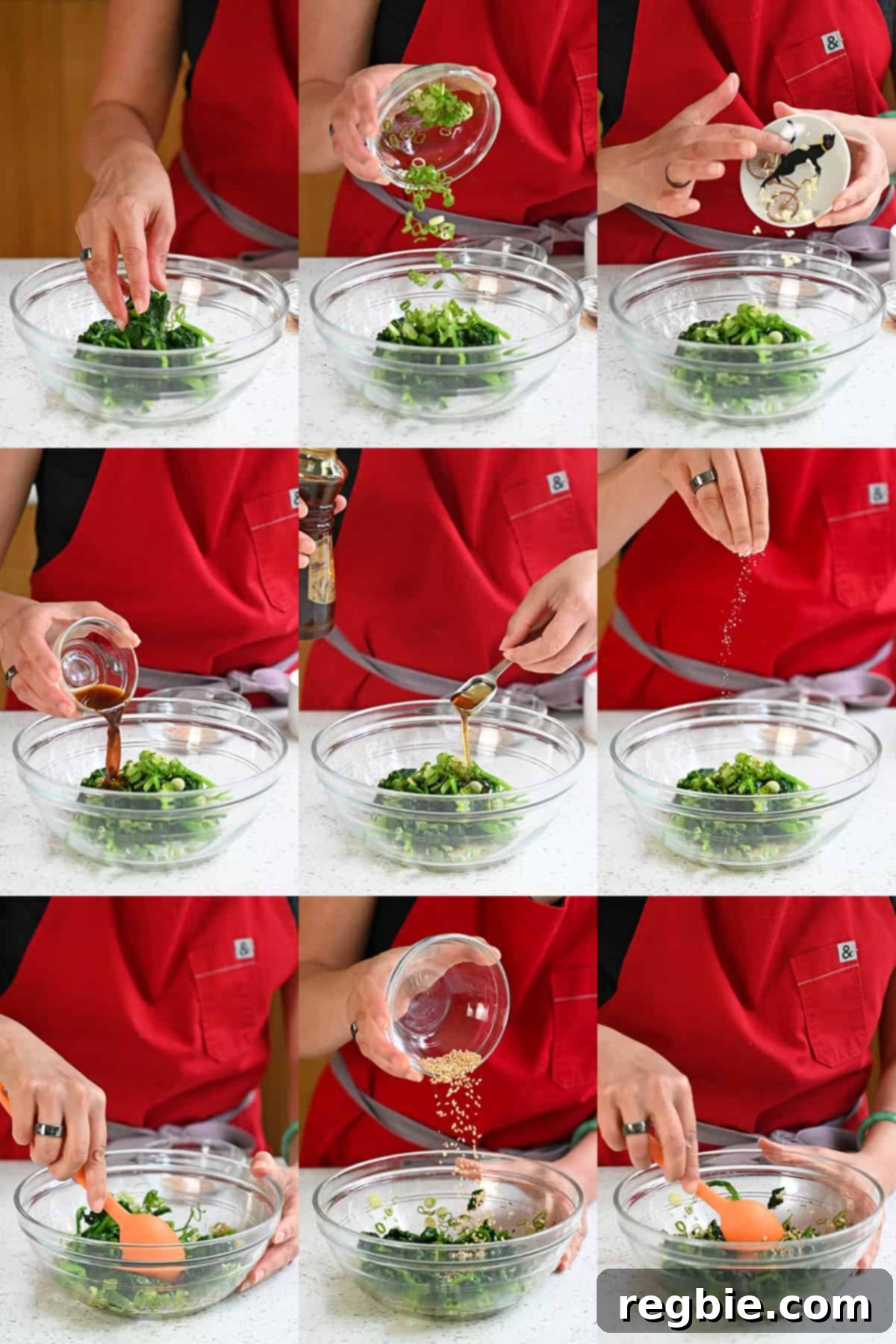
Transfer the chopped spinach to a large mixing bowl. Add the thinly sliced green onion, minced garlic, coconut aminos, toasted sesame oil, and your initial measure of Diamond Crystal kosher salt. Mix all the ingredients thoroughly with your hands or a spatula, ensuring the seasonings are evenly distributed. Taste a small bite and adjust the seasoning as needed; you might want a bit more salt or a splash more coconut aminos depending on your preference. Finally, toss in the toasted sesame seeds and, if desired, the gochugaru or red pepper flakes for a spicy kick. Give everything a final stir.
Chill and Serve for Optimal Flavor!
Cover the mixing bowl and place the seasoned spinach dish in the refrigerator. Allow it to chill for at least 5 to 10 minutes. This resting period is crucial as it allows the flavors to meld and deepen, resulting in a more harmonious and delicious final product. While waiting, you can prepare the rest of your meal or simply relax.
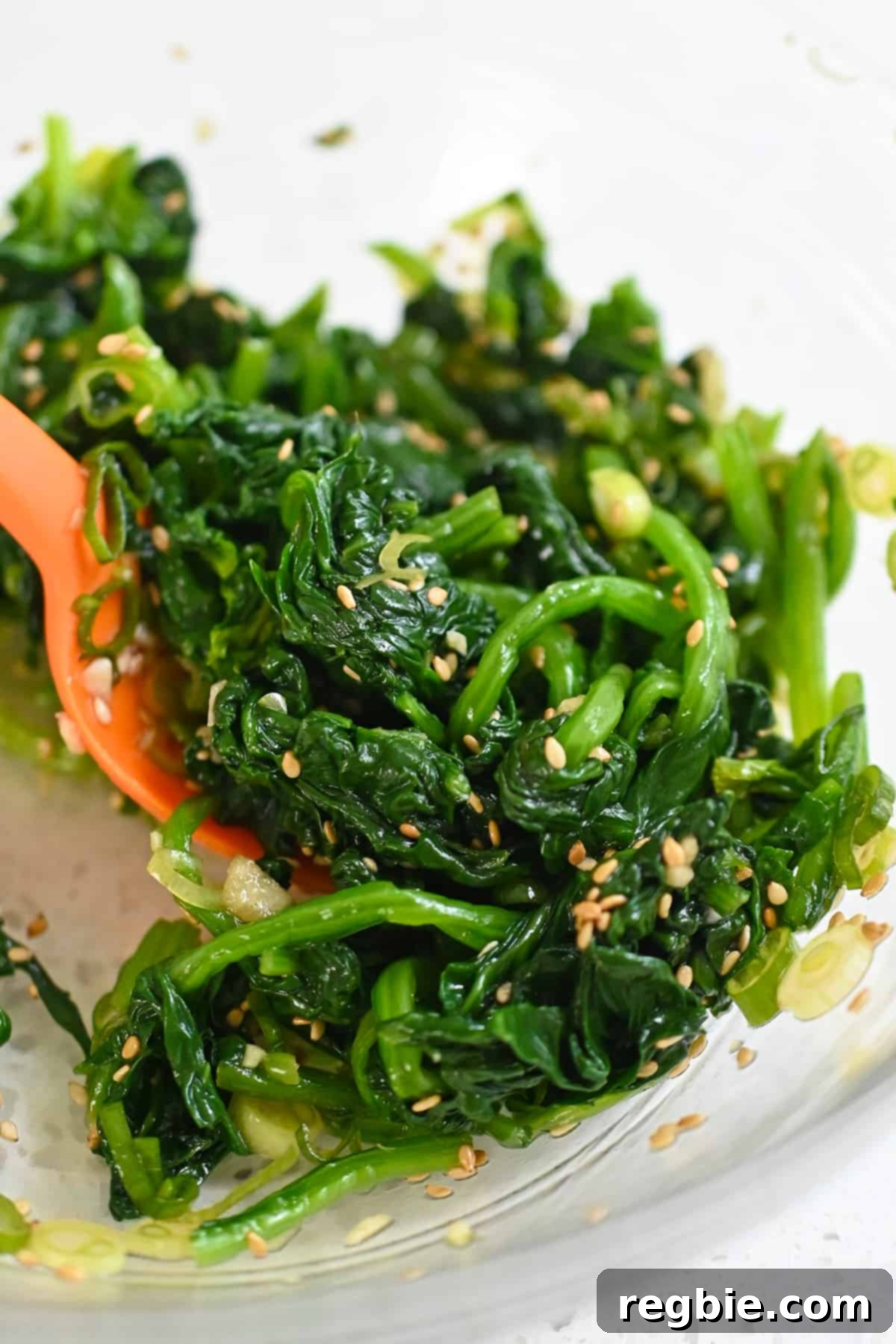
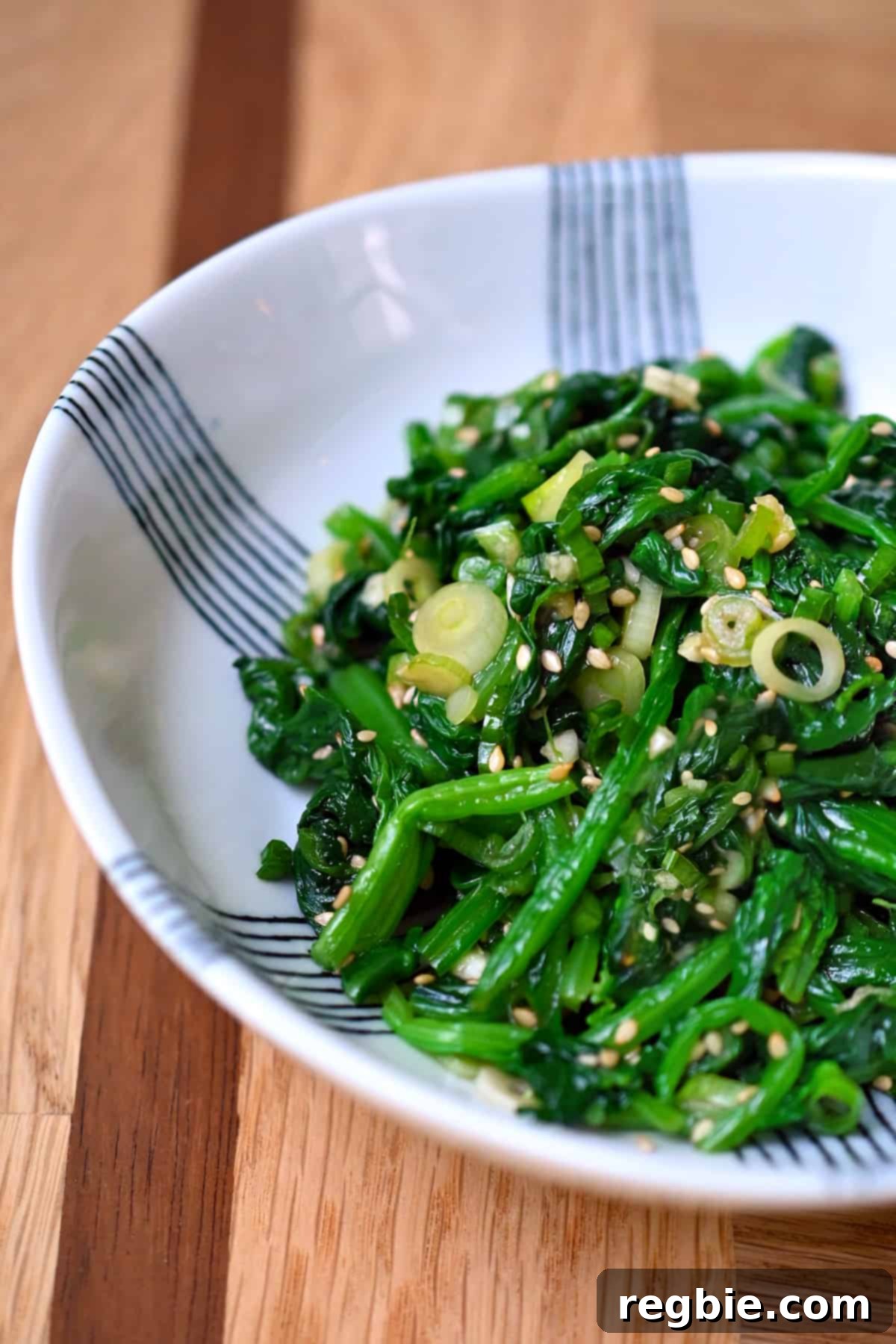
Once chilled, transfer the refreshing Sigeumchi Namul to an attractive serving bowl. It’s ready to be enjoyed as a light and flavorful side dish!
Serving Suggestions & Pairing Ideas
Sigeumchi Namul is incredibly versatile and can enhance a wide variety of meals. As a classic banchan, it’s typically served alongside steamed rice and other Korean dishes. Here are some ideas to inspire you:
- Traditional Korean Meal: Serve it as one of several small side dishes with a bowl of warm rice, Korean BBQ Short Ribs (Kalbi/Galbi), or a hearty stew.
- Bibimbap Component: It’s an essential ingredient in Bibimbap, adding freshness and texture to the colorful mixed rice bowl.
- Healthy Lunch Addition: Pack it in your lunchbox as a refreshing and nutritious side for salads, grilled chicken, or fish.
- Grain Bowls & Wraps: Incorporate it into your favorite grain bowls for an extra burst of flavor, or use it as a crisp filling in lettuce wraps or nori rolls.
- Light Appetizer: Serve a small bowl as a healthy and flavorful appetizer before a larger meal.
- Eggs & Breakfast: Believe it or not, a small portion alongside scrambled eggs or an omelet can add a wonderful freshness to your breakfast!
Make-Ahead & Storage Tips
One of the best features of Sigeumchi Namul is how perfectly it lends itself to meal preparation. It’s a fantastic dish to make in advance, as the flavors only deepen and meld beautifully over time in the refrigerator.
- Storage: To keep your Sigeumchi Namul fresh, transfer any leftovers into an airtight container. This will protect it from absorbing odors from other foods and maintain its vibrant flavor.
- Shelf Life: Stored correctly in the refrigerator, this spinach side dish will remain delicious and safe to eat for approximately 4 days. It tastes absolutely wonderful served cold, making it a convenient grab-and-go option.
- Meal Prep Perfection: Its excellent shelf life and delightful cold temperature serving make Sigeumchi Namul an ideal candidate for weekly meal prep. Whip up a batch on Sunday, and you’ll have a healthy, flavorful side dish ready for quick additions to your meals throughout the work week.
Frequently Asked Questions (FAQ)
Here are some common questions about making Sigeumchi Namul:
- Can I use baby spinach instead of regular spinach?
While baby spinach is convenient, its delicate leaves tend to get very soft, almost mushy, when blanched or microwaved for this dish. For the best texture, we highly recommend using regular spinach, which holds its structure better. - What if I don’t have coconut aminos? Can I use soy sauce?
This recipe is specifically designed to be Paleo, Whole30, and soy-free, which is why we use coconut aminos. If your diet allows, you could substitute low-sodium soy sauce. However, be aware that soy sauce is saltier, so you’ll need to reduce the added salt and adjust to taste. It will also alter the dietary compatibility. - How can I make this dish spicier?
To add more heat, simply increase the amount of gochugaru (Korean red pepper flakes) or standard red pepper flakes to your preference. You can also add a tiny dash of sriracha or other chili sauce, but this might introduce non-Whole30 ingredients. - Is it okay to skip the ice bath?
The ice bath is recommended for preserving the spinach’s bright green color and crisp texture. If you’re really pressed for time, rinsing with cold water can work, but the visual appeal and slight crunch might not be as pronounced. - Can I add other vegetables?
While Sigeumchi Namul is traditionally just spinach, you could experiment with thinly sliced carrots or bell peppers for added crunch and color, but this would deviate from the classic recipe.
Looking for More Paleo Korean Recipes?
If you’re enjoying the healthy and flavorful world of Paleo Korean cuisine, you’ll love these other recipes from our collection:
- Refreshing Korean Cucumber Salad
- Savory Korean Egg Roll with Seaweed
- Authentic BBQ Korean Short Ribs (Kalbi, Galbi)
- Effortless Slow Cooker Korean Short Ribs
- Quick Instant Pot Korean Short Ribs
Looking for even more healthy and delicious recipe ideas? Head on over to my Recipe Index for a comprehensive list. You’ll also discover exclusive recipes and culinary inspiration in my acclaimed cookbooks: Nom Nom Paleo: Food for Humans (Andrews McMeel Publishing 2013), Ready or Not! (Andrews McMeel Publishing 2017), and my latest release, Nom Nom Paleo: Let’s Go! (Andrews McMeel Publishing 2022).
Korean Spinach Side Dish (Sigeumchi Namul) Recipe
5
10
15
2
Michelle Tam
Print Recipe
This paleo and Whole30 version of sigeumchi namul, a simple Korean spinach side dish, is light, refreshing, and packed with flavor and nutrients. Plus, it’s perfect for meal prep because it only takes a few minutes to make and tastes great straight out of the fridge!
Ingredients
- 1 bunch spinach, (about 10 ounces) washed, drained, and ends trimmed
- 1 green onion, thinly sliced
- 1 small garlic clove, minced
- 2 teaspoons coconut aminos
- 1 teaspoon toasted sesame oil
- ⅛ teaspoon Diamond Crystal kosher salt
- 1 teaspoon toasted sesame seeds
- ¼ teaspoon gochugaru or red pepper flakes (optional)
Instructions
-
If you’re cooking the spinach on the stovetop, bring a large covered pot of water to a boil over high heat. Add the spinach and cook, uncovered, for 30 seconds to 1 minute, or until the leaves are bright green and just cooked.
Alternatively, you can microwave the spinach in an Anyday Large Deep Dish microwave glass bowl for about 2 minutes or until just cooked through.
-
Transfer the cooked spinach to a sieve or colander in a bowl of ice water to stop the cooking process. (When pressed for time, you can skip the ice water and just rinse the cooked spinach with cold water before squeezing out the excess liquid.)
-
Take the spinach out of the ice water and squeeze out all the excess water very well.
-
Cut the pile of cooked spinach into thirds to make it easier to eat.
-
In a large mixing bowl, combine the spinach with the green onion, garlic, coconut aminos, sesame oil, and salt. Mix well and taste a bite. Adjust for seasoning, if needed. Then, toss in the sesame seeds (and optional red pepper flakes) and stir everything together.
-
Cover and chill the spinach dish in the refrigerator for at least 5 to 10 minutes to let the flavors meld. Serve and enjoy!
Video
A video tutorial for this recipe is available to guide you through each step for perfect results.
Notes
Store any leftover Sigeumchi Namul in an airtight container in the fridge for up to 4 days. It tastes excellent cold!
Nutrition
Calories: 65kcal | Carbohydrates: 7g | Protein: 4g | Fat: 3g | Fiber: 3g | Sugar: 1g
Nutrition information is automatically calculated and should only be used as an approximation.
Like this recipe? Leave a comment below and share your thoughts!