
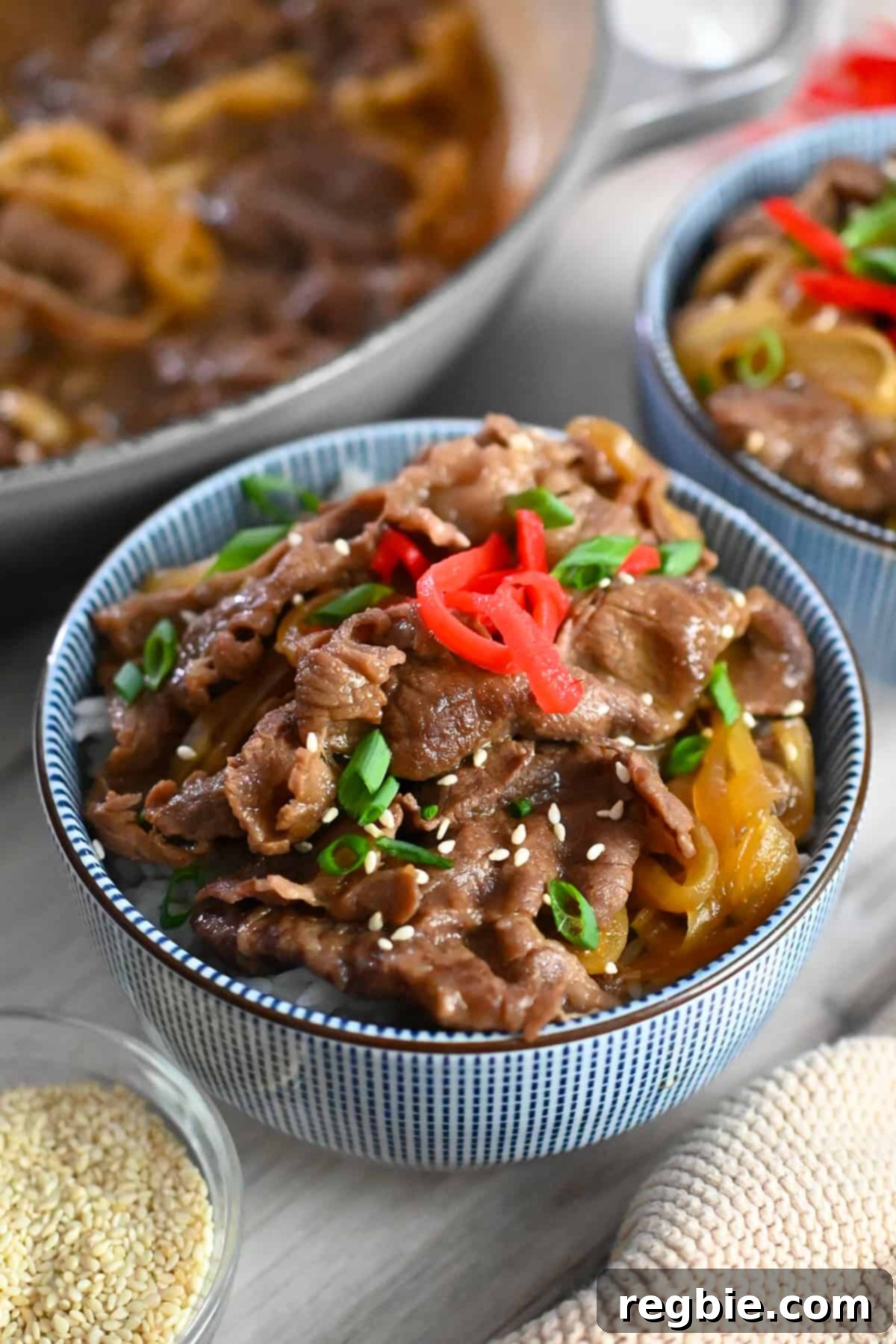
Embark on a culinary journey to Japan with a nourishing twist on the beloved classic, Gyudon. This recipe features succulent, thinly sliced beef and sweet onions, delicately simmered in a rich, savory-sweet sauce that’s completely soy-free. Served over a bed of fluffy steamed cauliflower rice, this healthy Japanese Beef Bowl offers all the comforting flavors of the original without the gluten or excess carbs. It’s an ideal solution for a quick, delicious, and diet-friendly weeknight dinner that will delight your taste buds.
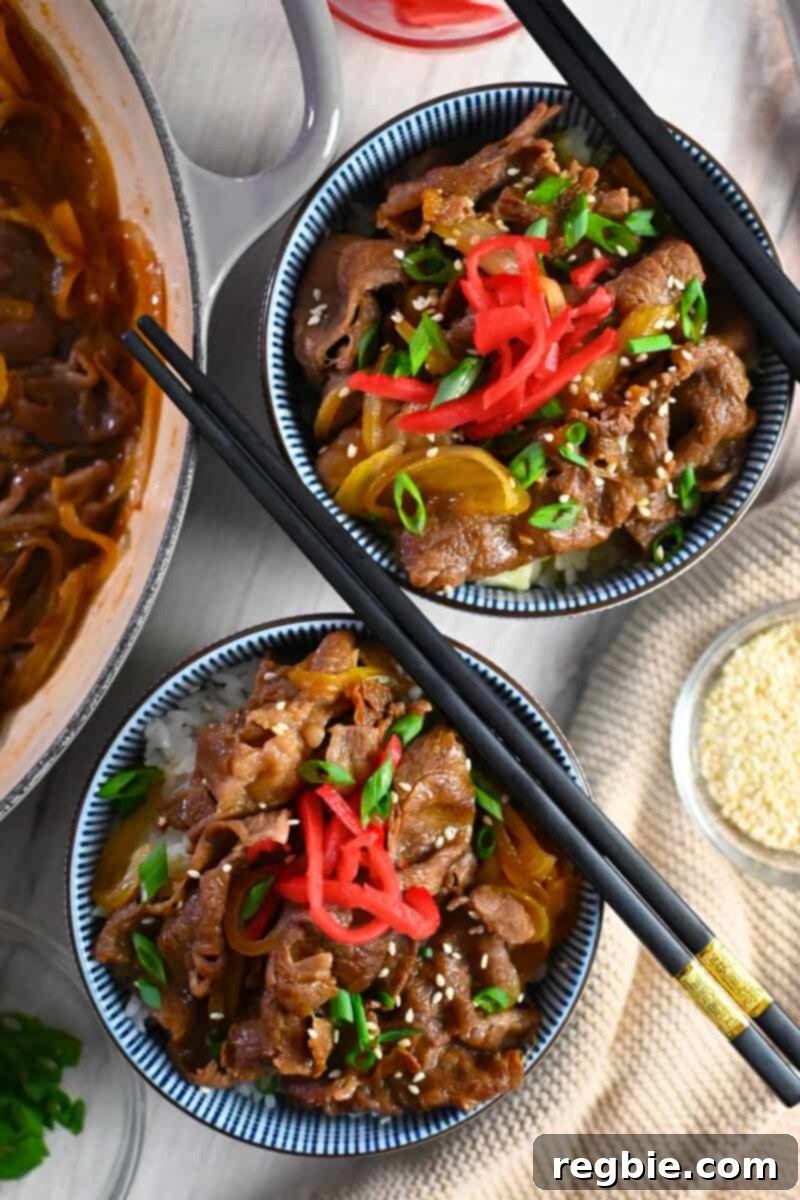
Table of Contents
- What is Gyudon? The Essence of a Japanese Comfort Food
- The Healthy Transformation: Gluten-Free, Whole30, and Low-Carb Gyudon
- Mastering Soy-Free Gyudon: Essential Tips for Perfect Flavor
- Elevate Your Gyudon: Can You Add an Egg?
- Key Ingredients for Your Healthy Japanese Beef Bowl
- Step-by-Step: How to Make This Delicious Gyudon
- Meal Prep and Storage Tips for Leftovers
- Printer-Friendly Recipe Card: Healthy Gyudon (Japanese Beef Bowl)
What is Gyudon? The Essence of a Japanese Comfort Food
Gyudon, affectionately known as the Japanese beef and rice bowl, stands as a quintessential comfort food in Japan. This universally cherished dish features delicate, thinly sliced beef and tender onions, lovingly simmered in an irresistibly umami-rich sauce. Traditionally, this sauce is crafted from a harmonious blend of soy sauce, mirin, sake, dashi (Japanese soup stock), and a touch of sugar. Many outside of Japan, particularly in America, first encountered the delightful simplicity of Gyudon through popular fast-food chains like Yoshinoya. In fact, the very term gyudon — where gyu translates to beef and don refers to a type of porcelain bowl — was reportedly coined by Yoshinoya’s founder, Eikichi Matsuda, solidifying its place in culinary history.
One of Gyudon’s most appealing attributes is its remarkable speed of preparation. Both the thinly sliced beef and the onions cook swiftly, allowing this beloved meal to be ready and served in mere minutes. This makes it an enduring favorite for busy home cooks seeking a flavorful yet efficient weeknight dinner. The conventional way to enjoy Gyudon is by serving the savory beef and onion mixture over a generous portion of steaming white rice, which perfectly absorbs the exquisite, flavorful sauce. The combination creates a hearty, satisfying, and deeply comforting experience that has charmed palates across generations.
The Healthy Transformation: Gluten-Free, Whole30, and Low-Carb Gyudon
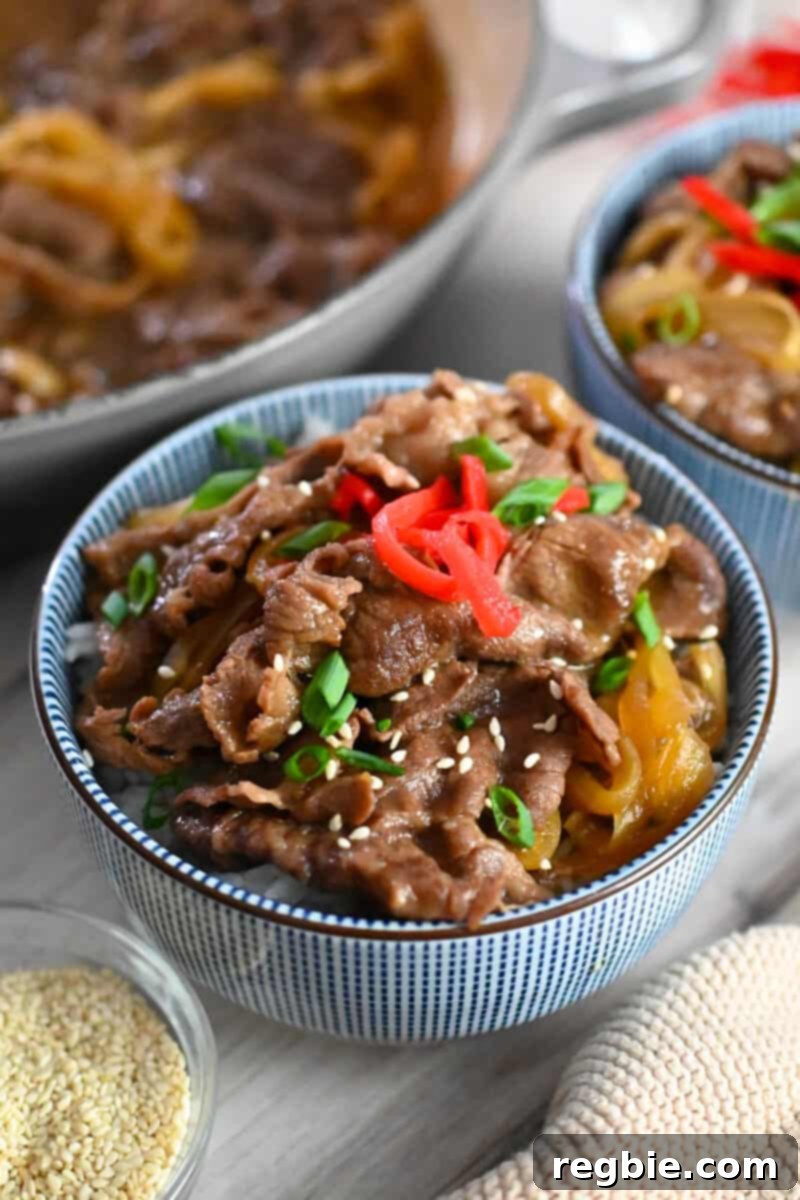
As a passionate admirer of Japanese cuisine, I often find myself navigating the challenges of dining out due to gluten in traditional soy sauce. This limitation, however, has only fueled my creativity in crafting paleo-friendly versions of my most cherished Japanese dishes. From Tsukune (Japanese Chicken Meatballs) to Chawanmushi (Savory Egg Custard), Beef and Enoki Mushroom Rolls, and even California Hand Rolls, I’ve successfully adapted many traditional recipes to fit a healthier lifestyle.
The journey to creating these healthier alternatives was significantly streamlined by the development of my versatile All-Purpose Stir-Fry Sauce a few years ago. I quickly recognized that the foundational flavor profile of this exceptional sauce could effortlessly replicate the essence of numerous Asian sauces in a wide array of recipes. Unsurprisingly, this magical sauce proved to be the perfect foundation for this homemade Gyudon. The result is a Japanese beef bowl that is not only gluten-free, Whole30-compatible, and soy-free but also deliciously low-carb. I often emphasize the versatility of my All-Purpose Stir-Fry Sauce because it truly lives up to its name, working wonders in countless applications. Ensuring you always have a jar of it in your refrigerator will open up a world of quick and healthy meal possibilities.
To fully align this Gyudon recipe with paleo and low-carb dietary guidelines, a crucial substitution is made for the base. Instead of traditional white rice, this rendition embraces a generous serving of steaming cauliflower rice. This simple yet effective swap significantly reduces the carbohydrate content while still providing a satisfying texture and mild flavor that beautifully complements the rich beef and onion mixture. This thoughtful adaptation ensures that you can savor the authentic flavors of Gyudon while adhering to your dietary preferences, making it a truly guilt-free indulgence.
Mastering Soy-Free Gyudon: Essential Tips for Perfect Flavor
Achieving a truly exceptional soy-free Gyudon, one that rivals its traditional counterpart in flavor and texture, requires attention to a few key details. These tips will help you create a Japanese beef bowl that is both healthy and incredibly delicious:
- Source Quality, Pre-Sliced Beef: For ultimate convenience and authenticity, I highly recommend visiting your local Asian market to purchase pre-sliced beef. Look for cuts like ribeye or chuck that are specifically prepared for shabu shabu (hot pot) or sukiyaki. These slices are typically thin and wide. If they are excessively large, simply cut them in half crosswise before cooking. Alternatively, you can thinly slice the beef yourself by freezing it until it’s semi-solid, then cutting against the grain for even, thin strips. Don’t hesitate to ask your neighborhood butcher to slice the beef for you, requesting a thickness similar to what they’d prepare for cheesesteak sandwiches.
- Embrace Well-Marbled and Ultra-Thin Beef: The secret to tender, flavorful Gyudon lies in the beef selection. Opt for well-marbled cuts, as the fat content contributes significantly to the richness and depth of flavor. Crucially, the beef must be sliced very thinly. Since Gyudon cooks rapidly, thin slices ensure that the beef becomes wonderfully tender without becoming chewy or tough.
- Prioritize the All-Purpose Stir-Fry Sauce: The foundation of this paleo Gyudon’s authentic taste lies in my All-Purpose Stir-Fry Sauce. This carefully crafted sauce replaces all the traditional soy-based ingredients, making it gluten-free and Whole30 compatible without compromising on flavor. It’s imperative not to alter the sauce ingredients; trust the recipe, as this sauce is the reason this healthy Gyudon tastes remarkably like the real thing! Furthermore, to maintain paleo compatibility, ensure your dashi broth is made traditionally with just kombu and bonito flakes, or use a certified compliant chicken broth. Be aware that most instant dashi products are not Whole30-compatible and should be avoided.
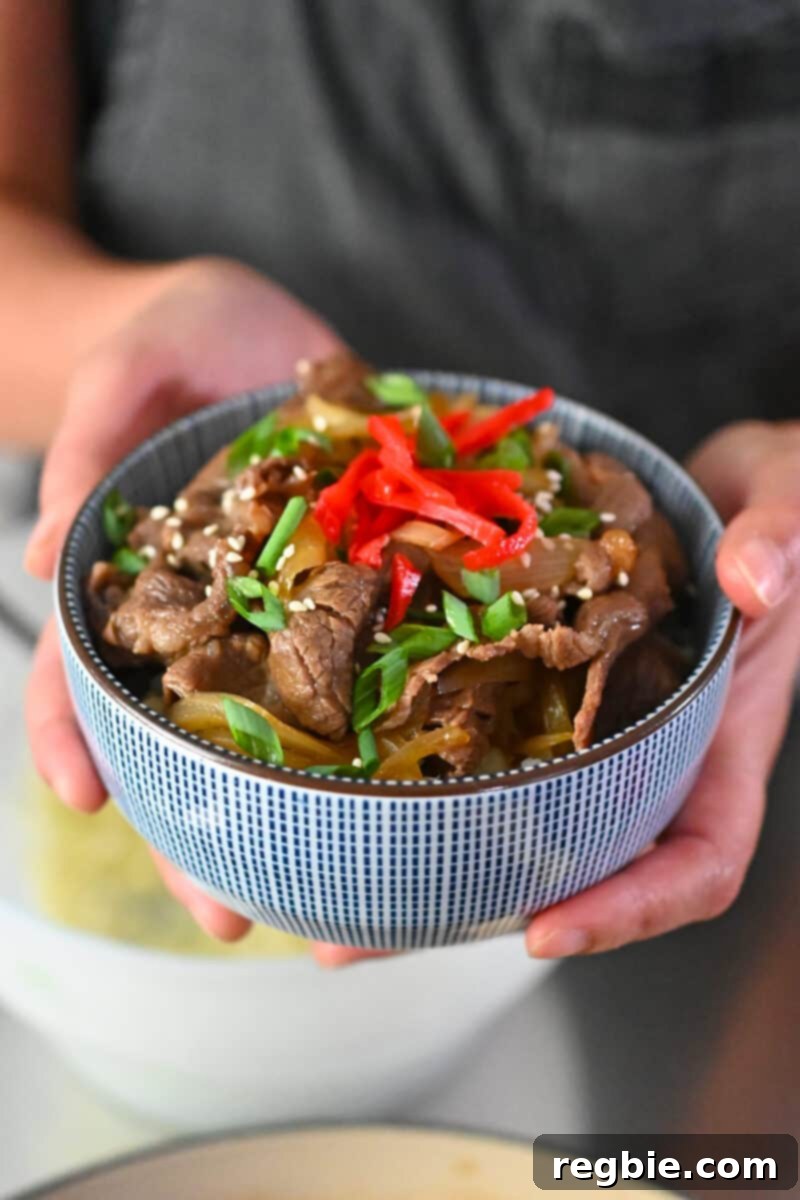
- Unleash a Symphony of Garnishes: While the beef, onions, and sauce are undoubtedly delicious over cauliflower rice, the right garnishes can elevate this humble dish to an extraordinary culinary experience. Don’t be shy with your toppings! A sprinkle of fresh scallions adds a vibrant freshness, toasted sesame seeds contribute a delightful nuttiness and crunch, spicy shichimi togarashi brings a welcome kick of heat, and sour and spicy red pickled ginger (beni shoga or kizami beni shoga) provides a tangy counterpoint that cuts through the richness of the beef. Most store-bought pickled red ginger is not Whole30-compatible, but you can find a compatible homemade recipe here to ensure your dish remains fully compliant.
Elevate Your Gyudon: Can You Add an Egg?
Absolutely! While this particular recipe doesn’t explicitly include an egg, adding one is a fantastic way to enhance your Gyudon experience. Many traditional Japanese beef bowls are served with a fresh egg, and there are several delicious ways to incorporate it. You can serve your healthy Gyudon with a perfectly poached egg gently nestled on top, allowing its runny yolk to meld with the savory sauce and beef. Alternatively, some enthusiasts prefer to stir in a raw egg yolk at the very end of cooking, just before serving. The heat from the dish will gently warm the yolk, creating a creamy, rich texture that adds another layer of indulgence. Whichever method you choose, adding an egg is an easy and delicious strategy to boost the protein content and richness of this already satisfying meal.
Key Ingredients for Your Healthy Japanese Beef Bowl
Crafting this delicious and healthy Gyudon requires a few simple yet essential ingredients. Here’s a closer look at what you’ll need to prepare this Japanese favorite:
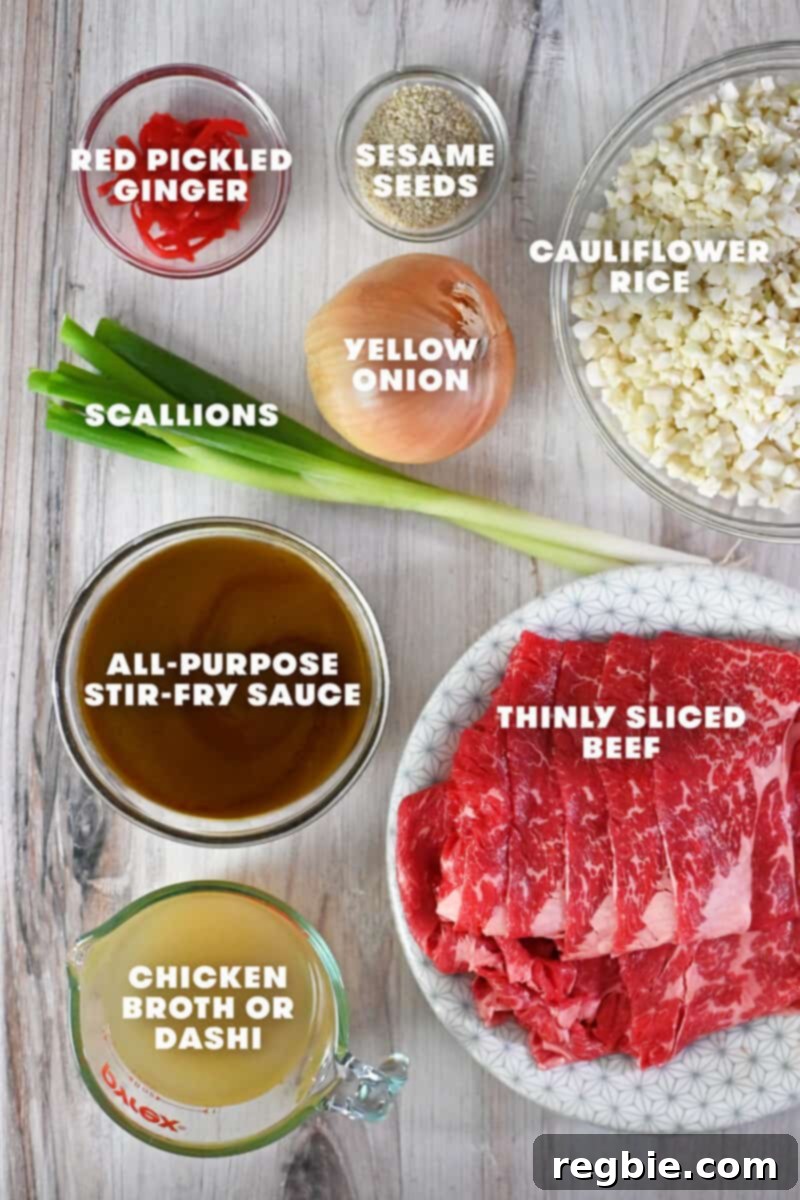
- Thinly Sliced Beef: The star of the dish. Opt for well-marbled cuts like chuck or ribeye. Purchasing pre-sliced beef from an Asian market designed for shabu-shabu or sukiyaki will drastically speed up your prep time, making this meal even faster.
- Onion: A large yellow onion is perfect for this recipe. When thinly sliced, it caramelizes beautifully in the savory sauce, adding a natural sweetness and a subtle, pleasing texture to the dish.
- All-Purpose Stir-Fry Sauce: This incredible homemade sauce is the foundation of our healthy Gyudon. It flawlessly mimics the complex flavors of traditional Japanese sauces while remaining entirely gluten-free, soy-free, and Whole30-compatible. It’s a versatile staple for many Asian-inspired dishes; explore this post for more ideas on how to use it!
- Dashi or Chicken Broth: Dashi is the traditional Japanese soup stock, offering a profound depth of umami. To keep this dish Whole30 compliant, it’s best to make your own dashi from kombu and bonito flakes. If dashi ingredients aren’t readily available, a high-quality, Whole30-compatible chicken broth makes an excellent and convenient substitute without sacrificing much flavor.
- Cauliflower Rice: This is our clever, low-carb alternative to white rice. While its texture is distinct, steamed cauliflower rice serves as a fantastic, nutrient-dense base that soaks up the rich Gyudon sauce beautifully, making it perfect for paleo and keto diets.
- Scallions / Green Onions: Thinly sliced scallions are essential for a pop of fresh, vibrant green color and a delicate oniony flavor. They brighten up the otherwise rich, brown tones of the dish.
- Toasted Sesame Seeds (Optional Garnish): A sprinkle of toasted sesame seeds adds a delightful nutty aroma and a pleasant crunch, enhancing the overall texture and taste profile.
- Shichimi Togarashi (Optional Garnish): For those who appreciate a bit of heat and a complex spice blend, shichimi togarashi (Japanese seven-spice powder) is a fantastic addition. It provides a unique spicy kick and an interesting textural element.
- Pickled Red Ginger (Beni Shoga or Kizami Beni Shoga) (Optional Garnish): The sharp, tangy, and subtly spicy flavor of pickled red ginger is crucial for balancing the richness of the beef. It provides a refreshing contrast that cleanses the palate with each bite. Remember, most commercial brands are not Whole30-compatible, so consider making a homemade version for full compliance.
Step-by-Step: How to Make This Delicious Gyudon
Preparing this healthy Gyudon is surprisingly simple and quick, making it perfect for any night of the week. Follow these easy steps to create your own Japanese beef bowl masterpiece:
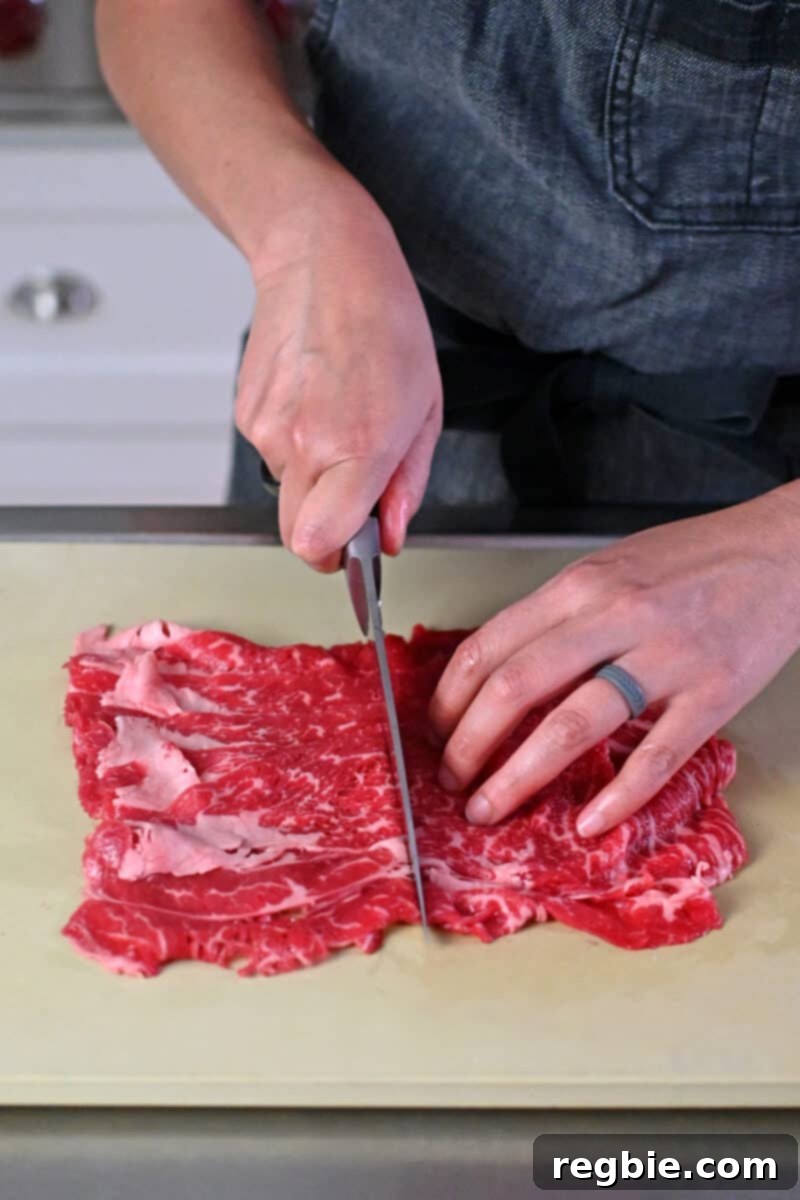
Step 1: Prepare the Beef
Begin by taking your thinly sliced beef. If the slices are particularly large, use a sharp knife to cut them in half crosswise. This ensures that the beef pieces are manageable and cook evenly.
Step 2: Slice the Onion
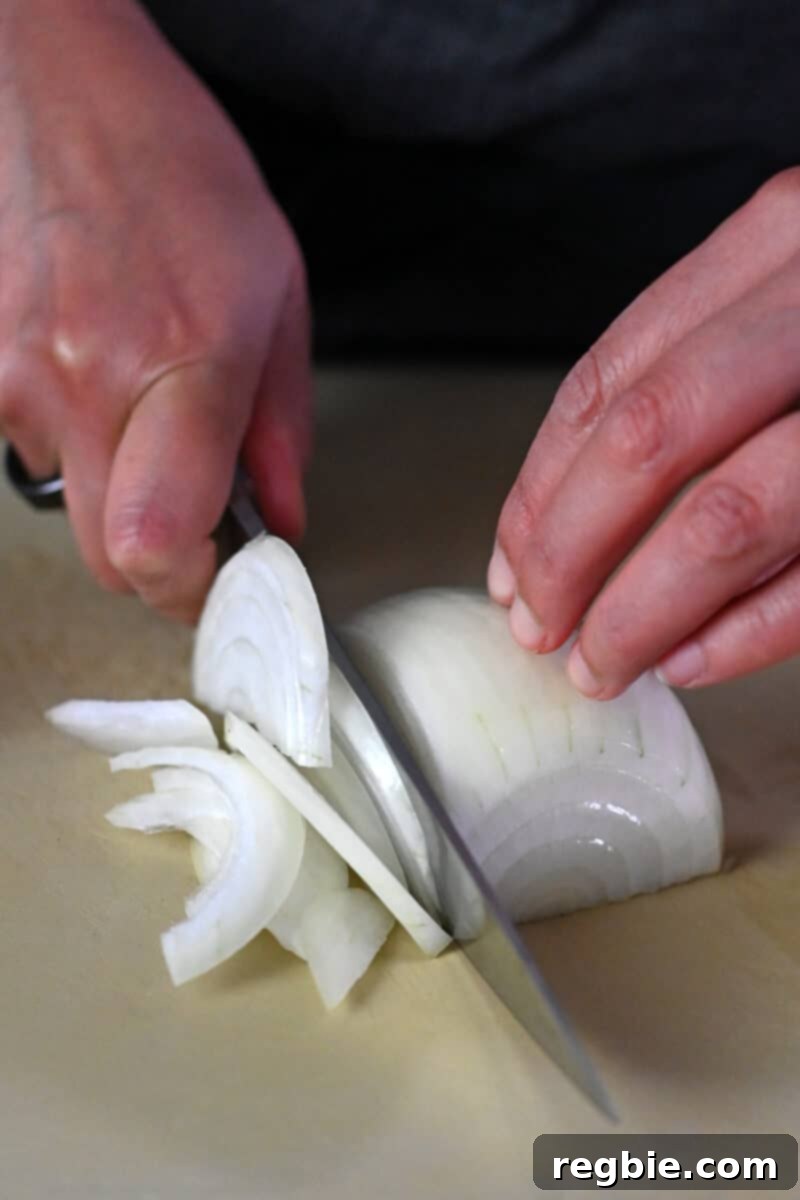
Trim off both the stem and root ends of the onion. Peel away the dry outer layers. Then, cut the onion in half through its poles. Place the cut side down and thinly slice each half. Aim for uniform, crescent-shaped slices that will tenderize beautifully in the sauce.
Step 3: Combine Sauce and Onions
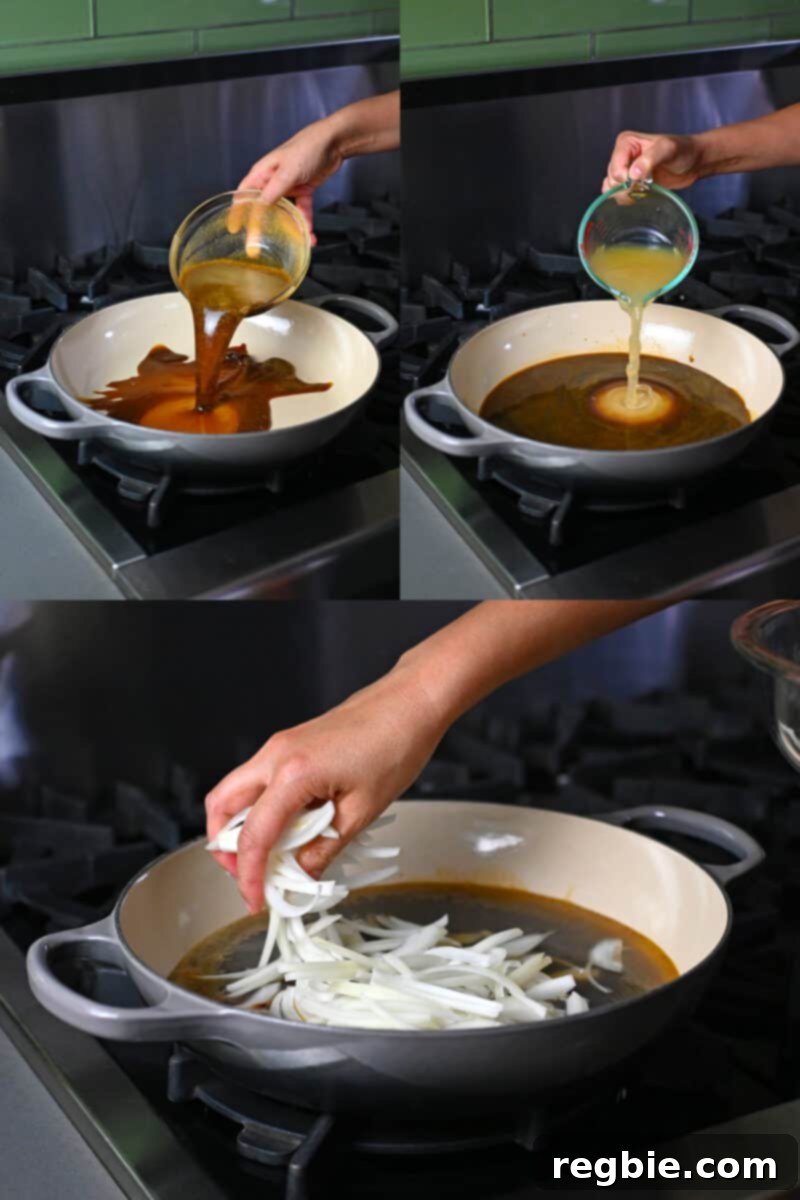
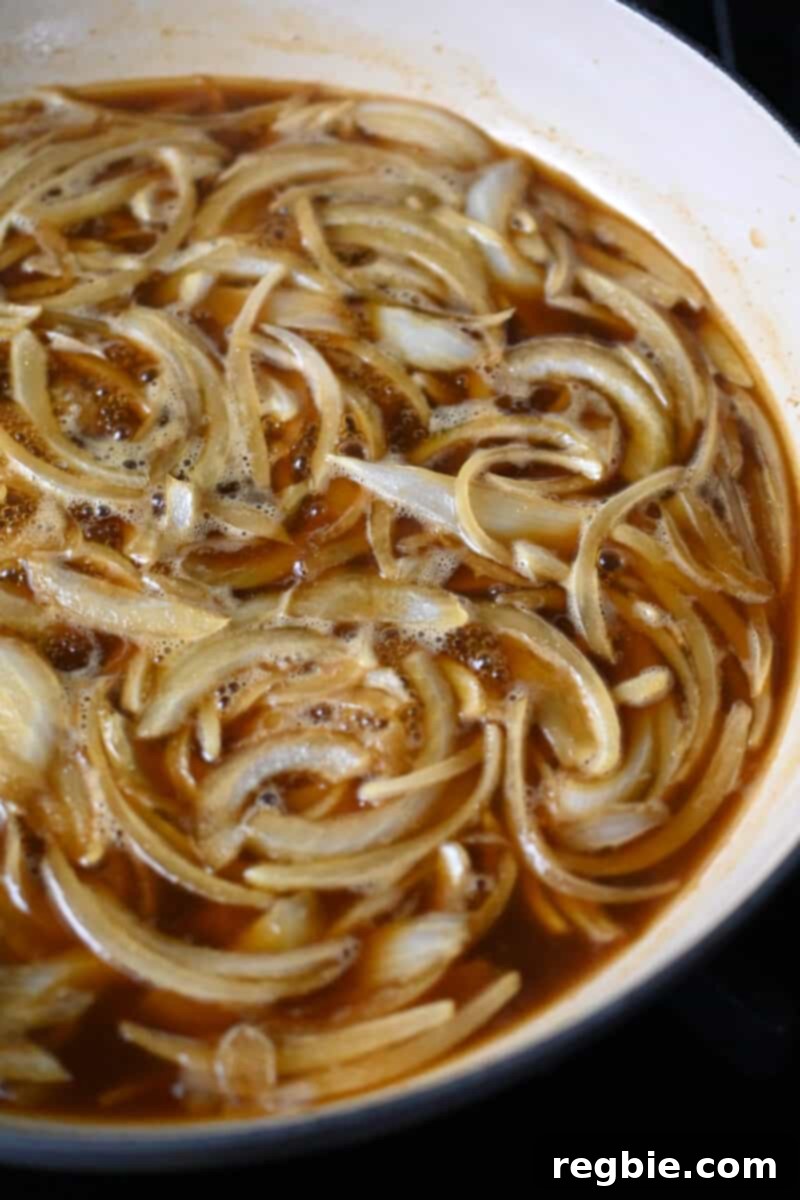
In a large skillet, combine your All-Purpose Stir-Fry Sauce with the dashi or chicken broth. Gently separate the thinly sliced onion pieces into half-rings and arrange them in a single layer across the bottom of the skillet. This ensures they cook evenly and absorb the rich flavors of the sauce.
Step 4: Simmer the Onions
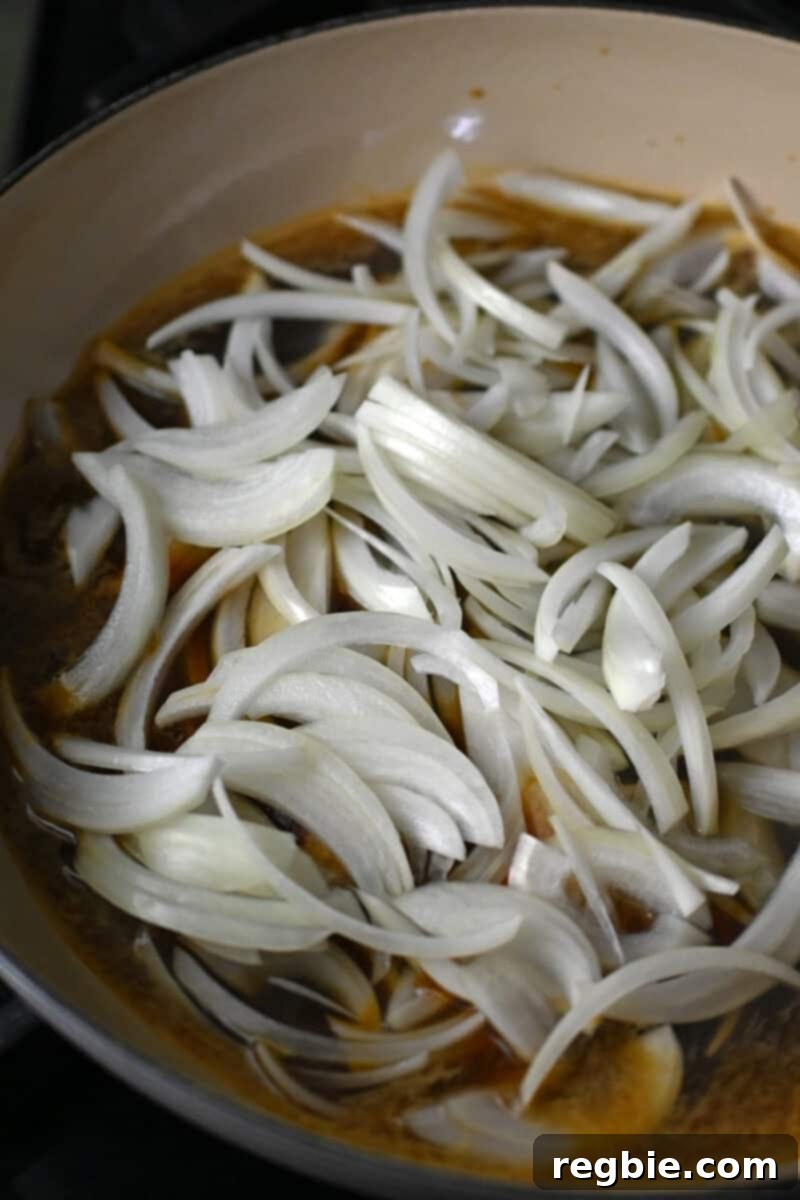
Place the skillet over medium-high heat and bring the sauce to a gentle simmer. Once simmering, reduce the heat to medium to maintain a steady, gentle simmer. Cook the onions for approximately 5 minutes, or until they have become mostly tender and translucent. This step allows the onions to soften and infuse the sauce with their natural sweetness.
Step 5: Cook the Beef
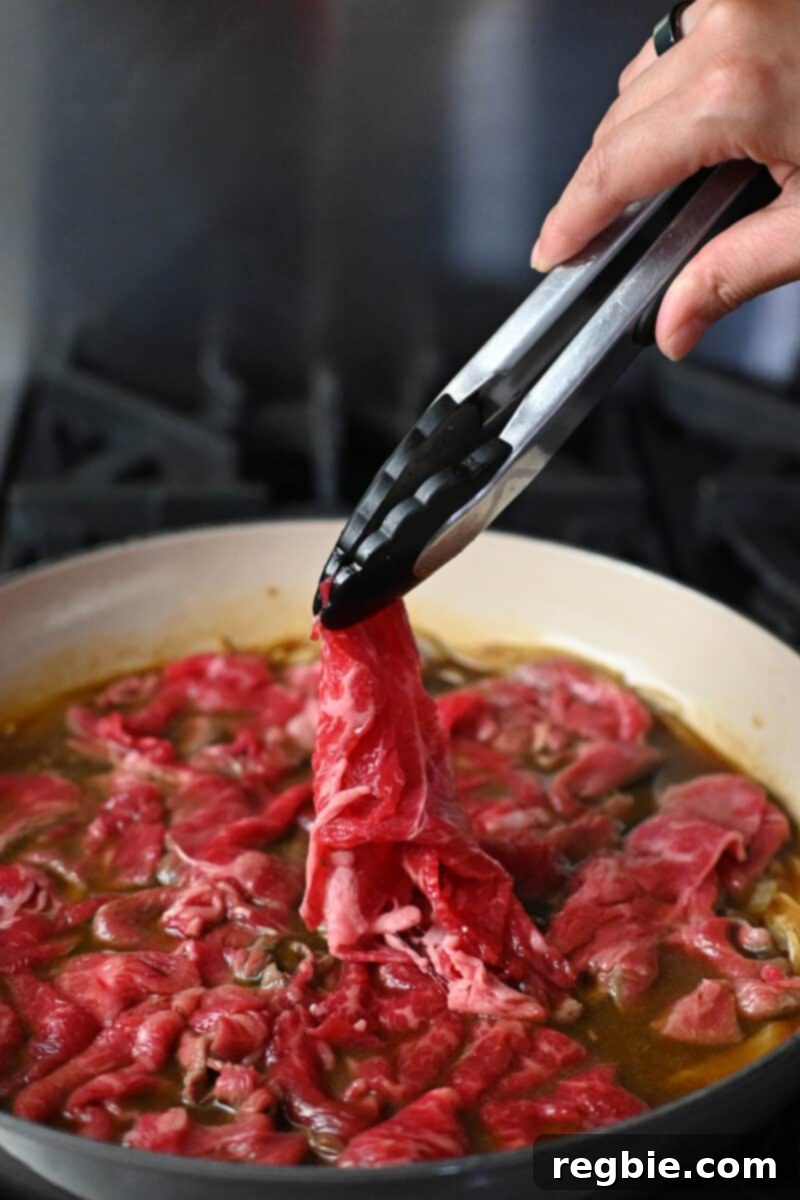
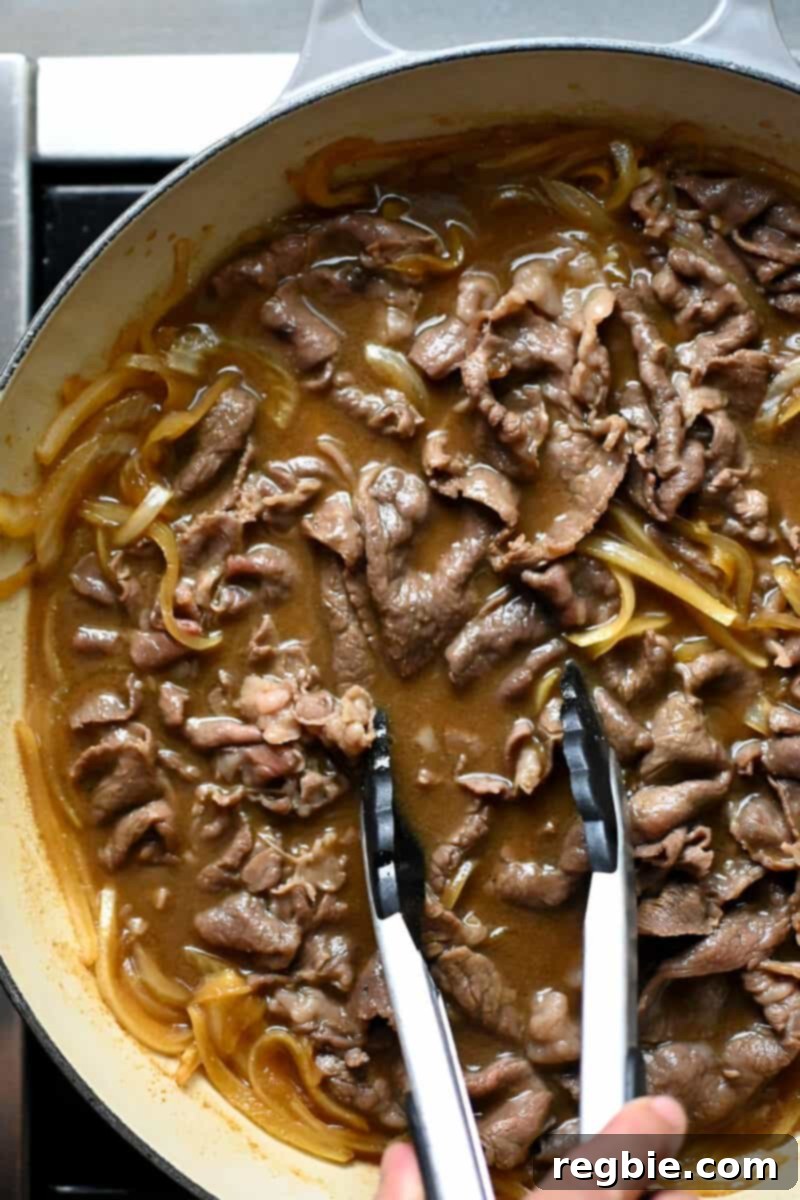
Once the onions are tender, add the prepared beef slices to the skillet. Continue to simmer the sauce, gently stirring occasionally to ensure the beef cooks evenly. The thinly sliced beef will cook very quickly. You’ll know it’s done when it’s no longer pink, typically within 3 to 5 minutes. As soon as the beef is cooked through, immediately remove the skillet from the heat to prevent overcooking and keep the beef tender.
Step 6: Assemble and Garnish
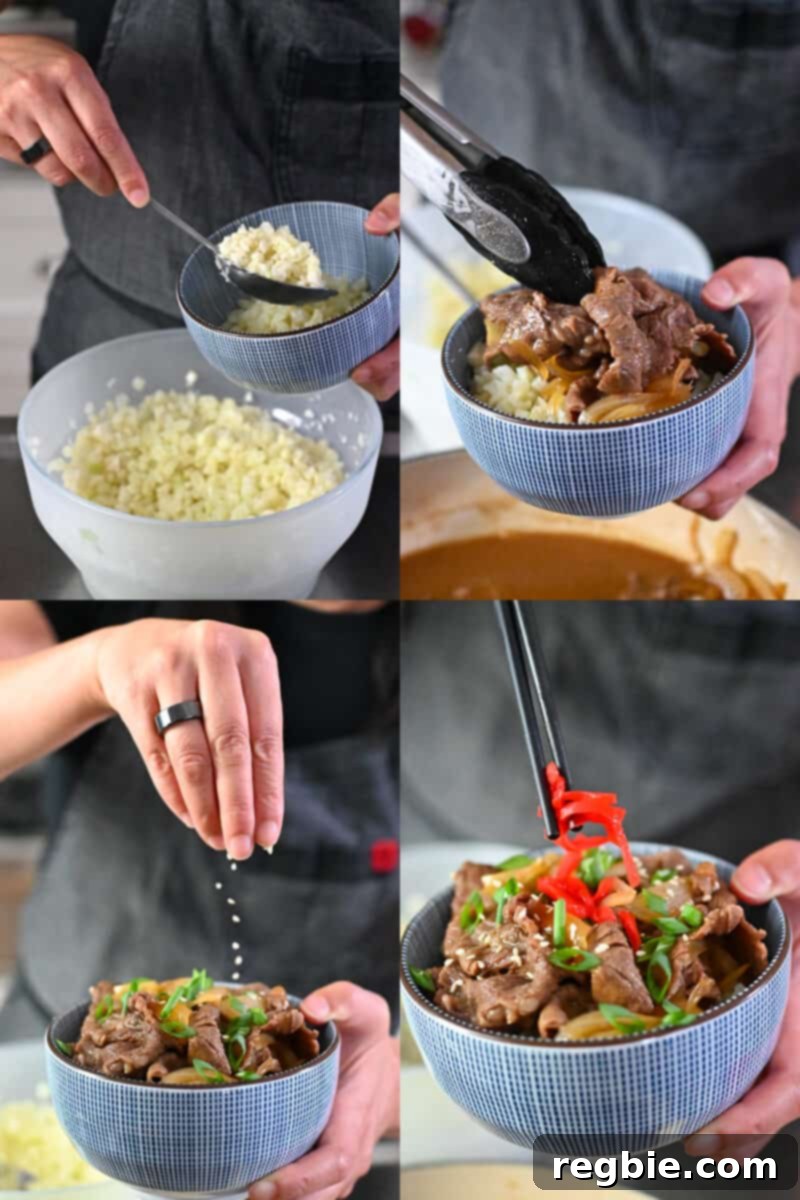
To serve, scoop a generous portion of cooked cauliflower rice (or white rice, if preferred) into individual bowls. Ladle a hearty amount of the tender beef, sweet onions, and flavorful sauce over the rice. Finally, personalize your bowl with desired garnishes: a sprinkle of fresh scallions, toasted sesame seeds, a dash of shichimi togarashi for heat, and some tangy pickled red ginger for a burst of refreshing flavor. Enjoy immediately while warm!
Enjoy your delicious and healthy homemade Gyudon!
Meal Prep and Storage Tips for Leftovers
This healthy Gyudon is not only fantastic for a freshly prepared meal but also makes for excellent meal prep. Preparing a larger batch means you can enjoy delicious, ready-to-eat meals throughout the week. Leftover Gyudon can be stored in the refrigerator in a tightly sealed airtight container for up to 4 days. For longer storage, you can freeze the cooked beef and onion mixture (separate from the cauliflower rice, if possible, as cauliflower rice can become watery when thawed). When stored in the freezer in a freezer-safe container, it will keep well for up to 2 months. To reheat, simply thaw overnight in the fridge (if frozen) and gently warm on the stovetop or in the microwave until heated through. Prepare fresh cauliflower rice for serving, or reheat previously cooked cauliflower rice separately.
Looking for more innovative and healthy recipe ideas? Head on over to my Recipe Index for a treasure trove of culinary inspiration. You’ll also find exclusive recipes and detailed cooking guides in my acclaimed cookbooks: Nom Nom Paleo: Food for Humans (Andrews McMeel Publishing 2013), Ready or Not! (Andrews McMeel Publishing 2017), and the latest, Nom Nom Paleo: Let’s Go! (Andrews McMeel Publishing 2022).
Printer-Friendly Recipe Card: Healthy Gyudon (Japanese Beef Bowl)
Gyudon (Japanese Beef Bowl)
Rating: 4.93 from 13 votes
Prep Time: 5 mins
Cook Time: 15 mins
Servings: 4
Author: Michelle Tam
Discover a healthy twist on the classic Japanese Gyudon: tender slices of beef and onions simmered in a savory-sweet sauce, served over steamed cauliflower rice. It’s a quick and healthy weeknight meal!
Ingredients
- 1 pound thinly sliced beef (chuck or ribeye sold for sukiyaki or shabu shabu are best)
- 1 large yellow onion
- 1 cup All-Purpose Stir-Fry Sauce
- 1 cup dashi or chicken broth
- 1 pound cooked cauliflower rice
- 2 scallions, thinly sliced
- Toasted sesame seeds (optional garnish)
- Shichimi togarashi (optional garnish)
- Pickled red ginger (optional garnish)
Instructions
- Grab the thinly sliced beef and use a sharp knife to cut it in half if the slices are overly large.
- Trim the stem and root ends off of the onion and peel off the dry outer layers. Cut the onion in half, through the poles of the onion, and then thinly slice the onion.
- Pour the All-Purpose Stir-Fry Sauce and dashi or chicken broth in a large skillet. Separate the onion slices into half-rings and arrange them in a single layer in the skillet.
- Turn the heat to medium high and bring the sauce to a simmer. Then, lower it to medium heat to maintain a simmer and cook the onions until mostly tender, about 5 minutes.
- Add the beef and continue simmering the sauce, stirring occasionally. When the beef is no longer pink, about 3 to 5 minutes later, take the skillet off the heat.
- Scoop some cauliflower rice (or white rice) into individual bowls and ladle some beef, onions, and sauce on top. Sprinkle on some scallions, sesame seeds, togarashi, and pickled red ginger if desired!
Video
A video tutorial demonstrating the steps for making this healthy Gyudon would typically be embedded here, guiding you through the cooking process visually.
Notes
- Head to your neighborhood Asian market and buy pre-sliced beef! I buy pre-sliced ribeye or chuck for shabu shabu (hot pot) or sukiyaki. The thin slices are pretty large, so I cut them in half crosswise for this recipe. You can also thinly slice the beef yourself—freeze it until it is semi-solid and cut thin slices against the grain. You can also ask your neighborhood butcher to slice the beef like they would for cheesesteak sandwiches.
- Make sure the beef is well-marbled and super thin. The meat cooks quickly so you need a fatty cut for flavor and thin slices so the beef doesn’t get too chewy.
- Don’t skimp on the sauce ingredients! The traditional sauce ingredients are already replaced with my All-Purpose Stir-Fry Sauce, so don’t change anything else up! The reason this paleo gyudon still tastes like the real thing is the sauce, people! Also, to keep things paleo, make sure you make a traditional dashi broth with just kombu and bonito flakes or use a compatible chicken broth. Instant dashi is almost always not Whole30-compatible.
- Go nuts with the garnishes! The beef, onion, and sauce taste fantastic on a bed of cauliflower rice—but sprinkling on some scallions, sesame seeds, spicy shichimi togarashi, and/or sour and spicy red pickled ginger takes this humble dish to another level!
Nutrition
Calories: 337kcal | Carbohydrates: 17g | Protein: 29g | Fat: 19g | Fiber: 5g | Sugar: 6g
Nutrition information is automatically calculated, so should only be used as an approximation.
Enjoyed this recipe? Share your thoughts in the comments below!