
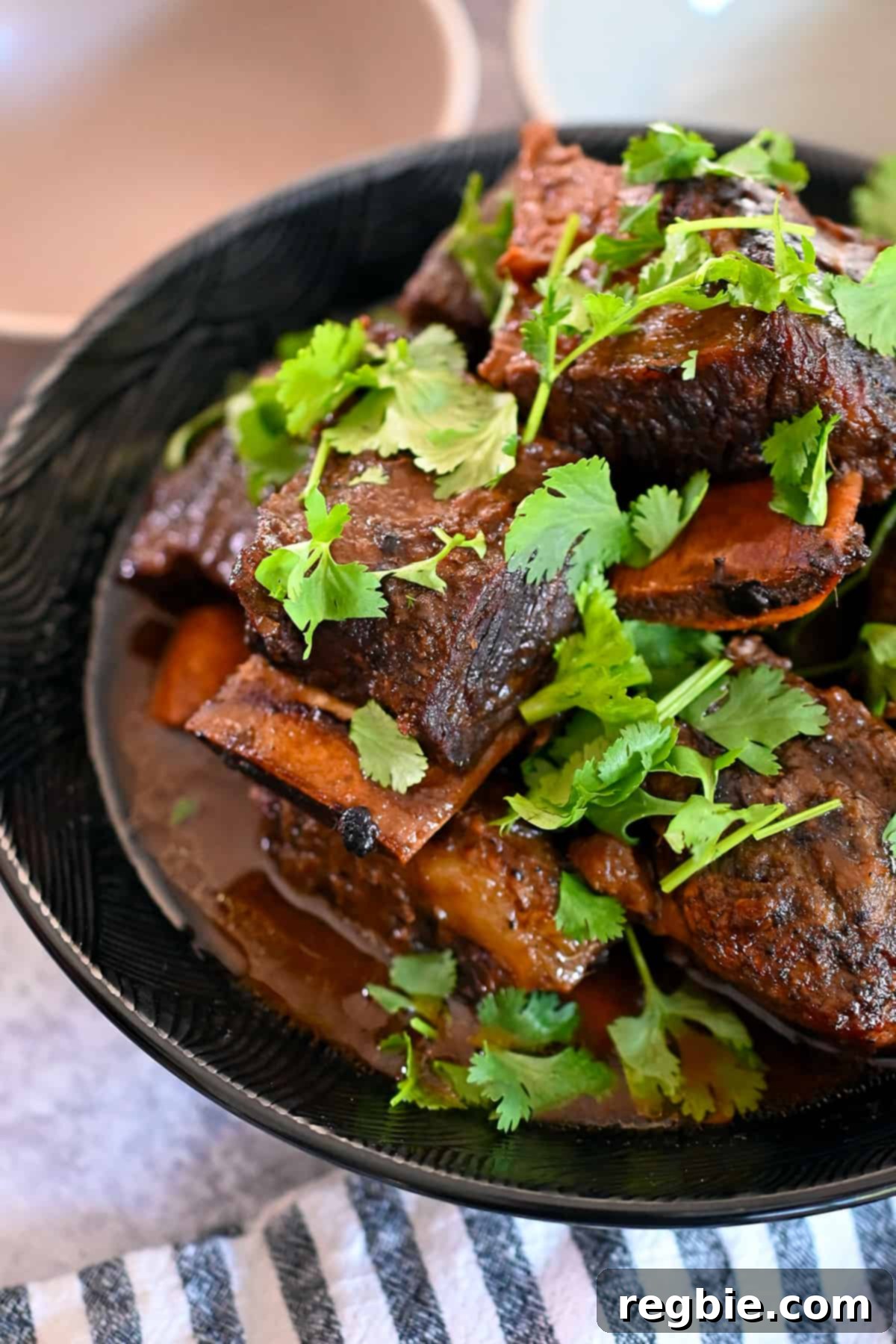
Indulge in the ultimate comfort food with this incredibly easy slow cooker braised Korean short ribs recipe. It’s a true “dump-it-in-and-forget-about-it” kind of dish that not only simplifies weeknight cooking but is also perfectly Whole30-friendly, Paleo-compliant, and absolutely bursting with delicious, authentic Korean flavors!
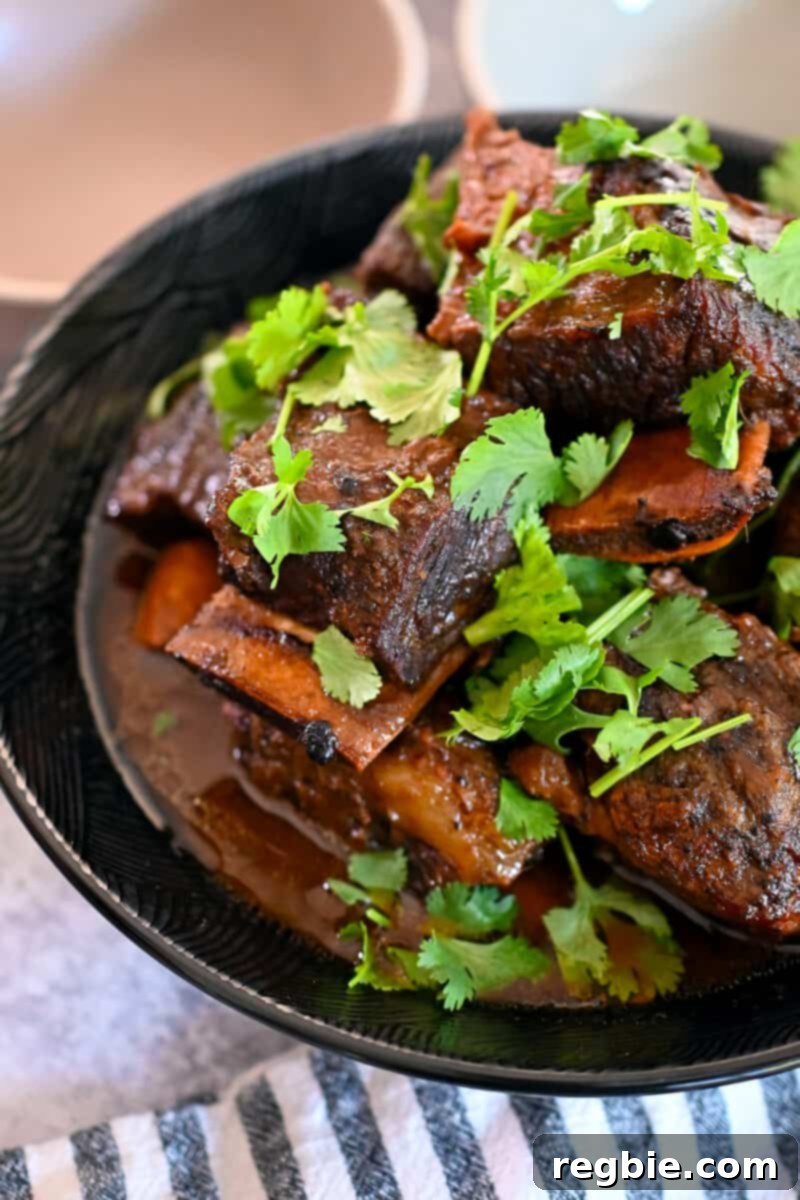
Table of Contents
- A Simple Paleo and Whole30 Galbi Jjim!
- Why You’ll Love These Slow Cooker Korean Short Ribs
- Can You Make Korean Short Ribs in an Instant Pot or in the Oven?
- How Do You Remove Excess Fat from Braised Short Ribs?
- Can You Make Korean Short Ribs Ahead of Time? (Meal Prep Friendly!)
- Essential Ingredients for These Flavorful Korean Short Ribs
- Step-by-Step: How to Make Slow Cooker Korean Short Ribs!
- What to Serve with Your Delicious Korean Short Ribs?
- How to Store Leftovers for Maximum Freshness?
- More Korean-Inspired Paleo and Whole30 Recipes to Explore
- Printer-Friendly Recipe Card: Slow Cooker Korean Short Ribs
A Simple Paleo and Whole30 Galbi Jjim!
This recipe is a labor of love, a simplified yet profoundly flavorful take on galbi jjim, one of Korea’s most cherished and elegant dishes. Traditionally reserved for special occasions, galbi jjim features succulent beef ribs braised until they are impossibly tender, practically melting in your mouth, all enveloped in a rich, savory sauce often sweetened with fruit. While you might be familiar with grilled Korean barbecue short ribs (kalbi), this braised version offers a different kind of culinary delight – deep, comforting flavors achieved through slow, gentle cooking.
Inspired by the meticulous approach of America’s Test Kitchen and their “Slow Cooker Revolution,” I’ve refined this Korean-style braised short rib dish over countless iterations. My goal was to maintain that authentic, irresistible flavor profile while making it compliant with Paleo and Whole30 dietary guidelines. This meant thoughtfully replacing traditional ingredients like soy sauce, Kirin, sake, and refined sugar with compatible, whole food substitutes such as coconut aminos and fresh fruit. The result? A sauce that’s perfectly balanced, savory, and subtly sweet, without sacrificing any of the original dish’s charm or complexity.
Why You’ll Love These Slow Cooker Korean Short Ribs
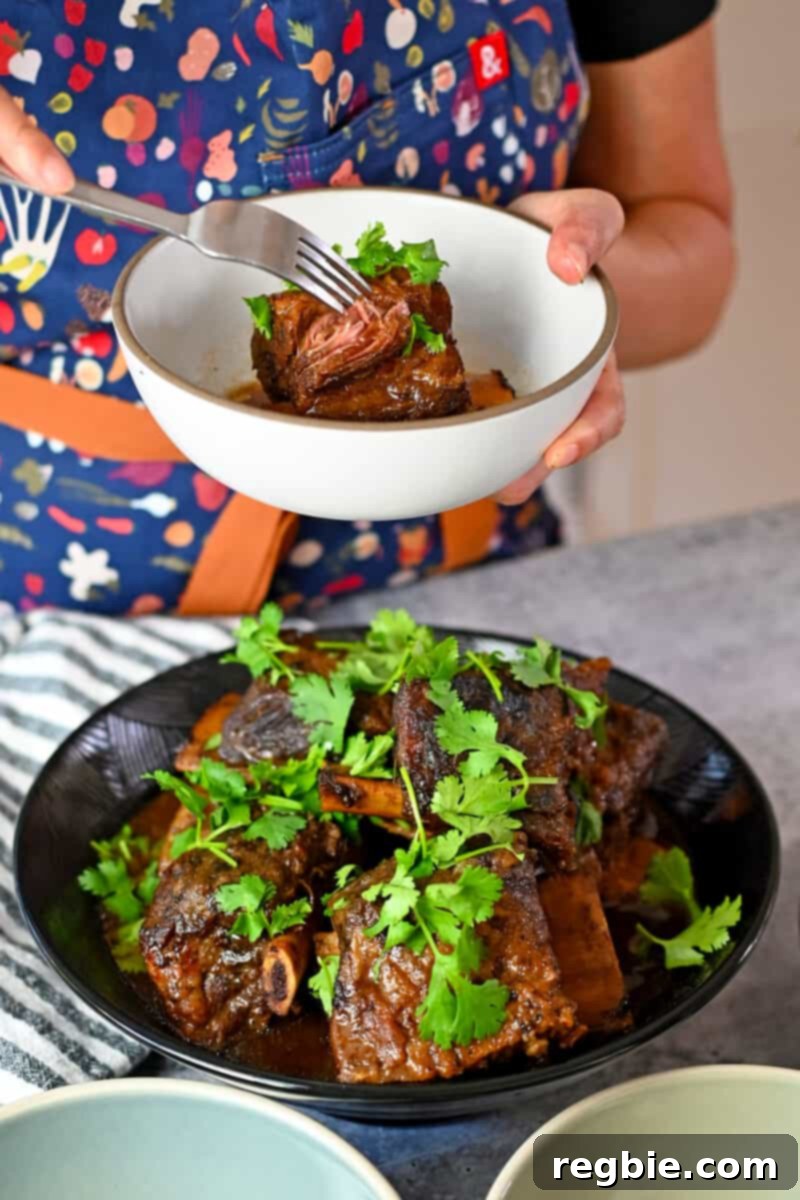
The beauty of this slow cooker recipe lies in its remarkable simplicity. Forget the tedious steps of searing meat or caramelizing aromatics before braising. This dish truly embodies the “dump-it-in-and-forget-about-it” philosophy. You simply combine the ingredients, set your slow cooker, and let time work its magic, transforming tough cuts of meat into fall-off-the-bone tenderness. This makes it an ideal option for busy weeknights or for hands-off entertaining, allowing you to focus on other tasks while dinner cooks itself.
However, for those moments when you have a little extra time and want to elevate the flavor, a quick sear under the broiler before slow cooking can make a noticeable difference. Broiling creates a beautiful crust and deeper caramelized notes on the short ribs, adding another layer of complexity to the final dish. While entirely optional, it’s a technique worth considering if you’re aiming for maximum flavor impact. Regardless of whether you sear or not, the slow cooker ensures a consistently delicious and deeply satisfying meal every single time.
Can You Make Korean Short Ribs in an Instant Pot or in the Oven?
Absolutely! While this recipe is perfectly designed for the slow cooker, its versatility extends to other cooking methods, allowing you to choose what best suits your schedule and equipment. Before the rise of the Instant Pot, the slow cooker was my go-to for this dish. However, if speed is a priority, I’ve since developed an Instant Pot Korean Short Ribs recipe that achieves equally spectacular results in a fraction of the time. Pressure cooking fundamentally changes the game, tenderizing the meat incredibly quickly while still infusing it with all the delicious flavors of the braising liquid.
For those who prefer traditional methods, cooking these short ribs in a Dutch oven in the oven is also an excellent option. This method provides a similar low-and-slow braising experience to a slow cooker, resulting in incredibly tender meat and a deeply concentrated sauce. If you opt for a Dutch oven, I recommend adding an additional cup of broth to the sauce to account for evaporation in the oven. Bake, covered, in a preheated 300°F (150°C) oven for approximately 3 to 4 hours, or until the short ribs are fork-tender and practically falling off the bone. This method creates a wonderfully aromatic kitchen and a truly comforting meal.
How Do You Remove Excess Fat from Braised Short Ribs?
Beef short ribs are a famously rich cut, and after hours of slow cooking, they will naturally release a significant amount of fat into the braising liquid. While this fat contributes to the incredible flavor, some people prefer to remove the excess for dietary reasons or simply for a lighter mouthfeel. Fortunately, there are a couple of effective ways to achieve this, depending on when you plan to serve your dish.
If you intend to enjoy your Korean short ribs immediately after cooking, you can carefully remove the fat from the warm sauce. One method is to use a large spoon or ladle to skim off the layer of fat that rises to the surface. For a more efficient and thorough fat removal, consider using a fat separator. Simply pour the braising liquid into the separator, allow the fat to rise, and then pour off the defatted liquid from the bottom, leaving the excess fat behind. This tool is a game-changer for rich stews and braises.
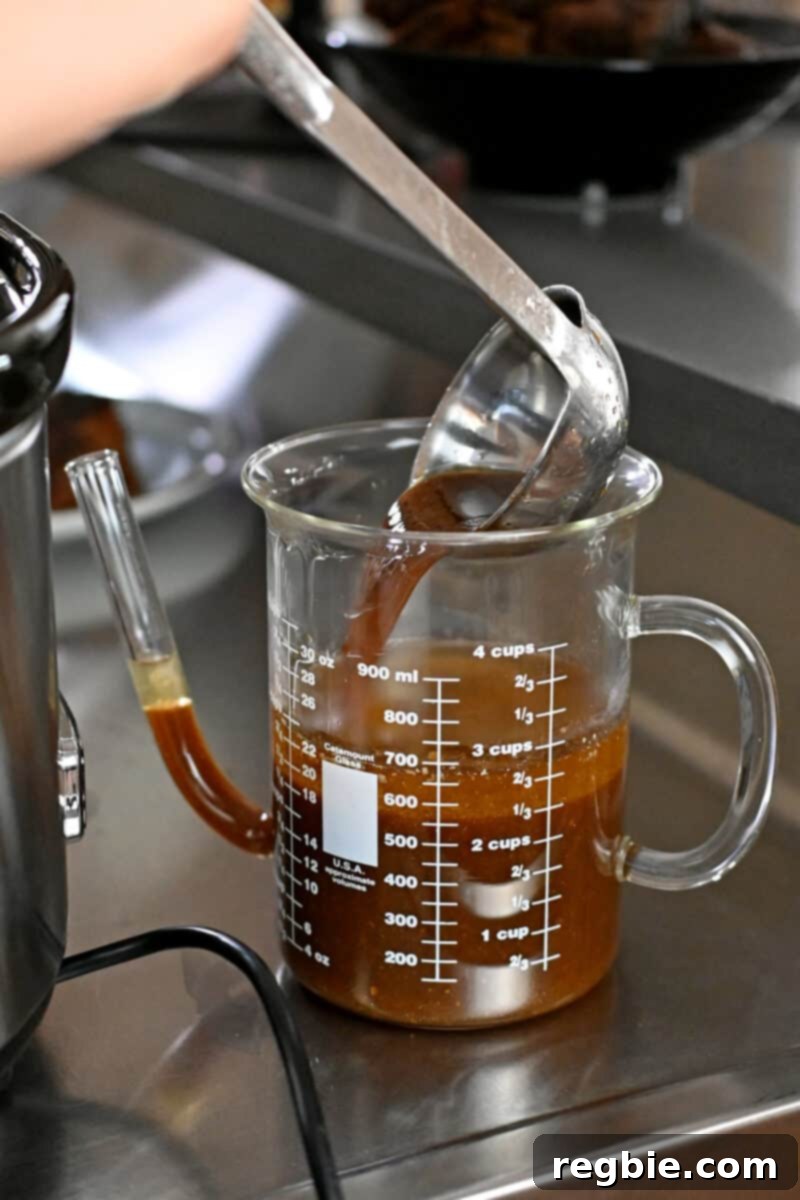
Alternatively, if you’re preparing this dish ahead of time, which is highly recommended (more on that below!), fat removal becomes even easier. Simply cook the dish as instructed, then allow it to cool completely before transferring it to your refrigerator. As the dish chills, the fat will solidify into a firm cap on the surface of the sauce. This hardened fat cap can then be easily lifted and discarded before you reheat and serve the delectable short ribs. This overnight chilling method not only simplifies fat removal but also allows the flavors to meld and deepen, making the dish even more delicious.
Can You Make Korean Short Ribs Ahead of Time? (Meal Prep Friendly!)
Yes, and in fact, these Slow Cooker Korean Short Ribs are an absolute dream for meal prepping! Not only do they reheat beautifully, often tasting even better the next day as the flavors have had more time to marry and deepen, but preparing them in advance also makes the fat removal process remarkably simple. As mentioned, once the short ribs have chilled thoroughly in the refrigerator overnight, any excess fat in the sauce will solidify, forming a convenient cap that can be easily lifted and discarded.
This makes Sunday meal prep a breeze: cook a big batch, let it cool, remove the fat, and portion it out for delicious, ready-to-eat meals throughout the week. You can safely store the cooked beef short ribs, submerged in their savory sauce, in an airtight container in the fridge for up to 4 days. For longer storage, this dish freezes exceptionally well. Transfer portions to freezer-safe containers or bags, ensuring they are tightly sealed, and freeze for up to 3 months. When ready to enjoy, simply thaw in the refrigerator overnight and gently reheat on the stovetop or in the microwave. This flexibility makes these braised Korean short ribs a perfect addition to any busy cook’s repertoire.
Essential Ingredients for These Flavorful Korean Short Ribs
Crafting these succulent short ribs starts with selecting high-quality ingredients. Each component plays a crucial role in building the complex, umami-rich, and subtly sweet flavor profile characteristic of authentic Korean braised dishes, while adhering to Whole30 and Paleo principles.
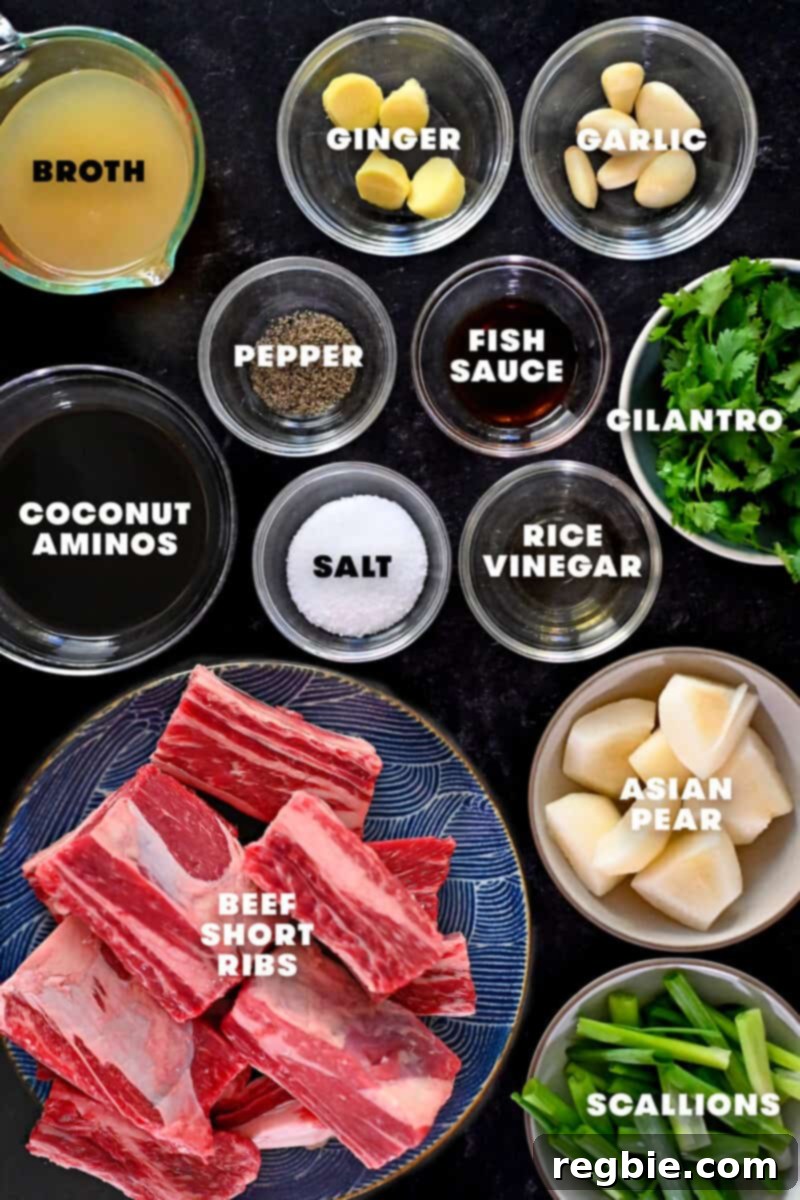
- English-style beef short ribs: These are the star of the show! Look for nice, meaty pieces with good marbling. The bone-in aspect is key, as it adds incredible depth of flavor and richness to the braising liquid, resulting in the most succulent, fall-off-the-bone tender results.
- Asian pear: This fruit is not just for sweetness; it also contains enzymes that naturally tenderize the meat. It provides a subtle, natural sweetness to the sauce, replacing refined sugars often found in traditional recipes. If an Asian pear isn’t available, a regular ripe pear or a Fuji apple can be excellent substitutes.
- Garlic: A foundational aromatic in Korean cuisine, fresh garlic provides pungent, savory notes that are essential for the sauce’s depth.
- Scallions or Green Onions: Adding a mild oniony bite and fresh aroma, scallions contribute to the layered flavors of the sauce.
- Ginger: Fresh ginger offers a warm, spicy, and fragrant counterpoint to the richness of the beef, creating a wonderfully balanced flavor profile.
- Coconut aminos: This is a fantastic Whole30 and Paleo-friendly substitute for soy sauce. It offers a subtly sweet and savory umami flavor without the soy or gluten.
- Red Boat fish sauce: A small amount of high-quality fish sauce adds a profound depth of savory, umami flavor, without making the dish taste “fishy.” It’s a secret weapon in many Asian cuisines for rounding out flavors. Ensure it’s a Whole30-compliant brand without added sugars.
- Rice vinegar: This bright, tangy vinegar cuts through the richness of the beef and balances the sweetness of the fruit and coconut aminos. Feel free to substitute with coconut vinegar, apple cider vinegar, or white balsamic vinegar for similar acidic notes.
- Chicken broth or beef broth: This liquid forms the base of the braising sauce, ensuring the ribs remain moist and tender while infusing them with flavor. Use a good quality bone broth for added nutritional benefits and deeper flavor.
- Kosher salt: Essential for seasoning the meat and balancing the flavors of the sauce. Adjust to your preference.
- Freshly ground pepper: Adds a subtle warmth and aroma, complementing the savory notes.
- Fresh cilantro (optional garnish): A sprinkle of fresh, chopped cilantro adds a burst of vibrant color and a fresh, herbaceous finish, elevating the presentation and flavor.
Step-by-Step: How to Make Slow Cooker Korean Short Ribs!
Follow these simple steps to create a truly unforgettable Korean short rib experience with minimal effort.
-
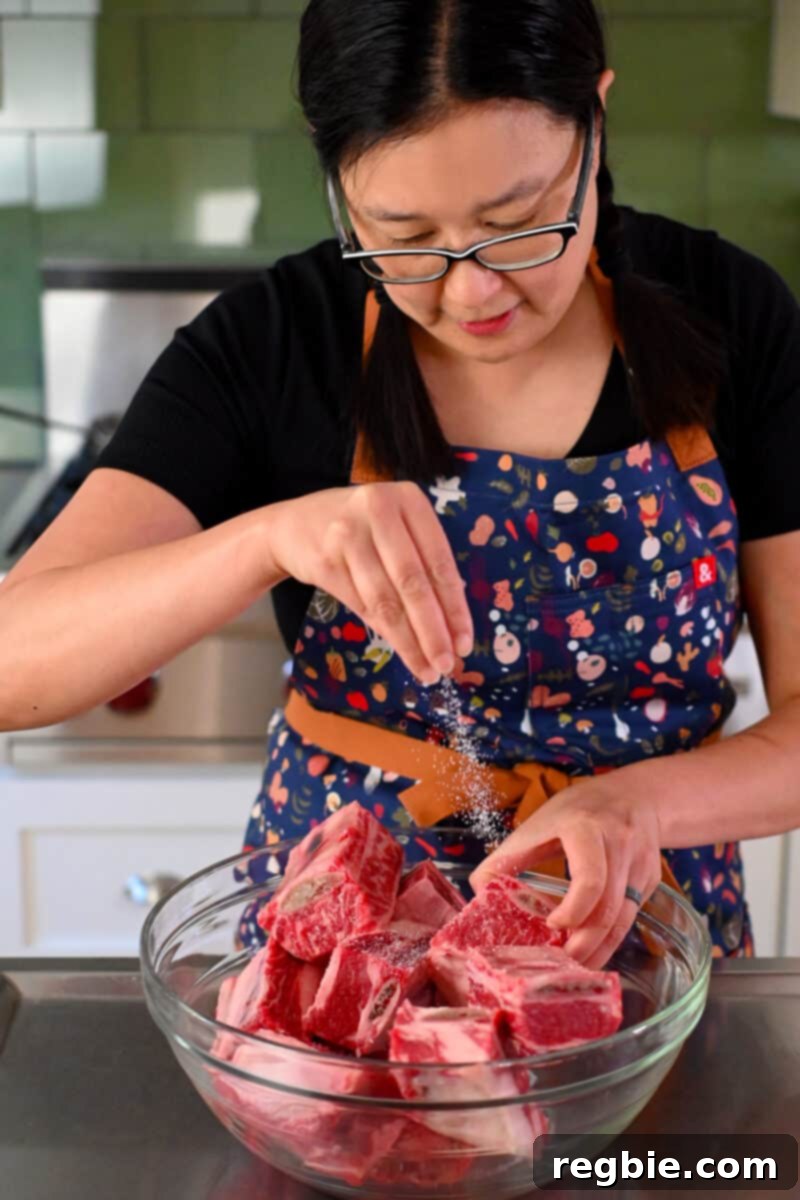
Prepare for Broiling (Optional but Recommended): Preheat your broiler, positioning the oven rack about 6 inches from the heating element. While the broiler heats, liberally sprinkle all sides of your English-style beef short ribs with kosher salt and freshly ground pepper. Chef’s Tip: When seasoning raw meat, it’s a good practice to use a dedicated small ramekin for your salt and pepper to prevent cross-contamination.

Seasoning the beef short ribs generously for maximum flavor. -
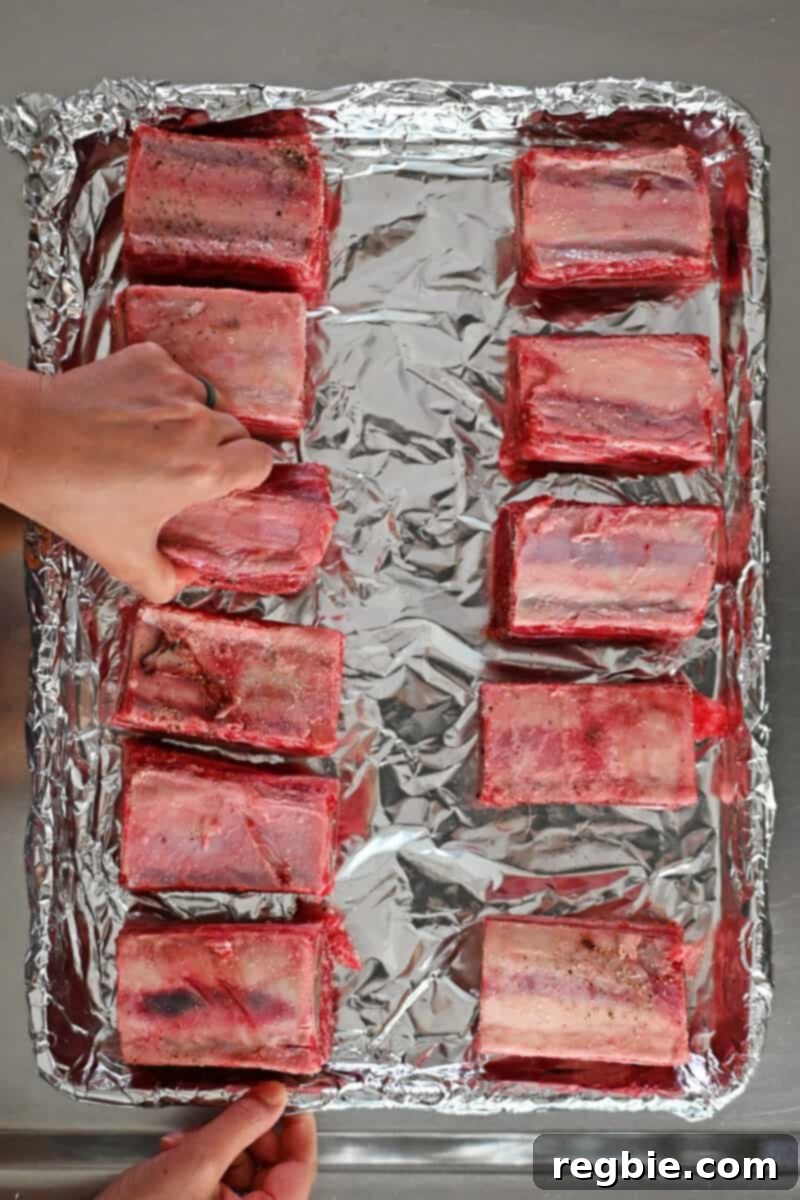
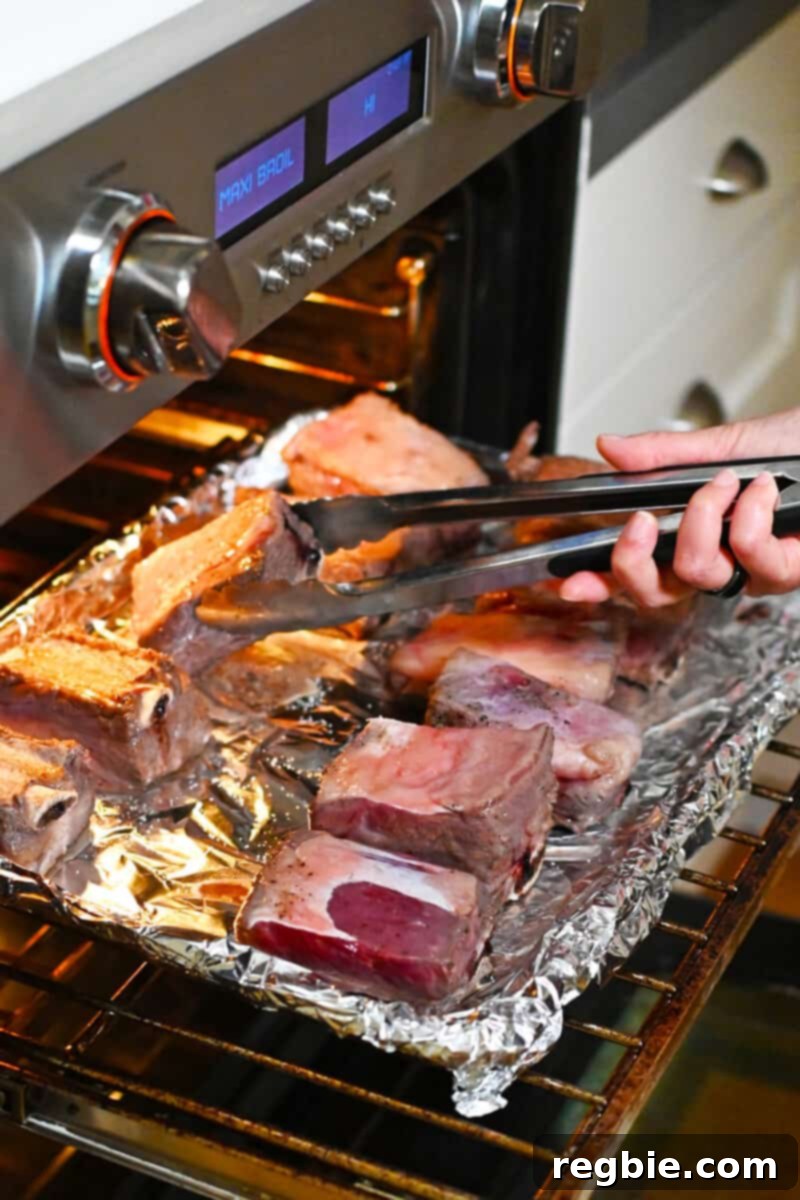
Broil for Searing: Lay the seasoned ribs, bone-side up, in a single layer on a foil-lined rimmed baking sheet. Broil for 5 minutes to achieve a lovely caramelization. Then, carefully flip them over and broil for another 5 minutes, or until both sides are beautifully browned and slightly charred. This quick sear adds incredible depth of flavor and color.
Arranging the seasoned short ribs on a baking sheet for broiling. Flipping the short ribs to ensure even browning under the broiler. -
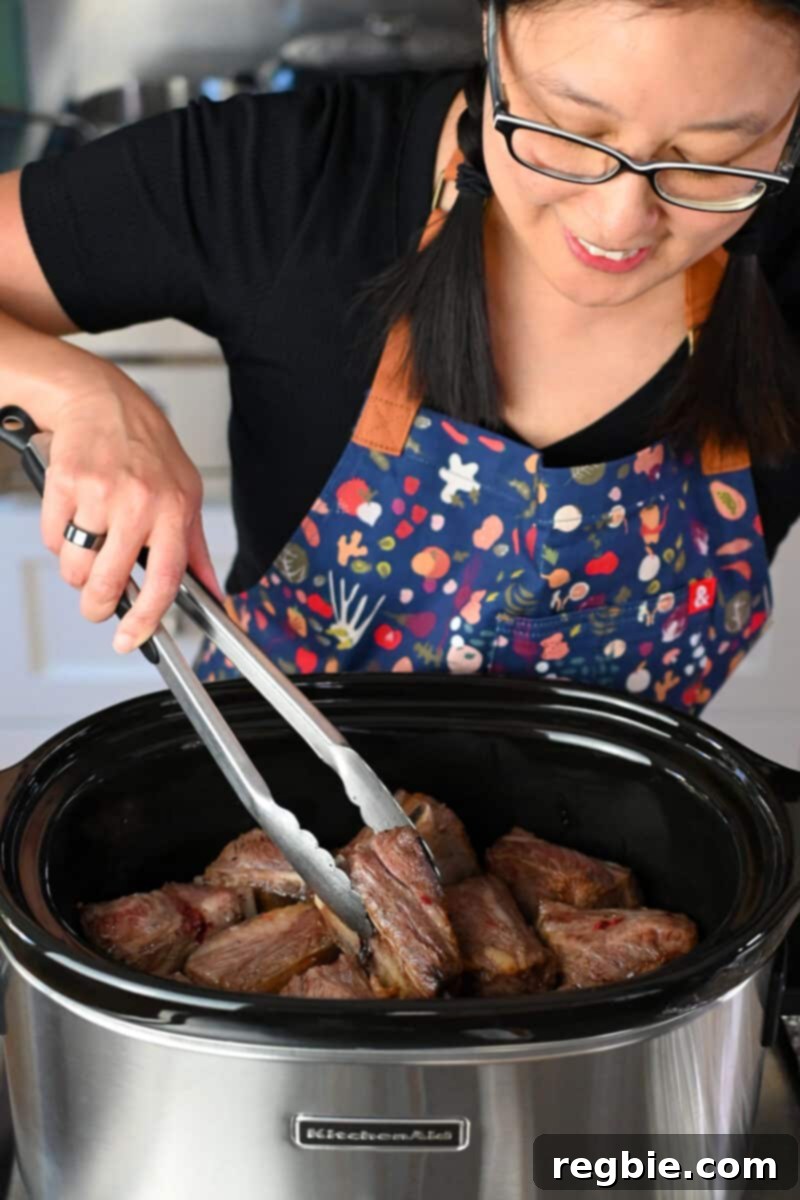
Transfer to Slow Cooker: Carefully transfer the seared ribs to your slow cooker. Arrange them in a single layer on the bottom. You may need to lay some pieces on their sides to ensure they all fit snugly. A single layer allows for even cooking and optimal flavor distribution.
Arranging the seared short ribs in the slow cooker. -
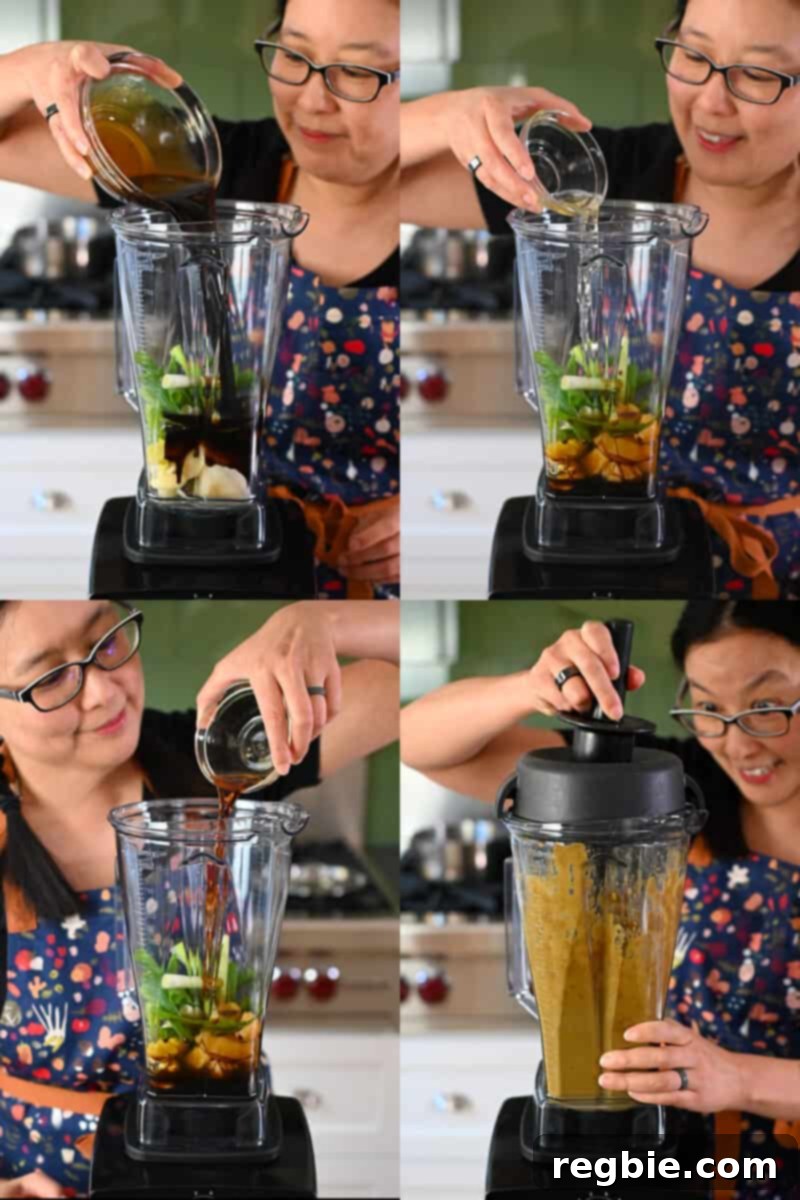
Prepare the Braising Sauce: In a high-speed blender, combine the peeled, cored, and coarsely chopped Asian pear (or substitute), peeled and roughly chopped garlic cloves, roughly chopped scallions, peeled and coarsely chopped fresh ginger (about the size of your thumb), coconut aminos, Red Boat fish sauce, and rice vinegar (or substitute). Blend until the mixture is completely smooth and uniform in consistency. This creates the flavorful marinade and braising liquid base.
Blending all the aromatic ingredients for the signature Korean sauce. -
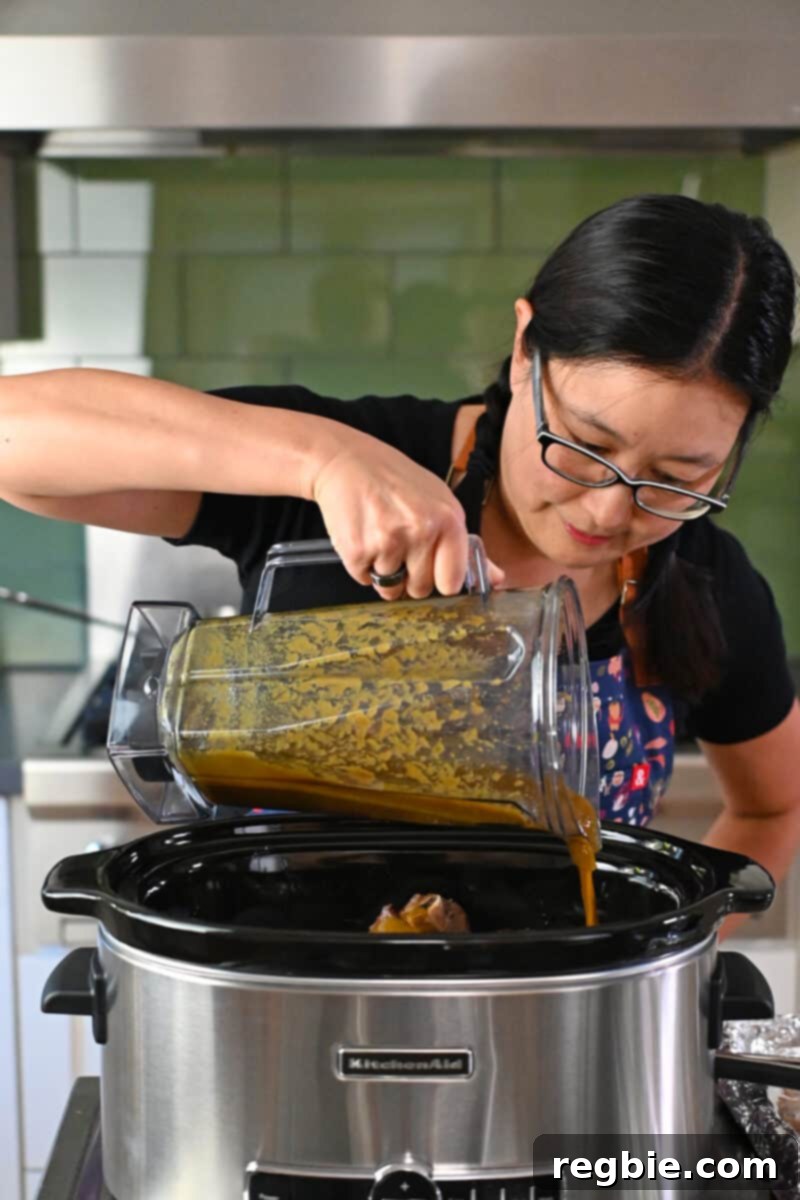
Add Sauce and Broth: Pour the freshly blended sauce evenly over the short ribs in the slow cooker. Follow this by adding the chicken or beef broth to the pot, ensuring the ribs are mostly submerged in the delicious liquid.
Pouring the rich, blended sauce over the short ribs. -
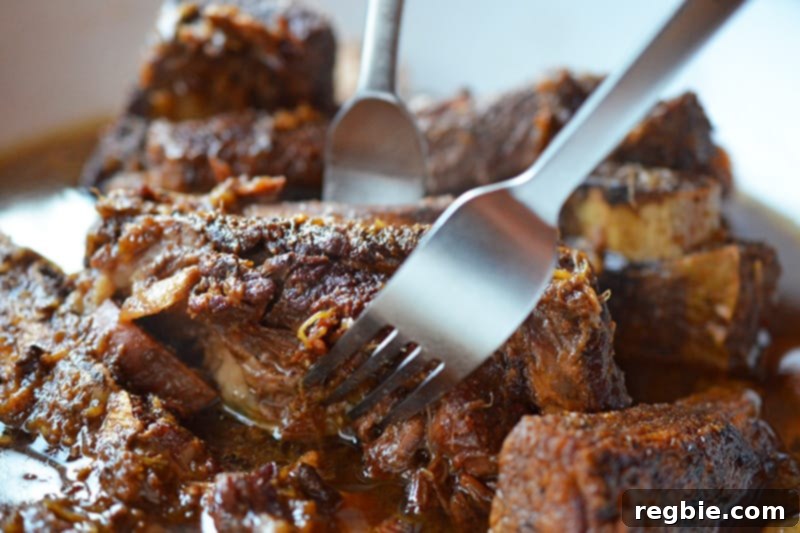
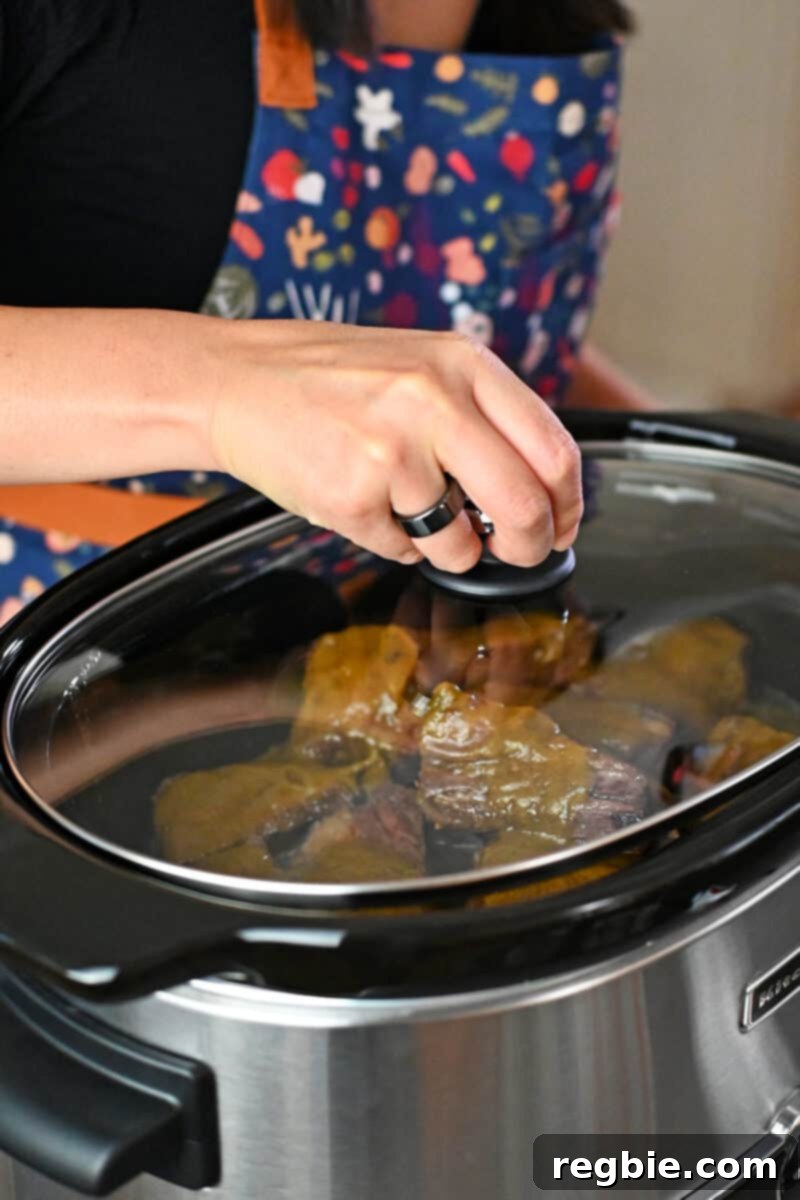
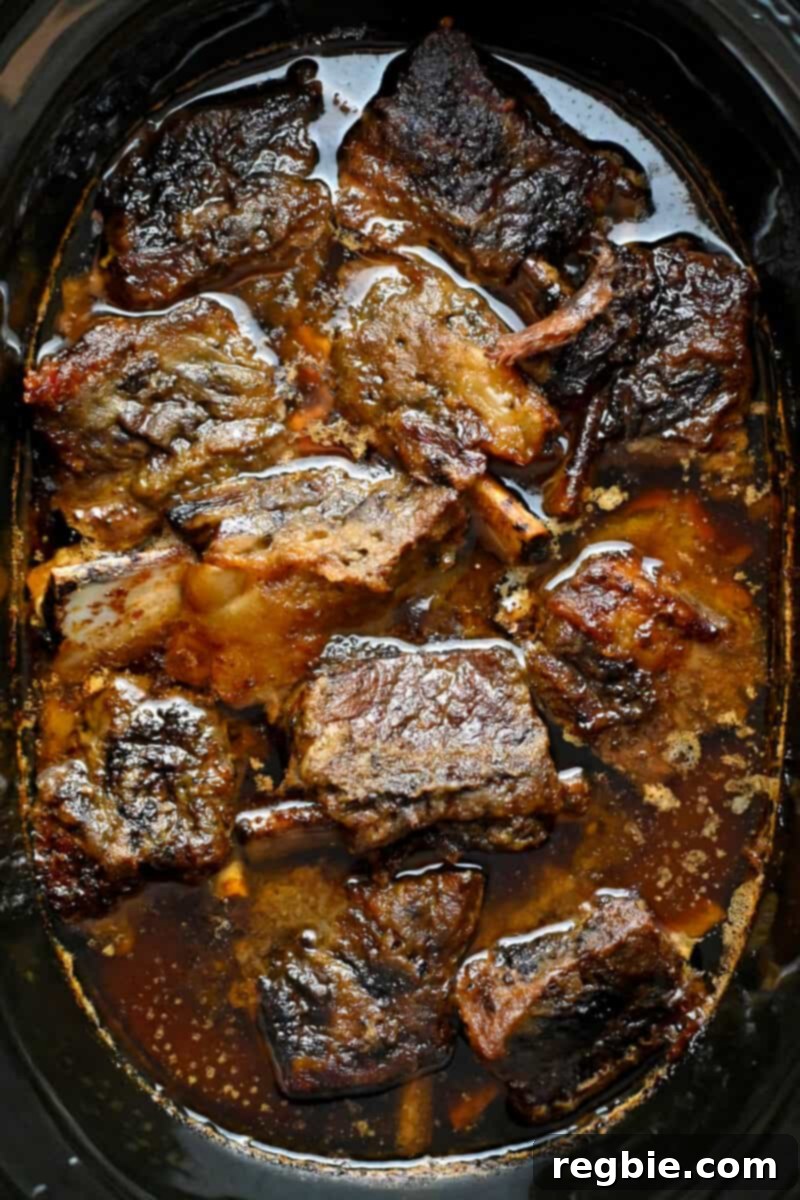
Slow Cook to Perfection: Cover the slow cooker with its lid. Set your slow cooker to the “low” setting and cook for 9 to 11 hours, or set it to “high” for 5 to 6 hours. The ribs are ready when they are incredibly fork-tender, easily yielding to pressure, and almost falling off the bone. This long, slow braise is key to their melt-in-your-mouth texture.
Covering the slow cooker and letting the magic happen. Perfectly braised short ribs, fork-tender and ready to be served. -
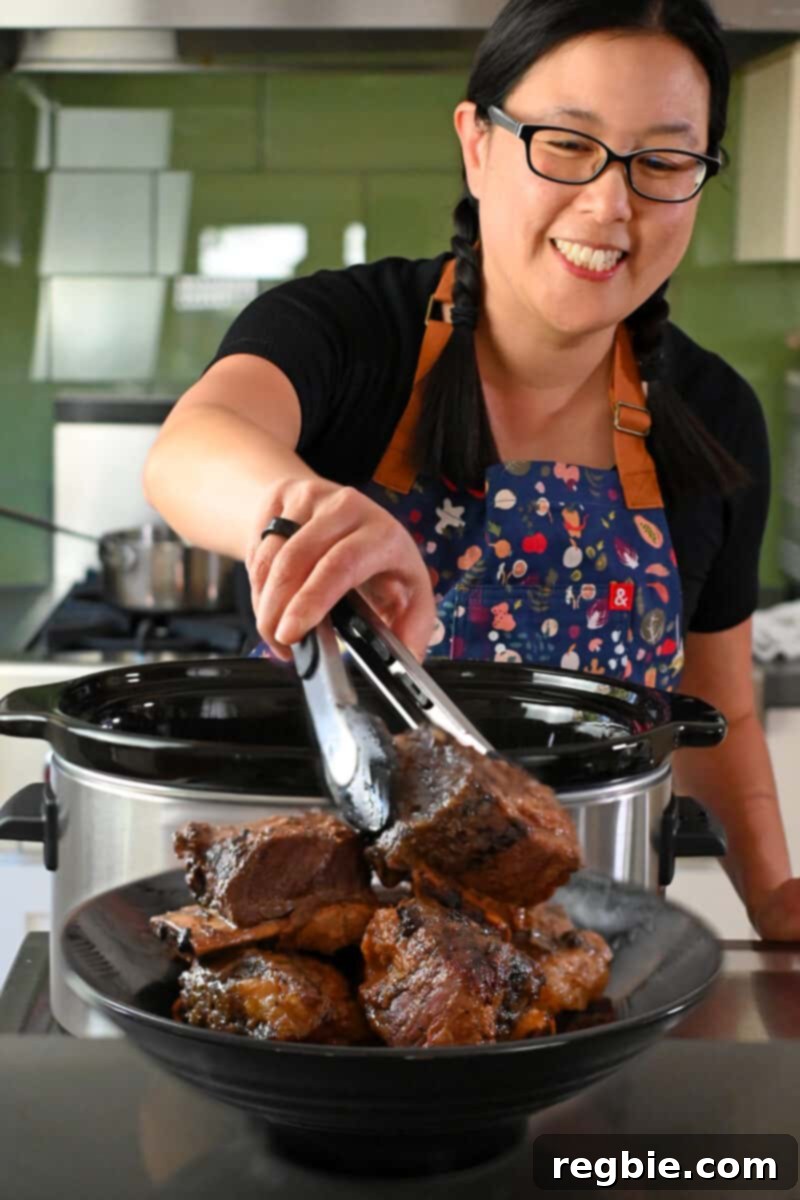
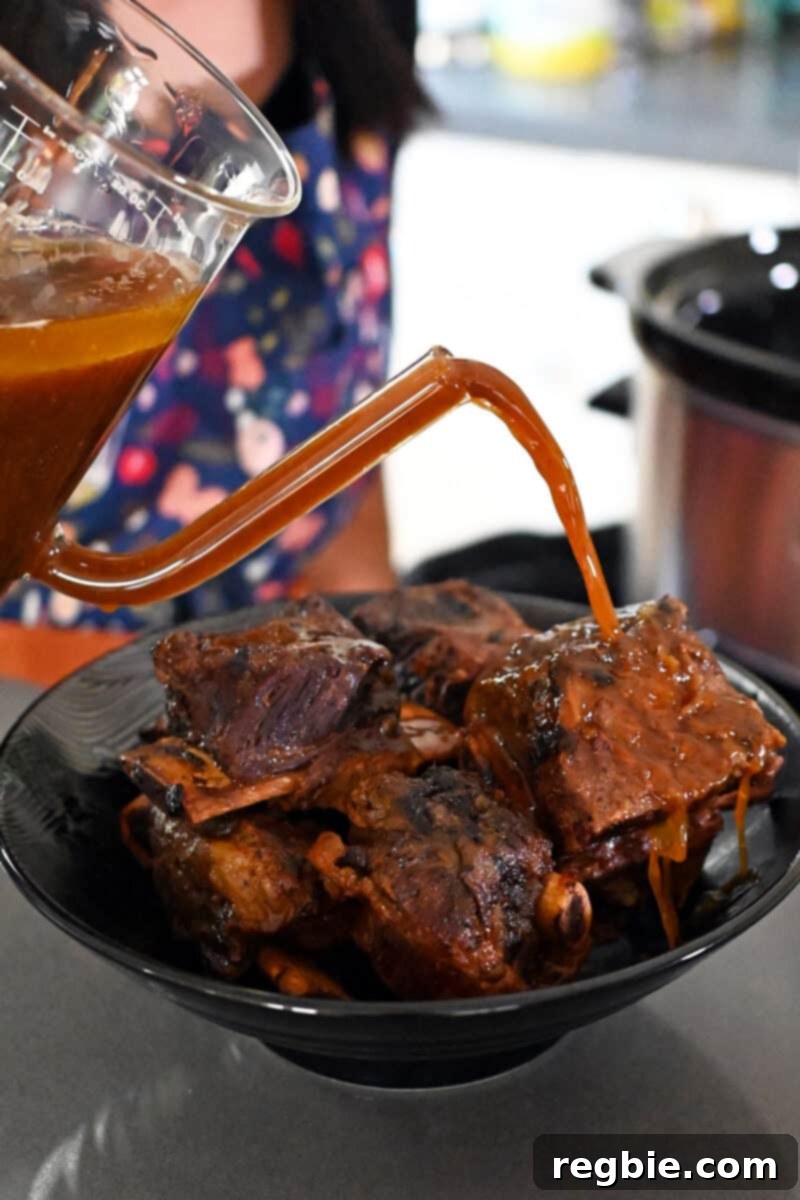
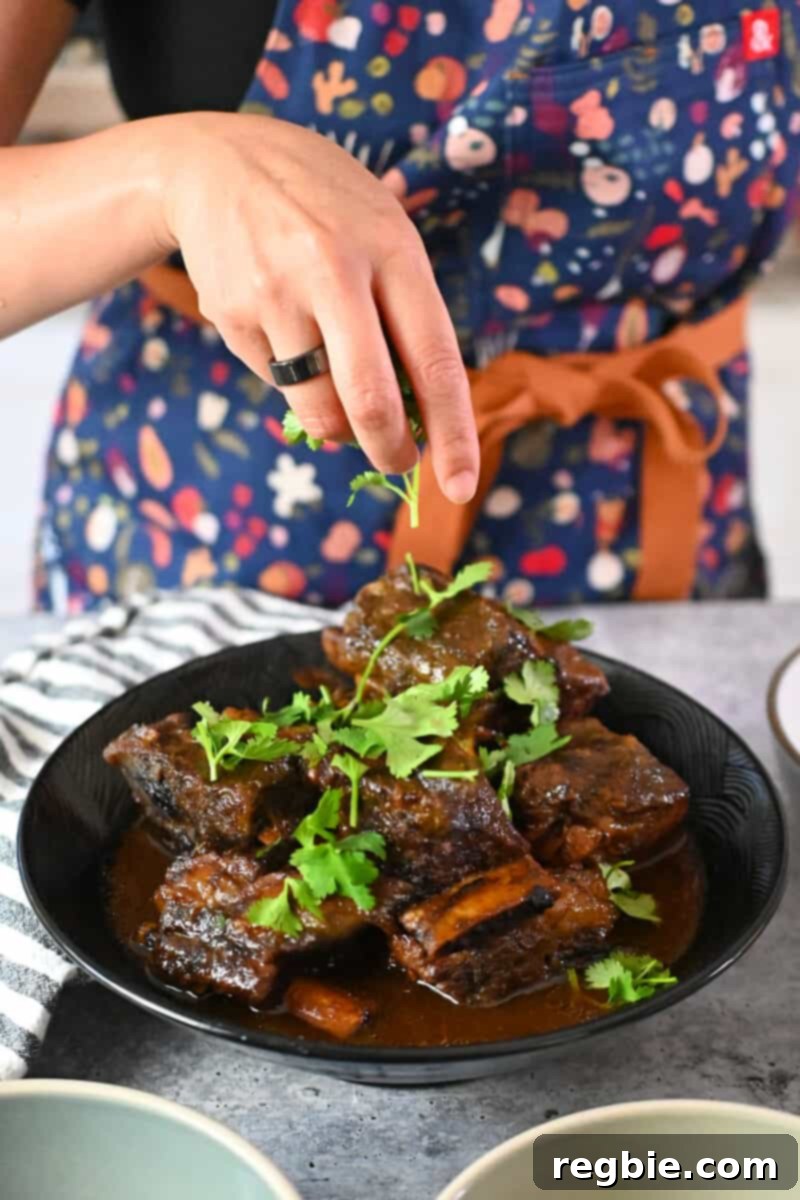
Serve and Garnish: Once cooked, carefully remove the tender meat from the slow cooker and arrange them on a warm serving platter. Allow the braising liquid to settle for about 5 minutes. Then, using a fat separator or a ladle, skim off any excess fat from the surface of the sauce. Taste the sauce and adjust the seasoning with additional salt and pepper if needed. Pour about 1 cup of this luscious, defatted sauce over the ribs. Finally, sprinkle generously with freshly chopped cilantro, if desired, for a burst of freshness and color. Serve the remaining sauce on the side for guests to add as they please.
Carefully transferring the cooked short ribs to a serving platter. Drizzling the rich, defatted sauce over the tender short ribs. A final flourish of fresh cilantro before serving.
What to Serve with Your Delicious Korean Short Ribs?
These slow cooker Korean Short Ribs are incredibly flavorful and pair beautifully with a variety of sides, especially those that complement the rich, savory sauce while keeping things Paleo and Whole30 compliant. Here are some of my favorite suggestions:
- Cauliflower Rice: A perfect low-carb alternative to traditional rice, cauliflower rice readily absorbs the delicious braising sauce, making every bite flavorful and satisfying.
- Korean Cucumber Salad: This crisp, tangy, and slightly spicy salad offers a refreshing counterpoint to the richness of the short ribs, cleansing the palate with each bite.
- Korean Spinach Side Dish (Sigeumchi Namul): A simple yet flavorful blanched spinach salad seasoned with garlic and sesame, providing a healthy and vibrant green component.
- Pineapple Coleslaw: The sweet and tangy notes of pineapple and the crunch of cabbage in this slaw provide a delightful contrast in texture and flavor.
- Quick Sugar Snap Peas with Basil, Mint, and Lime: A bright and herbaceous vegetable side that adds a fresh, zesty kick to your meal.
- Garlic Cauliflower Mashed Potatoes: Another excellent low-carb option that provides a creamy base, perfect for soaking up the savory sauce.
How to Store Leftovers for Maximum Freshness?
Proper storage ensures you can enjoy your delicious Korean Short Ribs for days to come. Store any leftover Korean Short Ribs, along with their braising liquid, in an airtight container. This can be kept in the refrigerator for up to 4 days. For longer storage, this dish freezes exceptionally well. Transfer the ribs and sauce to freezer-safe containers or heavy-duty freezer bags, removing as much air as possible to prevent freezer burn. They can be stored in the freezer for up to 3 months. When reheating from frozen, it’s best to thaw them in the refrigerator overnight before gently warming them on the stovetop or in the microwave until heated through.
More Korean-Inspired Paleo and Whole30 Recipes to Explore
If you’re craving more delightful Korean flavors that fit your Paleo and Whole30 lifestyle, check out these other fantastic recipes:
- Kalbi (Grilled Korean Short Ribs)
- Korean Egg Roll with Seaweed
- Kimchi Cauliflower Fried Rice
- Korean Cucumber Salad
- Korean Spinach Side Dish (Sigeumchi Namul)
Looking for even more healthy and delicious recipe ideas? Dive into my comprehensive Recipe Index for a treasure trove of culinary inspiration. You’ll also discover exclusive recipes and cooking wisdom in my acclaimed cookbooks: Nom Nom Paleo: Food for Humans (Andrews McMeel Publishing 2013), Ready or Not! (Andrews McMeel Publishing 2017), and Nom Nom Paleo: Let’s Go! (Andrews McMeel Publishing 2022). Happy cooking!
Printer-Friendly Recipe Card: Slow Cooker Korean Short Ribs
Slow Cooker Korean Short Ribs
30 mins
9 hrs
9 hrs 30 mins
6 servings
Michelle Tam
Print Recipe
Ingredients
- 5 pounds bone-in English-style beef short ribs
- Diamond Crystal kosher salt
- Freshly ground pepper
- 1 medium Asian pear, or regular pear/Fuji apple, peeled, cored, and chopped coarsely
- 6 garlic cloves, peeled and roughly chopped
- 3 scallions, roughly chopped
- 1 piece fresh ginger, about the size of your thumb, peeled and coarsely chopped
- ½ cup coconut aminos
- 1 tablespoon rice vinegar (or coconut vinegar, apple cider vinegar, or white balsamic vinegar)
- 2 teaspoons Red Boat fish sauce
- 1 cup bone broth or chicken broth
- ¼ cup fresh cilantro, coarsely chopped (optional garnish)
Instructions
- Heat your broiler with the rack 6 inches from the heating element.
- Sprinkle the ribs liberally on all sides with salt and pepper. Remember to use a separate small ramekin for seasoning raw meat to avoid cross-contamination.
- Place the ribs, bone-side up, in a single layer on a foil-lined rimmed baking sheet.
- Broil the ribs for 5 minutes, then flip them over and broil for another 5 minutes or until nicely browned.
- Place the ribs in a single layer in the slow cooker. Lay them on their side if necessary to fit them all in the pot.
- Time to make the sauce! Toss the pear, garlic, scallions, ginger, coconut aminos, rice vinegar, and fish sauce in a blender. Blend until smooth.
- Pour the sauce evenly over the ribs and add the broth to the pot.
- Cover with the lid, and set the slow cooker on low for 9 to 11 hours or on high for 5 to 6 hours. The ribs are done when they are fork tender and nearly fall off the bone.
- When it’s time to serve, remove the meat from the slow cooker and place them on a serving platter.
- Let the braising liquid settle for 5 minutes and then pour the sauce into a fat separator or ladle off the fat from the surface. Taste the sauce and adjust the seasoning with salt and pepper as needed. Pour about a cup of sauce over the ribs.
- Sprinkle on the chopped cilantro, if desired, and serve the remaining sauce on the side.
- Store leftovers in an airtight container in the fridge for up to 4 days and freeze for up to 3 months.
Notes
- Slow cooker cooking times can vary depending on the brand and model. If your slow cooker tends to run hotter (e.g., some Crockpot models), the ribs may be done at the lower end of the suggested cooking time range. It’s perfectly fine to start checking the meat for tenderness at the 8-hour mark if you’re cooking on low.
- Dutch Oven Instructions: If you prefer to cook this dish in a Dutch oven, add an additional cup of broth to the sauce before placing it in the oven. Bake, covered, in a 300°F (150°C) oven for 3 to 4 hours or until the ribs are wonderfully tender.
- For even faster results, you can find specific Instant Pot instructions in my Instant Pot Korean Short Ribs recipe.
Nutrition
|
Carbohydrates: 10g
|
Protein: 55g
|
Fat: 28g
|
Fiber: 1g
|
Sugar: 3g
Nutrition information is automatically calculated, so should only be used as an approximation.