
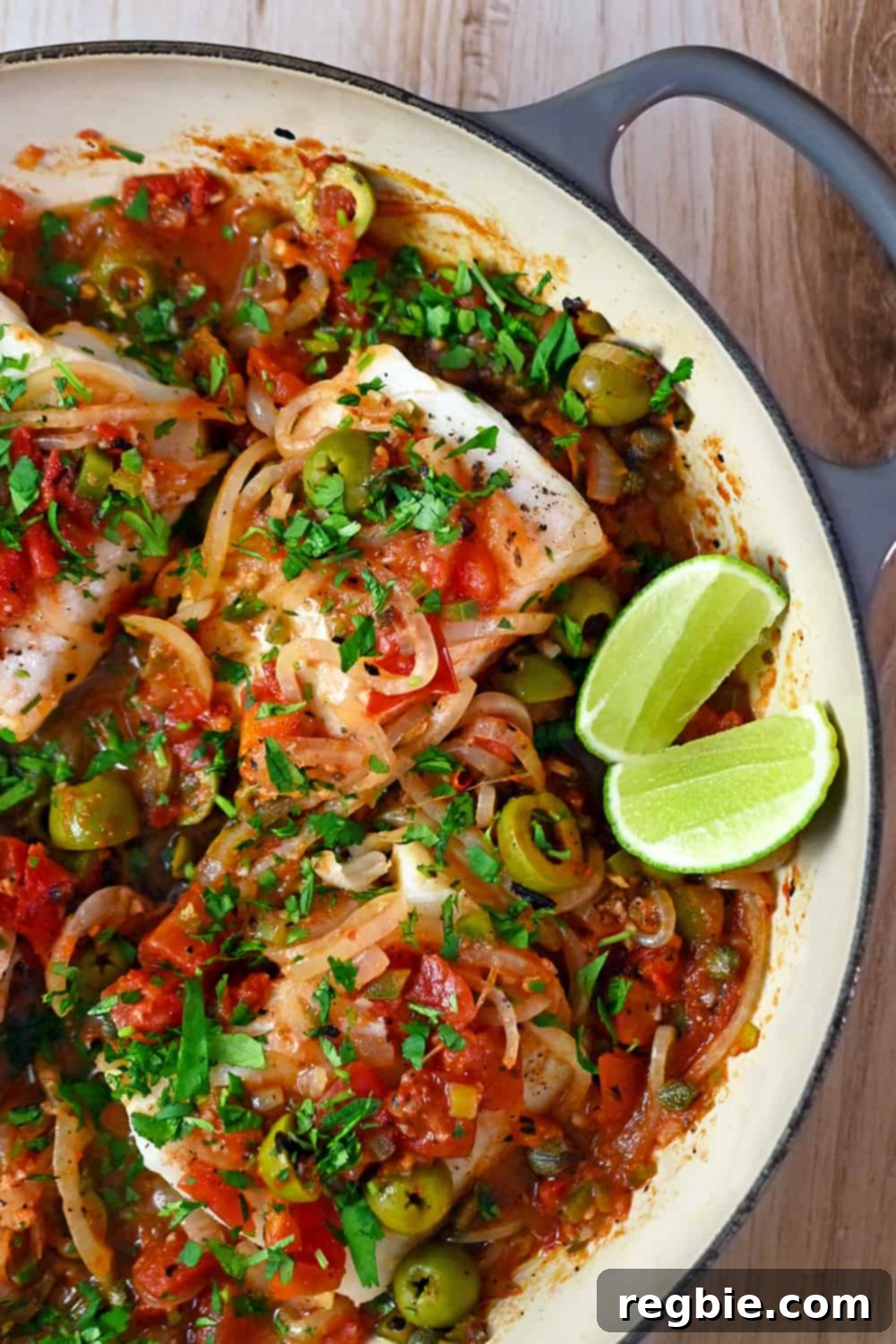
Embark on a culinary journey to the vibrant coast of Mexico with our incredible recipe for Fish in Veracruz Sauce. This delightful dish, also known as Pescado a la Veracruzana, is a true testament to flavor and simplicity, coming together in under 30 minutes in just one pan. Featuring tender white fish fillets bathed in a zesty, aromatic tomato sauce brimming with capers, olives, and onions, it’s a gourmet experience that’s surprisingly easy to achieve. Perfect for busy weeknights or a relaxed weekend meal, this healthy and flavorful option will quickly become a cherished part of your dinner rotation.
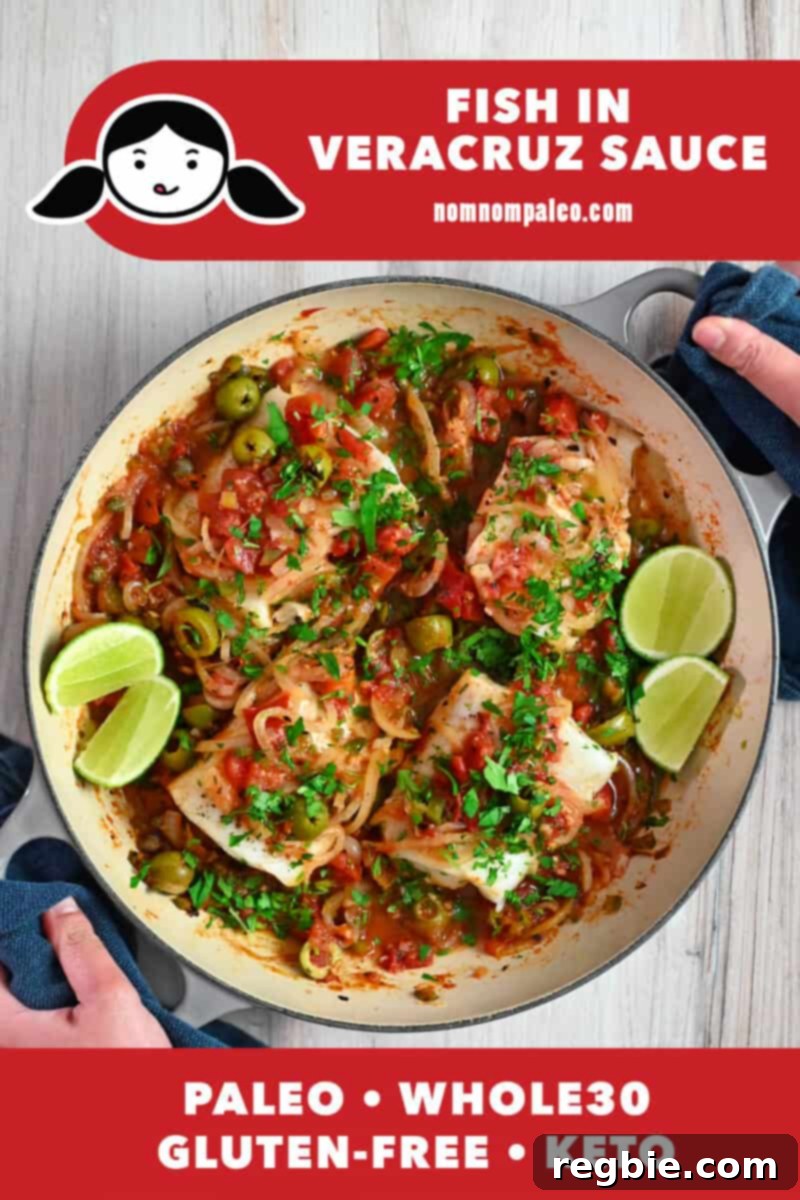
My first encounter with Veracruz-style fish, pescado a la Veracruzana, was unforgettable. Dining at a charming restaurant in Cancun, I was instantly captivated by the bright, tangy, and savory flavors that perfectly complemented the delicate white fish. That moment sparked an inspiration, leading me on a quest to recreate this classic Mexican seafood dish in my own kitchen. As a firm believer that dining out is an essential part of culinary research and development, I returned home determined to craft a version that was not only authentic in taste but also compatible with paleo, Whole30, and keto dietary guidelines, using readily available pantry staples.
The journey to perfecting this recipe took some delightful experimentation, but the result is a testament to perseverance. This homemade Fish in Veracruz Sauce offers all the depth and complexity of the restaurant version, yet it’s designed for maximum efficiency. You can have this spectacular dish on your table, ready to be enjoyed, in less than 30 minutes! It’s a truly remarkable achievement in quick, healthy, and delicious cooking, proving that wholesome meals don’t have to compromise on exquisite flavor.
Table of Contents
- What is Veracruz Sauce?
- Customize Your Meal: Protein Alternatives
- Key Ingredients for Veracruz Fish
- Step-by-Step: How to Make Fish in Veracruz Sauce
- Serving Suggestions for Veracruz Fish
- Tips and Tricks for Perfect Veracruz Fish
- More Healthy Seafood Recipes
- Full Recipe Card
Unveiling the Flavor: What is Veracruz Sauce?
Veracruz sauce is a classic, vibrant, and incredibly flavorful tomato-based sauce originating from the Gulf Coast region of Mexico, specifically the state of Veracruz. Its unique character comes from a harmonious blend of tomatoes, briny capers, savory olives, fragrant oregano, and aromatic bay leaves. If these ingredients sound reminiscent of Mediterranean cuisine, you’re absolutely on the right track! This culinary overlap is no coincidence.
The Port of Veracruz holds a significant place in Mexican history as one of the oldest and most important port cities. Its strategic location meant it was a major gateway for Spanish colonizers, bringing with them a rich tapestry of ingredients and cooking traditions from the Mediterranean. As a result, many regional Veracruz dishes, including this iconic sauce, beautifully integrate these Mediterranean components, creating a unique fusion that defines Veracruzana cuisine.
What makes this sauce truly special is its nuanced flavor profile. It’s robust and deeply satisfying, offering a delightful tang from the tomatoes and capers, a salty kick from the olives, and earthy notes from the herbs. Importantly, while many Mexican dishes are known for their heat, traditional Veracruz sauce is not meant to be spicy, making it an ideal choice for those who prefer milder flavors. My personal shortcut to enhancing this sauce involves using canned fire-roasted diced tomatoes. This simple trick adds an incredible smoky depth to the sauce without requiring any extra roasting or prep time, elevating the overall flavor with minimal effort.
Customize Your Meal: Feel Free to Change Up the Protein!
While Fish in Veracruz Sauce is traditionally prepared with whole fish or delicate white fish fillets like red snapper, tilapia, cod, or sea bass, its versatility extends far beyond. The rich and zesty Veracruz sauce is incredibly adaptable, making it a fantastic base for a variety of other proteins. Don’t hesitate to experiment and tailor this dish to your preferences or what you have on hand!
Here are some delicious protein swaps that pair wonderfully with the robust flavors of Veracruz sauce:
- Shrimp: For a quick-cooking alternative, shrimp is an excellent choice. Simply add raw, peeled, and deveined shrimp directly into the simmering sauce during the last few minutes of cooking. They cook very quickly, turning pink and opaque in just 2-4 minutes.
- Scallops: Seared scallops offer a sweet counterpoint to the tangy sauce. You can lightly sear them separately in a hot pan for 1-2 minutes per side until caramelized, then add them to the sauce right before serving, or simmer them briefly in the sauce until just cooked through.
- Chicken Breast or Thighs: For a heartier meal, boneless and skinless chicken breast or thighs are a great option. Cut the chicken into bite-sized pieces or leave them as whole fillets. Season them well with salt and pepper, then brown them lightly in the skillet before adding the sauce to simmer until cooked through and tender. Chicken thighs, with their higher fat content, tend to stay more moist and flavorful.
- Firm Tofu or Tempeh: For a plant-based option, firm tofu or tempeh can absorb the flavors beautifully. Press extra-firm tofu to remove excess water, then cube or slice it. Pan-fry until golden brown before adding to the simmering sauce to warm through.
No matter which protein you choose, the key is to season it adequately with salt and pepper before adding it to the sauce. Then, simply simmer it until it’s cooked through to your desired doneness, ensuring it fully absorbs the magnificent flavors of the Veracruz sauce. This flexibility makes the dish a perfect canvas for culinary creativity, allowing you to enjoy this incredible Mexican flavor profile with your favorite ingredients.
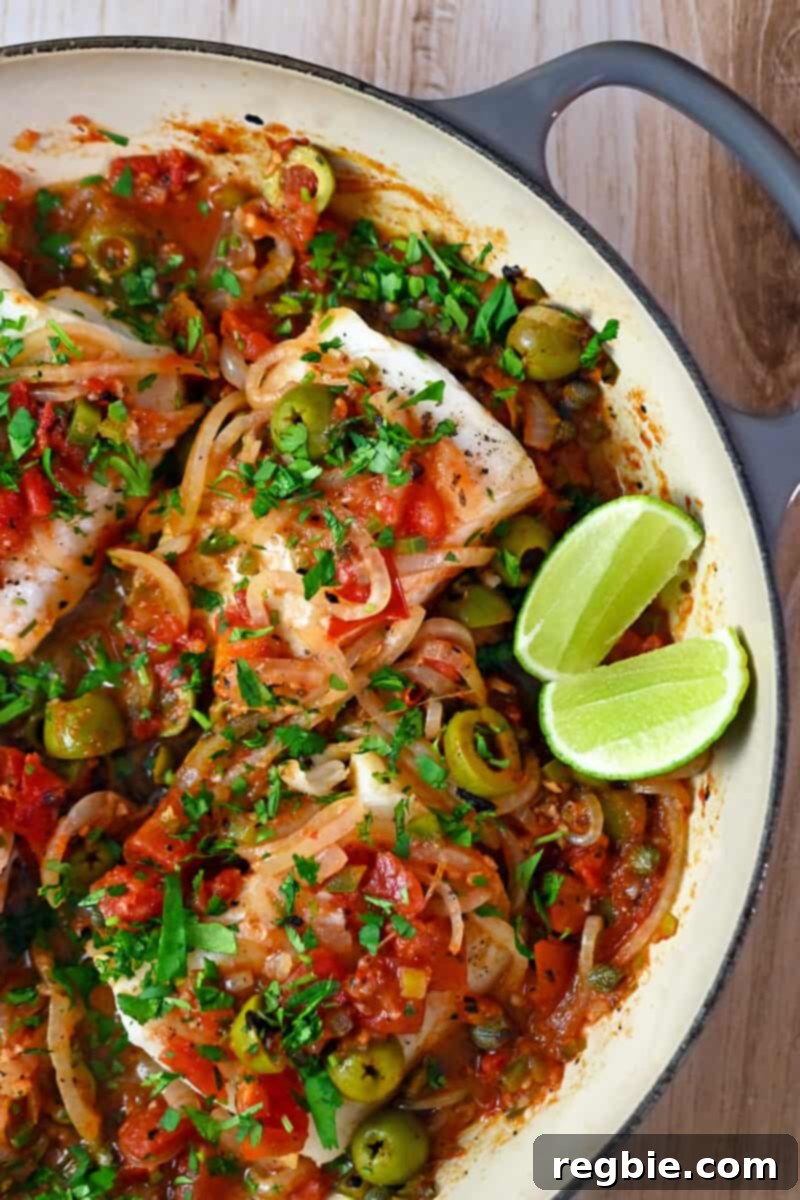
Essential Ingredients for Your Veracruz Fish
Crafting the perfect Fish in Veracruz Sauce begins with selecting the right ingredients. Each component plays a vital role in building the layered flavors that make this dish so special. Here’s a closer look at what you’ll need and some tips for choosing them:
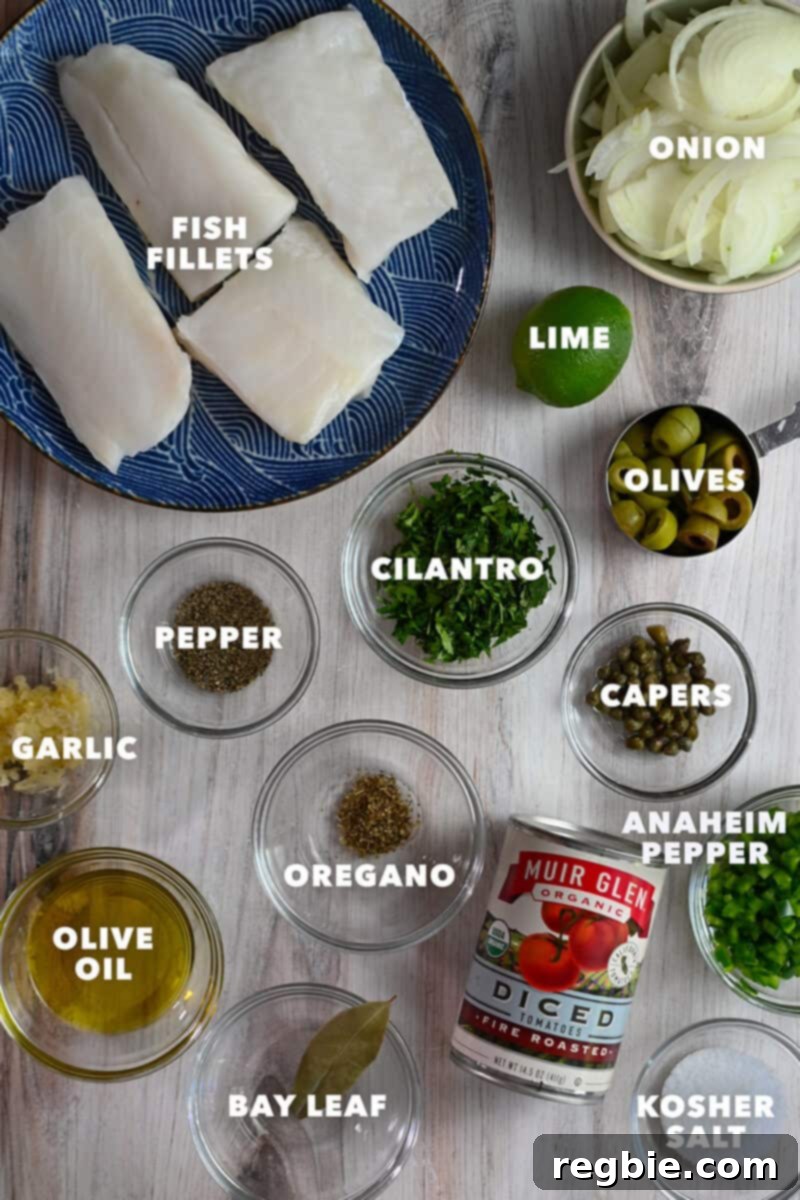
- Boneless, Skinless White Fish Fillets: While traditional recipes might call for whole red snapper, for a quick and easy weeknight meal, boneless and skinless fillets are ideal. Excellent choices include Chilean sea bass, cod, halibut, and tilapia. Aim for fillets that are roughly the same thickness (about 1-inch) to ensure even cooking. Always choose fresh fish with a clean, ocean smell and firm, translucent flesh.
- Fire-Roasted Diced Canned Tomatoes: This is my secret weapon for adding a smoky depth without extra work. Fire-roasted tomatoes bring a rich, complex flavor that regular diced tomatoes simply can’t match, enhancing the overall profile of your Veracruz sauce. No need to drain!
- Extra Virgin Olive Oil: A good quality extra virgin olive oil is crucial for sautéing the aromatics and forming the base of your sauce. Its fruity notes complement the other ingredients beautifully.
- Yellow Onion: The foundation of many great sauces, yellow onions soften and sweeten as they cook, providing a savory depth. Thinly slicing them ensures they cook down faster and integrate smoothly into the sauce.
- Anaheim Pepper: I opt for Anaheim peppers for their mild, slightly sweet flavor rather than intense heat. They offer just a whisper of spice, similar to a bell pepper but with a subtle kick, which is perfect for this non-spicy traditional dish. If unavailable, a green bell pepper can be used, though it will lack the very slight warmth.
- Garlic Cloves: Freshly minced garlic is indispensable for its pungent aroma and flavor, which perfectly balances the sweetness of the onions and tang of the tomatoes.
- Green Olives: Pitted green olives, especially buttery Castelvetrano olives, contribute a wonderful briny, salty, and slightly fruity note. Halving them helps their flavor disperse throughout the sauce.
- Capers: These tiny flower buds, preserved in brine, are essential for their distinctive tangy and salty punch. They add a bright acidity that cuts through the richness of the sauce and complements the fish. Ensure they are drained before adding.
- Dried Oregano: This classic herb adds an earthy, slightly peppery flavor that is characteristic of Mediterranean and Mexican cuisines. Dried oregano is often more potent than fresh, so a little goes a long way.
- Dried Bay Leaf: A single bay leaf infuses the sauce with a subtle, aromatic, and slightly bitter note, adding complexity to the overall flavor profile. Remember to remove it before serving.
- Diamond Crystal Kosher Salt: My preferred salt for its even distribution and ability to enhance flavors without overt saltiness. Taste and adjust as needed.
- Freshly Ground Black Pepper: A staple seasoning that provides a gentle warmth and aromatic complexity.
- Fresh Cilantro: Used as a garnish, fresh cilantro brightens the dish with its distinctive herbaceous, citrusy notes.
- Lime: Fresh lime wedges are a must for serving. A squeeze of fresh lime juice just before eating adds a burst of acidity that awakens all the flavors and balances the dish beautifully.
Step-by-Step: How to Make Fish in Veracruz Sauce
Creating this flavorful Fish in Veracruz Sauce is a straightforward process, perfect for cooks of all levels. Follow these simple steps to bring a taste of Mexico to your dinner table:
-
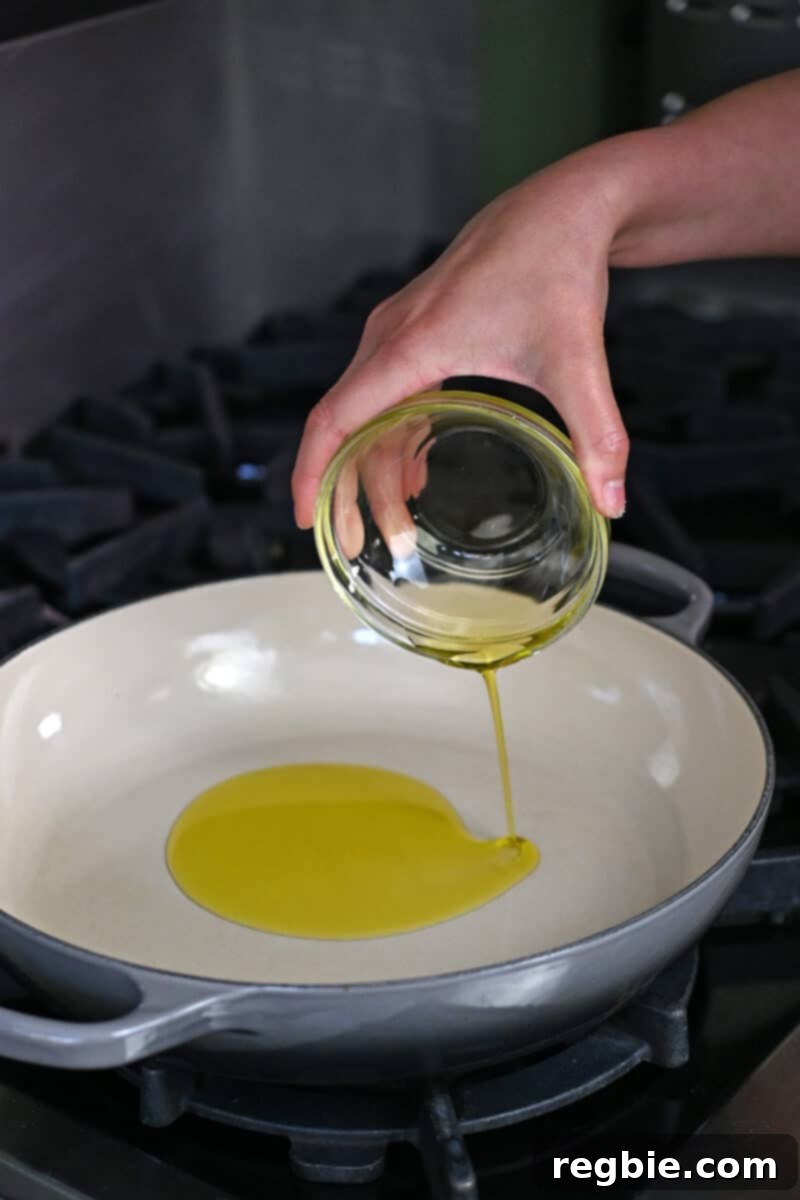
Prepare Your Skillet: Begin by heating a large, sturdy skillet over medium heat. A good heavy-bottomed skillet will ensure even cooking. Once the pan is hot, add the extra virgin olive oil. You’ll know the pan is ready when the oil shimmers slightly.

-
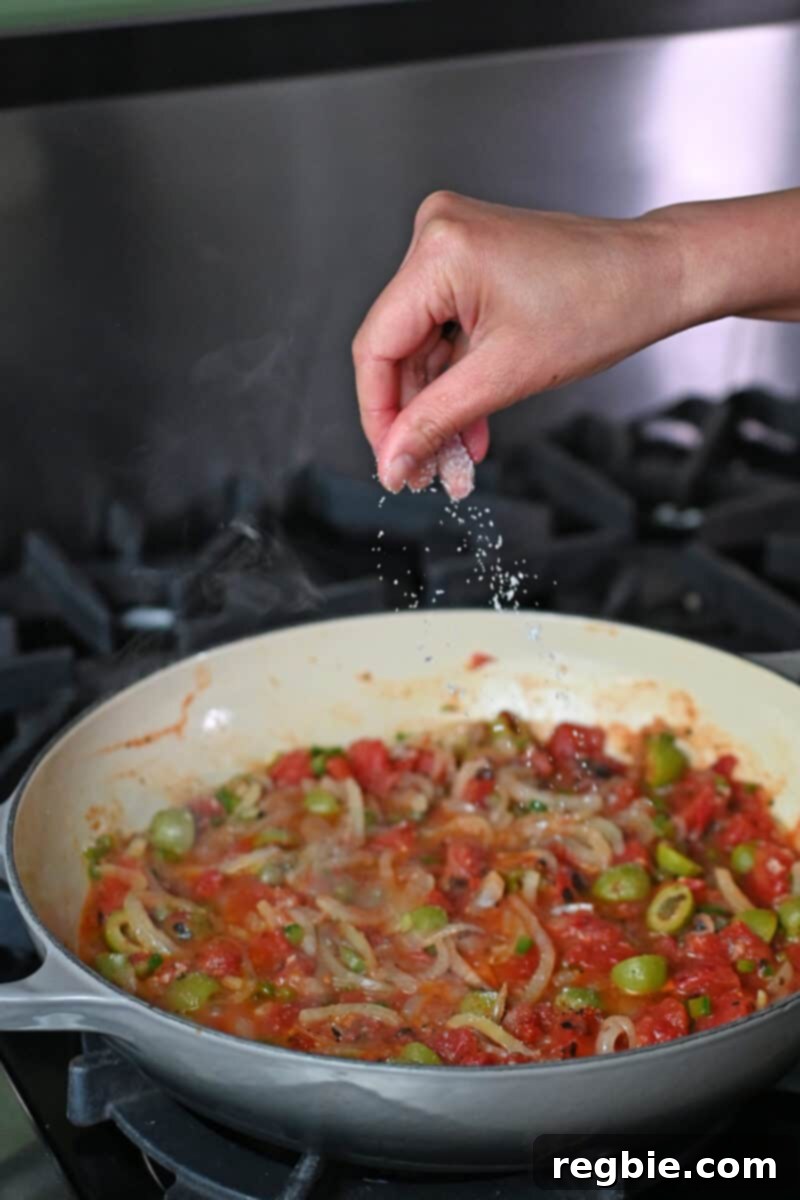
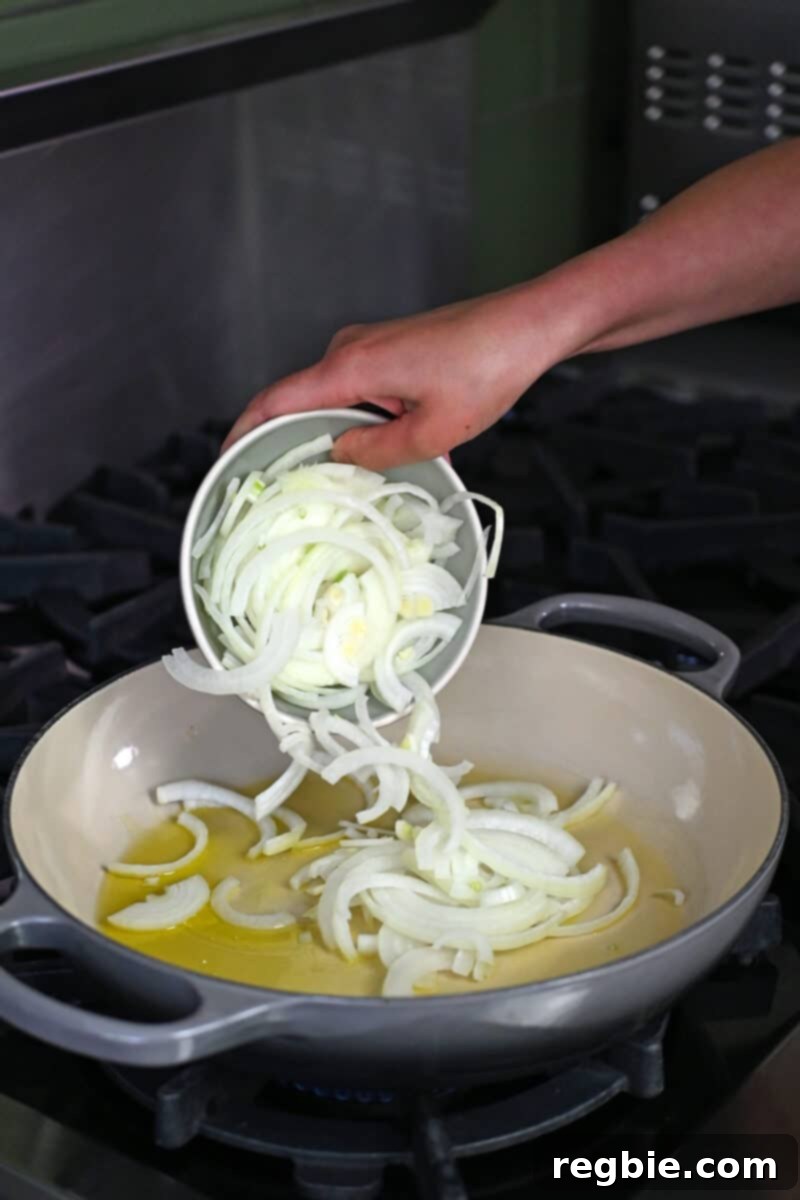
Sauté the Onions: Add the thinly sliced yellow onion to the hot oil. Sprinkle with a pinch of Diamond Crystal kosher salt. Cook the onions, stirring occasionally, until they become soft, translucent, and slightly caramelized, which typically takes about 8 to 10 minutes. This slow sautéing brings out their natural sweetness and forms a delicious base for the sauce.
-
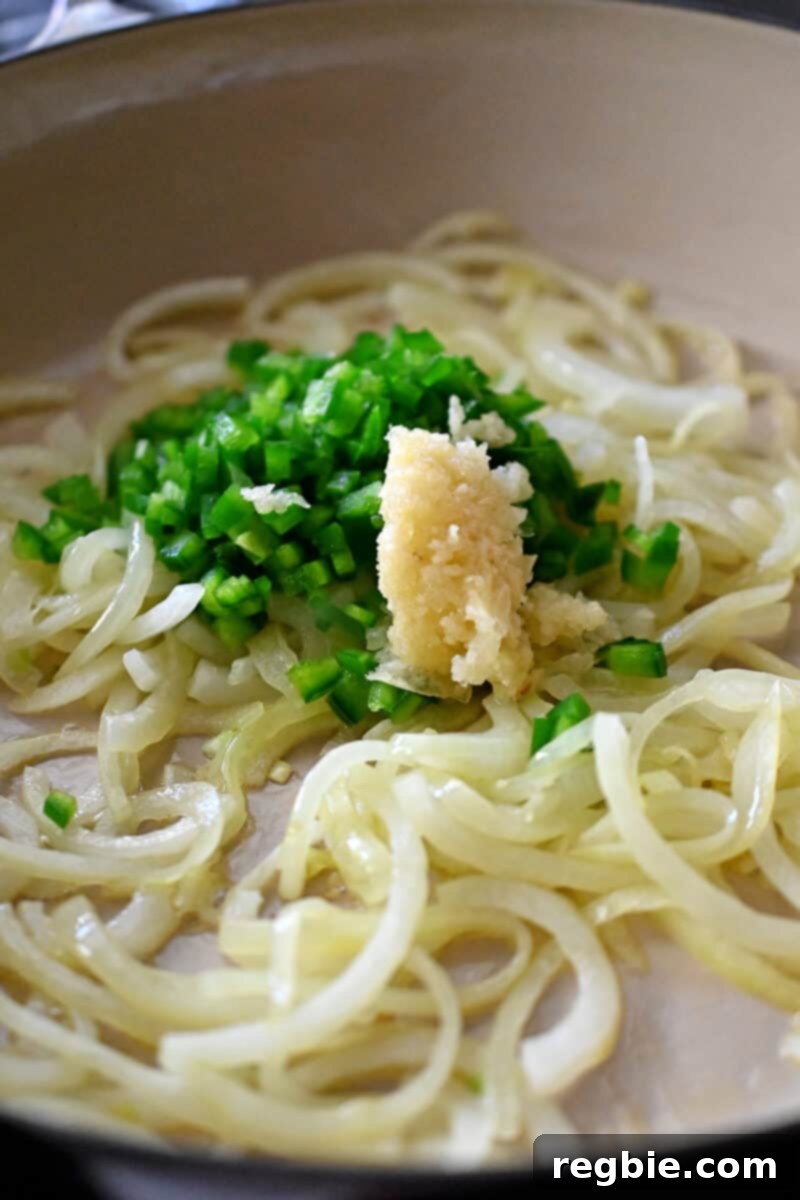
Add Peppers and Garlic: Once the onions are softened, stir in the finely diced Anaheim pepper and minced garlic cloves. Continue to cook for about 30 seconds, just until the garlic becomes fragrant. Be careful not to burn the garlic, as it can turn bitter quickly.
-
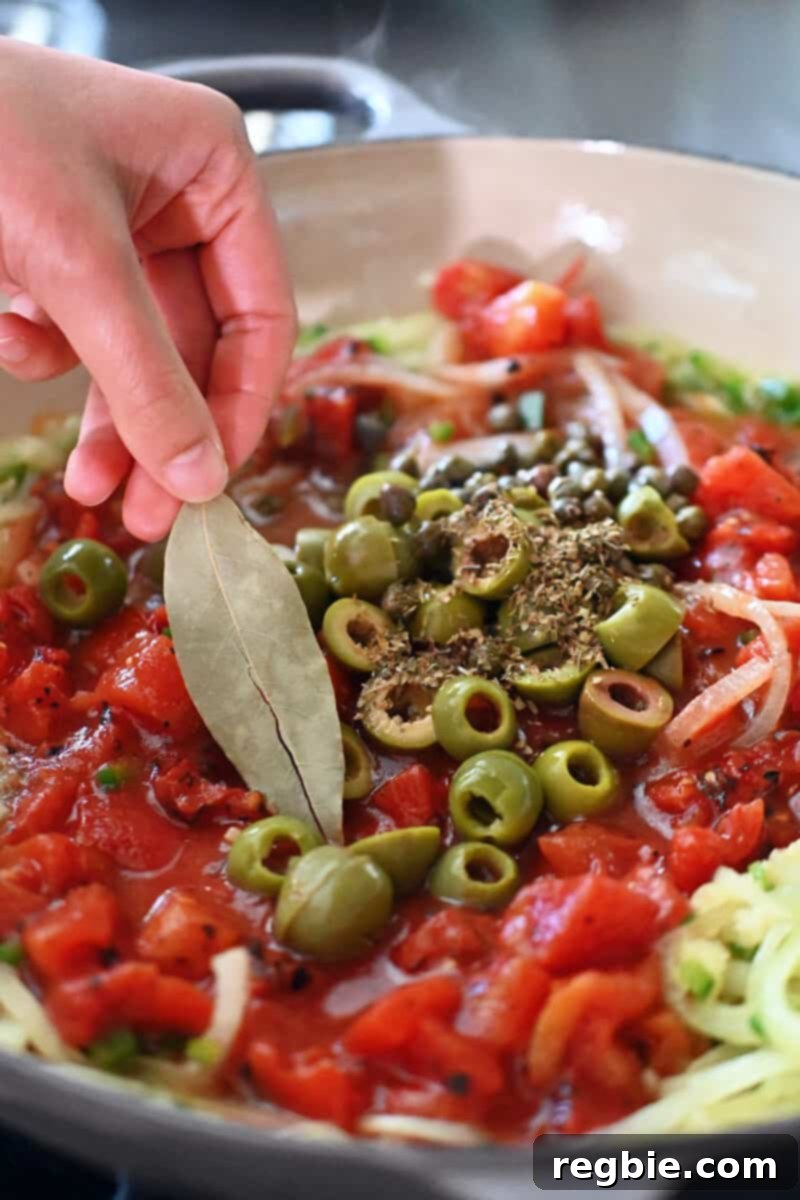
Build the Veracruz Sauce: Pour in the canned fire-roasted diced tomatoes (undrained), add the pitted and halved green olives, drained capers, dried oregano, and the bay leaf. Stir everything together to combine.
-
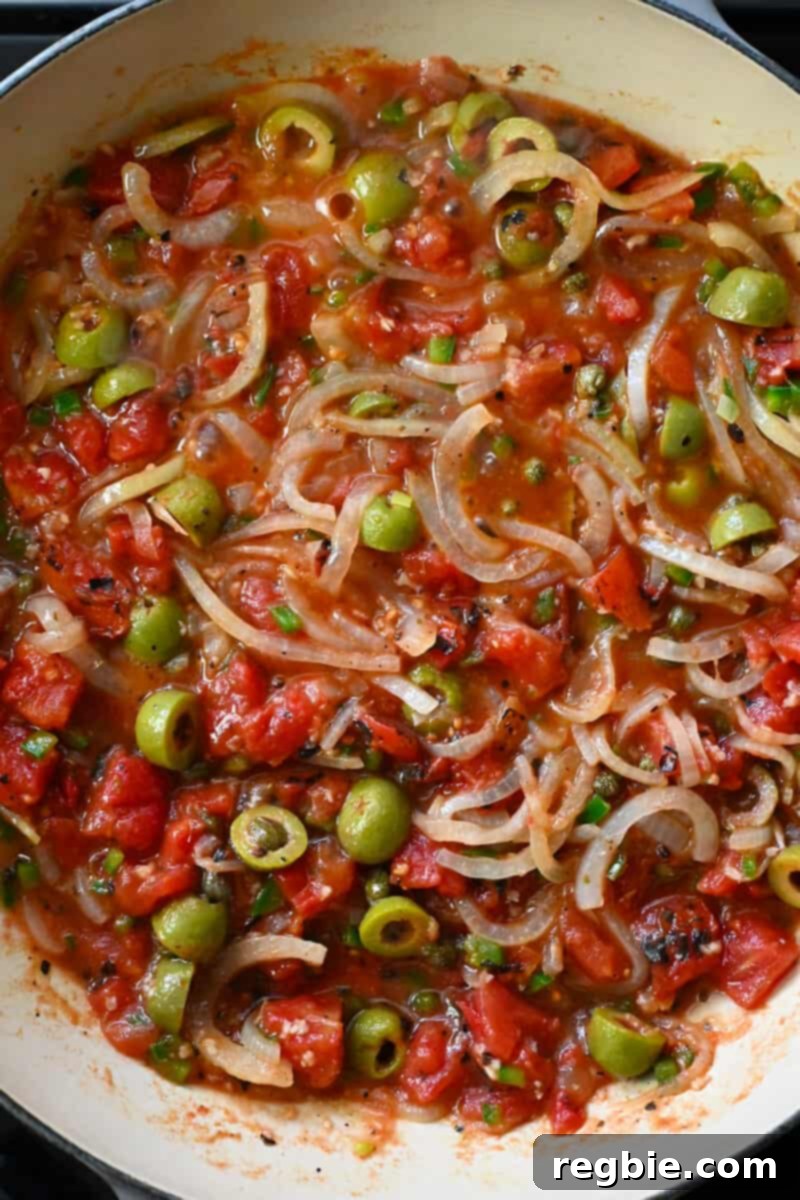
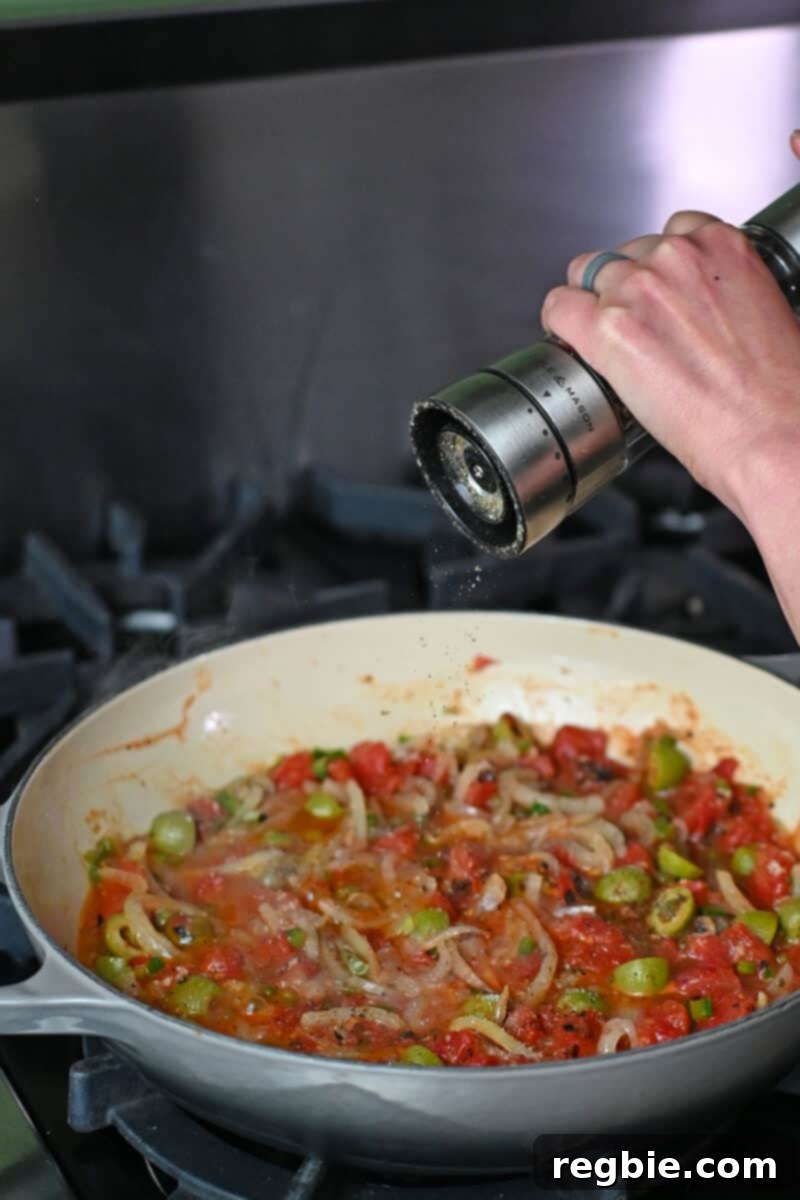
Simmer and Season the Sauce: Bring the sauce to a gentle boil, then immediately reduce the heat to maintain a steady simmer. Let the sauce cook for at least 5-10 minutes, allowing the flavors to meld and deepen. Taste the sauce at this point and season with additional salt and freshly ground black pepper as needed to achieve your desired balance of flavors.
-
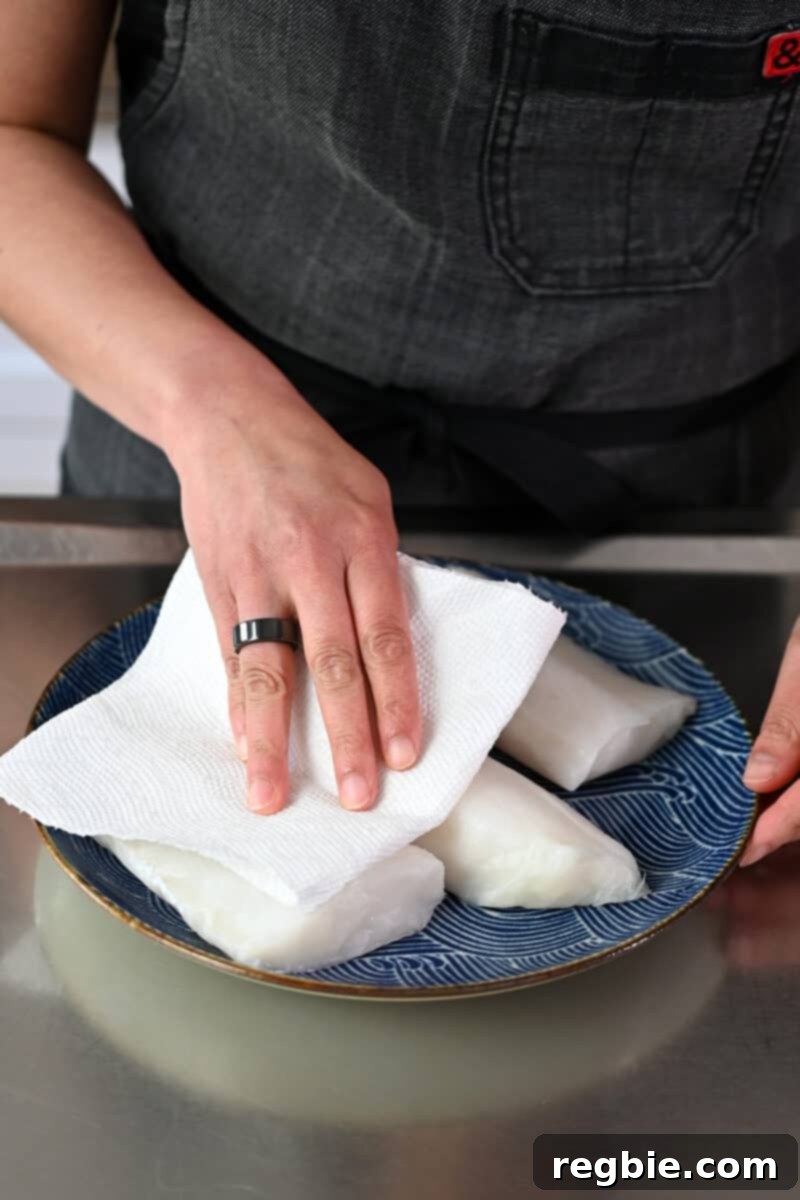
Prepare the Fish: While the sauce simmers, gently pat your white fish fillets dry with paper towels. This helps the seasoning adhere better and prevents the fish from steaming too much. Generously sprinkle both sides of each fillet with salt and freshly ground black pepper.
-
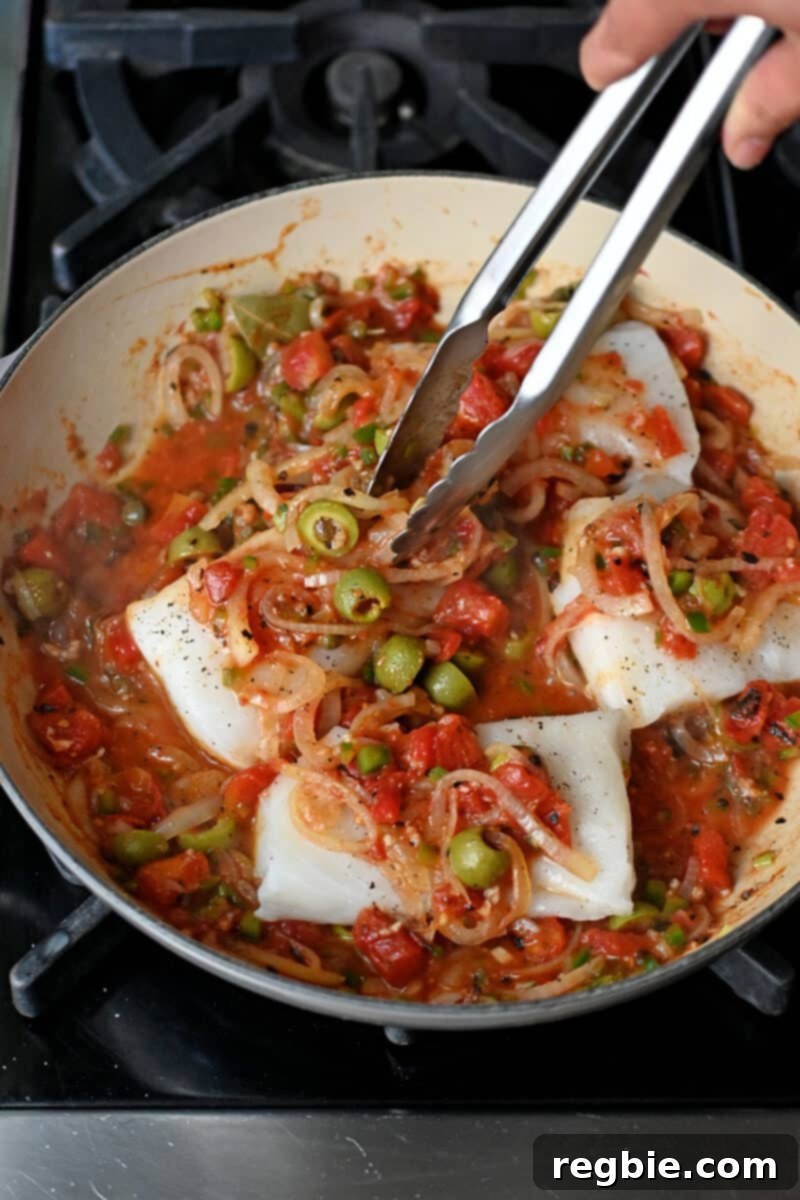
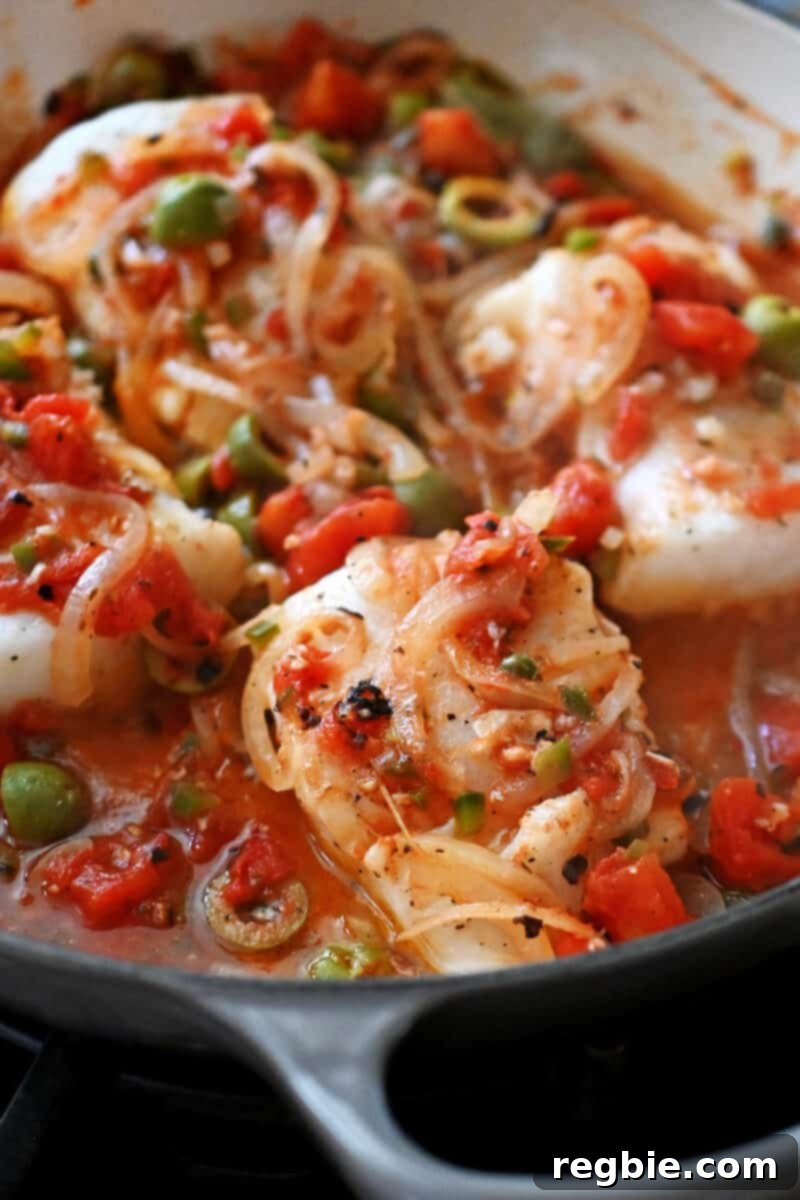
Cook the Fish: Carefully nestle the seasoned fish fillets into the simmering Veracruz sauce. Use a spoon to gently spread some of the sauce over the top of each fillet, ensuring they are well-coated. Cover the skillet with a lid and continue to cook on low heat for approximately 10 minutes, or until the fish is opaque throughout and flakes easily with a fork. For perfect doneness, an instant-read thermometer should register around 140°F (60°C) at the thickest part of the fish.
-
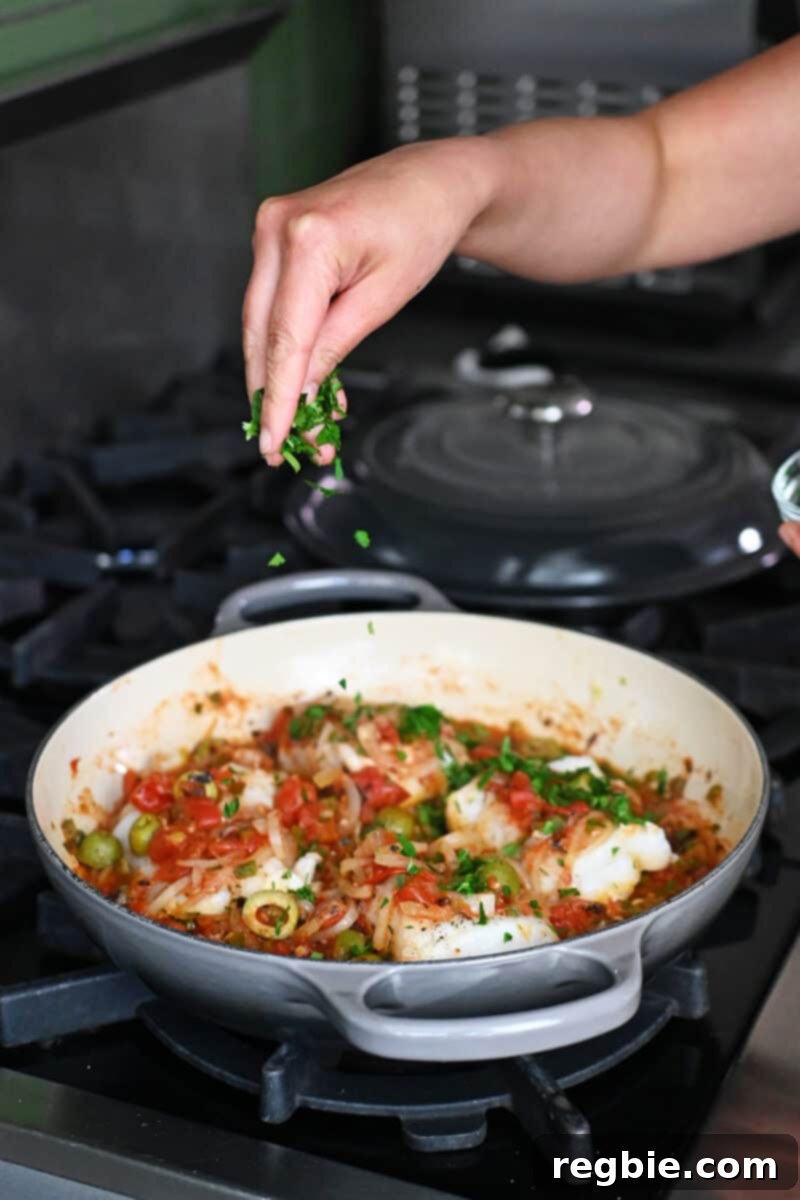
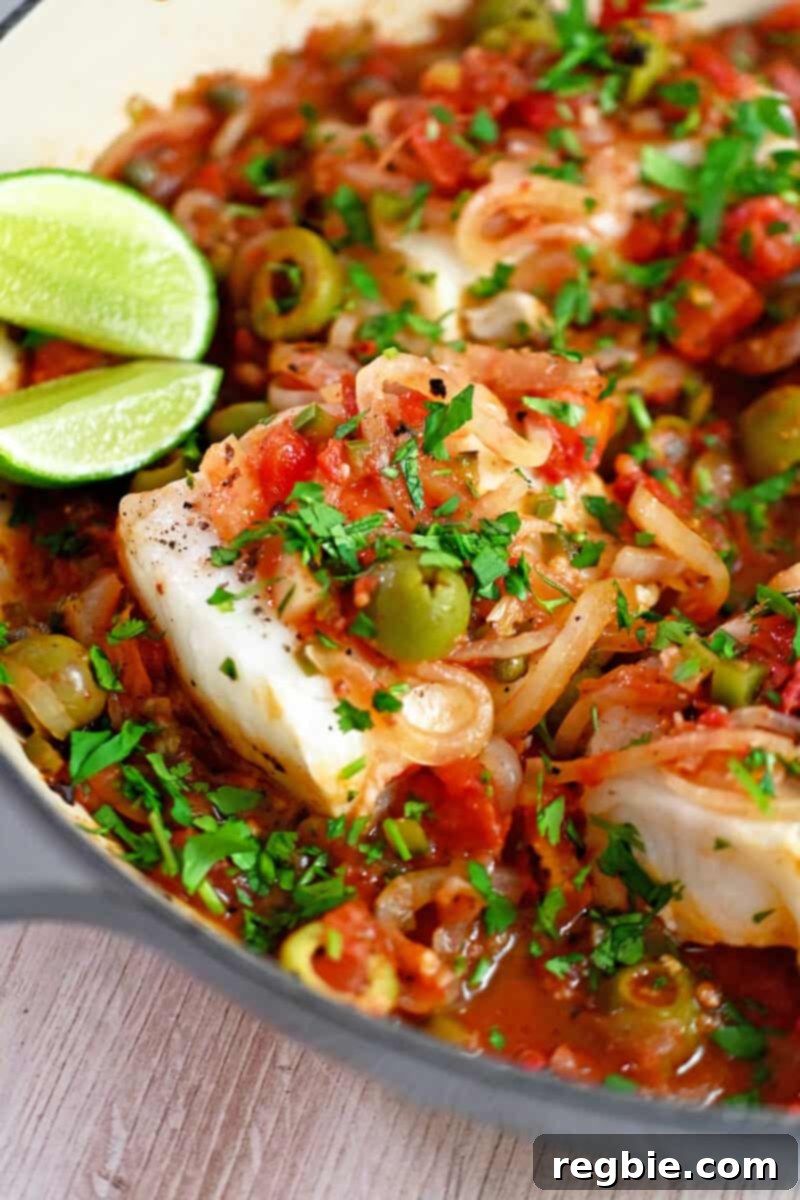
Garnish and Serve: Once the fish is cooked, remove the bay leaf. Sprinkle a generous amount of fresh minced cilantro over the entire dish. Serve the Fish in Veracruz Sauce immediately, accompanied by fresh lime wedges. Encourage everyone to squeeze a burst of fresh lime juice over their portion just before taking a bite – it truly elevates all the flavors!
Serving Suggestions for Veracruz Fish
Fish in Veracruz Sauce is a complete and satisfying meal on its own, but it truly shines when paired with thoughtful side dishes. To keep this recipe perfectly aligned with paleo, Whole30, and keto guidelines, consider these delicious accompaniments:
- Cauliflower Rice: A fantastic low-carb alternative to traditional white rice. Its neutral flavor provides the perfect canvas to soak up all the zesty Veracruz sauce. You can easily make your own or find pre-riced cauliflower in most grocery stores.
- Instant Pot Crispy Potatoes: If you’re not strictly adhering to keto, my Instant Pot Crispy Potatoes offer a wonderful texture and savory complement to the fish.
- Avocado Salad: A simple salad of sliced avocado, a squeeze of lime, and a sprinkle of salt provides a creamy, refreshing contrast to the tangy sauce.
- Steamed Green Beans or Asparagus: Lightly steamed vegetables offer a fresh crunch and vibrant color, making for a well-rounded meal.
- Warm Tortillas (if not strictly paleo/keto): For those who can enjoy them, warm corn tortillas (or grain-free tortillas) are perfect for scooping up the delicious sauce.
Tips and Tricks for Perfect Veracruz Fish
To ensure your Fish in Veracruz Sauce turns out perfectly every time, keep these tips in mind:
- Don’t Overcook the Fish: White fish cooks quickly, and overcooking can lead to dry, rubbery results. The best way to check for doneness is with an instant-read thermometer (aim for 140-145°F) or by gently flaking the fish with a fork—it should separate easily.
- Evenly Sliced Onions: Thin, uniform onion slices will soften at the same rate, integrating seamlessly into the sauce.
- Fresh Ingredients Matter: While canned tomatoes are a shortcut, using fresh garlic, onions, and cilantro makes a noticeable difference in flavor.
- Taste and Adjust: Always taste your sauce before adding the fish. Adjust salt, pepper, or even a tiny pinch of sugar if the tomatoes are too acidic (though fire-roasted usually balance well).
- Quality Olives: The type of green olive you use can impact the flavor. Castelvetrano olives offer a buttery, milder brine compared to stronger Spanish green olives.
- Make Ahead (Sauce Only): The Veracruz sauce can be made a day in advance and stored in the refrigerator. Reheat gently, then add the fish to cook just before serving. This can shave off even more last-minute prep time.
- Storage: Leftover Fish in Veracruz Sauce can be stored in an airtight container in the refrigerator for up to 2-3 days. Gently reheat on the stovetop or in the microwave.
More Healthy Seafood Recipes You’ll Love
If you’re a fan of delicious and healthy seafood, you’ll love exploring these other paleo-friendly options. Each recipe offers unique flavors and preparation methods to keep your meals exciting:
- Hash Brown Fish (page 150 in Nom Nom Paleo: Let’s Go!)
- Ginger Scallion Fish Fillets (page 156 in Nom Nom Paleo: Let’s Go!)
- Umami Fried Shrimp (page 164 in Nom Nom Paleo: Let’s Go!)
- Lobster Tails with Thai Red Curry Sauce (page 170 in Nom Nom Paleo: Let’s Go!)
- Air Fryer Fish Sticks
- Fried Calamari
- Shrimp and Avocado Salad
- Paleo Walnut Shrimp
Searching for more culinary inspiration? Explore my comprehensive Recipe Index for a wide array of delicious dishes. You can also discover exclusive recipes and more in my acclaimed cookbooks: Nom Nom Paleo: Food for Humans (Andrews McMeel Publishing 2013), Ready or Not! (Andrews McMeel Publishing 2017), and Nom Nom Paleo: Let’s Go! (Andrews McMeel Publishing 2022).
Full Recipe Card: Fish in Veracruz Sauce (Paleo, Keto, Whole30, Gluten Free)
Fish in Veracruz Sauce (Paleo, Keto, Whole30, Gluten Free)
Prep Time: 10 mins
Cook Time: 20 mins
Servings: 4
Author: Michelle Tam
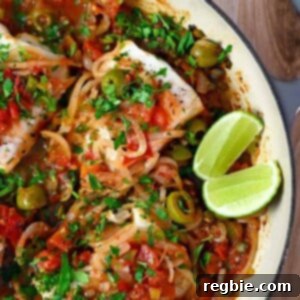
Fish in Veracruz Sauce is a delicious 30-minute, one-pan dish featuring white fish fillets simmered in a zesty tomato sauce flavored with capers, olives, and onions. It’s so simple and delicious that you’ll rush to add it to your weekly dinner rotation!
Ingredients
- 2 tablespoons extra virgin olive oil
- 1 medium yellow onion, halved and thinly sliced
- Diamond Crystal kosher salt
- 1 Anaheim pepper, seeded and finely diced
- 3 garlic cloves, minced
- 14.5 ounce can fire-roasted diced tomatoes (undrained)
- ½ cup green olives, pitted and cut in half
- 1 tablespoon drained capers
- ½ teaspoon dried oregano
- 1 dried bay leaf
- Freshly ground black pepper
- 4 white fish fillets (skinless and boneless), about 6 ounces each and 1-inch thick (sea bass, red snapper, halibut, cod, or tilapia are great choices)
- ¼ cup minced fresh cilantro
- 1 lime, cut into wedges
Instructions
- Heat a large skillet over medium heat. Add the extra virgin olive oil when the pan is hot.
- Add the thinly sliced onion and sprinkle on some salt. Cook until softened and translucent, about 8 to 10 minutes, stirring occasionally.
- Stir in the chopped Anaheim pepper and minced garlic. Cook for about 30 seconds until fragrant, being careful not to burn the garlic.
- Add the canned fire-roasted diced tomatoes (undrained), green olives, capers, dried oregano, and bay leaf to the skillet. Stir to combine.
- Bring the sauce to a gentle boil, then reduce the heat to maintain a simmer. Allow the sauce to simmer for at least 5-10 minutes for flavors to meld. Taste and season with additional salt and freshly ground black pepper as needed.
- While the sauce simmers, pat the fish fillets dry with a paper towel and sprinkle both sides generously with salt and pepper.
- Carefully nestle the seasoned fish fillets into the simmering sauce. Spoon some of the sauce over the top of each fillet. Cover the skillet and cook on low heat for about 10 minutes, or until the fish is opaque throughout and flakes easily with a fork (internal temperature should be around 140-145°F or 60-63°C).
- Remove the bay leaf. Sprinkle on some fresh minced cilantro. Serve the fish immediately with lime wedges for squeezing fresh lime juice over each serving.
Notes
What can you serve with Fish in Veracruz Sauce?
To keep this dish paleo, Whole30, and keto, serve it with cauliflower rice instead of traditional white rice. It also pairs wonderfully with my Instant Pot Crispy Potatoes for a heartier meal.
Nutrition
Nutrition information is automatically calculated and should only be used as an approximation. Individual results may vary based on ingredients and preparation methods.