
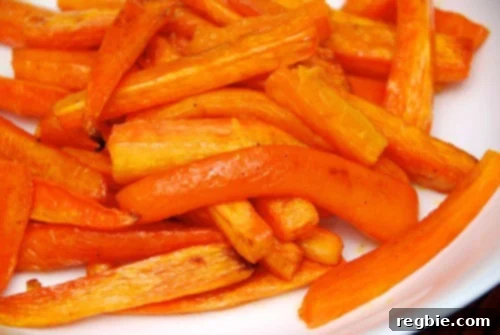
Welcome to a culinary journey that celebrates simplicity, flavor, and the sheer delight of perfectly prepared vegetables. If you’ve been following along, you’ll know that my absolute favorite method for transforming humble produce into a show-stopping side dish is through the magic of roasting. There’s something truly special about how the dry heat of the oven concentrates and intensifies natural flavors, bringing out a depth that boiling or steaming simply can’t achieve. Beyond the incredible taste, roasting offers unparalleled convenience. You don’t need to constantly monitor your vegetables; they largely take care of themselves as they cook, freeing you up to focus on other aspects of your meal or simply relax. And let’s be honest, minimal prep time and a straightforward cleanup are always winning propositions in any kitchen, especially after a long, demanding week.
Roasted Carrots: Your Ultimate Guide to Sweet, Caramelized Perfection
Today, we’re putting the spotlight on a star of the root vegetable world: carrots. While often relegated to being a background player, roasted carrots truly shine, revealing their inherent sweetness and developing a delightful tender-crisp texture. This recipe isn’t just about cooking carrots; it’s about unlocking their full potential with minimal effort, making them a fantastic addition to any meal, from a casual weeknight dinner to a festive holiday spread. Get ready to transform ordinary carrots into an extraordinary culinary experience.
The Art and Science of Roasting Vegetables: Unlocking Deep Flavor
Roasting is more than just cooking; it’s a flavor-enhancing process rooted in culinary science. When vegetables are exposed to high heat in the oven, a series of chemical reactions occur, most notably the Maillard reaction and caramelization. The Maillard reaction is responsible for the savory “browning” on the surface of your carrots, creating hundreds of new flavor compounds that are far more complex and appealing than those in raw or steamed vegetables. Simultaneously, the natural sugars within the carrots undergo caramelization, a process that deepens their sweetness and adds subtle nutty undertones. This dual action is why roasted vegetables taste so incredibly good – they develop a complex profile of sweet, savory, and slightly smoky notes that are utterly irresistible. The dry heat also drives off moisture, concentrating the vegetable’s essence and giving it that desirable slightly crisp exterior.
Why Roasted Carrots Are a Must-Try: Nutrition Meets Irresistible Flavor
Carrots are not only delicious but also incredibly nutritious. They are an excellent source of beta-carotene, which the body converts into vitamin A, crucial for vision, immune function, and skin health. They also provide dietary fiber, vitamin K, potassium, and antioxidants. Roasting enhances their natural sweetness, making them appealing even to those who might typically shy away from vegetables. The high heat coaxes out the sugars, leading to a beautifully caramelized exterior and a tender, melt-in-your-mouth interior. This transformation makes roasted carrots a versatile side dish that pairs wonderfully with a wide range of proteins, from roasted chicken and grilled salmon to hearty beef stews and vibrant vegetarian meals. They offer a delightful balance of earthy and sweet, a contrast that enriches any plate.
Essential Ingredients for Perfect Roasted Carrots
Crafting exceptional roasted carrots begins with selecting high-quality ingredients and understanding how each contributes to the final flavor and texture. The beauty of this recipe lies in its simplicity, requiring just a few core components that, when combined correctly, yield extraordinary results.
Choosing Your Carrots: The Foundation of Flavor
For this recipe, I recommend using six large carrots, which should yield approximately 1.5 pounds of prepped vegetables, enough to serve 3-4 people generously. When selecting carrots, look for firm, vibrant roots with smooth skin. Avoid those that are rubbery, cracked, or have soft spots, as these indicate they are past their prime. While the recipe specifies large carrots, you can absolutely use other varieties. Baby carrots are convenient as they often don’t require peeling, but ensure they are fresh and firm. Rainbow carrots can add a beautiful visual appeal to your dish, with their varied hues of purple, yellow, and white, each offering subtle differences in sweetness and earthiness. Regardless of the type, washing them thoroughly is essential, and peeling is recommended for larger, tougher-skinned carrots to ensure a tender bite.
Selecting the Ideal Fat: The Key to Crispness and Flavor
The fat you choose plays a crucial role in achieving that coveted crispy exterior and evenly cooked interior, while also acting as a flavor carrier. My go-to is extra virgin olive oil, especially a garlic-flavored variant if you want an extra aromatic kick. However, garlic-infused oils can sometimes be quite potent, so I often blend it with plain extra virgin olive oil to achieve a balanced, nuanced flavor without overwhelming the carrots’ natural sweetness. The update on my original recipe from January 2011 highlighted other excellent alternatives, demonstrating the versatility of this dish: lard, ghee, or coconut oil. Lard provides a rich, savory depth and excellent crisping properties, while ghee (clarified butter) offers a nutty, buttery flavor that complements the carrots beautifully. Coconut oil, particularly unrefined, imparts a subtle tropical aroma that can be a delightful pairing with the sweetness of carrots, especially if you’re exploring more exotic flavor profiles. The key is to use enough fat to lightly coat all the carrot pieces, ensuring they roast rather than steam.
Seasoning: The Foundation of Flavor
Simple yet powerful, the right seasoning can elevate your roasted carrots from good to unforgettable. Diamond Crystal kosher salt is my preferred choice due to its coarse texture, which allows for easier handling and more even distribution compared to fine table salt, and its pure, clean flavor. It helps draw out moisture from the carrots, contributing to their caramelization, and enhances their natural sweetness. Freshly ground black pepper adds a subtle warmth and a gentle bite that complements the sweetness. Always opt for freshly ground pepper over pre-ground, as it retains far more of its aromatic oils and provides a more vibrant flavor. These two pantry staples form the basic seasoning profile, but don’t hesitate to think of them as a canvas for further customization.
Equipment You’ll Need
While this recipe is wonderfully simple, having the right tools can make the process even smoother and more enjoyable. You won’t need anything fancy, just standard kitchen essentials:
- Large Baking Sheet(s): A sturdy, rimmed baking sheet is crucial. Using two if necessary ensures the carrots are spread in a single layer without overcrowding, which is vital for proper roasting and crispness.
- Parchment Paper or Aluminum Foil: Lining your baking sheet with either parchment paper or aluminum foil makes cleanup a breeze and prevents sticking. Parchment paper is generally preferred for vegetables as it helps prevent sticking without reacting with acidic foods.
- Sharp Chef’s Knife: Essential for efficiently peeling and slicing the carrots into uniform pieces.
- Cutting Board: A stable surface for all your chopping needs.
- Large Bowl or Gallon-Sized Ziploc Bag: For tossing the carrots with oil and seasonings, ensuring every piece is evenly coated.
- Vegetable Peeler: To quickly and effectively peel your carrots.
- Tongs or Spatula: For rotating and flipping the carrots during roasting.
For more kitchen tool recommendations that I swear by, check out my curated list here.
Recipe: Perfectly Roasted Carrots
Serves: 3-4
Prep time: 15 minutes
Cook time: 30-45 minutes
Total time: 45-60 minutes
Ingredients:
- 6 large carrots, peeled and sliced lengthwise (yielding about 1.5 lbs prepared)
- 2-3 tablespoons extra virgin olive oil (garlic-infused or regular), lard, ghee, or coconut oil
- ½ – 1 teaspoon Diamond Crystal kosher salt (adjust to taste)
- ¼ – ½ teaspoon freshly ground black pepper (adjust to taste)
- Optional enhancements (see instructions for timing): 1-2 cloves minced garlic, 1 teaspoon microplaned ginger, fresh cilantro, fresh lemon juice, Trader Joe’s Orange Muscat Champagne vinegar or aged balsamic vinegar, Madras curry powder.
Step-by-Step Instructions:
- Prepare the Carrots: Begin by thoroughly washing and peeling your carrots. For larger carrots, slice them lengthwise into uniform pieces, approximately ½ inch thick. The key here is consistency; uniform pieces will cook evenly, ensuring no burnt ends or undercooked centers. If using baby carrots, simply wash them well.
- Preheat Oven & Prep Tray: Preheat your oven to a robust 425°F (220°C). While the oven heats, line a large baking sheet with parchment paper or aluminum foil. This prevents sticking and makes post-meal cleanup significantly easier.
- Season the Carrots: In a spacious bowl or a large gallon-sized Ziploc bag, combine the prepared carrots with your chosen fat (extra virgin olive oil, lard, ghee, or coconut oil). Add the kosher salt and freshly ground black pepper. Toss vigorously and thoroughly until every carrot piece is glistening and evenly coated. This ensures consistent flavor distribution and promotes even browning during roasting.
- Arrange for Roasting: Spread the seasoned carrots in a single layer across the prepared baking sheet. It is crucial to avoid overcrowding the pan. If the carrots are too close together, they will steam instead of roast, resulting in soft, soggy vegetables rather than tender, caramelized ones. If necessary, use two baking sheets to give them ample space.
- Roast to Perfection: Place the baking sheet(s) in the preheated oven. Roast for 30-45 minutes, depending on the thickness of your carrots and your desired level of tenderness and caramelization. To ensure uniform cooking and browning, make it a habit to rotate the tray and flip the carrots every 10-15 minutes. Towards the end of the cooking time (e.g., during the last 15-20 minutes), you might want to flip them more frequently, every 5 minutes, to prevent any single side from over-browning. The carrots are perfectly done when they are tender-crisp with beautifully caramelized edges and a rich, sweet aroma.
- Optional Flavor Boosts (Post-Roasting):
- Garlic & Ginger Infusion: For an aromatic kick, immediately after removing the hot carrots from the oven, toss them with 1-2 cloves of finely minced garlic and 1 teaspoon of microplaned ginger. The residual heat from the carrots will gently soften and warm these aromatics, releasing their flavors without the risk of burning them, which can happen if added too early.
- Vinegar Finish: To brighten the flavors and add a delightful tang, drizzle a splash of your favorite vinegar over the plated carrots. Trader Joe’s Orange Muscat Champagne vinegar or a high-quality aged balsamic vinegar are excellent choices that provide a complex acidity, cutting through the sweetness and richness of the roasted vegetables.
- Curry & Cilantro Twist: For an exciting global flavor profile, inspired by my update from May 2011, toss the freshly roasted carrots with a pinch of Madras curry powder, a generous handful of fresh chopped cilantro, and a squeeze of fresh lemon juice. This combination adds warmth, herbaceous freshness, and a zesty brightness that is truly irresistible.
- Serve Hot: Serve your perfectly roasted carrots immediately as a delicious and healthy side dish. They are best enjoyed warm, straight from the oven.
Flavor Variations and Creative Twists
While the basic roasted carrot recipe is phenomenal on its own, its simplicity makes it an ideal canvas for culinary creativity. Don’t be afraid to experiment with different seasonings and finishes to suit your palate or complement your main course.
- Maple or Honey Glaze: For an even sweeter treat, drizzle the carrots with 1-2 tablespoons of maple syrup or honey during the last 10-15 minutes of roasting. This creates a beautiful sticky glaze that caramelizes beautifully.
- Herbal Infusion: Fresh herbs like rosemary, thyme, or oregano pair exceptionally well with carrots. Toss sprigs of these herbs with the carrots and oil before roasting, or sprinkle finely chopped fresh herbs over the finished dish.
- Spicy Kick: If you enjoy a bit of heat, add a pinch of red pepper flakes or a dash of cayenne pepper to your seasoning mix. A sprinkle of smoked paprika can also add depth and a smoky warmth.
- Citrus Zest: The bright, zesty notes of orange or lemon zest can beautifully complement the sweetness of roasted carrots. Add the zest during the last few minutes of roasting or sprinkle it over the finished dish for a burst of freshness.
- Indian-Spiced: Beyond Madras curry, consider a blend of cumin, coriander, and turmeric for an earthy, aromatic profile. Finish with a squeeze of lime juice.
- Gremolata Finish: A classic Italian gremolata (minced fresh parsley, lemon zest, and garlic) sprinkled over warm roasted carrots adds a burst of fresh, vibrant flavor.
Tips for Roasting Success
Even though roasting carrots is straightforward, a few key tips can elevate your dish from good to absolutely perfect:
- Don’t Overcrowd the Pan: This is arguably the most important rule for roasting. Carrots need space for the hot air to circulate around them, allowing them to brown and caramelize properly. Crowding causes them to steam in their own moisture, leading to a mushy texture.
- Uniformity in Size: As mentioned in the instructions, consistent sizing of your carrot pieces ensures they cook at the same rate. This avoids a mix of undercooked and overcooked pieces.
- High Heat is Key: A hot oven (400-425°F or 200-220°C) is essential for developing that desirable crispy exterior and sweet caramelization.
- Don’t Skimp on Fat: The oil or fat helps with heat transfer, flavor, and browning. Ensure all pieces are lightly coated.
- Preheat Thoroughly: Always place your vegetables into a fully preheated oven and onto a hot baking sheet (if you put the sheet in while preheating) to kickstart the roasting process immediately.
- Flip and Rotate: Regularly flipping and rotating the carrots ensures even browning and prevents sticking or burning on one side.
- Taste and Adjust: Always taste your food before serving. Add more salt, pepper, or other seasonings if needed.
Serving Suggestions
Roasted carrots are incredibly versatile and can be served in countless ways. They make a fantastic side dish for almost any main course:
- With Proteins: Pair them with roasted chicken, pan-seared steak, baked fish, or grilled pork chops for a balanced and flavorful meal.
- Vegetarian Mains: Complement lentil loaf, black bean burgers, or quinoa salads with a vibrant serving of roasted carrots.
- Holiday Feasts: Their vibrant color and sweet flavor make them a natural fit for Thanksgiving, Christmas, or Easter dinners.
- Salads: Chop cooled roasted carrots and add them to grain bowls or green salads for added texture, sweetness, and nutrition.
- Meal Prep: Roast a large batch at the beginning of the week to easily add to meals throughout.
These sweet, savory, and beautifully caramelized roasted carrots are truly a testament to the power of simple cooking methods. Once you master this technique, you’ll find yourself reaching for your baking sheet again and again, ready to transform any vegetable into a star. You’ll dig ’em. I promise.
Looking for more culinary inspiration? Explore my extensive Recipe Index for a wide array of delicious dishes designed to nourish and delight. You can also discover exclusive recipes through my popular iPhone and iPad app, and delve into my acclaimed cookbooks that continue to guide so many on their healthy eating journey: Nom Nom Paleo: Food for Humans (Andrews McMeel Publishing 2013), Ready or Not! (Andrews McMeel Publishing 2017), and Nom Nom Paleo: Let’s Go! (Andrews McMeel Publishing 2021).
Note: Nutrition information provided for recipes is automatically calculated and should be used as an approximation.
If you loved this simple yet incredibly flavorful recipe for roasted carrots, please consider leaving a comment below and sharing your culinary experience. Your feedback and creative twists are always welcome!