
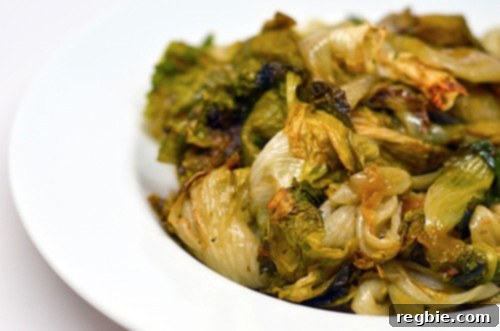
Mastering the Art of Oven-Roasted Escarole: A Simple & Flavorful Side Dish
For those who appreciate the robust flavors and tender-crisp textures that only roasting can achieve, oven-roasted escarole is a revelation. It’s a versatile and incredibly simple method that transforms this often-overlooked leafy green into a delightful side dish or a vibrant addition to any meal. If you’re accustomed to roasting other vegetables, you’ll find that escarole, a member of the chicory family, responds beautifully to high heat, mellowing its natural bitterness and developing wonderfully caramelized edges.
The inspiration for embracing roasted chicories comes from culinary masters like Deborah Madison, whose book, Local Flavors: Cooking and Eating From America’s Farmers’ Markets, opened my eyes to the potential of these greens. While Madison’s original approach might feature radicchio, the technique is universally applicable to any chicory, including our star today: escarole. Roasting not only tames the inherent bitterness that some find challenging but also imparts a desirable crispness that adds an exciting textural contrast to your plate. Prepare to discover a new favorite way to enjoy leafy greens!
Why You’ll Love Oven-Roasted Escarole
This recipe for oven-roasted escarole isn’t just easy; it’s a game-changer for anyone looking to incorporate more greens into their diet or simply seeking a fresh, flavorful side. Here’s why it deserves a spot in your regular cooking rotation:
- Bitterness Be Gone: Roasting at a high temperature works magic on bitter greens. The heat caramelizes their natural sugars, transforming the sharp, peppery notes into a subtle, earthy sweetness. Even those who claim to dislike bitter vegetables often find themselves enjoying roasted escarole.
- Irresistible Texture: The process yields tender inner leaves with deliciously crispy, almost charred, outer edges. This textural interplay adds excitement to every bite, making it far more interesting than simply steamed or sautéed greens.
- Effortless Preparation: With minimal prep and hands-on time, this dish is perfect for weeknights or when you need a quick, healthy side. Simply chop, toss, and roast!
- Versatile Pairing: Oven-roasted escarole complements a wide array of main courses, from roasted chicken and pan-seared fish to grilled steak or even a hearty pasta dish. It’s light enough not to overpower but flavorful enough to stand on its own.
- Nutrient-Rich: Escarole is packed with vitamins A, C, and K, as well as folate and fiber, making this a healthy addition to any meal.
What is Escarole? (And Its Chicory Cousins)
Before we dive into the cooking process, let’s get to know our main ingredient a little better. Escarole (Cichorium endivia, var. latifolium) is a leafy green vegetable belonging to the chicory family, which also includes endive, radicchio, and frisée. It’s characterized by broad, wavy, light-green leaves that form a loose head. While often mistaken for lettuce due to its appearance, escarole has a distinctly different flavor profile, offering a pleasant, mild bitterness.
In the culinary world, chicories are prized for their unique peppery and slightly bitter taste, which adds depth and complexity to dishes. Escarole, in particular, is one of the milder chicories, making it an excellent entry point for those new to these greens. Its crisp texture makes it wonderful in salads, but its robust nature also allows it to stand up beautifully to cooking methods like sautéing, grilling, and, of course, roasting.
Beyond its flavor, escarole is a nutritional powerhouse. It’s an excellent source of dietary fiber, which aids digestion and promotes gut health. It also provides significant amounts of Vitamin K, crucial for blood clotting and bone health, and Vitamin A, vital for vision and immune function. The subtle bitterness comes from compounds that are believed to have antioxidant and anti-inflammatory properties, contributing to overall well-being. So, when you’re enjoying a plate of roasted escarole, you’re not just savoring delicious flavors; you’re also nourishing your body.
The Simple & Delicious Method for Oven-Roasted Escarole
Roasting escarole is remarkably straightforward, requiring minimal effort for maximum flavor. Here’s a detailed breakdown of the process to ensure perfect results every time.
Time to Make Oven-Roasted Escarole!
Serves 4
Ingredients:
- 1 large head of escarole, thoroughly washed and cut into quarters lengthwise (or 3 smaller heads of radicchio, cut in half lengthwise, if substituting)
- 3 tablespoons of melted ghee or high-quality olive oil (avocado oil is also a great alternative for its high smoke point and neutral flavor)
- 1 tablespoon Sunny Paris seasoning (see notes below for alternatives)
- Kosher salt (Diamond Crystal is recommended for its flakey texture and excellent seasoning control)
- Freshly ground black pepper
- Aged balsamic vinegar, for finishing (a good quality balsamic makes a significant difference)
Ingredient Spotlight & Substitution Notes:
- Escarole: Choose a head that feels firm and looks vibrant green. Avoid any with yellowing or wilting leaves. If escarole isn’t available, radicchio or even Belgian endive can be roasted using the same method, though their bitterness levels and textures will vary slightly.
- Ghee or Olive Oil: Ghee, clarified butter, offers a rich, slightly nutty flavor and a high smoke point, ideal for roasting. Extra virgin olive oil provides a classic Mediterranean flavor. Avocado oil is another excellent choice, being very stable at high temperatures with a mild taste.
- Sunny Paris Seasoning: This beloved seasoning blend typically includes chives, shallots, green peppercorns, dill, and basil, offering a wonderfully aromatic and herbaceous profile. If you don’t have Sunny Paris, a good alternative would be a mix of dried herbs like Herbes de Provence, a dash of garlic powder, and a pinch of onion powder. Alternatively, simply use garlic powder and dried oregano for a more rustic flavor.
- Kosher Salt & Freshly Ground Pepper: These are non-negotiable flavor enhancers. Always season generously but to your taste.
- Aged Balsamic Vinegar: Drizzling a good quality aged balsamic vinegar over the hot roasted escarole adds a beautiful tang and a hint of sweetness, elevating the entire dish. Its acidity cuts through the richness and brightens the flavors.
Method: Step-by-Step Instructions
- Preheat Oven and Prepare Dish: Begin by preheating your oven to 400°F (200°C). As the oven heats, grab a 9×13-inch glass or ceramic baking dish. A metal baking sheet lined with parchment paper also works well for easier cleanup and potentially crispier edges.
- Coat the Baking Dish: Lightly coat the bottom of your chosen baking dish with a portion of the melted ghee or olive oil. This prevents sticking and helps in even browning.
- Arrange the Escarole: Place the quartered escarole pieces in a single layer in the prepared baking dish. Ensure there’s enough space between them for air to circulate; overcrowding will lead to steaming rather than roasting. If necessary, use two baking dishes.
- Season Generously: Drizzle the remaining melted ghee or olive oil evenly over the tops of the escarole quarters. Then, sprinkle generously with Sunny Paris seasoning, kosher salt, and freshly ground black pepper. Don’t be shy with the seasoning; it will distribute as the escarole roasts.
- First Roast: Place the baking dish in the preheated oven and roast for 15 minutes. During this time, the escarole will begin to soften and the edges will start to brown.
- Flip and Continue Roasting: Carefully remove the dish from the oven. Using tongs, gently flip each piece of escarole to ensure even cooking and browning on both sides. Return the dish to the oven and roast for an additional 8-10 minutes. The escarole is perfectly cooked when it’s tender but still has a slight bite, with beautifully blackened and crisp edges. Keep an eye on it to prevent burning.
- Finish with Balsamic: Once the escarole is done, remove it from the oven. Before serving, drizzle a generous amount of aged balsamic vinegar over the warm greens. The heat will slightly reduce the balsamic, intensifying its flavor and creating a glossy finish.
- Serve Immediately: Transfer the oven-roasted escarole to a serving platter and enjoy it while it’s warm and fresh.
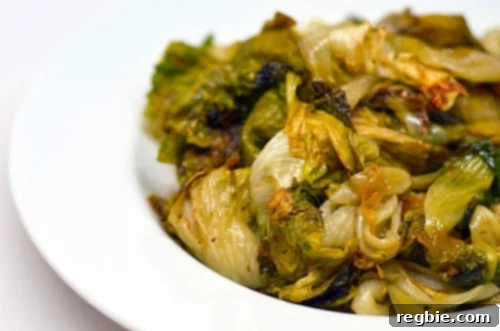
This simple technique truly unlocks the best qualities of escarole. The bitterness transforms into a pleasant undertone, complemented by the savory seasoning and the tangy sweetness of balsamic vinegar. It’s so good, you’ll want to try it with other chicories too – radicchio is next on my list!
Tips for Roasting Bitter Greens Like a Pro
While this recipe is straightforward, a few key tips can elevate your roasted escarole (or any bitter green) to restaurant-quality:
- Don’t Overcrowd the Pan: This is perhaps the most crucial rule for roasting any vegetable. If your escarole pieces are too close together, they will steam instead of roast, resulting in soggy greens. Use multiple baking sheets if necessary to ensure a single layer with some space around each piece.
- High Heat is Key: Roasting at 400°F (200°C) provides the intense heat needed to caramelize the greens quickly, developing those desirable crispy, blackened edges. Lower temperatures will just wilt the escarole.
- Even Coating of Fat: Ensure every piece of escarole is coated with ghee or oil. This fat not only helps with browning but also carries the flavors of your seasonings and prevents the greens from drying out.
- Season Liberally: Greens, especially bitter ones, can handle a good amount of salt and pepper. Taste as you go, but remember that proper seasoning enhances all the other flavors.
- Watch Closely Towards the End: Roasting times can vary slightly depending on your oven and the size of your escarole. Keep an eye on the greens during the last few minutes of roasting to achieve that perfect balance of tender interior and crisp exterior without burning.
- Finish with Acid: The drizzle of balsamic vinegar at the end is not just for flavor; it’s also a crucial balancing act. The acidity brightens the dish and cuts through any lingering bitterness, tying all the flavors together beautifully. Lemon juice or a splash of red wine vinegar could also work in a pinch.
Serving Suggestions & Flavor Pairings
Oven-roasted escarole is incredibly versatile and can be served in numerous ways. Here are some ideas to inspire your next meal:
- Classic Side Dish: Serve it alongside roasted chicken, grilled fish, pan-seared pork chops, or a juicy steak. Its slightly bitter and savory profile provides a refreshing counterpoint to richer proteins.
- Pasta Enhancer: Chop the roasted escarole and toss it with your favorite pasta, a little garlic, chili flakes, and a generous grating of Parmesan cheese for a quick and flavorful vegetarian meal.
- Salad Topper: Add cooled, chopped roasted escarole to a grain bowl or a mixed green salad for added texture, warmth, and depth of flavor.
- Sandwich or Wrap Filling: Layer it into sandwiches, wraps, or even flatbreads for a sophisticated and healthy vegetable component.
- Egg Dish Companion: Serve it with scrambled eggs, an omelet, or a frittata for a hearty breakfast or brunch.
- Underneath Roasted Meats: Place the escarole directly under a roasting chicken or pork shoulder during the last 20-30 minutes of cooking. It will absorb the flavorful drippings and become incredibly tender and savory.
Looking for more culinary inspiration? Dive into my extensive Recipe Index for a treasure trove of delicious and healthy meal ideas. You’ll also find exclusive recipes available on my iPhone and iPad app, and within my acclaimed cookbooks: Nom Nom Paleo: Food for Humans (Andrews McMeel Publishing 2013), Ready or Not! (Andrews McMeel Publishing 2017), and Nom Nom Paleo: Let’s Go! (Andrews McMeel Publishing 2021). Each book is packed with vibrant photography, clear instructions, and innovative recipes designed to make healthy eating both delicious and accessible.
Printer-Friendly Recipe Card: Oven-Roasted Escarole
Oven-Roasted Escarole
Average Rating: 4.67 out of 5 stars (from 12 votes)
5 mins
25 mins
30 mins
4
Michelle Tam
Print Recipe
Ingredients
- 1 large head of escarole cut into quarters
- 3 tablespoon melted ghee or avocado oil
- 1 tablespoon Sunny Paris seasoning
- Diamond Crystal kosher salt
- Freshly ground black pepper
- aged balsamic vinegar
Instructions
-
Preheat the oven to 400 F (200°C) and grab a 9×13″ glass baking dish.
-
Coat the baking dish in ghee or olive oil before putting the quartered escarole in a single layer.
-
Drizzle the remaining ghee or olive oil over the top of the greens and season with Sunny Paris, salt, and pepper.
-
Roast the greens in the oven for 15 minutes then flip them. Roast for another 8-10 minutes. The escarole is finished when it has blackened edges and is tender-crisp.
-
Take the dish out of the oven and drizzle on aged balsamic vinegar before serving.
Nutrition
Nutrition information is automatically calculated, so should only be used as an approximation.
Frequently Asked Questions (FAQ) about Roasted Escarole
Q: Can I use other types of chicory for this recipe?
A: Absolutely! This recipe is incredibly versatile. Radicchio, Belgian endive, or even frisée can be roasted using the same method. Keep in mind that their bitterness levels and textures will vary, so adjust roasting times slightly and taste as you go.
Q: What if I don’t have Sunny Paris seasoning?
A: No problem! You can easily substitute it with other dried herbs. A mix of Italian seasoning, Herbes de Provence, or even just garlic powder and dried oregano would work wonderfully. The key is to add aromatic depth to the greens.
Q: How can I make my roasted escarole extra crispy?
A: To maximize crispiness, ensure your escarole is thoroughly dry before roasting. Don’t overcrowd the baking sheet, as this causes steaming. You can also use a metal baking sheet instead of glass, as metal conducts heat more efficiently, leading to better browning and crisping. A very light dusting of cornstarch or arrowroot powder tossed with the greens and oil can also aid in crispness, but is not usually necessary.
Q: Can I roast escarole ahead of time?
A: Roasted escarole is best enjoyed immediately for optimal texture. However, leftovers can be stored in an airtight container in the refrigerator for up to 2-3 days. Reheat gently in a pan on the stovetop or in the oven to try and regain some crispness, though it won’t be as crisp as fresh.
Q: Is roasted escarole suitable for a specific diet (e.g., Paleo, Keto, Vegetarian)?
A: Yes! This recipe is naturally Paleo, Whole30, Keto, and vegetarian-friendly. For a vegan option, simply ensure you use olive oil or avocado oil instead of ghee. It’s a fantastic clean-eating side dish that fits a variety of dietary needs.
Embrace the Simplicity of Roasted Escarole
This oven-roasted escarole recipe is a testament to how simple ingredients, combined with the right cooking technique, can yield extraordinary flavors. It’s a dish that celebrates the natural character of the vegetable while transforming it into something truly irresistible. Whether you’re a seasoned chef or a home cook looking to expand your repertoire of healthy and delicious side dishes, this recipe is sure to become a cherished favorite.
So, the next time you spot a beautiful head of escarole at your local market, don’t hesitate. Grab it, give it a quick roast, and prepare to be amazed by the depth of flavor and delightful texture that emerges. It’s an easy, elegant, and incredibly satisfying way to enjoy your greens!