
Embark on a culinary adventure with lemongrass! This comprehensive guide will teach you everything you need to know about selecting, storing, trimming, and preparing this aromatic herb for a variety of exquisite dishes. Say goodbye to intimidation and hello to vibrant, fresh flavors in your kitchen!
Mastering Lemongrass: Your Ultimate Guide to Preparation and Cooking
For many home cooks, the sight of a tough, fibrous stalk of lemongrass can be a little daunting. I confess, I once felt the same apprehension, even after years of cooking. This fear was partly fueled by a friend’s unfortunate incident involving a knife and a stubborn lemongrass stalk, which landed her in the emergency room. For a long time, the mystery of proper preparation kept me from fully embracing this incredible ingredient.
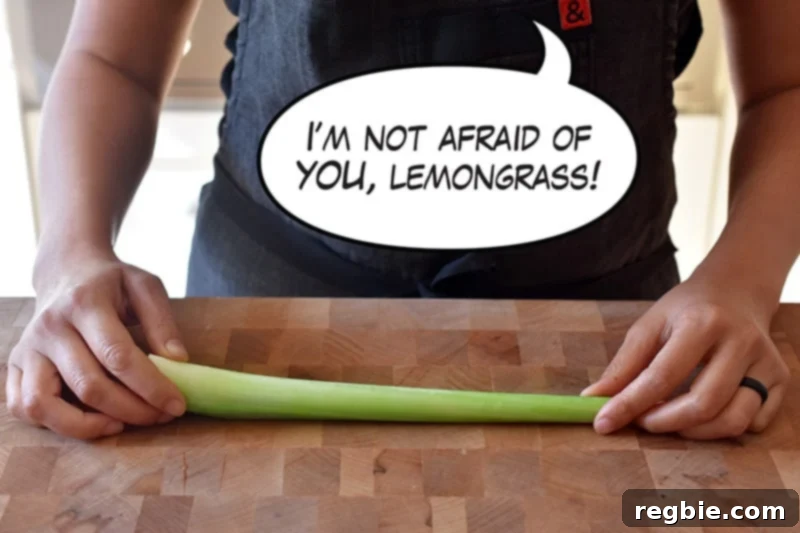
My perspective shifted dramatically after a transformative trip to Vietnam. There, I experienced dish after flavorful dish, each imbued with the unique, invigorating essence of lemongrass. From fragrant curries to bright marinades and soothing soups, its presence was undeniable and utterly delicious. Inspired by the sheer culinary magic, I resolved to demystify lemongrass preparation once and for all. What I discovered was far simpler than I imagined, and now I’m excited to share the essential techniques that will empower you to confidently incorporate this versatile herb into your cooking. Forget the fear—it’s time to teach that stalk who’s boss!
What Exactly is Lemongrass? An Introduction to a Culinary Gem
Before diving into preparation, let’s understand what lemongrass is. Scientifically known as Cymbopogon citratus, lemongrass is a tropical grass widely cultivated for its distinctive lemony scent and flavor. It’s a staple in Southeast Asian cuisines, particularly Thai, Vietnamese, Indonesian, and Cambodian dishes, where it’s prized for adding a bright, citrusy, and slightly minty note with hints of ginger and rose. The plant itself grows in dense clumps and features long, slender, pale green stalks that gradually lighten towards the root end.
The magic of lemongrass lies in its essential oils, especially citral, which is responsible for its characteristic aroma and flavor. Beyond its culinary appeal, lemongrass has also been traditionally used for its purported health benefits, including digestive aid and its calming properties in teas. Understanding its essence helps us appreciate why specific preparation methods are crucial to unlock its full potential in our dishes.
How to Select the Freshest Lemongrass Stalks
The journey to delicious lemongrass dishes begins with selecting the best stalks. You’ll typically find lemongrass in the produce section of well-stocked grocery stores or, more abundantly and often fresher, at your local Asian markets. Here’s what to look for to ensure you pick a good stalk:
- Aroma: The most important indicator! Bring it to your nose and smell it. Fresh lemongrass should have a strong, vibrant lemony scent. If it smells faint or earthy, it’s likely past its prime.
- Color: Look for stalks that are pale green on the upper part, transitioning to a whiter or pale yellow color towards the bottom, near the root. Avoid stalks that are predominantly yellow or brown, as these indicate dryness or age.
- Texture and Firmness: The stalks should feel firm and pliable, not rigid or rubbery. Gently bend a stalk; it should offer some resistance but not snap easily. Soft or mushy spots are signs of spoilage.
- Appearance: Opt for stalks that are free from significant bruising, blemishes, or dried-out leaves. While a few dry outer leaves are normal, excessive dryness suggests it’s old.
Optimizing Storage for Longevity
Once you’ve selected your perfect lemongrass stalks, proper storage is key to maintaining their freshness and potency. With a little care, you can extend their life significantly:
- Refrigeration (Short-term): For use within a few weeks, wrap fresh, untrimmed lemongrass stalks tightly in plastic wrap or place them in an airtight bag. This prevents moisture loss and keeps them fragrant. Store them in the crisper drawer of your refrigerator.
- Freezing (Long-term): Lemongrass freezes exceptionally well. For storage up to a few months, you can freeze whole stalks, tightly wrapped. Alternatively, and more conveniently for future cooking, you can prepare the lemongrass (trim and peel as described below) and then chop or slice it before freezing it in an airtight container or freezer bag. This way, it’s ready to use directly from the freezer in most dishes, saving you prep time later.
The Art of Preparing Lemongrass: Step-by-Step
The beauty of lemongrass is its versatility, but how you prepare it largely depends on how you intend to use it. However, the initial trimming steps are generally consistent to get to the most aromatic and flavorful parts of the stalk.
Initial Trimming: Getting to the Core
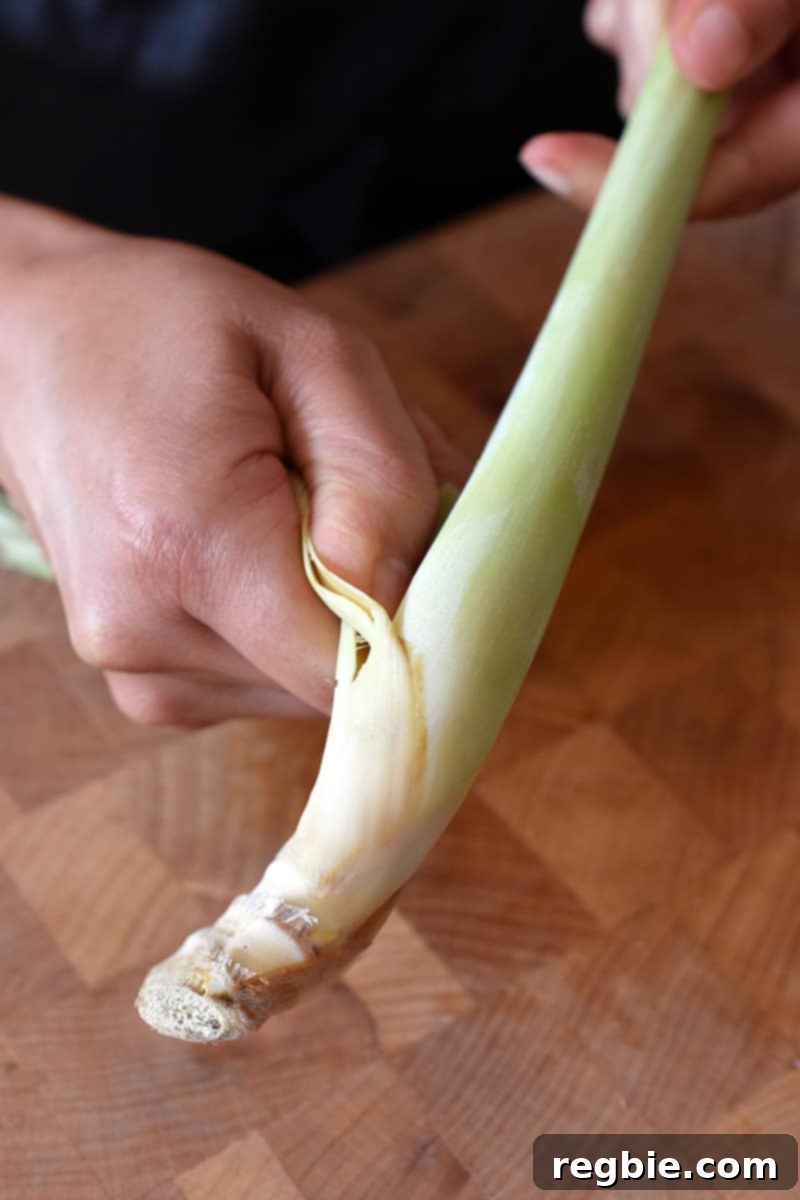
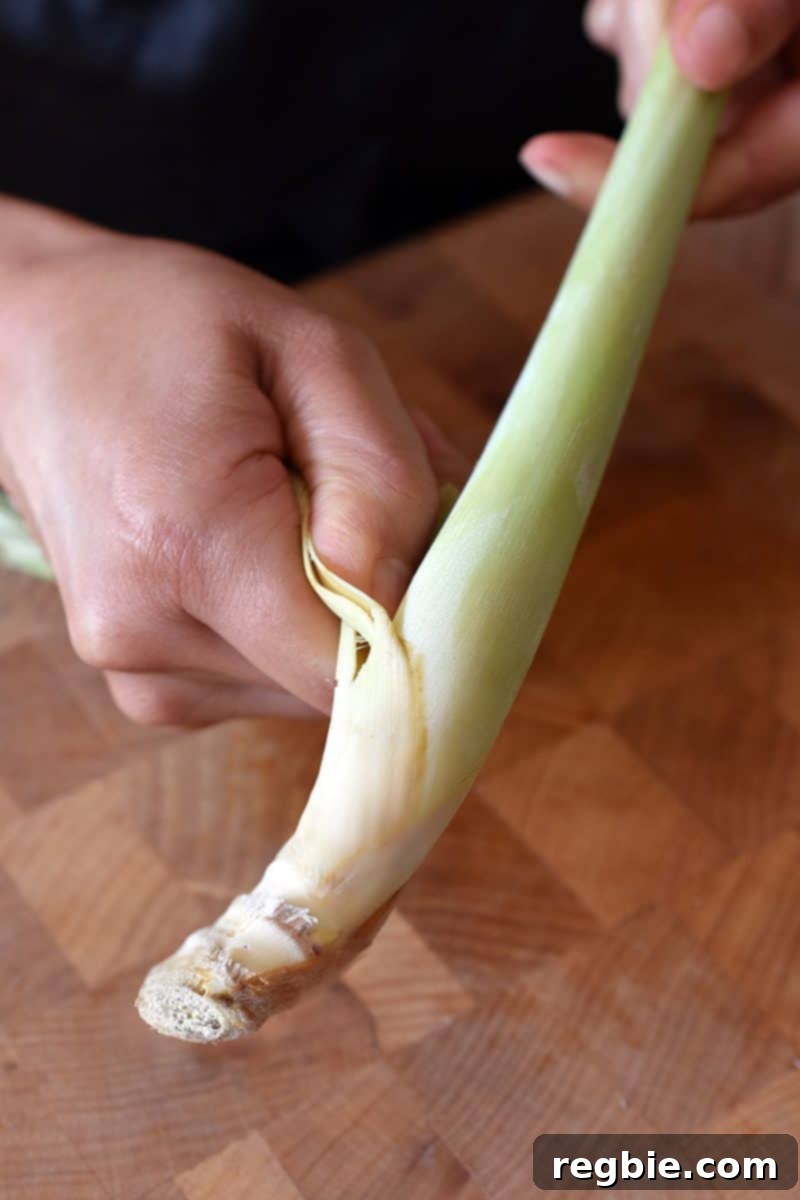
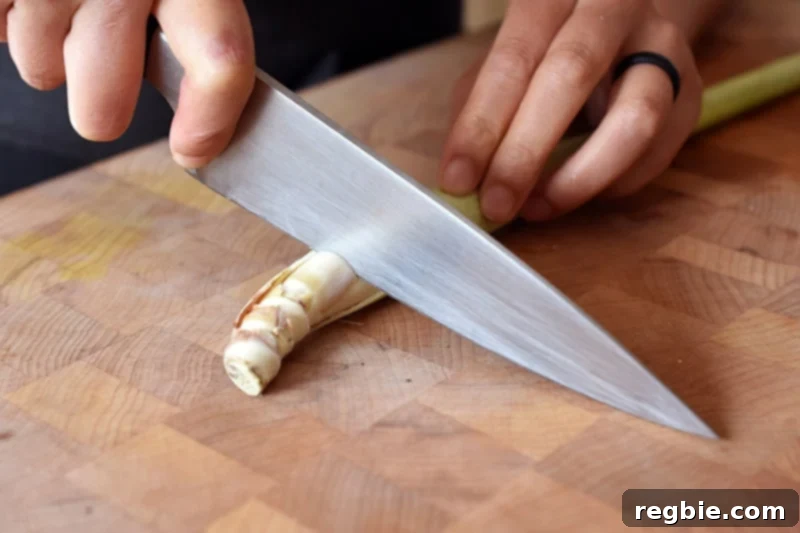
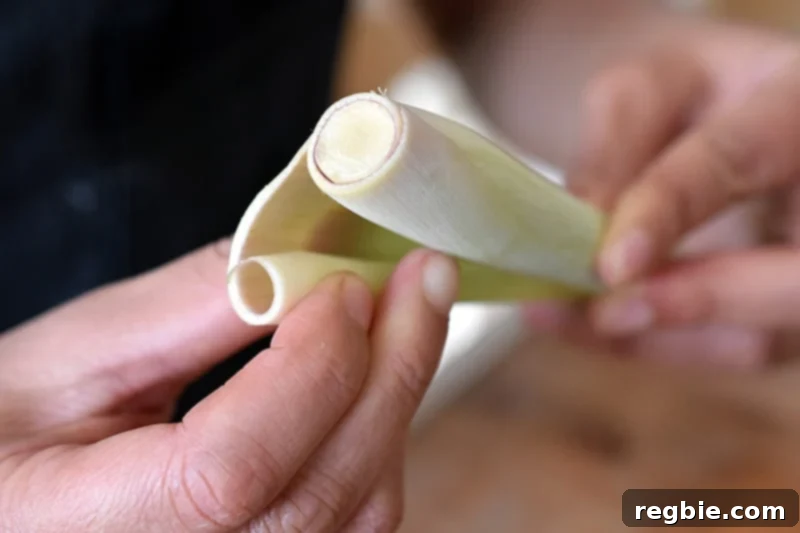
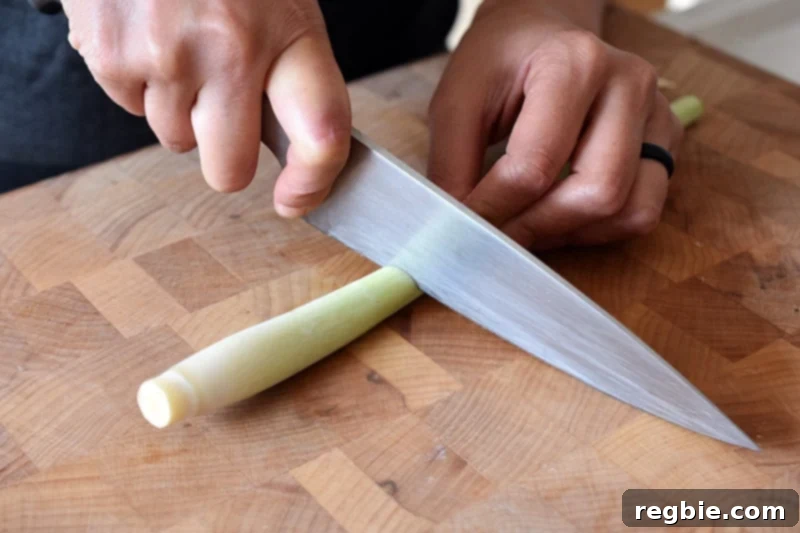
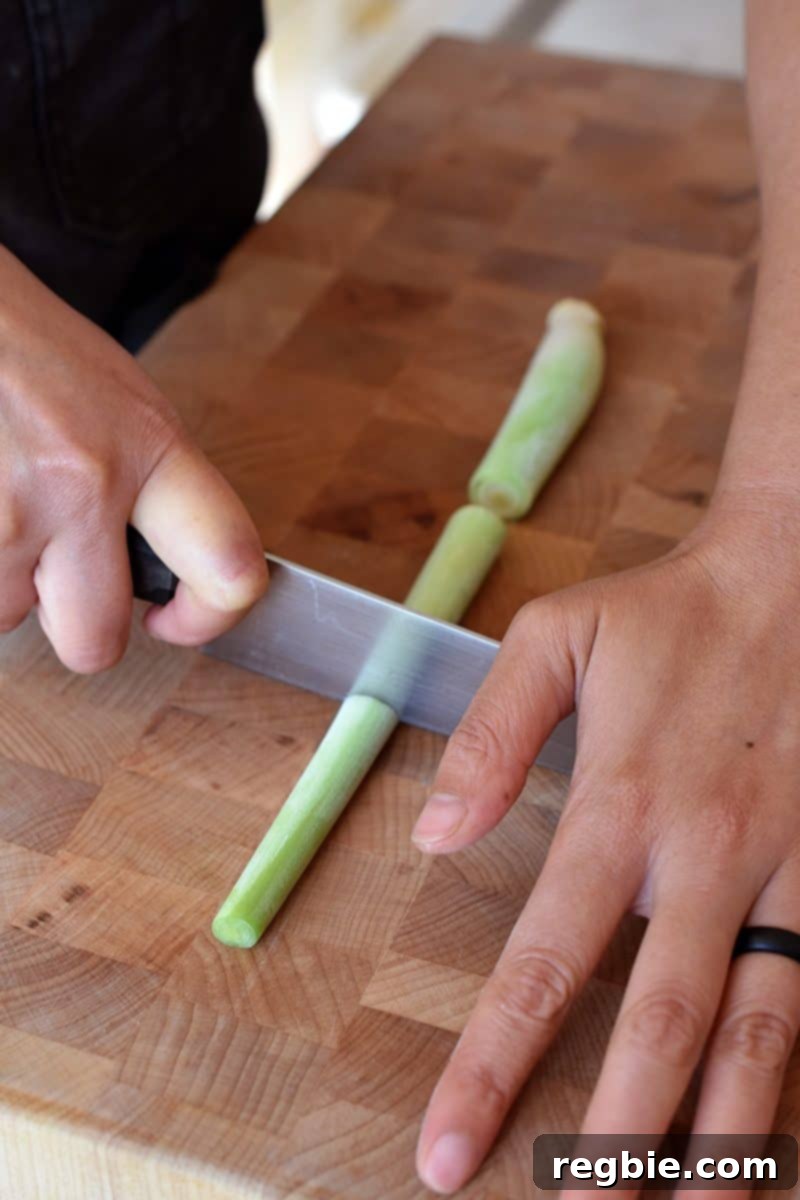
Regardless of your dish, you’ll want to start by preparing the stalk. Begin by cutting off about one inch from the root end, as this part is typically very tough and lacks flavor. Next, trim off any dried-out or excessively green, leafy tops of the stalk. You’re aiming for the more succulent, pale green and white sections. You may also need to peel off one or two of the outermost, papery or tough layers, revealing the slightly softer, more vibrant stalk beneath.
Preparation for Edible Applications: Stir-Fries, Pastes, and Marinades
When lemongrass is meant to be eaten directly in a dish—such as in a stir-fry, curry paste, or marinade—texture is paramount. You want it to be tender and easily chewable, not stringy or fibrous. This requires a bit more diligence in preparation:
- Peel to the Tender Core: After the initial trim, continue peeling off the tough outer layers of the stalk until you reach the much more tender, pale yellow or whitish core. This core is the most flavorful and least fibrous part suitable for direct consumption. You’ll typically find this tender section extends about 4 to 5 inches from the bottom of the stalk.
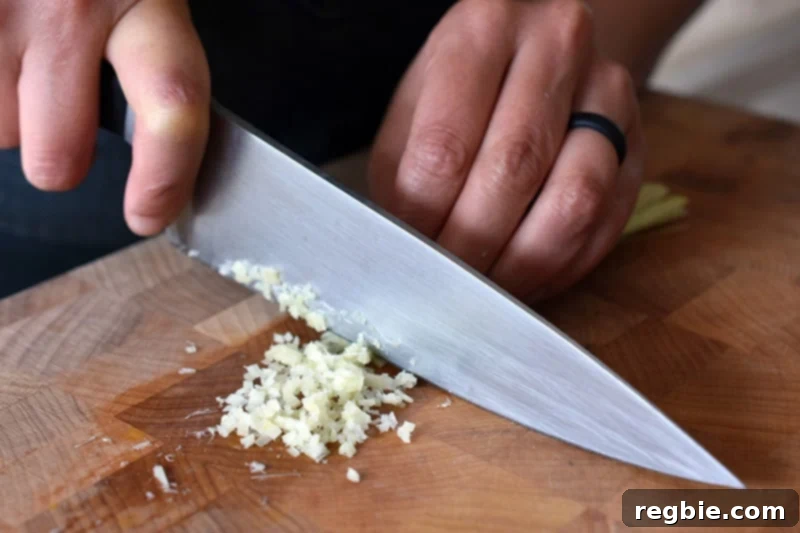
- Finely Mincing is Key: For dishes where lemongrass is ingested, a super-fine mince is crucial to prevent stringy, unpleasant bits.
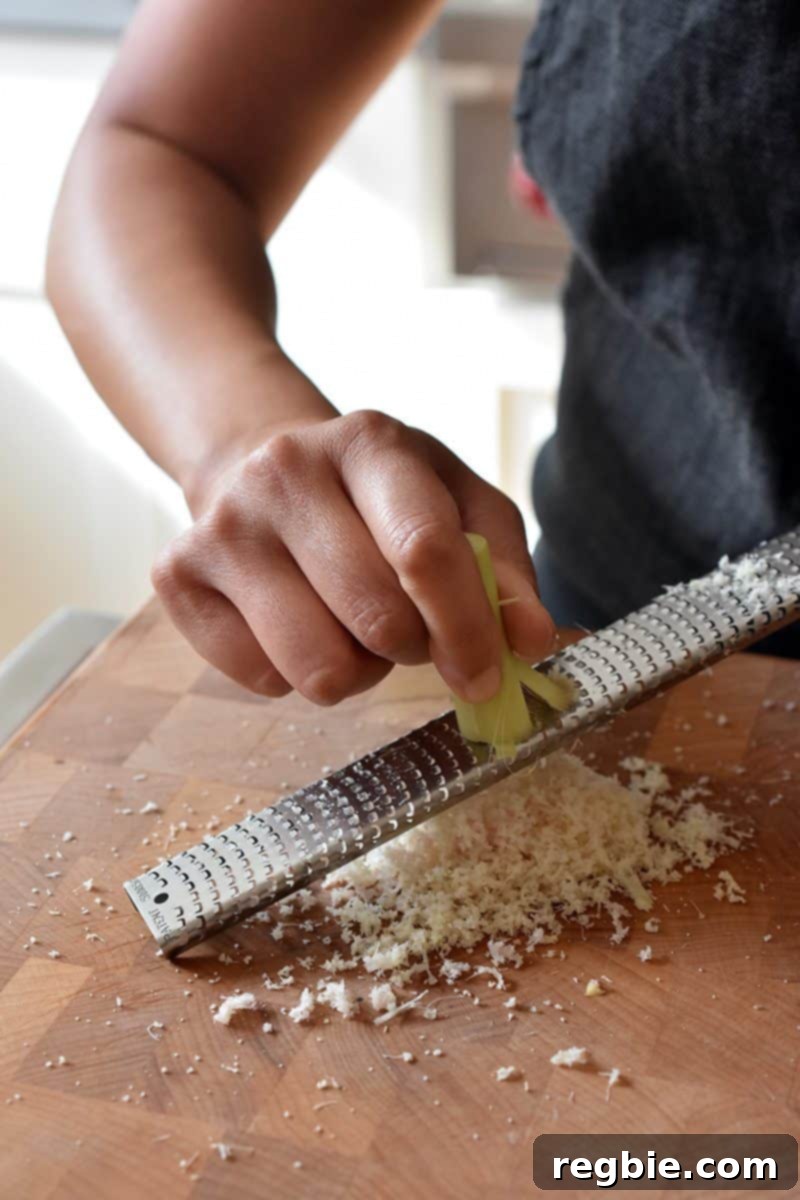
- Using a Microplane Grater: My preferred method for achieving an almost “snow-like” consistency is to use a microplane rasp grater. Simply grate the peeled, tender core of the lemongrass directly into your dish or onto a cutting board. This method effectively breaks down the fibers, resulting in a smooth texture that integrates beautifully into pastes, marinades, and stir-fries.
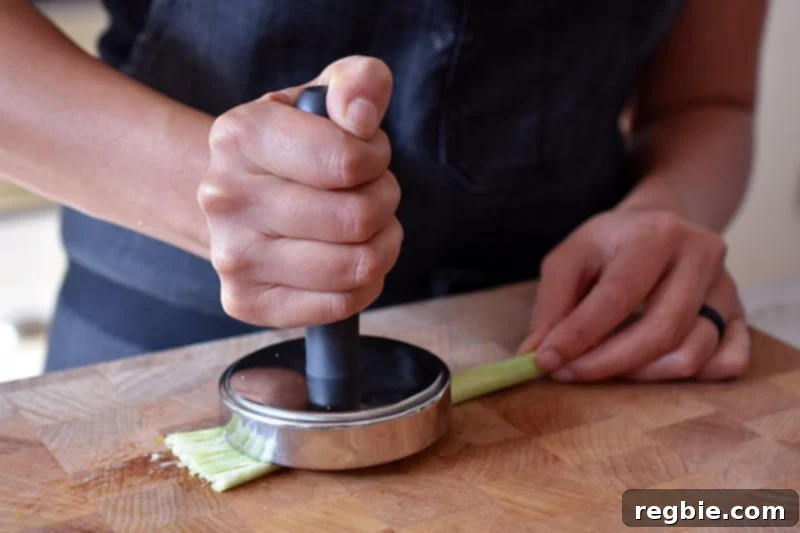
- Pounding and Mincing (No Microplane? No Problem!): If you don’t have a microplane, you can still achieve a fine mince. Start by roughly chopping the tender lemongrass. Then, place the pieces on a sturdy cutting board and pound them vigorously with a meat pounder, the flat side of a heavy chef’s knife, or even a small cast iron skillet. This pounding action breaks down the tough fibers. After pounding, gather the softened pieces and mince them very finely with a sharp knife, always cutting against the grain of the fibers to minimize stringiness.
- Blender/Food Processor: For making curry pastes or large batches of marinades, combining chopped lemongrass with other ingredients in a blender or food processor is an efficient way to achieve a smooth consistency. Ensure there’s enough liquid or other ingredients to create a vortex for even processing.
- Mortar and Pestle: For a truly traditional approach, especially for Thai or Vietnamese curry pastes, a mortar and pestle allows you to grind chopped lemongrass into a fine paste, releasing its full aromatic potential through crushing rather than slicing.
Preparation for Flavoring Liquids: Stews, Soups, and Teas
When lemongrass is used solely for its aromatic infusion into liquids, such as in hearty stews, comforting soups, or refreshing teas, you don’t need to worry about fine mincing or removing every fibrous layer since the stalks will be removed before serving. The goal here is to maximize flavor release with minimal effort:
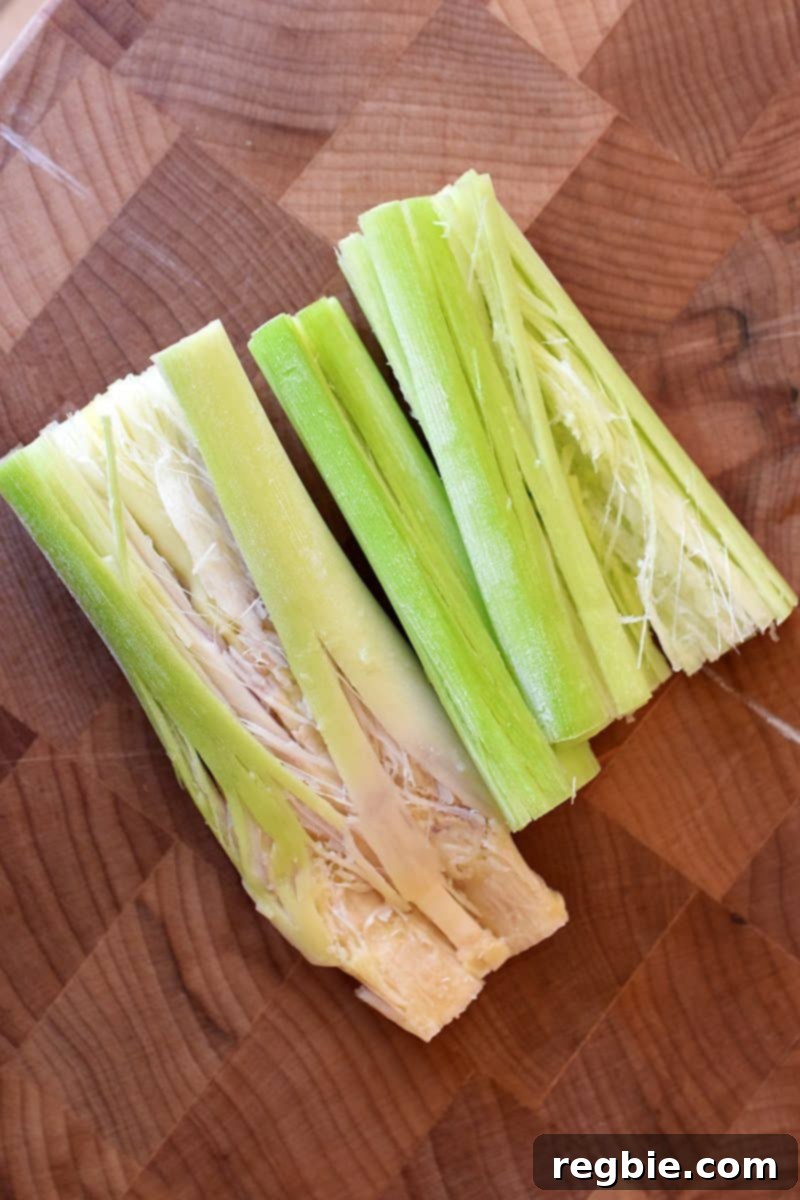
- Segment and Bash: After the initial trim of the root and dried leaves, cut the stalk into two or three roughly 3-4 inch segments. Then, using the flat side of a chef’s knife, a meat pounder, or even a rolling pin, vigorously bash each segment. The goal is to bruise and slightly flatten the stalk, breaking open the fibers and releasing the fragrant essential oils without fully pulverizing it.
- The “Knot” Method: For longer, thinner stalks, an elegant and practical alternative is to bash the trimmed stalk and then tie it into a knot. This compacts the stalk, making it easier to retrieve from the pot once its flavoring job is done. This method is particularly useful for clear broths or lighter soups where aesthetics matter. You can watch this helpful video from the folks at Saveur to see how it’s done.
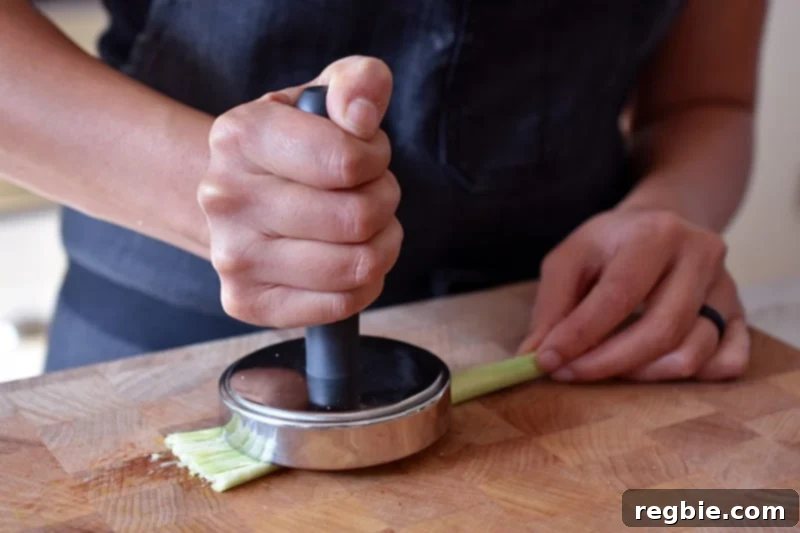
These bashed or knotted stalks are then simply dropped into your pot or infuser. Their aromatic compounds will infuse into the liquid, lending their distinctive flavor. Remember, when used in this fashion, the lemongrass itself is not meant to be eaten. Always fish out the stalks before serving the final dish, or politely inform your guests to do so.
Culinary Versatility: Beyond the Basics
Once you’ve mastered the preparation, the culinary world of lemongrass truly opens up. Its unique flavor profile—a captivating blend of lemon, mint, ginger, and subtle floral notes—makes it incredibly versatile. Here are just a few ways this aromatic herb can elevate your cooking:
- Curries: Essential for Thai green, red, and yellow curries, as well as many Vietnamese and Indonesian curry variations. It adds a crucial layer of freshness and complexity.
- Soups and Broths: Think Tom Yum Goong or Tom Kha Gai, where bashed lemongrass infuses the broth with its signature aroma. It’s also fantastic in chicken or beef broths.
- Marinades: Finely minced lemongrass is a game-changer for marinating poultry, pork, beef, and seafood, imparting a bright, zesty flavor that tenderizes and perfumes the meat. Grilled lemongrass chicken or pork skewers are perennial favorites.
- Stir-Fries: Add finely minced lemongrass at the beginning of a stir-fry with garlic and chili for an aromatic base that permeates the entire dish.
- Salads: Infuse salad dressings with lemongrass, or add finely minced pieces to Asian-inspired salads for a burst of freshness.
- Beverages and Desserts: Lemongrass can make a delightful herbal tea, a refreshing simple syrup for cocktails and lemonades, or even be used to infuse custards and sorbets.
- Dipping Sauces: Incorporate finely minced lemongrass into a spicy peanut sauce or a nuoc cham variation for an extra layer of flavor.
Lemongrass pairs beautifully with coconut milk, ginger, garlic, chilies, fish sauce, and cilantro. Don’t be afraid to experiment with it across different cuisines; its vibrant flavor can often be a delightful surprise.
Pro Tips for Success and Safety
- Knife Safety: Given the fibrous nature of lemongrass, always use a sharp knife and exercise caution. Tuck your fingertips under when chopping, and use a stable cutting surface. The anecdote of my friend’s injury serves as a good reminder to always prioritize safety.
- Testing Freshness: If you’re unsure about the freshness of a stalk, scratch a small part of the outer layer and smell it. A strong, pleasant lemon scent confirms its quality.
- Substitutions (Use Sparingly): While fresh lemongrass is best, if you absolutely cannot find it, you might consider a tiny amount of lemon zest combined with ginger as a very loose substitute, but understand that the complex, earthy, and minty notes of true lemongrass will be missing. Some Asian markets also sell frozen chopped lemongrass, which is a good alternative.
Now that you’re armed with the knowledge of how to properly select, store, and prepare lemongrass for any culinary application, there’s no limit to the delicious dishes you can create. Go forth and infuse your cooking with the vibrant, unmistakable flavor of lemongrass!
Recipes to Try and Master Your New Skill:
- Slow Cooker Lemongrass and Coconut Chicken Drumsticks
- Instant Pot Lemongrass and Coconut Chicken
- Bo Kho (Spicy Vietnamese Beef Stew)
- Vietnamese Lemongrass Chicken
- Tom Kha Gai
[Originally posted on October 29, 2015. Updated on January 10, 2020. This version further expanded and optimized.]
Looking for even more inspiring recipe ideas to use your newfound lemongrass skills? Head on over to my Recipe Index for a treasure trove of culinary delights. You’ll also find exclusive recipes on my iPhone and iPad app, and in my critically acclaimed cookbooks, Nom Nom Paleo: Food for Humans (Andrews McMeel Publishing 2013) and the follow-up, Ready or Not! (Andrews McMeel Publishing 2017)! Happy cooking!