
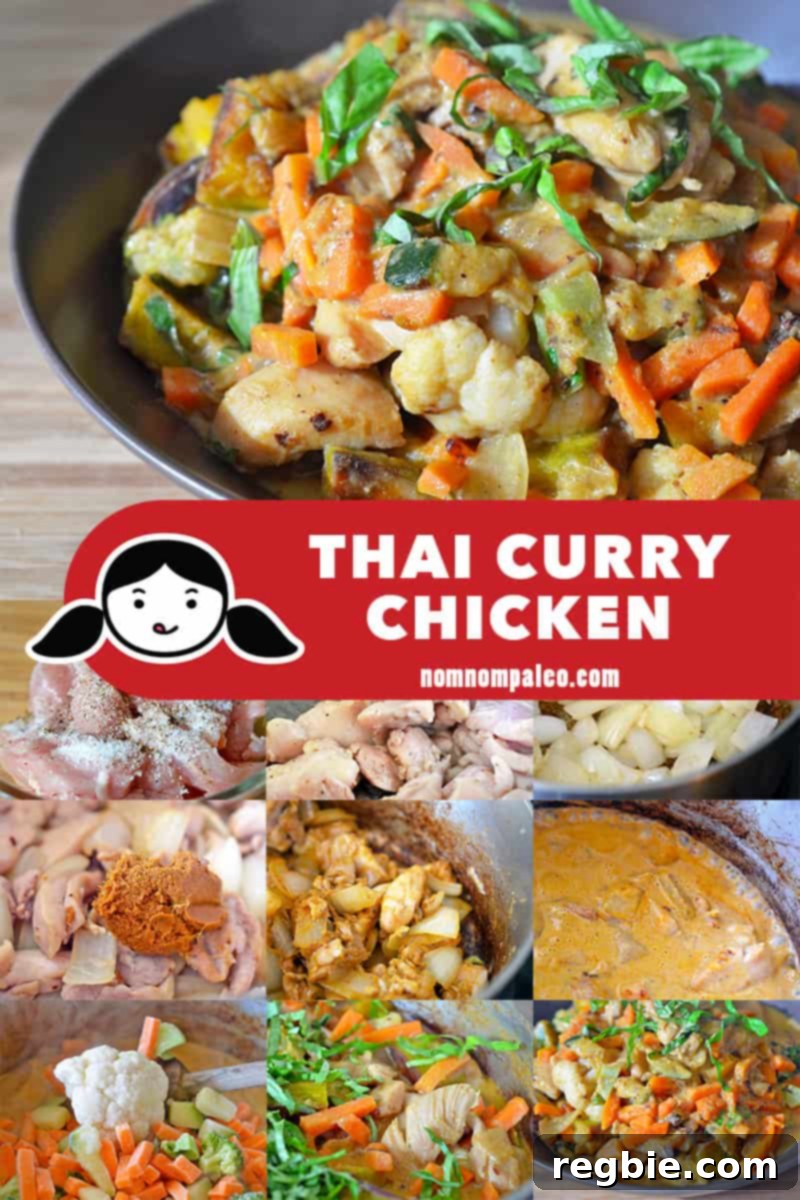
Experience the vibrant flavors of Thailand with this incredibly fast and easy Thai Chicken Curry. Perfectly crafted for paleo, gluten-free, and Whole30 lifestyles, this healthy and delicious meal can be on your table in just 20 minutes! Forget about greasy takeout; this homemade curry is a true game-changer.
Table of Contents
- Faster, Healthier, Tastier Than Takeout!
- Your Pantry’s Secret Weapon: Thai Curry Pastes
- Key Ingredients for an Authentic Curry
- Crafting Your Thai Chicken Curry: A Step-by-Step Guide
- Storage and Reheating Tips for Leftovers
- Explore More Thai-Inspired Paleo Recipes
- Full Thai Chicken Curry Recipe Card
Faster, Healthier, Tastier Than Takeout!
Craving the rich, aromatic flavors of Thai cuisine but short on time? This Thai Chicken Curry recipe is your ultimate solution, offering a delightful culinary journey that’s significantly quicker, healthier, and more satisfying than any takeout order. In just about 20 minutes, you can transform simple ingredients into a fragrant, deeply flavored curry that will impress your taste buds and nourish your body. The beauty of this dish lies in its simplicity and versatility. You just need some tender chicken (or any quick-cooking protein you prefer), a handful of vibrant frozen or leftover vegetables, and the secret weapon: a good quality Thai curry paste coupled with creamy coconut milk. A quick simmer on the stove, and voilà! You’ll have a gourmet-quality meal ready in minutes. Plus, instead of waiting for a delivery driver, you’ll be giving yourself a well-deserved pat on the back for creating such a masterpiece from scratch.
This recipe isn’t just fast; it’s also incredibly adaptable. It allows you to control the quality of your ingredients, ensuring your meal is free from unwanted additives often found in restaurant dishes. The robust flavors of the curry paste combined with fresh herbs create an experience that transcends typical home cooking, making it a regular favorite for busy weeknights or impromptu gatherings. Say goodbye to soggy noodles and hello to a vibrant, wholesome, and unbelievably delicious Thai Chicken Curry!

Your Pantry’s Secret Weapon: Thai Curry Pastes
Consider this your friendly public service announcement of the day: a well-stocked pantry absolutely needs a selection of quality Thai curry pastes. These versatile pastes are the heart and soul of many Thai dishes, condensing complex flavors into a convenient, ready-to-use form. My personal favorites are brands like Aroy-D and Mae Ploy, which consistently deliver authentic taste and aroma. I highly recommend keeping yellow, red, and green curry pastes on hand to cater to different flavor profiles and spice levels.
You can typically find these pastes at most Asian markets, and increasingly, in the international aisles of larger supermarkets. However, it’s crucial to read the labels carefully. Opt for brands that list only natural herbs and spices as their primary ingredients, avoiding those with added sugars, artificial colors, or preservatives. A good quality curry paste is a blend of fresh chilies, lemongrass, galangal, kaffir lime peel, shallots, garlic, and spices, which saves you the time and effort of mincing and sautéing each of these components individually. Having a variety allows you to quickly whip up a mild yellow curry, a spicier red curry, or a vibrant, herb-packed green curry, making weeknight meals exciting and effortless. It’s an investment that pays dividends in deliciousness!

Key Ingredients for an Authentic Curry
Crafting a truly exceptional Thai Chicken Curry starts with selecting the right ingredients. Each component plays a vital role in building the layered flavors and satisfying texture of this dish. Here’s a breakdown of what you’ll need and why these choices make a difference:
- Boneless, Skinless Chicken Thighs: I prefer using chicken thighs because they boast a richer flavor and remain incredibly tender, even if slightly overcooked – perfect for busy cooks! While chicken breasts are a leaner option, they can dry out quickly, so if you choose them, monitor cooking times closely to maintain their juiciness.
- Diamond Crystal Brand Kosher Salt: This specific type of kosher salt offers a delicate flavor and dissolves beautifully. For an added layer of umami and traditional Thai authenticity, a dash of high-quality fish sauce can be used to season the dish instead of, or in addition to, plain salt.
- Freshly Ground Black Pepper: A staple seasoning that provides a subtle warmth and balances the other vibrant flavors.
- Coconut Oil or Fat of Choice: Coconut oil is ideal for sautéing as it complements the tropical notes of the curry. However, feel free to use your preferred cooking fat, such as avocado oil or ghee, to suit your dietary needs.
- Small Onion, Chopped Medium: Onions form the aromatic base of the curry, mellowing and sweetening as they sauté, adding depth to the sauce.
- Thai Curry Paste (Red, Yellow, or Green): This is the star ingredient! Using a good quality prepared paste eliminates the need for mincing individual herbs and spices like ginger, garlic, shallots, cumin, coriander, and chili peppers, saving you significant prep time without sacrificing flavor. Choose your preferred color based on desired spice level and flavor profile.
- Full-Fat Coconut Milk: Essential for creating a rich, creamy, and satisfying curry sauce. My go-to brands are Aroy-D and Mae Ploy for their consistent quality and creamy texture. Always opt for full-fat to achieve the best consistency and flavor.
- Frozen Mixed Vegetables: For ultimate convenience, a bag of pre-cut and pre-washed frozen mixed vegetables is a lifesaver. It allows you to dump them straight into the skillet without any extra chopping. Of course, fresh vegetables can be used and add a lovely crispness if preferred.
- Leftover Cooked Squash or Root Vegetable: Adding leftover roasted kabocha squash, butternut squash, or even frozen sweet potatoes contributes a delightful sweetness and hearty texture, making the curry more substantial and comforting.
- Apple Juice (Optional): A small amount of apple juice, like Martinelli’s, provides a hint of natural sweetness to balance the complex flavors of the curry, making it Whole30 compliant and enhancing the overall taste without refined sugars.
- Fresh Basil Leaves, Thinly Sliced: Fresh herbs are crucial for finishing the dish. Basil, especially Thai basil, adds a fragrant, peppery, and slightly anise-like note. Cilantro or green onions are excellent alternatives if basil isn’t available, offering their own unique freshness.
- Lime Juice (Optional): A squeeze of fresh lime juice just before serving brightens the entire dish, cutting through the richness of the coconut milk and adding a wonderful tangy zest. While not strictly necessary, it truly elevates the flavor profile.
Crafting Your Thai Chicken Curry: A Step-by-Step Guide
Creating this flavorful Thai Chicken Curry is incredibly straightforward, perfect for novice and experienced cooks alike. Follow these simple steps to bring a taste of Thailand into your kitchen:
First, prepare your chicken by cutting the boneless, skinless chicken thighs into medium-sized, bite-friendly chunks. Season these pieces generously with a sprinkle of kosher salt and freshly ground black pepper. This initial seasoning helps to build flavor from the start.

Next, grab a medium-sized saucepan or a deep skillet and place it over medium heat. Allow it to heat thoroughly until it’s hot. Once warmed, swirl in your chosen cooking fat, such as coconut oil, ensuring the bottom of the pan is lightly coated.

When the oil begins to shimmer, carefully add the seasoned chicken chunks to the pan. Brown the chicken on all sides. This step is crucial for developing a rich flavor and sealing in the juices. Don’t worry about cooking it through completely at this stage.

Once the chicken is nicely browned, remove it from the saucepan and transfer it to a clean plate. Set it aside for a moment, reserving any accumulated juices – these will add more flavor back into the curry later.

Now, add your chopped onions to the same saucepan, utilizing the residual oil and chicken drippings. Sauté the onions over medium heat, stirring occasionally, until they become soft and translucent. This usually takes about 3-5 minutes.

Return the browned chicken and any juices from the plate back into the pot with the sautéed onions. It’s time to introduce the star flavor: the Thai curry paste. Start with 1 tablespoon if you prefer a milder curry, or add up to 2 tablespoons for a bolder, spicier kick. You can always adjust later!

Stir-fry the chicken and paste mixture for about a minute. This step allows the curry paste to toast slightly, releasing its full, rich aroma and deepening the overall flavor profile of your dish.

Pour in the full-fat coconut milk, scraping up any delicious browned bits from the bottom of the pan. The coconut milk will form the luxurious base of your curry sauce.

Now, toss in the frozen mixed vegetables, your cooked squash (like roasted kabocha squash), and the optional apple juice for a touch of sweetness. Stir everything together gently to combine.

Increase the heat to high and bring the contents of the pot to a vigorous boil. Once boiling, reduce the heat to medium-low, cover, and let the curry simmer gently for about 10 minutes. This simmering time allows the vegetables to warm through and soften, and more importantly, gives all the magnificent flavors a chance to meld together perfectly. Before serving, taste the curry and adjust the seasoning with more salt, pepper, or curry paste if desired.
To finish, stir in the thinly sliced fresh basil chiffonade. If you have a fresh lime handy, a final squeeze of lime juice will add a fantastic bright, tangy flourish that truly makes the flavors sing.

Serve your exquisite Thai Chicken Curry immediately over a bed of light and healthy zoodles, fluffy plain cauliflower rice, or flavorful Asian Cauliflower fried rice for a paleo/Whole30 compliant meal. For those not adhering to these dietary restrictions, it’s also absolutely delicious served over traditional jasmine rice! Yes, this Thai chicken curry recipe is truly that simple to make, yet delivers complex, restaurant-quality taste every time.

Storage and Reheating Tips for Leftovers
This Thai Chicken Curry is so delicious, you might not have many leftovers! However, if you do, it stores beautifully, making it an excellent option for meal prep. Allow the curry to cool completely to room temperature before transferring it to an airtight container. Store it in the refrigerator for up to 4 days. For longer storage, this curry freezes exceptionally well. Portion it into freezer-safe containers and freeze for up to 3 months. When you’re ready to enjoy it again, simply thaw it in the refrigerator overnight and reheat gently on the stovetop over medium-low heat, stirring occasionally, or in the microwave until thoroughly warmed through. You might need to add a splash of water or coconut milk to achieve the desired consistency when reheating.
Explore More Thai-Inspired Paleo Recipes
If you’ve fallen in love with the vibrant flavors of this Thai Chicken Curry, you’ll be thrilled to discover more delicious paleo and Whole30 Thai-inspired recipes that are just as easy to make and equally satisfying. Expand your culinary repertoire with these fantastic dishes:
- Tom Kha Gai (Thai Coconut Chicken Soup): A comforting and creamy soup infused with galangal, lemongrass, and kaffir lime, featuring tender chicken.
- Spicy Thai Chicken Zoodles: A light yet flavorful salad featuring spiralized zucchini noodles tossed with spicy Thai chicken.
- Thai Basil Chicken: A quick and aromatic stir-fry packed with savory chicken and fragrant Thai basil.
- Instant Pot Lemongrass and Coconut Chicken: An incredibly tender and flavorful chicken dish cooked effortlessly in your pressure cooker, bursting with fragrant lemongrass and creamy coconut.
Looking for even more incredible recipe ideas? Head on over to my Recipe Index for a treasure trove of wholesome and delicious meals. You’ll also find exclusive recipes and culinary inspiration in my critically acclaimed cookbooks: Nom Nom Paleo: Food for Humans (Andrews McMeel Publishing 2013), Ready or Not! (Andrews McMeel Publishing 2017), and the latest addition, Nom Nom Paleo: Let’s Go! (Andrews McMeel Publishing 2022). Happy cooking!
Printer-Friendly Recipe Card
Thai Chicken Curry
10 minutes
20 minutes
30 minutes
4
servings
Michelle Tam
Print Recipe
Ingredients (US Customary)
-
1
pound
boneless, skinless chicken thighs
(cut into medium chunks) -
½
teaspoon
Diamond Crystal brand kosher salt -
freshly ground black pepper
(to taste) -
1
tablespoon
coconut oil or fat of choice -
1
small onion
(chopped medium) -
1-2
tablespoons
Thai curry paste
(red, yellow, or green, to preference) -
1
cup
full-fat coconut milk -
10
ounces
frozen mixed vegetables -
2
cups
leftover roasted kabocha squash
(or roasted butternut squash, frozen sweet potatoes, etc.) -
2
tablespoons
apple juice
(optional, for sweetness) -
¼
cup
fresh basil leaves
(thinly sliced, for garnish) -
1
lime
(cut into wedges, optional, for serving)
Instructions
-
Cut the chicken into medium-sized chunks and season generously with salt and pepper.
-
Heat a medium saucepan or deep skillet over medium heat until hot. Swirl in the coconut oil until shimmering. Add the seasoned chicken and brown on all sides. Once browned, transfer the chicken to a separate plate, reserving any juices.
-
Add the chopped onions to the same saucepan and sauté until they become soft and translucent, about 3-5 minutes. Return the browned chicken and its juices to the pot. Stir in 1 to 2 tablespoons of Thai curry paste, according to your taste preference for spice and flavor intensity.
-
Stir-fry the chicken and curry paste mixture for about 1 minute, allowing the spices to toast and release their aromatic fragrance. Pour in the full-fat coconut milk, then add the frozen mixed vegetables, cooked squash, and the optional apple juice. Stir gently to combine all ingredients.
-
Increase the heat to high and bring the contents of the pot to a boil. Once boiling, reduce the heat to medium-low, cover the saucepan, and simmer for 10 minutes. This allows the vegetables to heat through and soften, and the flavors to meld beautifully. Taste for seasoning and adjust with more salt, pepper, or curry paste if needed.
-
Stir in the fresh basil chiffonade. If desired, squeeze in some fresh lime juice for an extra burst of brightness. Serve your Thai Chicken Curry hot over cauliflower rice, zoodles, or jasmine rice for a complete and satisfying meal.
Video
Nutrition
Calories:
353
kcal
|
Carbohydrates:
18
g
|
Protein:
26
g
|
Fat:
21
g
|
Fiber:
4
g
Nutrition information is automatically calculated and should be used as an approximation.
Like this recipe? Leave a comment below!
Share your thoughts and feedback – we’d love to hear from you!