
Mastering the Art of Roasting a Whole Duck: A Culinary Journey from Childhood Memories to Gourmet Delights
For as long as I can remember, Cantonese roast duck has held a special place in my heart. This iconic dish, with its succulent meat and remarkably crispy skin, wasn’t just food; it was a cornerstone of family gatherings, a tradition that filled our home with irresistible aromas and joyful anticipation. Even today, the mere thought of it brings back a flood of delicious memories.
Growing up, the arrival of a whole roasted duck from Chinatown was always a momentous occasion. Every few weeks, my mom would meticulously select one, ensuring it was whole—head and neck still attached—a testament to her philosophy of utilizing every part of the animal. The intoxicating fragrance of roasted meat, infused with the warm notes of five-spice powder, would instantly draw me into the kitchen. There, in a stealthy ritual, I’d sneak tiny, tender pieces of duck and crisp, amber skin from the takeout container before it even made it to the chopping block, a small, illicit pleasure that only heightened the dining experience.
My mom’s insistence on bringing home the entire bird, rather than having it pre-carved at the market, was rooted in a practical wisdom she humorously imparted to me. “Anyone naive enough to do that,” she’d laugh, “would inevitably get stiffed a few pieces. The very best pieces, mind you!” This practical lesson about diligence and ensuring value resonated deeply, instilling in me a foundational appreciation for the entire process, from selection to preparation.
Just before dinner, the duck would undergo its final transformation. My mom would briefly reheat it in the oven to revitalize its glorious crisp skin, then place it on her well-worn wooden chopping block. With her formidable cleaver, she’d expertly hack it into perfect, bite-sized portions. This was my cue. I’d sidle up, deploying my most persuasive puppy-dog eyes, until she’d relent and hand me a glistening piece of meat—a precious appetizer to quell my pre-dinner hunger.
My profound love for duck has endured through the years. While I’ve experimented with various preparations, the challenge of roasting a whole duck remained an untackled frontier until very recently. My hesitation stemmed from a couple of significant hurdles: the difficulty in sourcing a truly high-quality whole duck and my lack of a truly foolproof recipe. Ducks, especially premium ones, are an investment, and the thought of potentially spoiling such a magnificent bird was enough to keep me from attempting it.
The Stars Align: A Journey to Culinary Confidence
However, fate, or perhaps simply good timing, intervened. Two pivotal changes transformed my apprehension into excitement. First, I discovered Good Eggs, a wonderful service that delivers fresh, locally sourced produce and artisanal goods right to my doorstep. To my delight, they offered whole ducks from Early Bird Ranch in Pescadero—a truly exceptional find that solved my sourcing dilemma. Almost simultaneously, I received an advance review copy of Hank Shaw’s highly anticipated cookbook, Duck, Duck, Goose. With a premium bird in my fridge and a definitive guide in my hands, the universe seemed to be sending a clear message: it was time to finally roast my first whole duck.
Unlocking Duck Secrets: The Wisdom of Hank Shaw
For those unfamiliar, Hank Shaw is a true culinary luminary, particularly when it comes to wild game and traditional cooking techniques. He’s not just a chef; he’s an accomplished hunter, angler, James Beard Award-winning food blogger, and cookbook writer extraordinaire. His first cookbook, Hunt, Gather, Cook, was an instant favorite, inspiring countless home cooks to explore forgotten culinary arts. Now, with Duck, Duck, Goose, Shaw once again proves his mastery, delivering what is arguably the definitive guide to preparing duck and geese.
This cookbook is a treasure trove, packed with an incredible array of recipes that, while not exclusively Paleo, are remarkably adaptable for various dietary preferences. Every turn of a page reveals another enticing dish I’m eager to try, from the elaborate Peking Duck to the rich Confit of Duck, the adventurous Grilled Duck Hearts with Chimichurri, and the comforting Braised Duck with Red Cabbage and Juniper. What makes Shaw’s work so accessible is his inclusion of difficulty ratings for each recipe, coupled with stunning photography that not only inspires but also guides the visual learner. Given his impeccable track record and deep expertise, I have absolute confidence that every recipe within its pages is nothing short of wonderful.
Demystifying the Roast: Hank Shaw’s Simple Whole Duck Recipe
With my single, prized duck waiting in the fridge, I carefully perused Duck, Duck, Goose. For my inaugural attempt, I decided to start with the foundational wisdom: Hank’s remarkably simple slow-roast duck recipe. It promised an approachable method for achieving perfectly tender meat and delightfully crisp skin, making it the ideal entry point into the world of whole duck preparation. Are you ready to embark on this delicious journey with me?
Ingredients to Gather (Serves 4):
- 1 domesticated whole duck (approximately 4-5 pounds)
- 1 large lemon, halved
- 1 tablespoon kosher salt (essential for drawing out moisture and enhancing flavor)
- 4 sprigs of your favorite aromatic herb (I chose flat-leaf parsley for its fresh notes, but Hank also recommends sage, rosemary, thyme, or a fragrant mixture for varied flavor profiles)
Step-by-Step Instructions for a Perfectly Roasted Duck:
1. Preheat Your Oven: Begin by preheating your oven to a steady 300°F (150°C). This initial low temperature is crucial for slowly rendering the duck fat, which is key to achieving both tender meat and an exceptionally crispy skin.
2. Prepare the Duck: Carefully remove the neck and any giblets from the duck’s cavity. Using a sharp pair of kitchen shears, trim away any excess fat, particularly around the neck and cavity openings. Don’t discard these valuable bits! The neck and innards (excluding the liver, which can become bitter when slow-cooked) are perfect for making a rich, flavorful bone broth, either in a pressure cooker for speed or a slow cooker for deeper flavor development. Remember to save the rendered duck fat from the roasting process; it’s culinary gold for future cooking endeavors!
3. Score the Skin: This is a critical step for maximum crispness. Using a sharp needle or the tip of a very sharp knife (I use this specialized tool for precision), carefully poke the duck skin all over, paying particular attention to the fattier areas like the breast and thighs. Be meticulous, ensuring you pierce only the skin and fat layer, without penetrating the underlying flesh. This allows the fat to render out efficiently, resulting in that coveted crackling skin without drying out the meat.
4. Lemon Rub: Take one of the lemon halves and vigorously rub it all over the duck’s skin, squeezing gently to release its juice as you go. The citrus not only adds a subtle aromatic brightness but also helps to further break down the skin for better crisping and can aid in removing any gamey flavors.
5. Aromatic Stuffing: Toss the spent lemon halves (or fresh ones, if preferred) into the duck’s cavity. Then, generously stuff the cavity with your chosen herbs. These aromatics will infuse the duck from the inside out, adding depth and complexity to the flavor of the meat.
6. Season and Prepare for Roasting: Sprinkle the kosher salt generously over the entire duck, massaging it gently into the skin. This not only seasons the duck but also helps draw out surface moisture, contributing to a crispier finish.
7. The Slow Roast: Place the duck breast-side up in a large, well-seasoned cast iron skillet or a sturdy roasting pan. Roast in the preheated 300°F (150°C) oven for 45 minutes. During this stage, a significant amount of fat will accumulate in the pan. This is exactly what you want! Periodically pour this liquid gold into a heat-proof, sealable jar for future use. Rendered duck fat is excellent for roasting vegetables, frying eggs, or making confit.
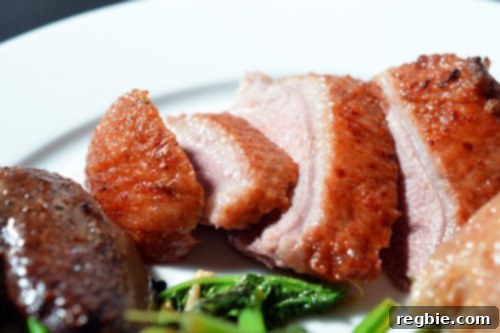
8. The High-Heat Crisp: After 45 minutes, remove the duck from the oven. Carefully increase the oven temperature to a blazing 500°F (260°C). Once the oven is fully preheated to this high temperature, return the duck to the oven. Continue roasting for another 15 minutes, or until the skin transforms into a magnificent golden-brown hue and is wonderfully crisp. Keep a close eye on it during this final stage, as ovens vary, and you want to achieve crispness without burning.
9. Rest and Carve: Once your duck reaches perfection, remove it from the oven. This is perhaps the most important final step: allow the duck to rest for at least 10 minutes (preferably 15-20 minutes) before carving. Resting allows the juices to redistribute throughout the meat, ensuring every bite is tender and succulent.
Serving Suggestions and Culinary Pairings
For a touch of nostalgia and a delightful contrast, I served my perfectly roasted duck with a simple yet elegant side of stir-fried greens and shiitake mushrooms. The earthy mushrooms and crisp greens provide a beautiful counterpoint to the rich, savory duck. Beyond this classic pairing, roasted duck shines alongside a variety of accompaniments:
- Potatoes: Crispy roasted potatoes or a creamy gratin are excellent choices.
- Wild Rice: A nutty wild rice pilaf can absorb the delicious duck drippings.
- Fruit Sauces: Tart fruit sauces, such as cherry, orange, or even plum, beautifully cut through the duck’s richness, offering a sweet and tangy balance.
- Vegetables: Braised red cabbage, Brussels sprouts, or asparagus are fantastic seasonal options.
And for those who appreciate a good beverage pairing, a medium-bodied red wine like a Pinot Noir or a Syrah would complement the duck’s flavors wonderfully.
Beyond the Roast: Utilizing Every Part of the Duck
Embracing my mom’s philosophy, the journey with your whole duck doesn’t end with the main meal. The leftover carcass and giblets are the perfect foundation for an incredibly rich and nourishing duck stock. This stock can elevate soups, sauces, and risottos to new heights of flavor. Furthermore, the precious rendered duck fat you collected during the roasting process is a culinary gem. Store it in the refrigerator, and use it to roast potatoes, sauté vegetables, or even make your own confit for a taste of French elegance.
Embark on Your Own Duck Roasting Adventure
Roasting a whole duck, once a daunting culinary challenge, has become a deeply satisfying and rewarding experience. Thanks to quality sourcing and Hank Shaw’s expert guidance, I’ve discovered that this seemingly complex dish is entirely within reach for the home cook. The aroma, the crispy skin, the tender meat—it all evokes those cherished childhood memories while creating new ones. If you’ve been hesitant to try your hand at cooking a whole duck, I wholeheartedly encourage you to take the plunge.
To truly master this art and explore the vast potential of cooking with duck, make sure to snap up your own copy of Hank Shaw’s essential guide, Duck, Duck, Goose! It’s an investment in countless delicious meals and a testament to the joy of traditional cooking.
Looking for more recipe ideas? Head on over to my Recipe Index. You’ll also find exclusive recipes on my iPhone and iPad app, and in my cookbooks, Nom Nom Paleo: Food for Humans (Andrews McMeel Publishing 2013), Ready or Not! (Andrews McMeel Publishing 2017), and Nom Nom Paleo: Let’s Go! (Andrews McMeel Publishing 2021).