
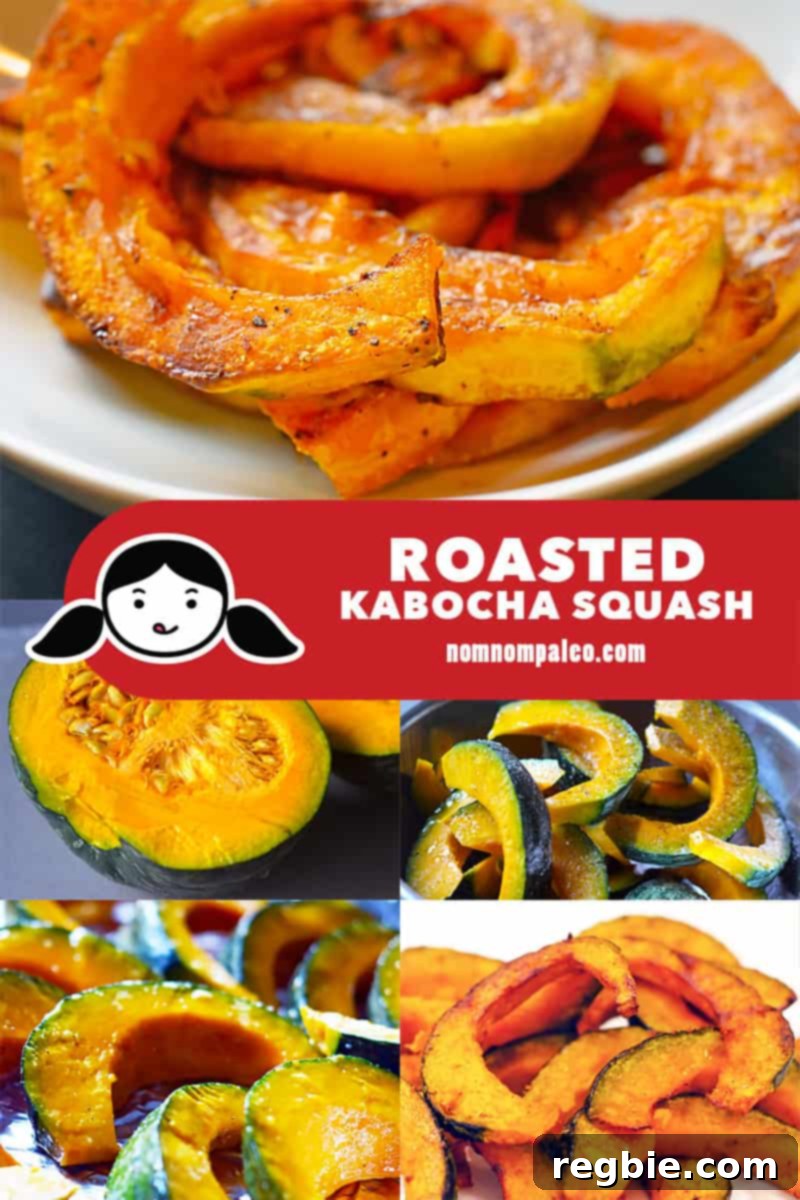
Uncover the magic of autumn with this simple yet sublime recipe for Perfectly Roasted Kabocha Squash! Transform a humble Japanese pumpkin into a caramelized, chestnut-like delicacy that everyone, even the pickiest eaters, will adore.
Embracing the Flavor of Fall with Kabocha Squash
As the leaves begin to turn and the air grows crisp, my thoughts invariably drift to the comforting embrace of winter squash. Among the many varieties, kabocha squash holds a special place in my culinary heart. Often referred to as “Japanese pumpkin,” kabocha boasts a uniquely sweet, earthy flavor and a dense, creamy texture that truly shines when roasted. Many describe its cooked taste as strikingly similar to roasted chestnuts, a delightful characteristic that makes it an instant favorite.
This vibrant green squash isn’t just delicious; it’s a nutritional powerhouse. Rich in vitamins A and C, fiber, and antioxidants, kabocha squash is a fantastic addition to any diet, especially those focused on whole, unprocessed foods like Paleo, Whole30, and gluten-free lifestyles. It’s naturally sweet, making it a wonderful substitute for starchy vegetables or a healthy alternative to less nutritious side dishes.
Why Roasting is the Best Method for Kabocha
While kabocha can be steamed, pureed, or incorporated into stews, roasting truly unlocks its full potential. High heat caramelizes its natural sugars, intensifying the sweetness and creating irresistible slightly crispy edges. The interior becomes incredibly tender and fluffy, a delightful contrast that makes each bite a sensory pleasure. It’s a method that requires minimal effort but yields maximum flavor, proving that healthy eating doesn’t have to be complicated.
Even the most discerning palates, like my little one, Lil-O, can’t resist snatching up slices of roasted kabocha from the communal plate. It’s one of those rare vegetables that transcends typical veggie-aversion, making it a staple in our home. For most, the skin of kabocha is perfectly edible and softens beautifully during roasting, adding extra fiber and nutrients. However, if you have specific autoimmune concerns, a quick peel beforehand is always an option, though I usually leave it on for convenience and added texture.
Selecting and Storing Your Kabocha Squash
To ensure the best flavor and texture, selecting a good kabocha squash is key. Look for a squash that feels heavy for its size, indicating a dense and flavorful flesh. The skin should be deep green, firm, and free of soft spots or significant blemishes. A dry stem is also a good indicator of ripeness. Once you’ve chosen your perfect kabocha, store it in a cool, dry place away from direct sunlight. Uncut kabocha can last for several weeks, or even up to a couple of months, allowing you to enjoy this delightful squash throughout the autumn and winter seasons.
Time to Make Perfectly Roasted Kabocha Squash!
This recipe is designed for simplicity and maximum flavor, serving 4 people generously. It’s a fantastic side dish for any meal, from a weeknight dinner to a holiday feast.
Ingredients:
- 1 medium kabocha squash (approx. 2-3 pounds)
- 2 tablespoons ghee, olive oil, avocado oil, or melted coconut oil (choose your preferred healthy fat)
- Diamond Crystal kosher salt, to taste
- Freshly ground black pepper, to taste
Equipment:
- Sharp vegetable peeler (optional, if peeling)
- Sturdy chef’s knife
- Reliable cutting board
- Measuring spoons
- Large mixing bowl
- Rimmed baking sheet
- Parchment paper or aluminum foil (for easy cleanup)
- Explore more of my recommended kitchen tools here.
Method:
Follow these steps for perfectly roasted kabocha squash every time:
-
Prepare the Oven and Squash: Preheat your oven to a steady 400°F (200°C) with an oven rack positioned in the middle. While the oven preheats, give your kabocha squash a thorough rinse under cool running water to remove any dirt or debris. Pat it completely dry with a clean towel. If you choose to peel the squash (again, it’s optional but recommended for those with autoimmune sensitivities), now is the time to do so carefully with a sharp vegetable peeler. The skin can be quite tough, so proceed with caution.
-
Safely Cut the Squash: Kabocha, like many other winter squashes, has a hard exterior that requires a sharp knife and a bit of careful force to cut. For maximum safety and ease, start by carefully slicing off the very top and bottom ends of the squash. This creates stable, flat surfaces, making it much easier to handle. Once the top and bottom are removed and a bit of the vibrant orange flesh is exposed, carefully cut the squash in half through its center. The flat ends help stabilize it on your cutting board, making this step significantly less challenging.
-
Remove Seeds and Slice: With the squash halved, use a sturdy spoon to scoop out all the seeds and fibrous strands from the center. Discard these. Next, place each squash half cut-side down on your cutting board and carefully slice it into thin, uniform wedges, approximately ½ to ¾ inch thick. Aim for consistent thickness to ensure even roasting. Thinner slices will yield crispier results, while slightly thicker slices will be softer.
-
Season the Kabocha: Transfer the kabocha wedges to a large mixing bowl. Drizzle your chosen fat (ghee, olive oil, avocado oil, or melted coconut oil) over the squash. Toss thoroughly to ensure every piece is evenly coated. This fat is crucial for flavor, browning, and achieving that desirable crispy exterior. Season generously with Diamond Crystal kosher salt and freshly ground black pepper, tossing again to distribute the seasonings evenly.
-
Arrange on Baking Sheet: Line a rimmed baking sheet with parchment paper or aluminum foil for easy cleanup. Arrange the seasoned kabocha wedges in a single layer on the prepared baking sheet. It’s important not to overcrowd the pan; leave a little space between each piece. If the pan is too crowded, the squash will steam instead of roast, preventing it from getting beautifully caramelized and crispy. If necessary, use two baking sheets.
-
Roast to Perfection: Place the baking sheet in the preheated oven. Roast for a total of 30 minutes, making sure to flip the squash wedges over at the halfway point (after about 15 minutes). This ensures even browning and crispiness on both sides. The kabocha is ready when it’s fork-tender on the inside, with a fluffy texture, and has developed a beautiful golden-brown color and slightly crunchy exterior.
Serving Suggestions & Creative Variations
This roasted kabocha squash is incredibly versatile. It makes a fantastic standalone side dish, but don’t stop there!
- Everyday Side: Serve it alongside roasted chicken, grilled fish, or a hearty steak for a balanced and flavorful meal.
- Bowl Booster: Add roasted kabocha to grain bowls, salads, or nourish bowls for an extra boost of flavor and nutrition.
- Flavor Variations:
- Sweet Twist: A drizzle of maple syrup or a sprinkle of cinnamon and nutmeg before roasting can enhance its natural sweetness, perfect for a breakfast side or dessert.
- Savory Kick: Experiment with garlic powder, onion powder, smoked paprika, or a pinch of chili flakes for a more savory or spicy profile. Fresh herbs like rosemary or thyme also complement kabocha wonderfully.
- Leftovers Magic: Got leftover roasted kabocha squash? It reheats beautifully, but you can also repurpose it! Blend it into a creamy soup, mash it like potatoes, or toss it into a quick and easy Whole30-friendly Thai Chicken Curry for an instant flavor and texture upgrade.
Whether you’re following a Paleo, Whole30, or gluten-free diet, or simply looking for a delicious and healthy vegetable dish, this roasted kabocha squash recipe is sure to become a cherished favorite in your kitchen.
More Culinary Inspiration from Nom Nom Paleo
If you’re eager for more delicious and healthy recipe ideas, be sure to explore my comprehensive Recipe Index. You’ll discover a treasure trove of delightful dishes perfect for any occasion. For exclusive recipes and convenient cooking on the go, check out my iPhone and iPad app. And for even more culinary adventures, dive into my award-winning cookbooks:
- Nom Nom Paleo: Food for Humans (Andrews McMeel Publishing 2013)
- Ready or Not! (Andrews McMeel Publishing 2017)
- Nom Nom Paleo: Let’s Go! (Andrews McMeel Publishing 2021)
Happy cooking!
PRINTABLE RECIPE CARD
Roasted Kabocha Squash
15
mins
30
mins
45
mins
4
servings
Michelle Tam
Print Recipe
Ingredients
-
1
medium kabocha squash -
2
tablespoons
ghee
olive oil, avocado oil, or melted coconut oil - Diamond Crystal kosher salt
- Freshly ground black pepper
Instructions
-
Preheat the oven to 400 F (200°C) with the rack in the middle. Rinse the squash under running water, and pat it dry. (If you choose to peel it, do so now with a sharp vegetable peeler, being cautious of the tough skin.)
-
To safely cut the kabocha, first slice off the top and the bottom ends to create stable flat surfaces. Then, carefully cut the squash in half through its center. Once halved, scoop out the seeds and fibrous strands using a sturdy spoon.
-
Cut the squash halves into thin wedges, approximately ½ to ¾ inch thick, aiming for uniform size. Transfer the wedges to a large bowl, toss with your fat of choice (ghee, olive oil, avocado oil, or melted coconut oil), and then sprinkle generously with salt and pepper, tossing again to ensure even coating.
-
Arrange the seasoned kabocha wedges in a single layer on a foil- or parchment-lined rimmed baking tray. Ensure there is some space between each piece to allow for proper roasting and caramelization, rather than steaming. If necessary, use a second baking sheet.
-
Pop the baking sheet(s) into the preheated oven and roast for a total of 30 minutes. At the midpoint (around 15 minutes), flip the squash wedges over to ensure even browning. The kabocha is ready when it’s beautifully golden-brown, slightly crunchy on the outside, and wonderfully fluffy and soft on the inside.
Notes
Nutrition
Nutrition information is automatically calculated, so should only be used as an approximation.
Enjoyed this recipe? Share your thoughts below!