
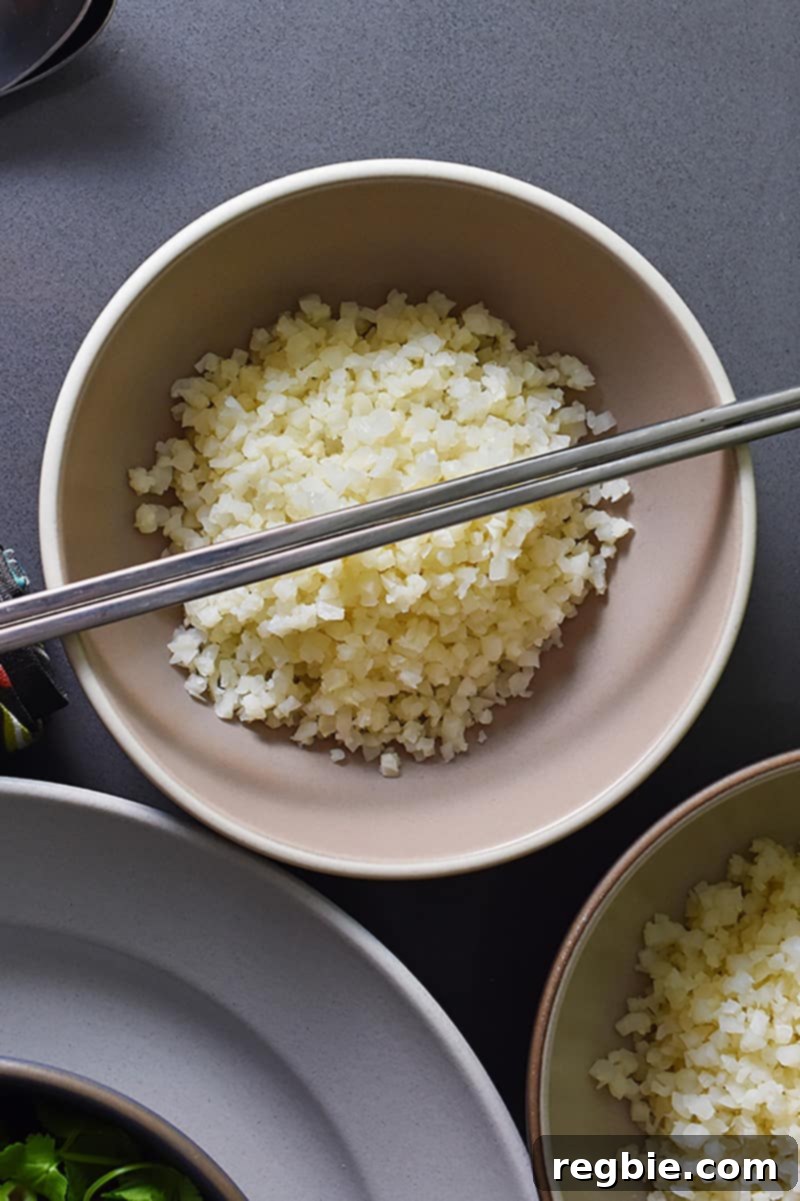
The Ultimate Guide to Easy & Delicious Simple Cauliflower Rice (Whole30, Paleo, Keto Friendly!)
Are you searching for a versatile, healthy, and incredibly easy alternative to traditional white rice? Look no further! This simple cauliflower rice recipe is your perfect solution, fitting seamlessly into Whole30, Paleo, Keto, and gluten-free lifestyles. Say goodbye to carb-heavy grains without sacrificing flavor or satisfaction. This isn’t just a side dish; it’s a foundation for countless healthy meals, ready in mere minutes.
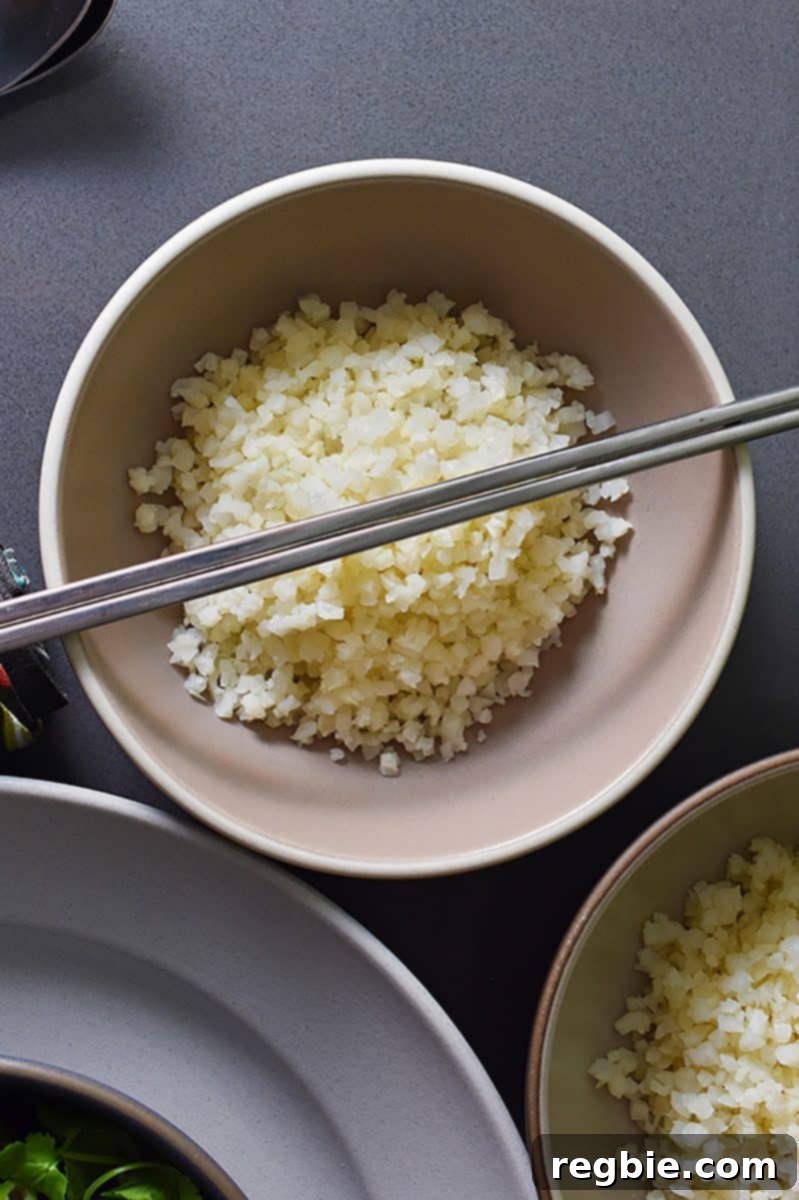
Rediscover Simplicity: My Journey to Perfect Cauliflower Rice
My culinary adventures with cauliflower rice haven’t always been straightforward. My first attempt, while edible, proved to be a little too involved for my everyday busy schedule. It required extra steps like microwaving before frying, which added unnecessary time and complexity. However, I’ve refined my approach, adapting a much simpler, more efficient method inspired by Elana’s Pantry. This updated recipe streamlines the process, cutting down on prep and cook time significantly, making it ideal for those nights when you need a healthy meal on the table fast. There’s no need to “nuke” the cauliflower before pan-frying; we’re going straight to the skillet for maximum flavor and minimal fuss.
What Exactly is Cauliflower Rice?
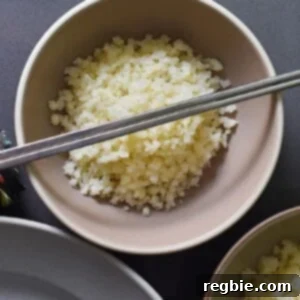
Cauliflower rice is simply cauliflower florets that have been processed or chopped into small, grain-like pieces, resembling traditional rice. It’s a fantastic low-carb, grain-free vegetable substitute that has exploded in popularity among health enthusiasts and those following specific dietary regimens. Its neutral flavor makes it incredibly versatile, easily absorbing the spices and aromatics it’s cooked with. Whether you’re looking to reduce your carbohydrate intake, increase your vegetable consumption, or simply explore new culinary textures, cauliflower rice is a culinary game-changer.
Why Choose Cauliflower Rice? Benefits for Your Plate and Health
Beyond its culinary adaptability, cauliflower rice offers a host of impressive health benefits and is suitable for a wide array of dietary needs.
Unparalleled Health Benefits
Cauliflower itself is a nutritional powerhouse. It’s low in calories but rich in essential vitamins and minerals, including Vitamin C, Vitamin K, and B vitamins like folate. It’s also an excellent source of fiber, which aids digestion, promotes satiety, and helps regulate blood sugar levels. Incorporating cauliflower rice into your diet is a delicious way to boost your intake of nutrient-dense vegetables without feeling deprived.
Dietary Versatility: A Staple for Many Lifestyles
One of the biggest draws of cauliflower rice is its incredible versatility across various dietary frameworks:
- Whole30 & Paleo: It’s a natural, unprocessed vegetable, perfectly compliant with both Whole30 and Paleo principles, offering a satisfying “rice” experience without grains.
- Keto & Low-Carb: With significantly fewer carbohydrates than white rice, it’s an ideal choice for maintaining ketosis and managing blood sugar.
- Gluten-Free: Naturally gluten-free, making it a safe and delicious option for those with celiac disease or gluten sensitivity.
- Vegan & Vegetarian: A plant-based staple that adds bulk and nutrients to any meat-free meal.
Flavor Profile: A Blank Canvas
Unlike some vegetable substitutes, cauliflower rice has a mild, almost neutral flavor. This characteristic is its greatest strength, as it allows the cauliflower to truly act as a canvas for whatever flavors you choose to introduce. From aromatic Indian curries to zesty Mexican bowls or savory Asian stir-fries, cauliflower rice adapts beautifully, soaking up the sauces and seasonings without overpowering them.
The Ultimate Easy Meal Prep Ingredient
This recipe yields about 6 servings, making it perfect for meal prepping. You can cook a large batch at the beginning of the week and have a healthy, ready-to-use base for your packed lunches or quick dinners. Its quick cooking time means you spend less time in the kitchen and more time enjoying delicious, wholesome meals.
Time to Make Simple Cauliflower Rice!
This recipe is designed for ease and flavor, serving approximately 6 people.
Ingredients:
- 1 small cauliflower head, chopped coarsely, or 16 ounces pre-riced cauliflower
- 2 tablespoons ghee, coconut oil, avocado oil, or your preferred cooking fat
- 1 small onion, finely chopped (ideally in a food processor for consistency)
- Magic Mushroom Powder or Diamond Crystal brand kosher salt, to taste
- Freshly ground black pepper, to taste
- Aleppo pepper (optional, for a subtle warmth and color)
Equipment You’ll Need:
- Cutting board
- Chef’s knife
- Food processor (highly recommended for best results)
- 12-inch skillet with a lid (cast iron works wonderfully for even heat)
- Silicone spatula
- Measuring spoons
Mastering the Method: Step-by-Step Instructions for Perfect Cauliflower Rice
Follow these straightforward steps to create perfectly textured and flavored cauliflower rice every time.
Step 1: Preparing Your Cauliflower
If you’re starting with a whole head of cauliflower, begin by washing it thoroughly and patting it dry. Remove the green leaves and cut the florets into coarse pieces. Grab these cauliflower florets and toss them into a food processor fitted with the chopping blade. Pulse the contents in short bursts until the cauliflower breaks down and resembles grains of couscous or rice. Be careful not to over-process, or you’ll end up with a watery mush! You want distinct, small “grains.”
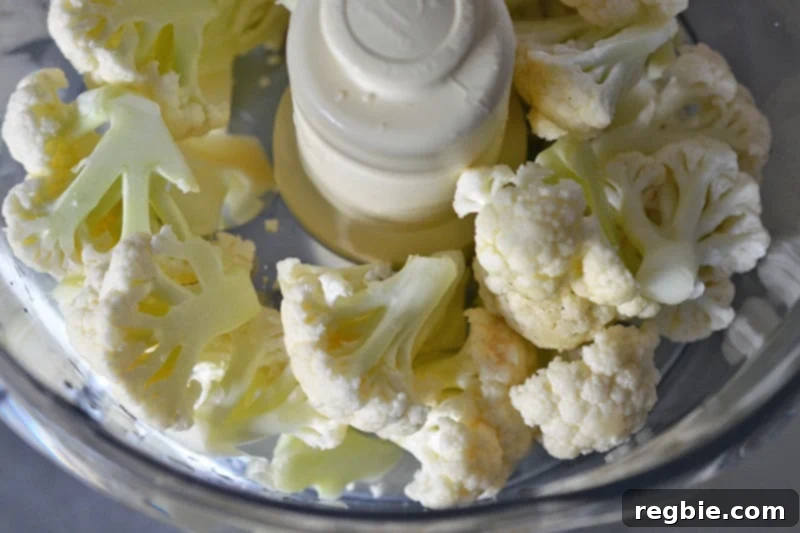
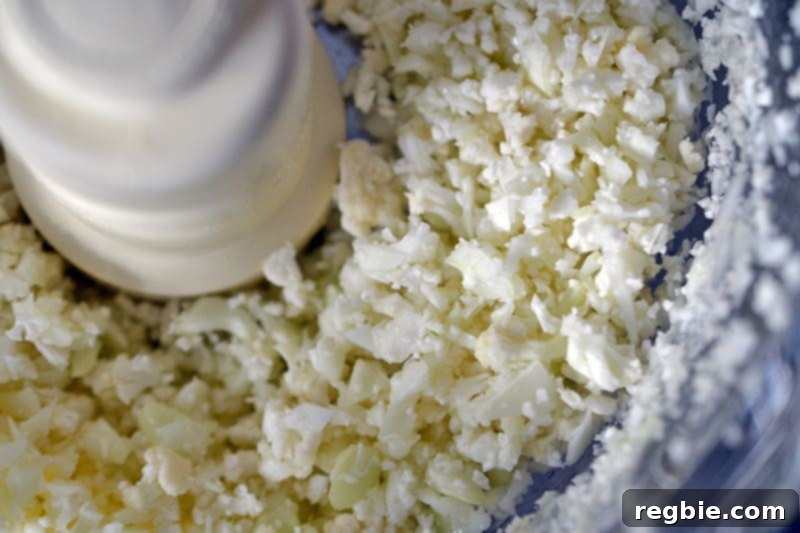
Pro Tip: If you’ve opted for the convenience of a bag of pre-riced cauliflower, you can happily skip this step and proceed directly to building the flavor base. Make sure to pat dry any excess moisture from pre-riced cauliflower for the best texture.
Step 2: Building the Flavor Base
Place your 12-inch skillet over medium heat. Allow it to heat thoroughly until hot, but not smoking. Add your chosen cooking fat – whether it’s ghee, coconut oil, or avocado oil – to the hot pan. Once the fat is shimmering, indicating it’s ready, add the finely chopped onions. Cook the onions, stirring frequently with your silicone spatula, until they become translucent and softened. This usually takes about 3-5 minutes. The goal here is to create a fragrant and slightly sweet foundation for your cauliflower rice.
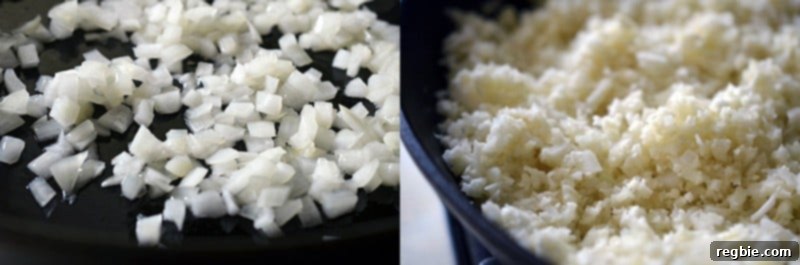
Step 3: Cooking the Cauliflower Rice to Perfection
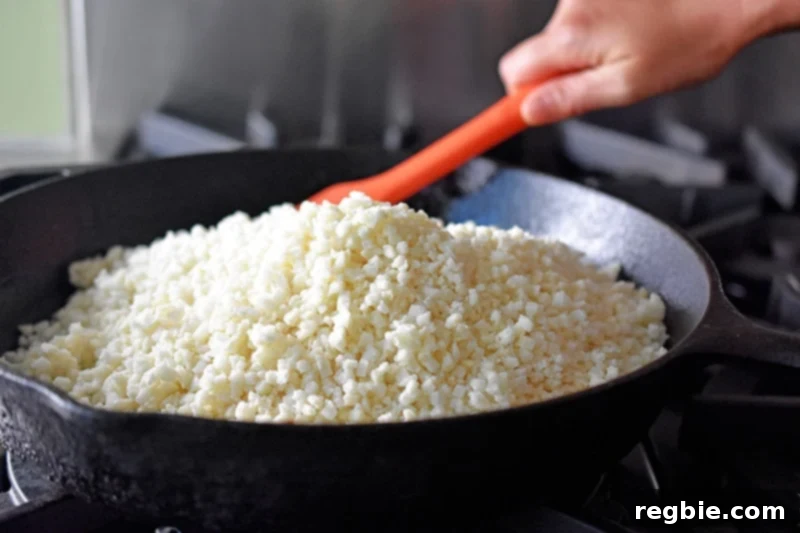
Once the onions are beautifully softened, it’s time to introduce the star of the show. Carefully dump the riced cauliflower into the skillet with the onions and fat. Stir everything together thoroughly, ensuring the fat and onions are evenly distributed throughout the cauliflower. This step is crucial for imparting flavor and preventing uneven cooking.
Now, season your “rice” generously. I love using Magic Mushroom Powder for an umami boost, but good quality Diamond Crystal kosher salt works perfectly. Add freshly ground black pepper to taste, and if you enjoy a touch of subtle warmth and color, a pinch of Aleppo pepper is a wonderful addition.
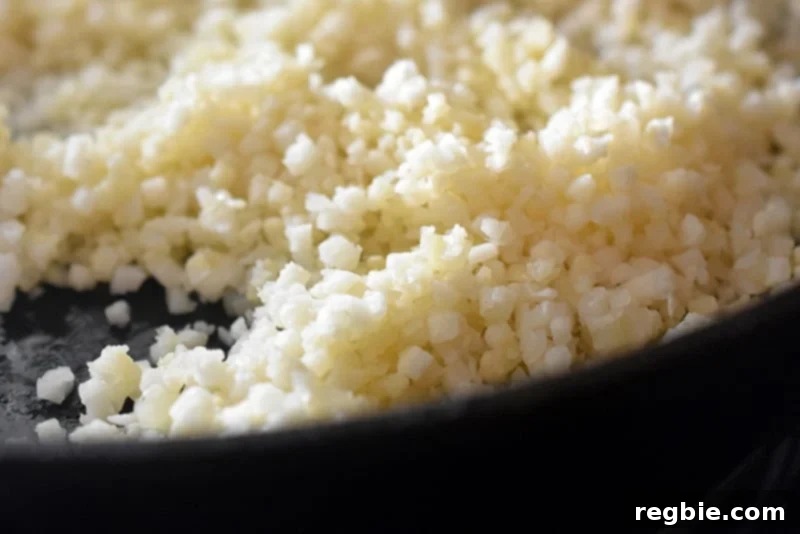
Cover the skillet with a lid and allow the cauliflower to cook for 5-10 minutes. The cooking time will depend on how finely your cauliflower is riced and your desired texture. The key is to cook it until it’s tender-crisp – softened but not mushy. Overcooking will result in a soggy texture, so keep a close eye on it!
Step 4: The Final Touch
After 5-10 minutes, remove the lid and give the cauliflower rice a final stir. Taste a spoonful and adjust the seasoning as needed with additional salt and pepper. If it feels a bit bland, a little more salt usually does the trick. Your simple cauliflower rice is now ready to serve immediately or store for later use.
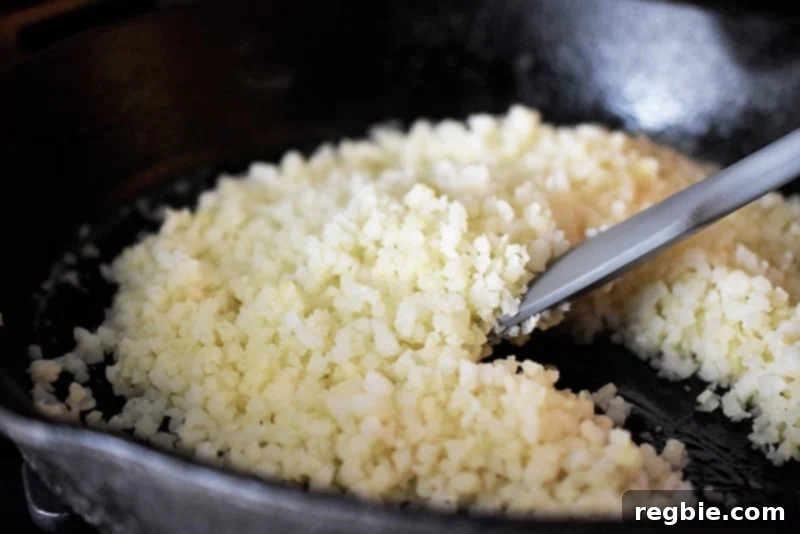
Customizing Your Cauliflower Rice: Endless Possibilities
This basic recipe is just the beginning! The beauty of cauliflower rice lies in its adaptability. You can totally change up the seasoning and customize it to your tastes, transforming it into a myriad of different dishes.
Flavor Enhancements
- Garlic & Ginger: Sauté minced garlic and ginger with the onions for an aromatic base, perfect for Asian-inspired meals.
- Herbs: Fresh cilantro, parsley, or dill can be stirred in at the end for a burst of freshness.
- Spices: Experiment with turmeric for an earthy note, cumin and chili powder for a Mexican twist, or curry powder for an Indian-inspired side.
- Citrus Zest: A little lemon or lime zest added at the end brightens up the entire dish.
Vegetable Add-Ins
Boost the nutritional value and texture by incorporating other vegetables. Frozen peas, diced carrots, bell peppers, or even mushrooms can be added to the skillet alongside the riced cauliflower, or lightly sautéed beforehand.
Protein Boost
Turn your cauliflower rice into a complete meal by adding protein. Scramble an egg into it for a fried rice effect, or stir in cooked chicken, shrimp, or tofu during the last few minutes of cooking.
Serving Suggestions: What to Pair with Your Cauliflower Rice
Simple cauliflower rice is incredibly versatile and makes an excellent accompaniment to a wide range of dishes:
- As a Base: Use it as a healthier base for curries, stir-fries, stews, or grain bowls. It soaks up sauces beautifully!
- Side Dish: Serve it alongside grilled chicken, baked fish, roasted vegetables, or a hearty steak.
- Breakfast: Believe it or not, a savory cauliflower rice bowl with a fried egg and avocado makes for a delightful and filling breakfast.
Storage and Meal Prep Tips
A single head of cauliflower yields a generous amount of rice, typically around 6 servings. This makes it an ideal candidate for meal prepping. You can store cooked cauliflower rice in an airtight container in the fridge for up to a week. To reheat, simply warm it in a skillet over medium heat or in the microwave until heated through. If it seems a little dry, add a tablespoon of water or broth to loosen it up.
Beyond the Basic: Explore More Cauliflower Rice Variations
Once you’ve mastered this simple recipe, don’t stop there! The world of cauliflower rice is vast and exciting. Dive into these other delicious variations for even more flavor adventures:
- Asian Cauliflower Fried Rice
- Kimchi Cauliflower Fried Rice
- Mexi-Cauli Rice
Looking for more healthy and delicious recipe ideas? Head on over to my Recipe Index. You’ll also find exclusive recipes on my iPhone and iPad app, and in my cookbooks, Nom Nom Paleo: Food for Humans (Andrews McMeel Publishing 2013), Ready or Not! (Andrews McMeel Publishing 2017), and Nom Nom Paleo: Let’s Go! (Andrews McMeel Publishing 2021).
Simple Cauliflower Rice Recipe Card
Simple Cauliflower Rice
Looking for a delicious, simple, Whole30-friendly, Paleo alternative to white rice? Make my simple cauliflower rice recipe!
Prep Time: 10 mins
Cook Time: 10 mins
Total Time: 20 mins
Servings: 6 servings
Author: Michelle Tam
Print Recipe
Ingredients
- 1 small cauliflower head, chopped coarsely or 16 ounces riced cauliflower
- 2 tablespoons ghee, coconut oil, avocado oil, or fat of choice
- 1 small onion, chopped finely in a food processor
- Magic Mushroom Powder or Diamond Crystal brand kosher salt
- Freshly ground black pepper
- Aleppo pepper (optional)
Instructions
- Grab your cauliflower florets and throw them into a food processor fitted with the chopping blade.
- Pulse the contents until the cauliflower resembles couscous or rice grains. (You skip steps 1 & 2 if you have a bag of riced cauliflower.)
- Heat a 12-inch pan over medium heat until hot. Add your favorite cooking fat and when it’s shimmering, toss in the onions. Cook, stirring frequently, until the onions are translucent.
- When the onions are softened, dump in the riced cauliflower and stir well to distribute the fat and onions.
- Season the “rice” with some Magic Mushroom Powder (or Diamond Crystal kosher salt), pepper, and Aleppo pepper (if using).
- Cover the skillet and cook the cauliflower for 5-10 minutes or until softened. Make sure the rice doesn’t get mushy! Taste for seasoning and adjust with additional salt and pepper if needed.
- Serve immediately or store in the fridge for up to a week.
Nutrition
Calories: 75kcal | Carbohydrates: 6g | Protein: 2g | Fat: 5g | Fiber: 2g | Sugar: 3g
Nutrition information is automatically calculated, so should only be used as an approximation.
Like this? Leave a comment below!